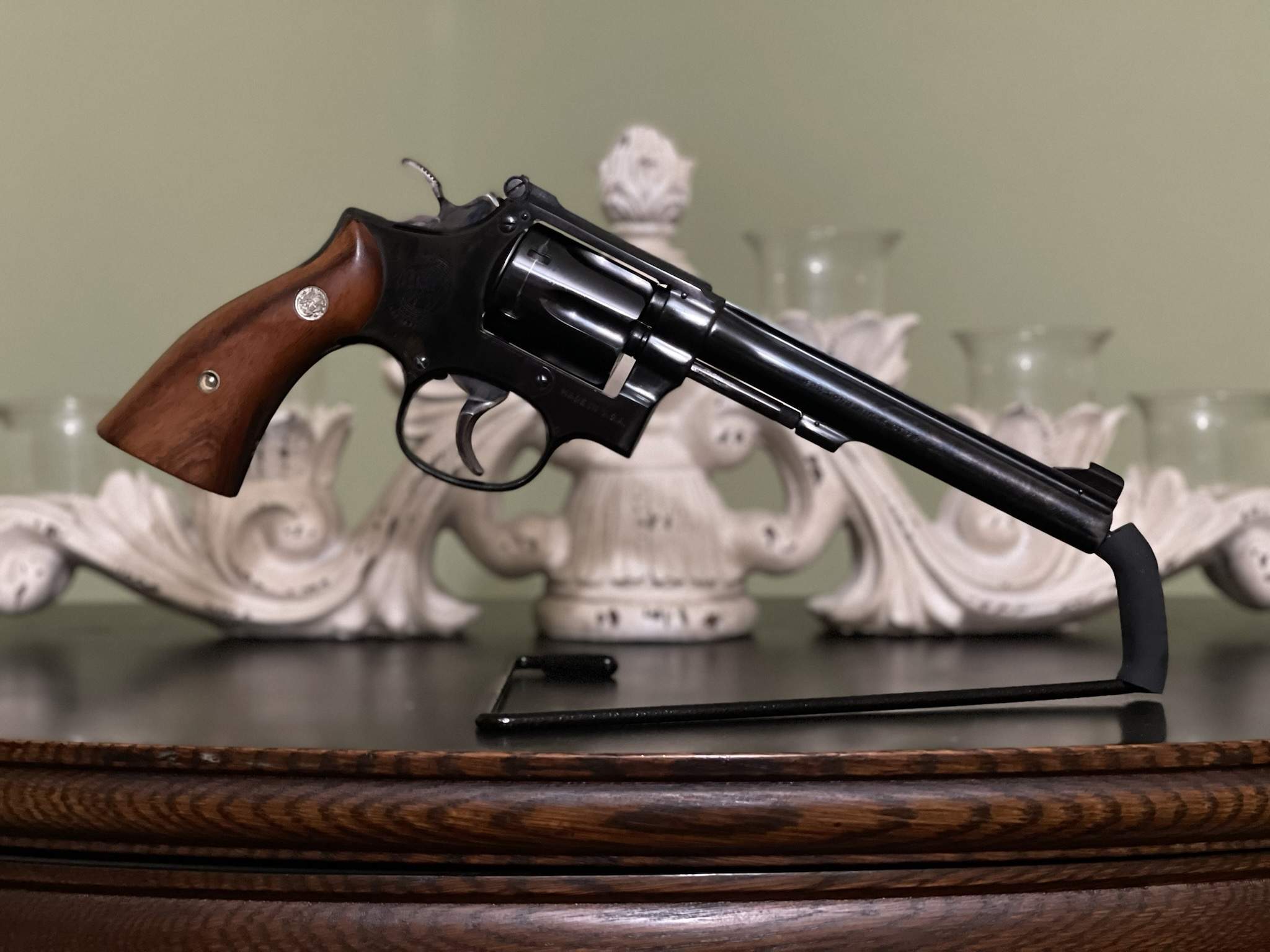
This article is Part II of the K-22 Masterpiece Series. If Part I explains why the post-war K-22 matters, this page shows the kind of revolver that makes the whole subject come alive.
Before focusing on this historically important 1946 factory showcase gun, read the complete Smith & Wesson K-22 Masterpiece Overview.
Part I
Post-War Pre-17 Overview
Part II
The 1946 Factory Showcase Gun
Part III
The 1948 K-22
Part IV
The 1953 Five-Screw K-22
Part V
The 1957 Four-Screw K-22
The First Production K-22 Masterpiece
This was the first production K-22 Masterpiece completed in 1946, and Smith & Wesson used it to showcase the K-22 line of revolvers. That alone would make it special. But the deeper story is what happened after it left the factory display case.
This gun was placed in the Sales Manager's office showcase at the Smith & Wesson factory on February 4, 1947. While held by the factory, it was updated as new features were developed, including the target hammer, target trigger, and special grips.
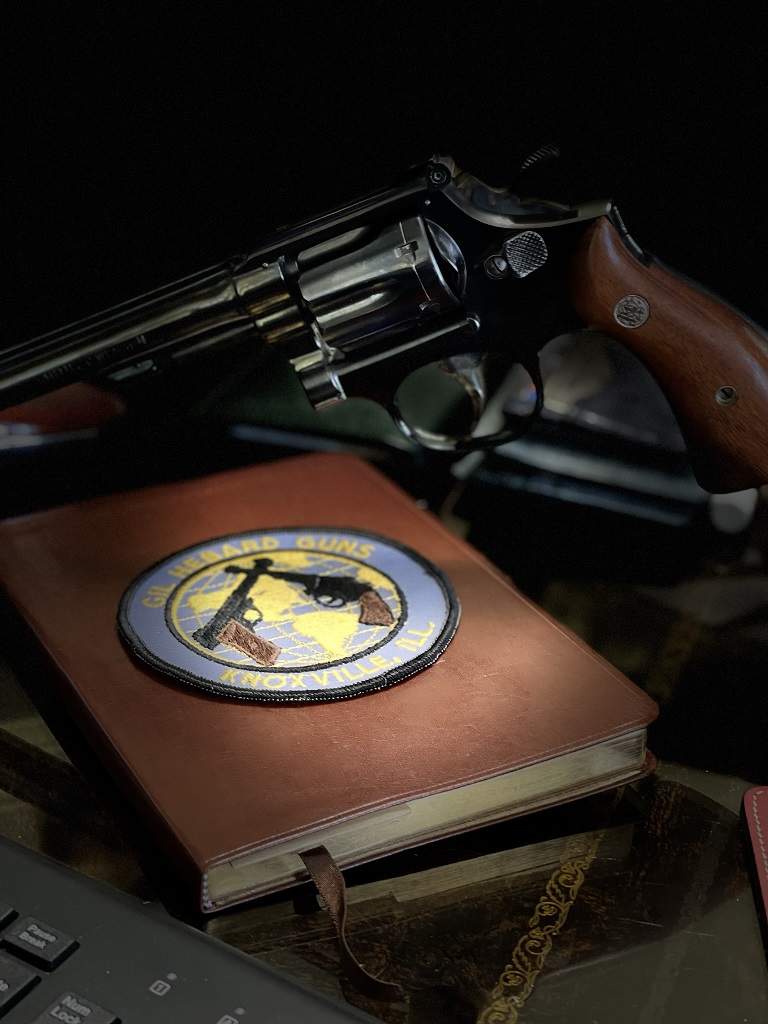
Gil Hebard Owned This Gun from 1950 to 1991
In 1950, this revolver was removed from the display case and given to Assistant S&W Sales Manager Fred Miller. Miller placed the gun in a 1947 K-Frame blue fiberboard presentation case and presented it to Gil Hebard of Knoxville, Illinois — an important target shooter, innovator, and Smith & Wesson distributor.
The revolver remained in Hebard's personal collection from 1950 until 1991. Hebard was a major figure in competitive handgun shooting, known for Gil Hebard Guns, his annual catalogs, his NRA competitive pistol work, and his influence on the target-shooting world.
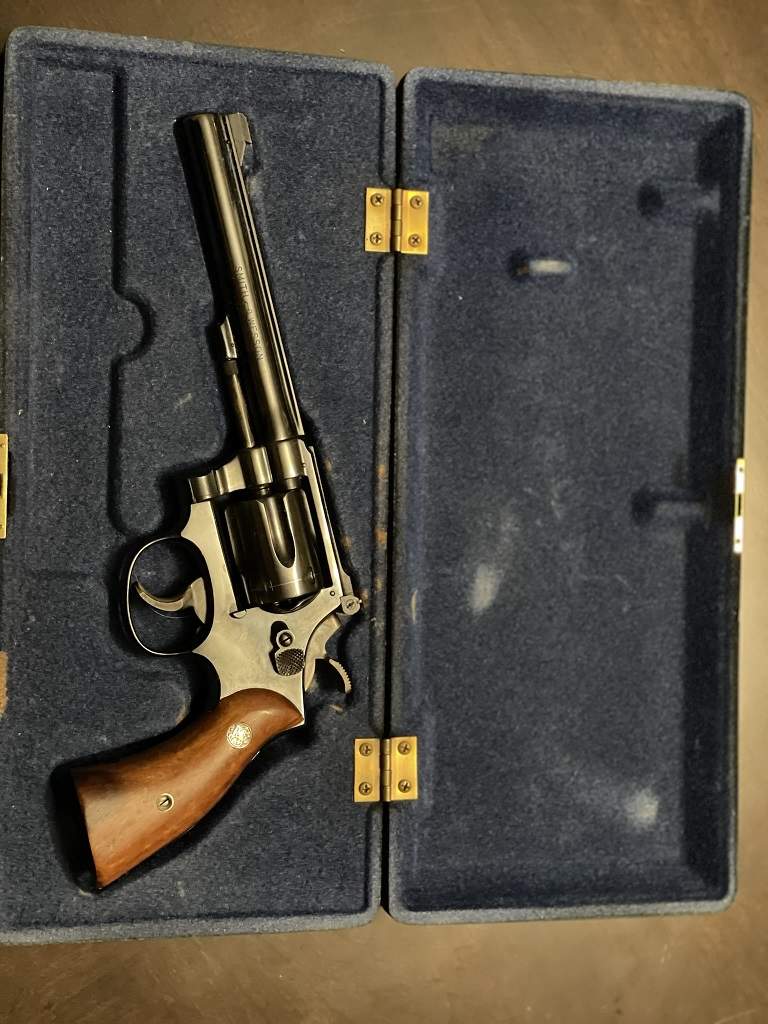
In my quest to acquire a five-screw K-22 with the bright finish, narrow rib barrel, target hammer, and target trigger, I never dreamed it would come in the form of a gun with this level of historical importance.
This gun is the pinnacle. Not just of the K-22 Masterpiece line, but of an era when craftsmanship, precision, and pride in manufacturing reached a level that simply cannot be replicated today.
Roy Jinks and the Amoskeag Description
In 1991, the revolver was purchased by Roy G. Jinks, Smith & Wesson historian, directly from Gil Hebard. The gun remained in Mr. Jinks' personal collection until 2018, when it was sold at the Amoskeag Auction.
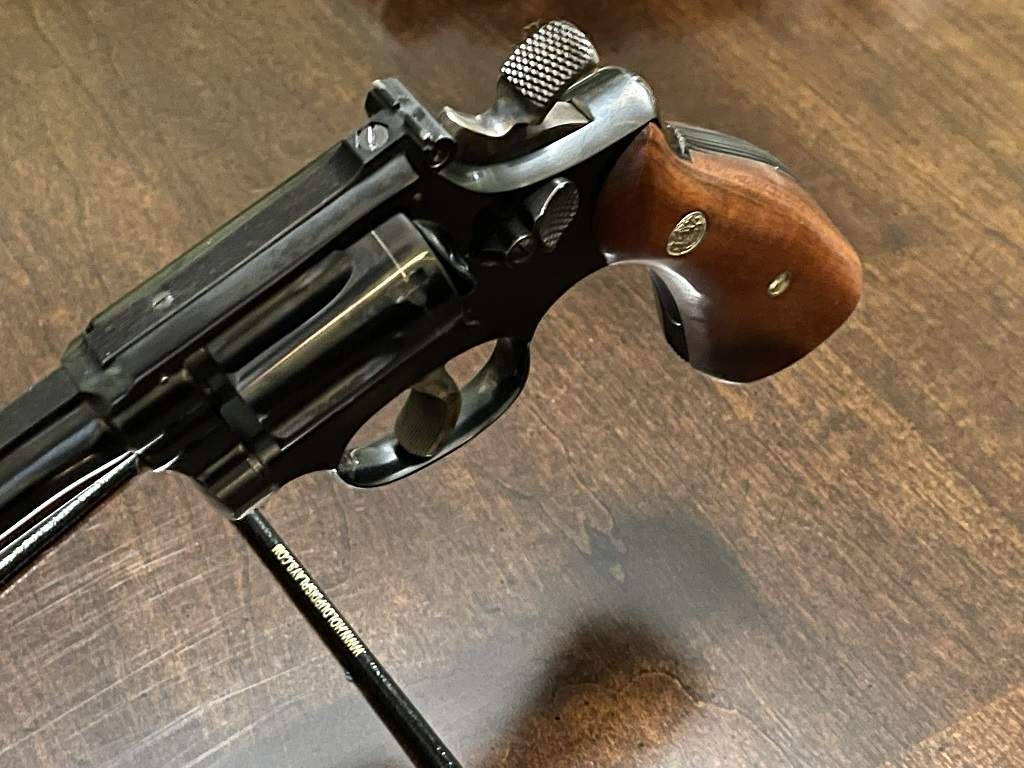
The Amoskeag 2018 description identified the gun as serial number K250, .22 LR, with a six-inch barrel and an excellent bore. The description noted that the revolver was the first production K-22 Masterpiece completed in 1946 and that it had been used by the factory to showcase the K-22 line of revolvers.
The metal surfaces were described as retaining about 97 to 98 percent original blue, with light high-edge wear, fine scratches, and a turn ring on the recessed cylinder. The .500-inch target hammer and .500-inch target trigger retained beautiful case-hardened colors with minor operational wear.
Why This Gun Matters
This revolver is not simply rare. It sits at the intersection of manufacturing history, competitive shooting, and collector provenance.
It represents the moment Smith & Wesson restarted civilian production after World War II. It lived inside the factory itself. It passed through the hands of Gil Hebard and Roy Jinks — two names that carry weight in the world of firearms history.
Very few guns check all three boxes: first production, factory display, and documented ownership. This one does.
Benny, My FFL Guy
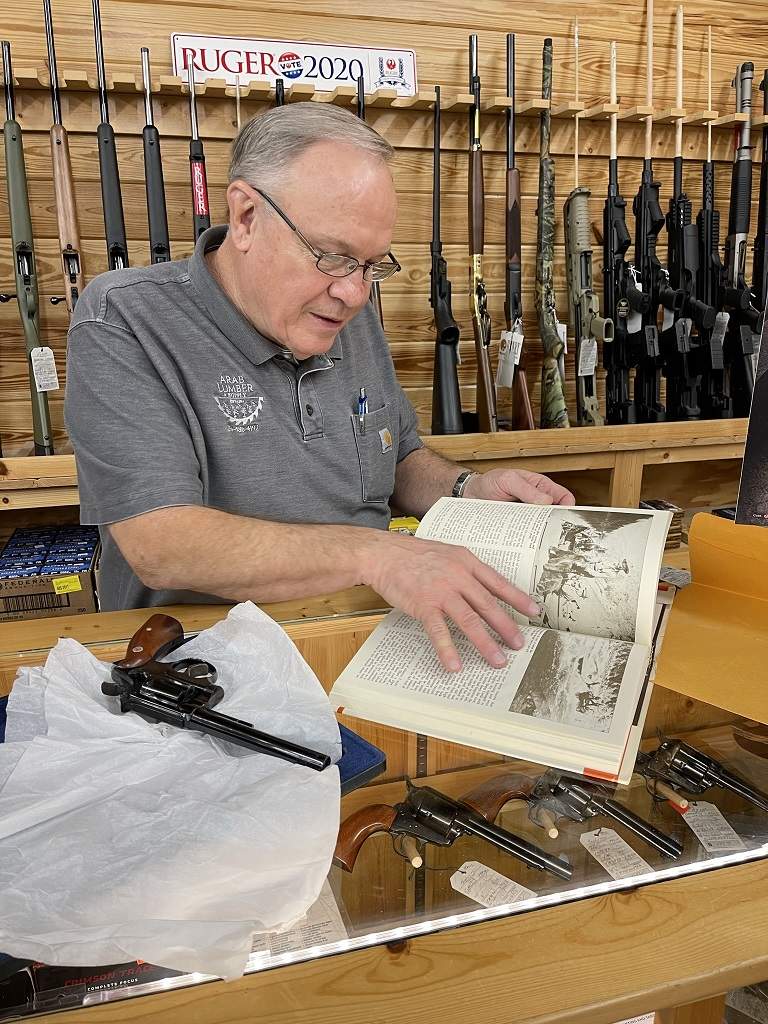
Everyone who reads my blog knows Benny, my FFL guy. In this case, the acquisition connected several strands of my collecting life: my interest in post-war craftsmanship, my affection for Smith & Wesson target revolvers, and my ongoing effort to reduce the number of guns while increasing the quality of what remains.
The Collecting Conundrum
By January 2022, I had been actively downsizing my collection for nearly two years. I had recently placed ten guns on consignment. Then, on Christmas Day 2021, I bought this factory display gun.
So if I sell ten and buy one, I am making progress — at least that is what I told myself. The truth is more complicated. I was reducing quantity, but trying to improve quality. This revolver fit that plan better than anything I could have imagined.
This may be one of the Smith & Wesson .22 target revolvers I keep long-term, unless another rare opportunity comes along. It is my personal opinion that you cannot find a better class of guns to collect and shoot than the post-war Third Model K-22 Masterpiece.
Collector Takeaway: Provenance matters. When a firearm’s history is documented — not guessed — it moves from collectible to significant.
Detailed Photo Gallery
For detailed photos of the 1946 K-22 Masterpiece, including additional angles and close-ups, view the dedicated photo gallery.
View 1946 K-22 Photo GalleryFrom My Bench
For Smith & Wesson collectors, Roy Jinks’ work belongs near the top of the reading list. I keep related books, tools, cleaning gear, and bench items on my curated gear page.
Browse My Gear ListAs an Amazon Associate I earn from qualifying purchases. I only link to products, books, tools, and accessories that fit the editorial purpose of Gun Collectors Club.
Continue Through the Smith & Wesson Cluster
This page is part of the Gun Collectors Club Smith & Wesson research cluster. Use these companion pages to move between company history, serial-number dating, Model 10 variants, K-22 target revolvers, magnum duty guns, galleries, and modern S&W arms.
Hub & serial research
Model 10 research
K-22 / Model 17 target revolvers
Smith & Wesson photo galleries
Magnum, duty & J-frame revolvers
Modern S&W arms & accessories

About Greg Cook
Greg Cook writes about firearms collecting, personal history, and the stories behind interesting guns. His Army MOS was 76Y, Unit Armorer, and he brings that practical background to his collector articles — including the Smith & Wesson K-Frame Serial Number Master Guide.