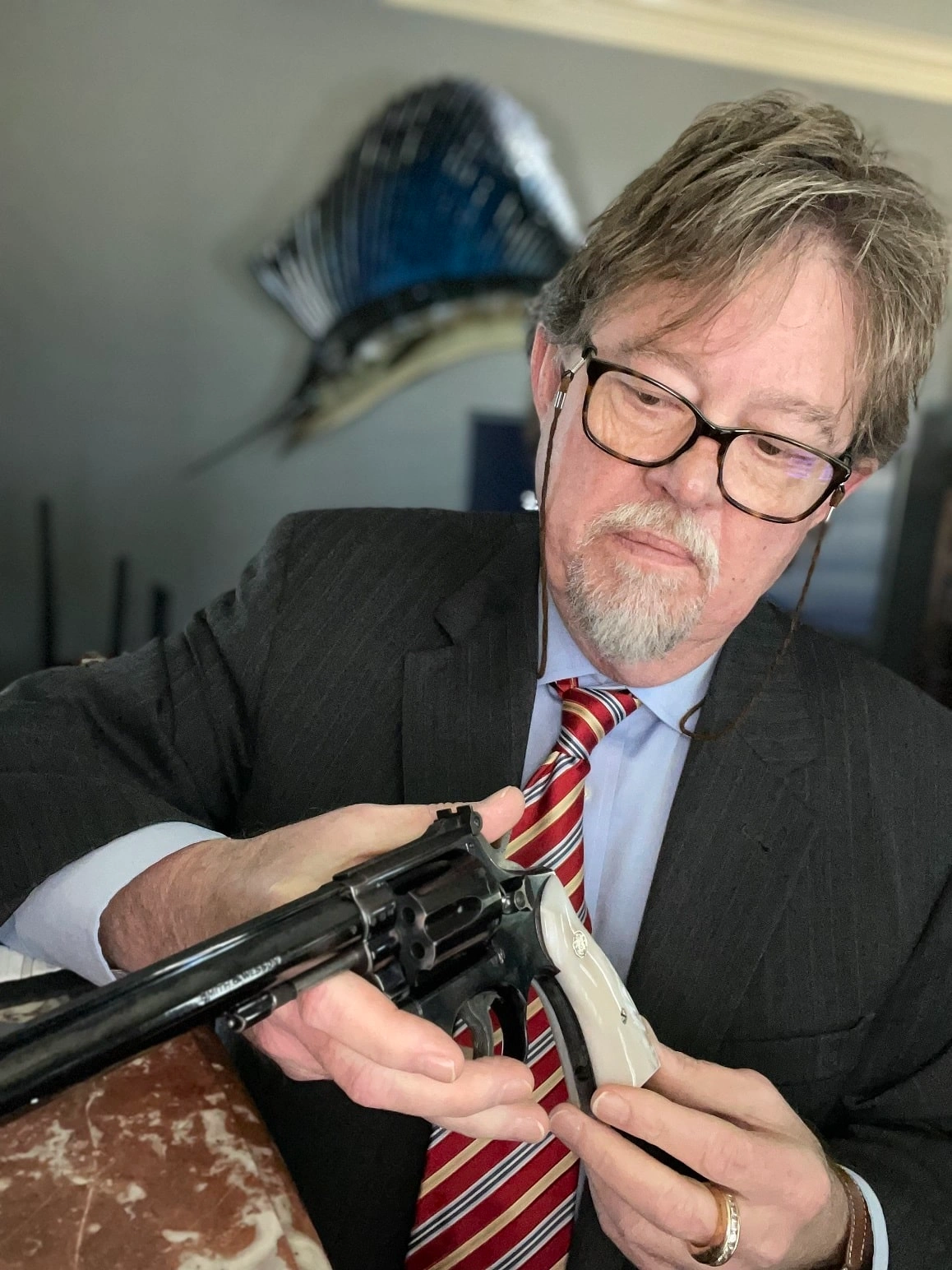
Gun collecting usually begins with one spark of interest. For some collectors, that spark is an old revolver with family history. For others, it is a military rifle, a favorite semi-automatic handgun, or a shotgun tied to hunting seasons and field memories.
The collecting world is broad, but most collections tend to settle into one or more of four major categories: revolvers, semi-automatic handguns, rifles, and shotguns. Each category has its own history, mechanical personality, value factors, and preservation concerns. Collectors interested in pistols and revolvers can begin with the Handgun Collector Guides hub.
Many collectors do not try to collect everything. In fact, some of the best collections are highly focused. A person may collect Smith & Wesson revolvers and never develop much interest in shotguns. Another may study military rifles but pass over modern pistols. That focus is not a limitation. It is often what gives a collection its identity.
Collector takeaway: Pick the category that holds your attention, learn its patterns, and then buy with patience. Knowledge is what separates an accumulation of guns from a collection. If you’re just getting into firearms, this handgun collecting roadmap will help you avoid common beginner mistakes.
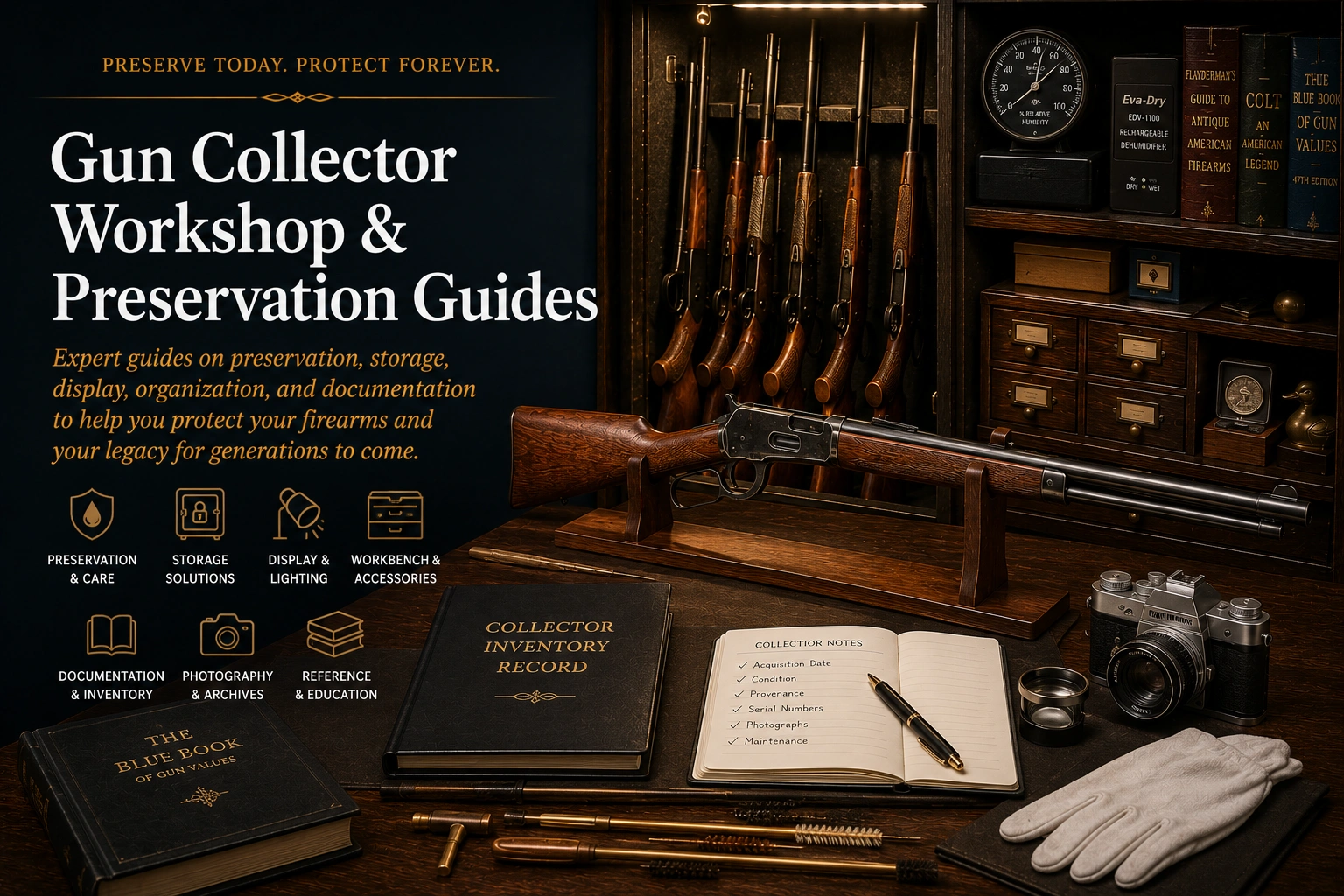
Gun Collector Workshop & Preservation Guides
A dedicated collector resource covering humidity control, long-term storage, display systems, workbench setup, firearm documentation, cleaning, lighting, and organization for serious firearm collectors.
This growing preservation series focuses on protecting condition, preserving originality, organizing collections, and building a practical collector workspace.
Explore Preservation Guides
Revolver Handguns
Revolvers are one of the most approachable collecting categories because their design is visible, mechanical, and easy to understand. The cylinder, lockwork, frame, barrel, sights, finish, and grips all tell part of the story. Small differences in model, dash number, barrel length, caliber, and original configuration can make a major difference to collectors.
This category appeals to people who like craftsmanship and history. A revolver may represent law enforcement use, military service, frontier tradition, target shooting, or a particular manufacturer’s golden era. Condition matters, but originality often matters even more. A polished finish, changed grips, or altered barrel can affect the collector value even when the gun still looks attractive.
Many collectors build entire collections around revolvers alone. Some focus on Colt, Smith & Wesson, Ruger, military sidearms, snub-nose revolvers, or classic target models. If you enjoy mechanical design, visible wear patterns, and serial-number research, revolvers can become a lifetime collecting lane.
View Revolver Guide
Semi-Automatic Handguns
Semi-automatic handguns tell the story of modern firearm development. From early pocket pistols and military service pistols to classic 1911-pattern handguns and later duty pistols, this category combines engineering, ergonomics, manufacturing changes, and historical use in a way that attracts many collectors.
Collectors often look closely at manufacturer markings, proof marks, serial-number ranges, magazine type, finish, grips, sights, and whether the pistol remains in its original configuration. Original magazines, boxes, papers, and accessories can add meaningful context. As with any collectible firearm, a pistol that has been heavily modified may be less desirable than a clean, original example.
This is a good category for collectors who enjoy design evolution. Semi-automatic handguns changed rapidly through the twentieth century, and each generation reflects new ideas about military use, personal defense, target shooting, law enforcement, and manufacturing efficiency.
View Semi-Automatic Guide
Rifles
Rifles may be the widest collector category because they cover sporting arms, military arms, lever actions, bolt actions, single shots, semi-automatic rifles, rimfires, and custom or limited-production pieces. A rifle can be collected for its maker, chambering, military connection, hunting use, regional history, or mechanical design.
Rifle collectors often study bore condition, matching numbers, stock markings, cartouches, barrel dates, sights, sling hardware, scopes, and whether the firearm has been sporterized or refinished. With military rifles, originality and correct parts can be especially important. With sporting rifles, wood condition, checkering, factory options, and provenance may carry more weight.
Some collectors stay entirely within rifles because the field is deep enough to support a lifetime of study. Whether the interest is Winchester lever actions, Mauser variants, U.S. military rifles, rimfire classics, or modern limited-production rifles, the rifle category rewards patience and careful research.
For a deeper look at one of America’s most collected lever-action rifles, see the Winchester Model 94 collector guide.
View Rifle Guide
Shotguns
Shotguns occupy a special place in collecting because they often connect mechanical history with field tradition. Double guns, pump shotguns, semi-automatics, single shots, and specialized sporting shotguns all have their own collector audience. Many were used hard, so high-condition original examples can stand out.
Shotgun collectors pay attention to gauge, barrel length, choke markings, rib style, engraving, wood quality, receiver finish, chamber length, and whether the gun remains in factory configuration. With older shotguns, condition and safety evaluation are especially important. A beautiful shotgun may still need careful inspection before any shooting use is considered.
This category often attracts collectors who appreciate hunting history, craftsmanship, and the feel of traditional sporting arms. A shotgun collection can be as narrow as one maker or model, or as broad as an overview of American and European sporting gun development.
Researching a humpback shotgun? Date your Browning Auto-5 by serial number.
View Shotgun GuideChoosing Your Collecting Lane
The best category is usually the one you keep reading about after the first purchase. That interest will lead you toward better questions, better examples, and better long-term decisions.
Before buying, study originality, condition, documentation, and the difference between ordinary examples and collector-grade examples. The more focused your collection becomes, the easier it is to recognize what belongs in it and what should be left for someone else.
From My Bench
If you are setting up your own workspace or maintaining a collection, I keep a curated list of tools, books, cleaning gear, and bench items that fit the way I work.
Browse My Gear ListAs an Amazon Associate I earn from qualifying purchases. I only link to products, books, tools, and accessories that fit the editorial purpose of Gun Collectors Club.

About Greg Cook
Greg Cook writes about firearms collecting, personal history, and the stories behind interesting guns. His Army MOS was 76Y, Unit Armorer, and he brings that practical background to his collector articles.