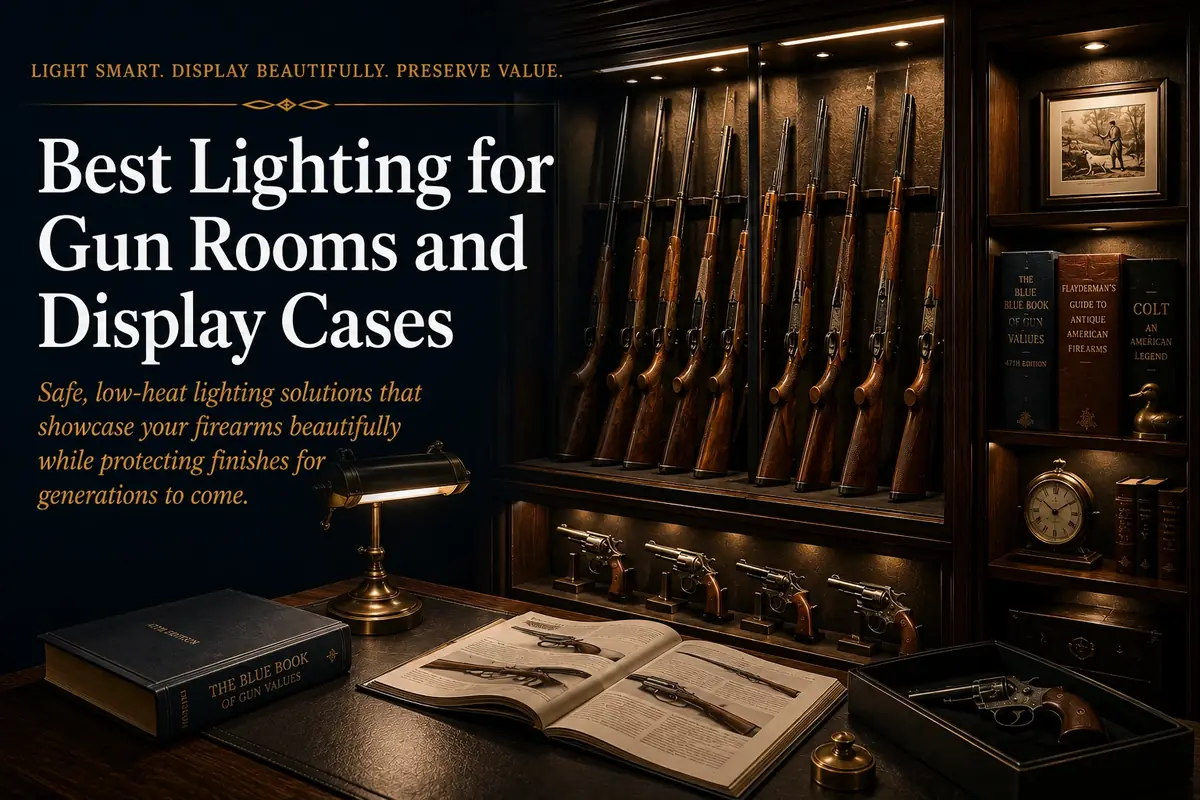
Lighting is one of the easiest upgrades a collector can make to a gun room, safe, or display case. Good light helps you appreciate craftsmanship, inspect condition, photograph markings, and notice small problems before they become permanent. Poor lighting, on the other hand, can create glare, heat, UV exposure, and fading risk.
The goal is not to turn a collection into a retail counter or tactical showroom. The goal is controlled presentation: enough light to see details clearly while protecting finish, wood, leather, paper, and accessories from avoidable damage.
The best collector lighting makes the firearm easier to study without making the environment harder on the firearm.
Why Lighting Matters to Collectors
Collectors need lighting for more than appearance. Light helps reveal rust, fingerprints, dust, oil migration, cracks, stock repairs, sight markings, engraving, rollmarks, and serial numbers. It also makes routine inspection more likely because the collection is easier to see.
Better lighting can help with:
- safe organization;
- display case presentation;
- firearm photography;
- insurance documentation;
- condition inspection;
- finding accessories, boxes, tags, and paperwork.
Avoid UV Exposure
Ultraviolet light can contribute to fading and discoloration over time. Collectors should avoid placing firearms, wood stocks, paper labels, boxes, leather, or documents in direct sunlight. Sunlight through a window may look attractive in a room, but it is not ideal for long-term display.
For display cases and gun rooms, choose lighting designed for low UV output. Modern LED lighting is usually a much better choice than older bulbs for collector presentation.
Avoid Heat Near Firearms
Heat is another concern. Older incandescent and halogen lights can create localized heat inside cabinets or above wall displays. Heat can dry wood, affect adhesives, increase temperature swings, and contribute to unstable storage conditions.
LED lighting is usually preferred because it runs cooler and uses less energy. Still, lights should not press directly against wood, leather, paper, or firearm surfaces.
LED Strip Lighting
LED strips can work very well in safes, display cases, and cabinets. They create even light across shelves and vertical spaces, especially when installed along edges or behind trim. Motion-activated LED strips are especially useful inside safes because they turn on when the door opens.
Good uses for LED strips include:
- safe interiors;
- glass display cases;
- gun cabinets;
- collector shelving;
- low-profile accent lighting.
Install them so they illuminate the firearm rather than shine directly into the viewer's eyes. Avoid creating glare on polished blueing, nickel, stainless, or glass.
Rechargeable Lights
Rechargeable lights are useful where wiring is inconvenient. They work well in safes, temporary display areas, cabinets, and closets. Many have motion sensors, magnetic mounts, or adhesive mounting strips.
For collectors, rechargeable lights are especially attractive because they do not require drilling or permanent modifications to furniture, safes, or display cabinets.
Display Case and Cabinet Lighting
Display case lighting should be soft, even, and low heat. The goal is to show the lines of the firearm without bleaching wood, heating the cabinet, or creating harsh reflections.
For display cases, consider:
- low-heat LED cabinet lights;
- diffused light rather than bare bright spots;
- lights mounted away from direct firearm contact;
- timers or switches so lights are not on constantly;
- UV-safe materials and careful placement.
Gun Room Lighting
A dedicated gun room needs layered lighting. Overhead light helps general visibility. Task lighting helps inspection and cleaning. Accent lighting helps display selected pieces. Photography lights help produce better website, insurance, and inventory images.
A practical gun room lighting plan may include:
- main overhead LED room lights;
- adjustable bench lights;
- display case or shelf lighting;
- safe interior lights;
- portable lights for photography and close inspection.
| Lighting Type | Best Use | Collector Caution |
|---|---|---|
| LED strips | Safes, cabinets, shelves, and display cases | Avoid glare and direct contact with finishes or paper. |
| Rechargeable lights | Safes, closets, temporary displays, and no-wire locations | Check battery heat and mounting materials periodically. |
| Cabinet lighting | Display cases and presentation shelves | Use low-heat, low-UV options and avoid constant exposure. |
| Photography lights | Documentation, website images, and serial-number photos | Control reflections on polished finishes. |
Photography Lighting
Photography lighting is one of the highest-value upgrades for a collector who documents firearms. LED panels, small light boxes, and adjustable task lights can make serial numbers, markings, proof stamps, engraving, and condition details much easier to photograph.
For polished firearms, move the light rather than the firearm until the reflections become manageable. Soft, diffused light usually works better than one harsh bright source.
From My Bench: Lighting Gear Worth Considering
For collector lighting, I would start with LED strip lights for safes and cabinets, rechargeable motion lights for hard-to-wire spaces, low-heat cabinet lighting for displays, and adjustable LED photography lights for documentation work. The priority is visibility without heat, UV, or finish risk.
Collector Gear PicksPaid link. As an Amazon Associate I earn from qualifying purchases. I only link to products, books, tools, and accessories that fit the editorial purpose of Gun Collectors Club.
Protecting Finishes, Wood, and Paper
Lighting can affect more than metal. Wood stocks, old boxes, hang tags, manuals, leather accessories, and paper documents can all be vulnerable to fading, drying, or discoloration over time.
For preservation:
- avoid direct sunlight;
- avoid hot bulbs inside enclosed cases;
- use LEDs where possible;
- turn display lights off when not needed;
- keep paper documents and boxes out of constant light;
- inspect display items periodically for fading or drying.
Common Lighting Mistakes
- Using hot bulbs in small display cases.
- Leaving lights on continuously for no reason.
- Placing cases in direct sunlight.
- Creating glare that hides rather than reveals details.
- Mounting adhesive lights where they may fall onto firearms.
- Ignoring paper, leather, and wood when thinking about light exposure.
Collector Takeaway
Good lighting makes a collection more enjoyable and more useful. It helps with inspection, documentation, safe organization, display presentation, and photography. It also encourages the collector to look closely and regularly, which is one of the best ways to catch problems early.
The best lighting for gun rooms and display cases is low heat, low UV, adjustable, and installed with preservation in mind. For collectors, light should reveal craftsmanship without becoming another source of damage.
Continue the Collector Utility Series
This article is part of the Gun Collectors Club preservation and gear guide series. These related pages help connect storage, preservation, documentation, display, and collector workbench decisions.

About Greg Cook
Greg Cook writes about firearms collecting, personal history, and the stories behind interesting guns. His Army MOS was 76Y, Unit Armorer, and he brings that practical background to his collector articles.