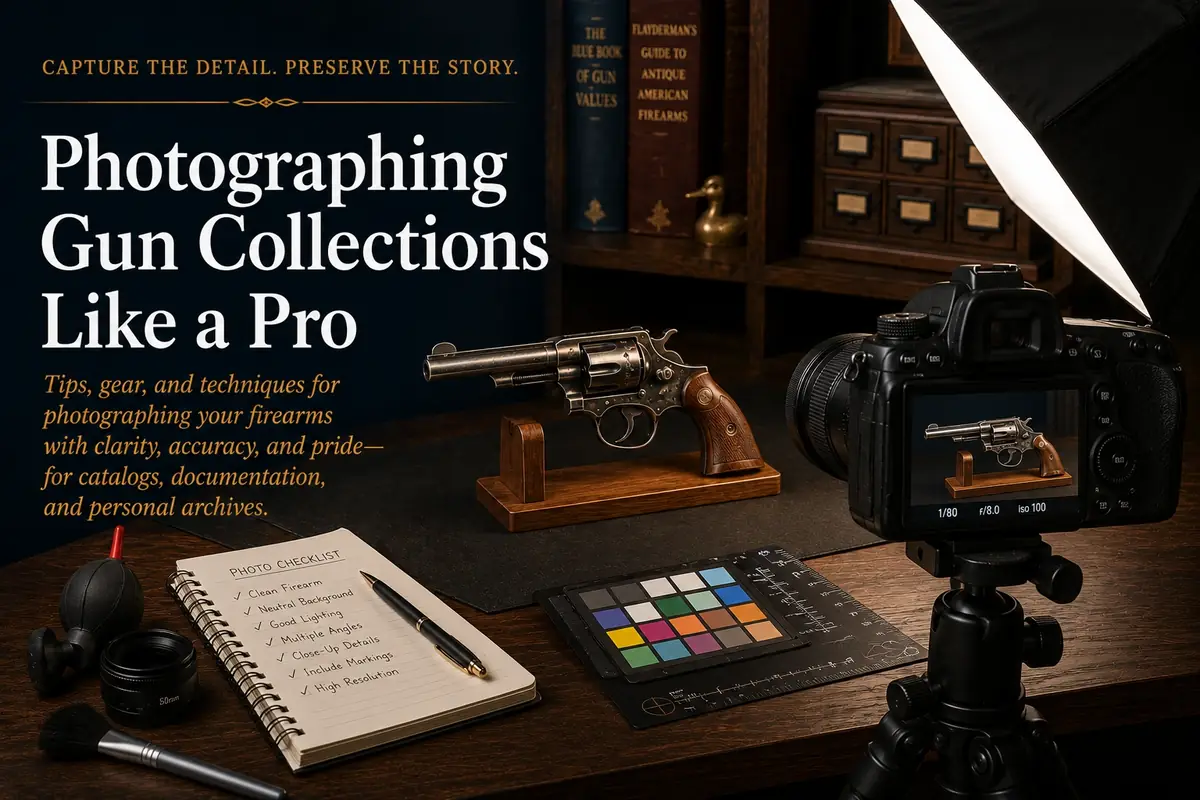
Most gun collectors take pictures when they are excited about a new firearm. Fewer collectors build a deliberate photo record of the entire collection. That is a missed opportunity. Clear photos can help identify a firearm, document condition, preserve serial-number records, support insurance claims, and make estate administration easier for family members later.
A good documentation system does not require a professional studio. It requires consistency, lighting, stable camera support, clean backgrounds, and a habit of photographing the details that matter: serial numbers, markings, boxes, paperwork, accessories, and condition.
The goal is not glamour photography. The goal is a clear visual record that another person could understand years from now.
Why Firearm Documentation Photos Matter
Collectors often know their firearms by memory. The problem is that memory does not help much after theft, fire, storm damage, death, illness, or an estate transition. Photos create a record that can be shared with an insurer, appraiser, attorney, executor, heir, or trusted advisor.
Good photos can help establish:
- the existence of the firearm;
- make, model, caliber, and serial number;
- condition at a point in time;
- special markings, engraving, or factory features;
- matching boxes, papers, letters, and accessories;
- collector provenance or family history.
A Simple Photography Setup
You do not need an elaborate studio to build useful collection records. A simple setup can produce excellent documentation photos if it is repeatable.
| Item | Collector Purpose |
|---|---|
| LED lights | Provide consistent, cool light without the heat of older bulbs. |
| Light box or neutral backdrop | Reduces clutter and makes markings easier to see. |
| Tripod or phone mount | Keeps photos sharp and framing consistent. |
| Microfiber cloths | Remove fingerprints and dust before photographing. |
| Archival labels | Connect the firearm to inventory numbers, boxes, and records without damaging the gun. |
The best background is usually plain, clean, and non-abrasive. Avoid surfaces that can scratch blueing, trap grit, or compete visually with the firearm.
Start With Overall Views
For each firearm, take full-length photos from both sides. These establish the basic identity and condition of the gun. For rifles and shotguns, make sure the entire firearm fits in the frame. For handguns, show both the left and right sides with the grips, barrel, sights, and frame clearly visible.
Suggested basic views include:
- left side overall;
- right side overall;
- top view when useful;
- muzzle end where safe and appropriate;
- buttstock, grips, or buttplate;
- box, case, or accessories grouped separately.
Serial Number Documentation
Serial-number photos are among the most important images in the record. They should be sharp, readable, and stored securely. When possible, photograph the serial number in context so the image shows where it appears on the firearm.
For some firearms, serial numbers or assembly numbers may appear in more than one location. Photograph all relevant markings, especially on collectible revolvers, military firearms, older rifles, and firearms with matching-number significance.
Keep serial-number records private. They are essential for insurance and inventory purposes, but they do not need to be published publicly.
Photograph Markings and Special Features
Collectors should document the details that make a firearm identifiable and valuable. Those details may be more important than a wide photo of the gun itself.
Photograph:
- rollmarks and barrel markings;
- proof marks and inspection stamps;
- factory engraving or custom work;
- special-order features;
- condition issues such as wear, pitting, cracks, or repairs;
- case coloring, blueing, nickel, or stainless finish details;
- stock cartouches, grip medallions, and buttplates.
Boxes, Papers, Letters, and Accessories
Collector value often depends on what comes with the firearm. A box, manual, factory letter, invoice, target, tool, magazine, holster, sling, or special accessory may matter years later. Photograph these items separately and together with the firearm when appropriate.
Do not assume heirs will know which box belongs with which gun. If the collection is large, labels and photos can prevent important items from being separated.
Preparing for Insurance Claims
Insurance claims are easier when records are complete before a loss occurs. A photo record can support ownership, condition, and value discussions. It should be paired with a written inventory and, for valuable pieces, appraisals or comparable sales records where appropriate.
A useful insurance file should include:
- clear firearm photos;
- serial-number photos;
- inventory spreadsheet or written list;
- purchase receipts where available;
- appraisals or valuation notes for high-value pieces;
- photos of boxes, papers, and accessories;
- backup copies stored away from the collection.
Do not store the only copy of the records in the same safe or room as the collection. A fire, theft, or storm may destroy both the firearms and the documentation.
The Estate Planning Angle
Documentation is a gift to the next person who has to understand the collection. A surviving spouse, adult child, executor, or attorney may not know the difference between a common shooter and a rare original example. Photos can help prevent undervaluation, accidental separation of accessories, or uninformed sales.
For estate purposes, connect each firearm to:
- inventory number;
- make, model, caliber, and serial number;
- storage location;
- estimated value or appraisal date;
- important notes about rarity, provenance, or family history;
- related boxes, papers, and accessories.
Lighting Tips for Collectors
Lighting makes the difference between a useful record and a blurry snapshot. LED lights are ideal because they are bright, cool, and easy to position. Use light from both sides when possible to reduce harsh shadows.
Glossy blueing, nickel, and stainless finishes can reflect everything in the room. Move the light, not the gun, until markings become readable. A light box can help with smaller handguns and accessories, while larger rifles may require a clean table, neutral cloth, and adjustable LED panels.
Handling and Surface Protection
Before photographing, wipe the firearm with a microfiber or silicone cloth. Use gloves when appropriate for high-condition collectible finishes. Keep the photography surface clean and avoid rough fabric, unfinished wood, concrete, metal tables, or anything that may scratch a finish.
For safety and documentation clarity, keep ammunition separate from the photography area unless it is being documented as an accessory, and then photograph it separately.
From My Bench: Photo Documentation Gear Worth Considering
For collection documentation, I would start with practical tools: LED lights, a phone tripod or camera tripod, a neutral backdrop or light box, microfiber cloths, archival labels, and a simple inventory system that connects each photo set to the correct firearm.
Documentation GearPaid link. As an Amazon Associate I earn from qualifying purchases. I only link to products, books, tools, and accessories that fit the editorial purpose of Gun Collectors Club.
How to Organize the Photo Files
Good photos are only useful if they can be found later. Create a folder structure that matches your inventory. Use consistent filenames that include the inventory number, firearm name, and view.
Example filename pattern:
- GCC-001-Colt-Python-left-side.jpg
- GCC-001-Colt-Python-serial-number.jpg
- GCC-001-Colt-Python-box-papers.jpg
- GCC-001-Colt-Python-condition-detail.jpg
Back up the records to an external drive and a secure cloud location if appropriate. The best documentation system has more than one copy.
Firearm Documentation Photo Checklist
- Left and right full views.
- Serial number close-up.
- Rollmarks, proof marks, and inspection stamps.
- Condition details, including wear or defects.
- Box, papers, manual, letter, and accessories.
- Grip, stock, buttplate, and special features.
- Inventory tag or record number.
- Updated photo after major value changes or restoration work.
Collector Takeaway
Photographing a gun collection is one of the most underrated collector habits. It supports insurance claims, protects heirs from confusion, preserves provenance, and creates a clearer record of what the collection actually contains.
Good documentation does not require expensive equipment. It requires steady lighting, careful handling, readable serial-number photos, organized files, and the discipline to photograph the details before they are needed. Once a loss, estate issue, or valuation question appears, it is too late to go back and create the record you wish you had.
Continue the Collector Utility Series
This article is part of the Gun Collectors Club preservation and gear guide series. These related pages help connect storage, preservation, documentation, display, and collector workbench decisions.

About Greg Cook
Greg Cook writes about firearms collecting, personal history, and the stories behind interesting guns. His Army MOS was 76Y, Unit Armorer, and he brings that practical background to his collector articles.