Start Here • Updated September 19, 2026
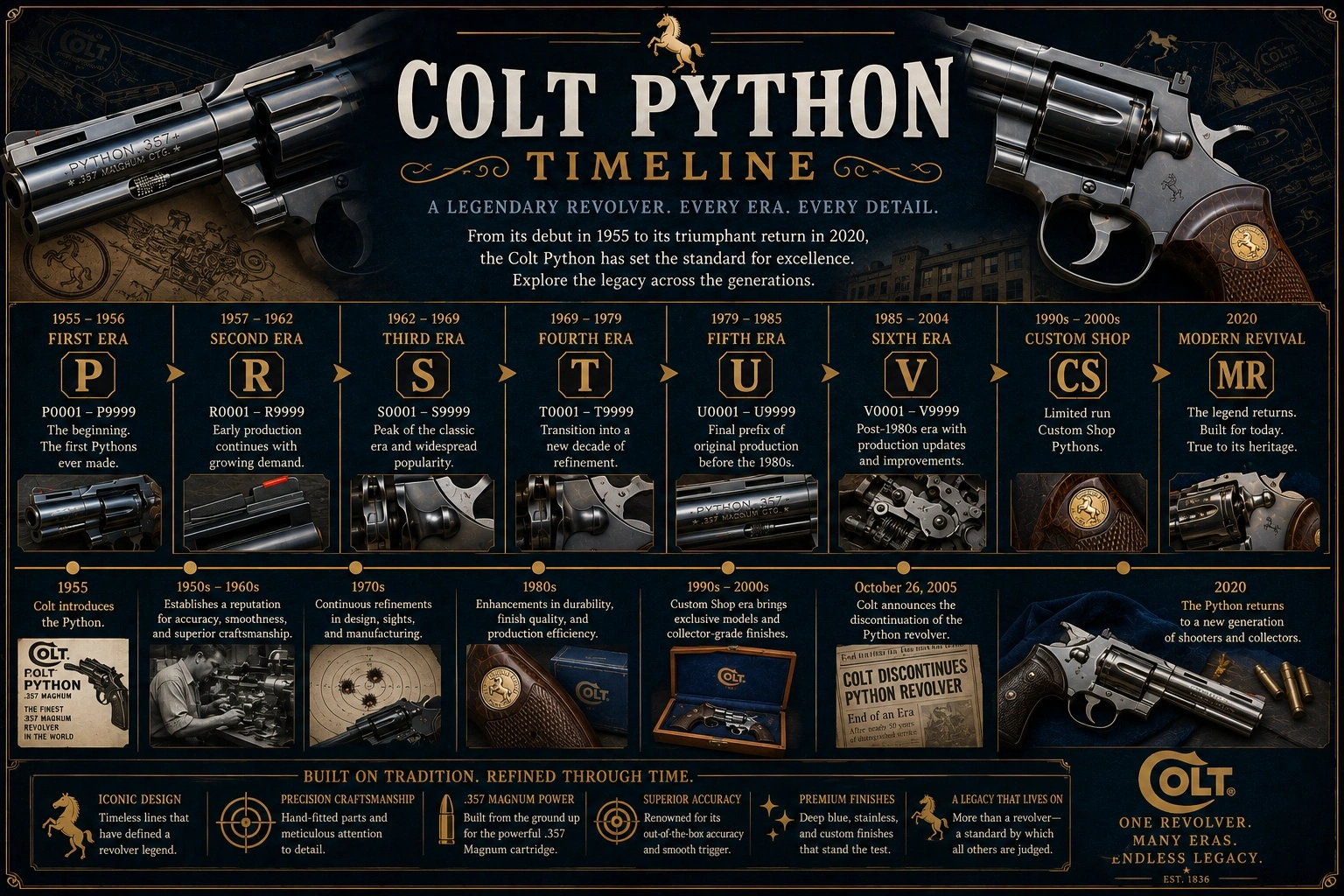
For a second step in confirming production history, open the complete Python timeline research in the Colt serial-number lookup tool.
A Working Roadmap for Colt Python Collectors
The Colt Python is one of the few American revolvers whose history can be followed through mechanics, finish work, serial-number structure, packaging, and collector-market behavior. The same model name spans the postwar target-revolver tradition, Colt's high-polish finishing culture, law-enforcement and sporting use, late Custom Shop scarcity, and a modern redesigned revival.
This hub organizes the series into focused collector references. Instead of forcing every production cue into one long article, each segment isolates a useful identification problem: what changed, when the change is usually encountered, what a collector should inspect, and what documentation is needed before making strong claims about originality or rarity.
Part 1 of 10
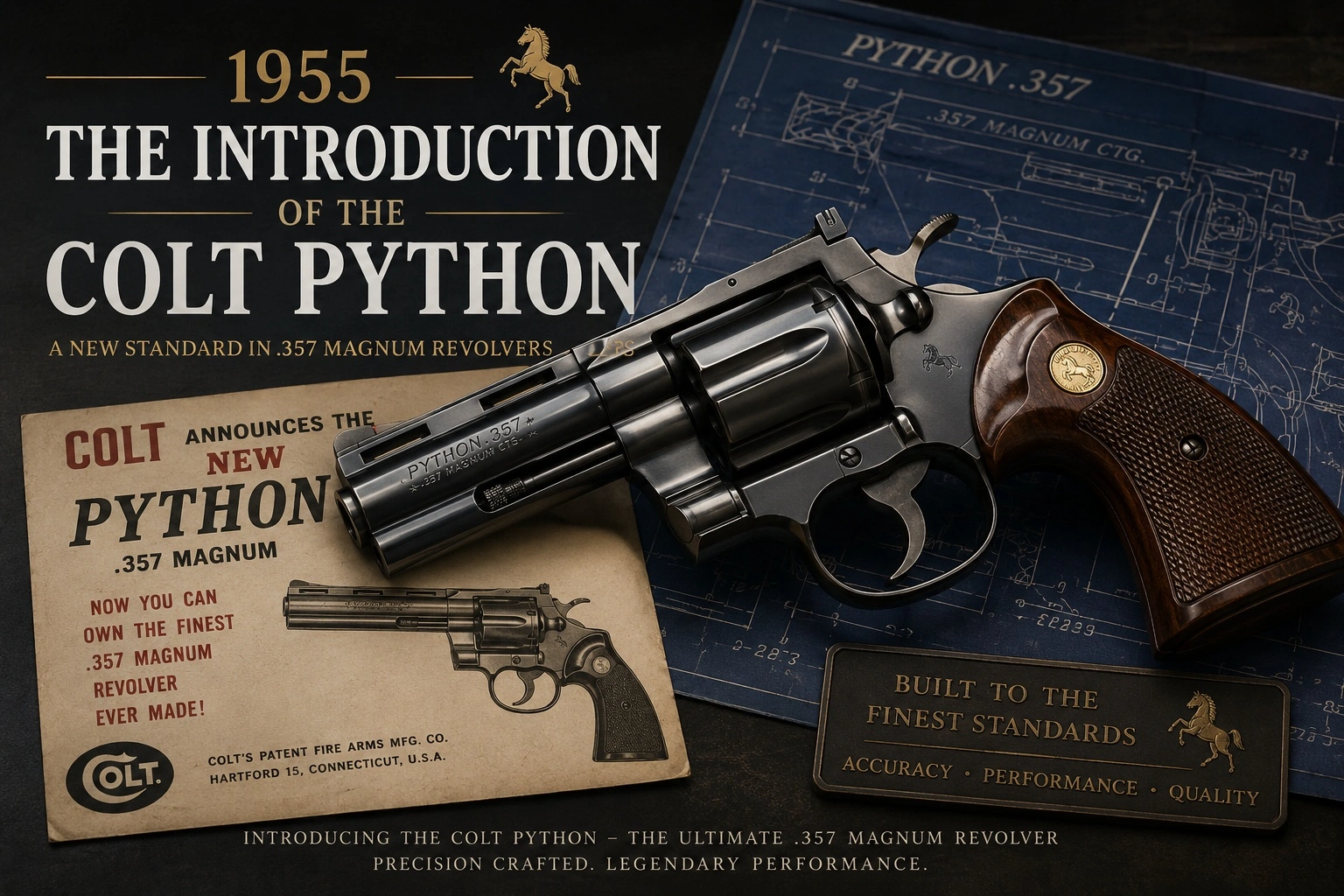
1955 Introduction
Colt introduced the Python as its premium .357 Magnum revolver, setting the baseline for the ventilated rib, full underlug, adjustable sights, hand-fitted action, and high-polish identity collectors still use as reference points.
Part 2 of 10
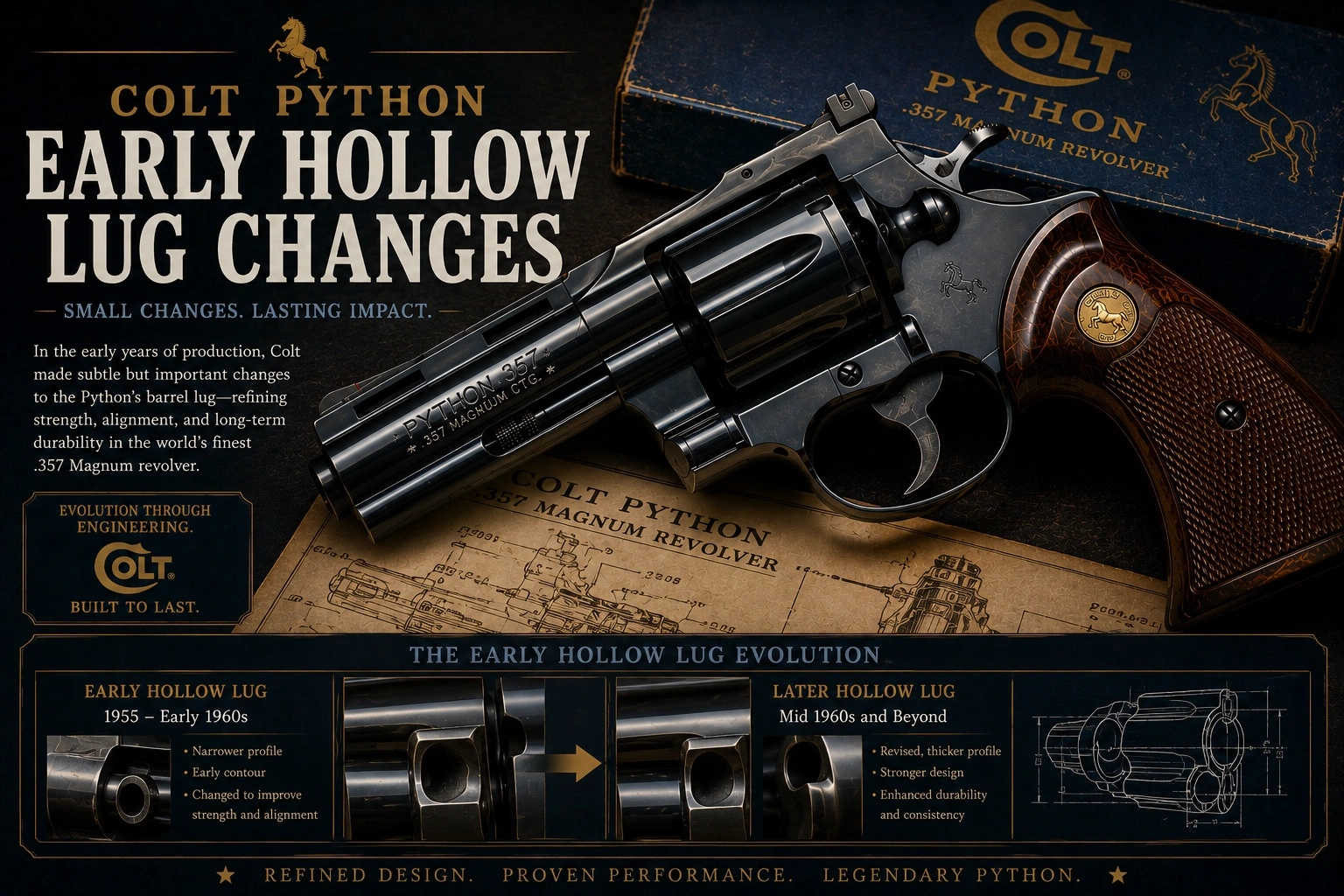
Early Hollow-Lug Changes
Early barrel and underlug details help separate first-generation production cues from later, more familiar solid-lug examples. The page treats the hollow-to-solid underlug story as a transition to document, not a shortcut for valuation.
Part 3 of 10
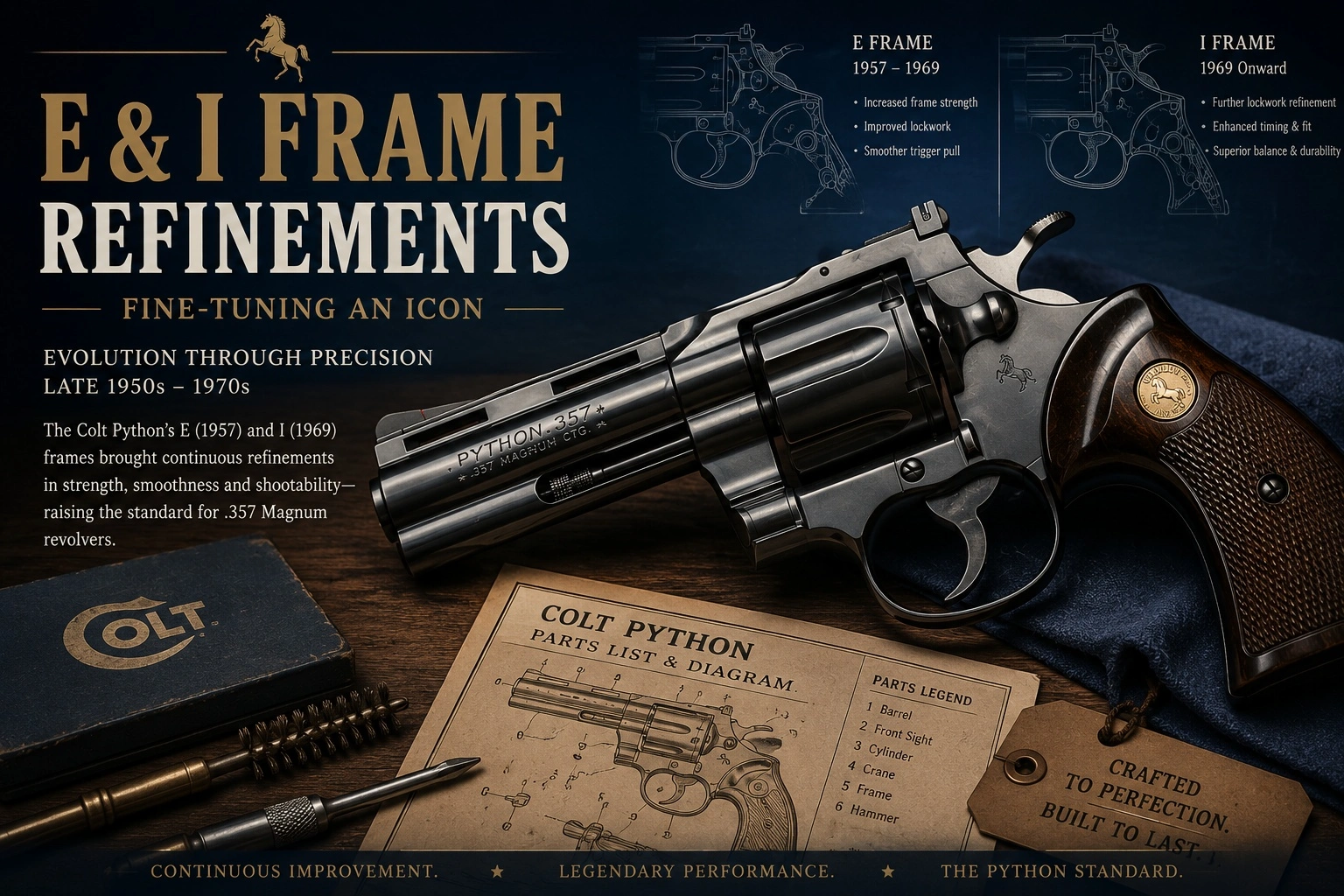
E/I Frame Refinements
This segment explains why collectors use E/I-frame language, how the Python fits Colt's medium-frame lineage, and why timing, lockup, and original hand fitting remain central inspection points.
Part 4 of 10
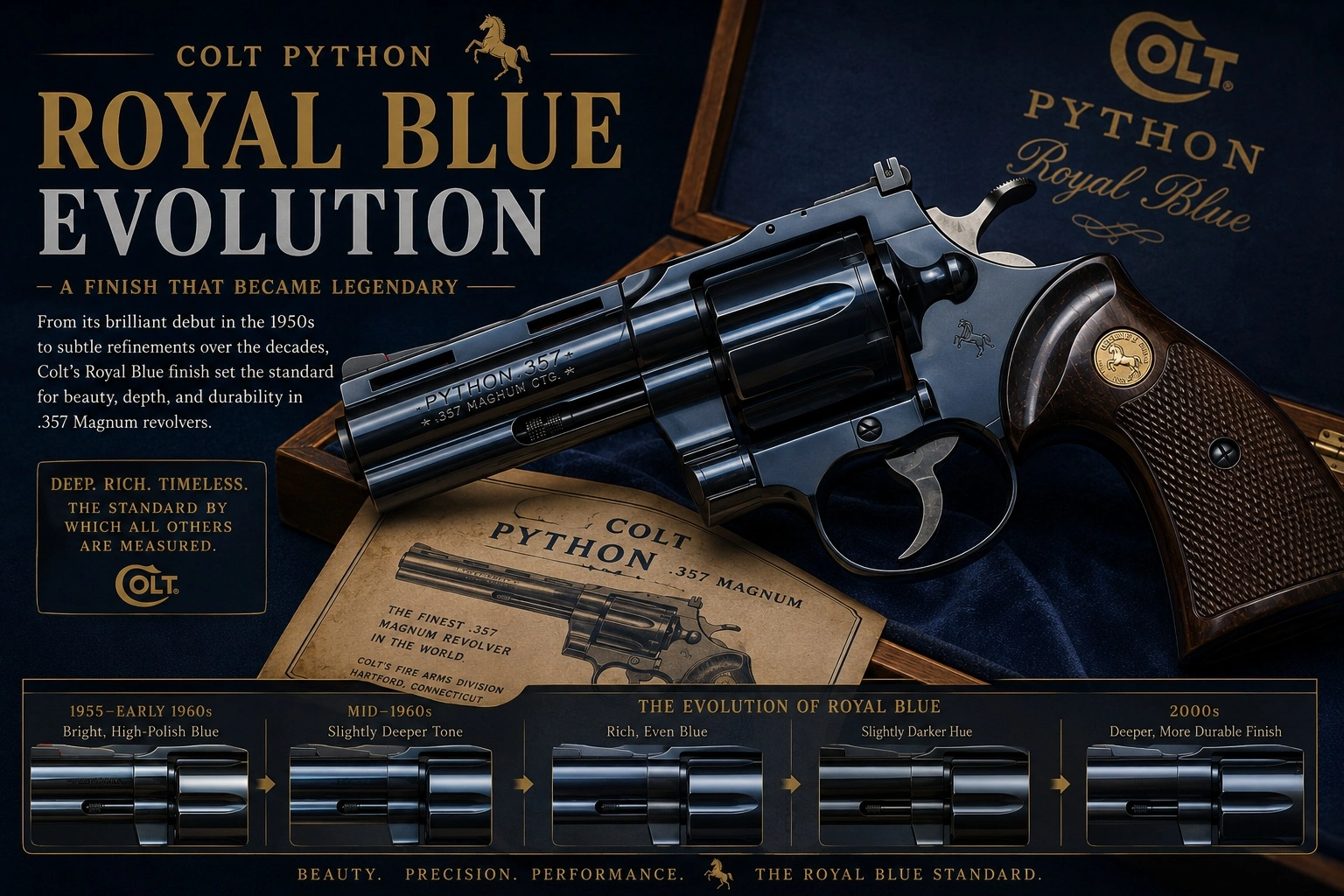
Royal Blue Evolution
A finish-focused reference for Royal Blue, polish quality, edge preservation, rollmark sharpness, and the difference between original high-polish Colt finish and later refinishing.
Part 5 of 10
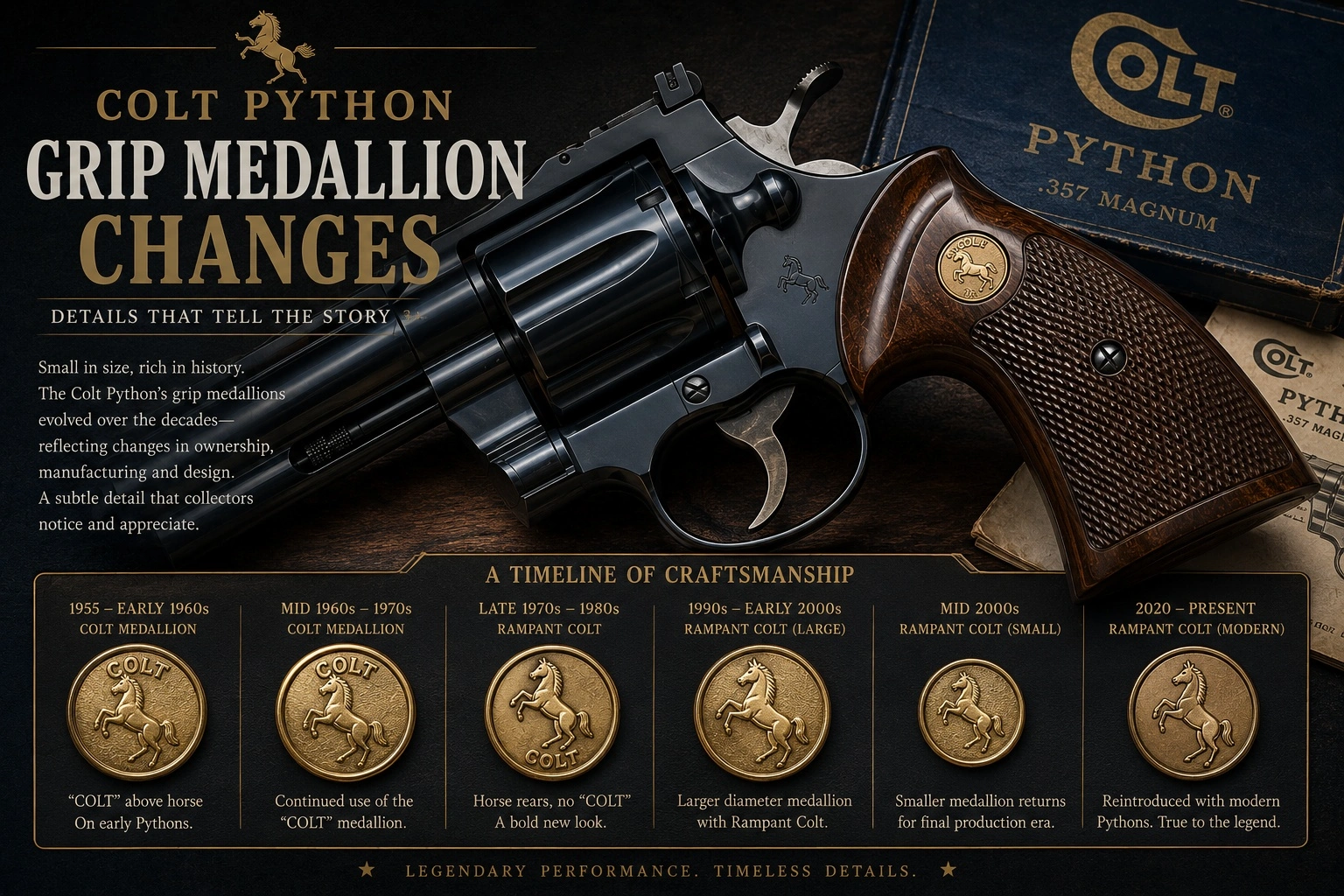
Grip & Medallion Changes
A practical identifier for walnut stocks, checkering patterns, medallions, fit, replacements, and why correct period furniture can change how a Python is described and valued.
Part 6 of 10
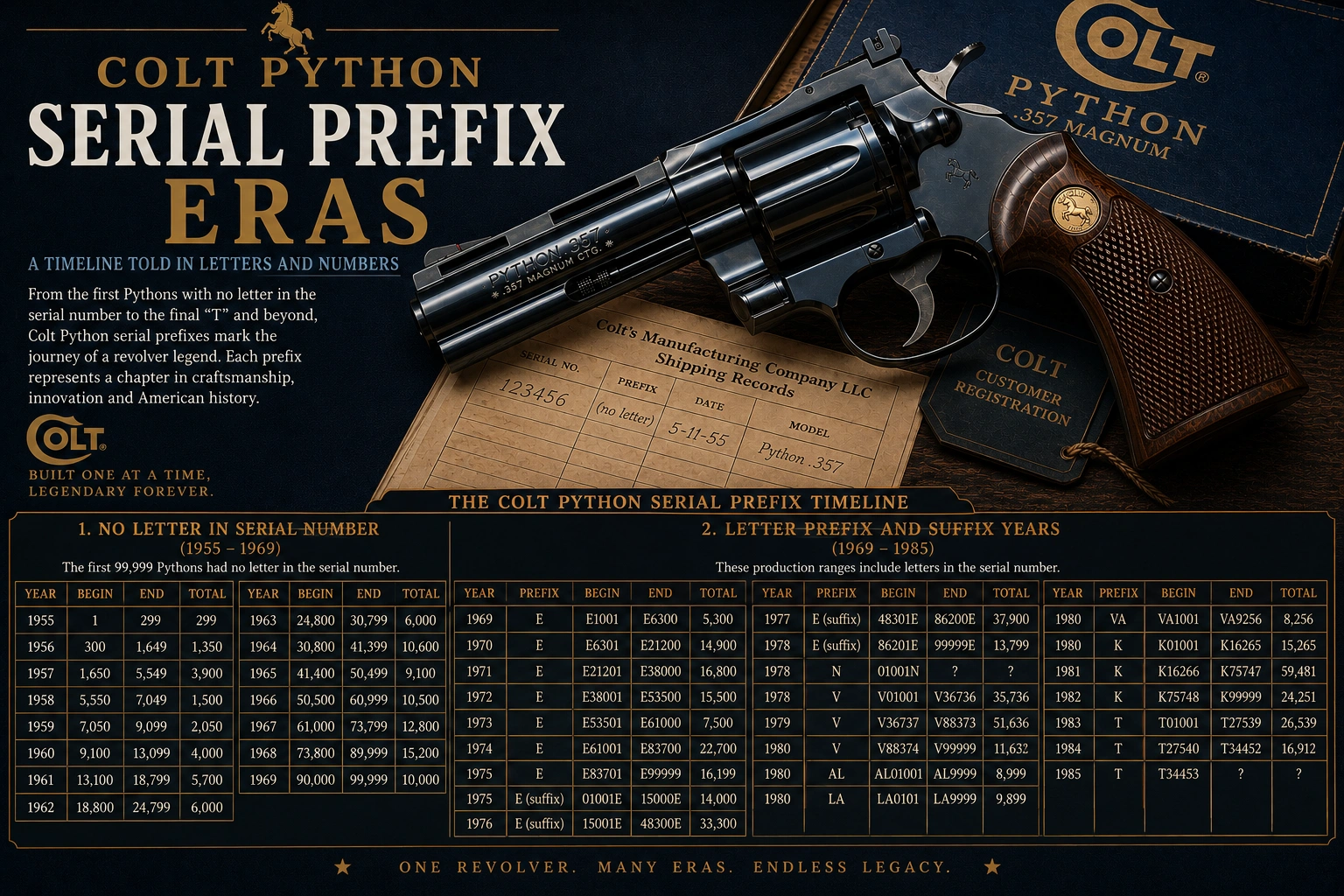
Serial Prefix Eras
The serial-prefix roadmap helps sort no-letter guns, E-prefix and E-suffix revolvers, later V/K/T-style eras, and the limits of serial tables without factory documentation.
Part 7 of 10
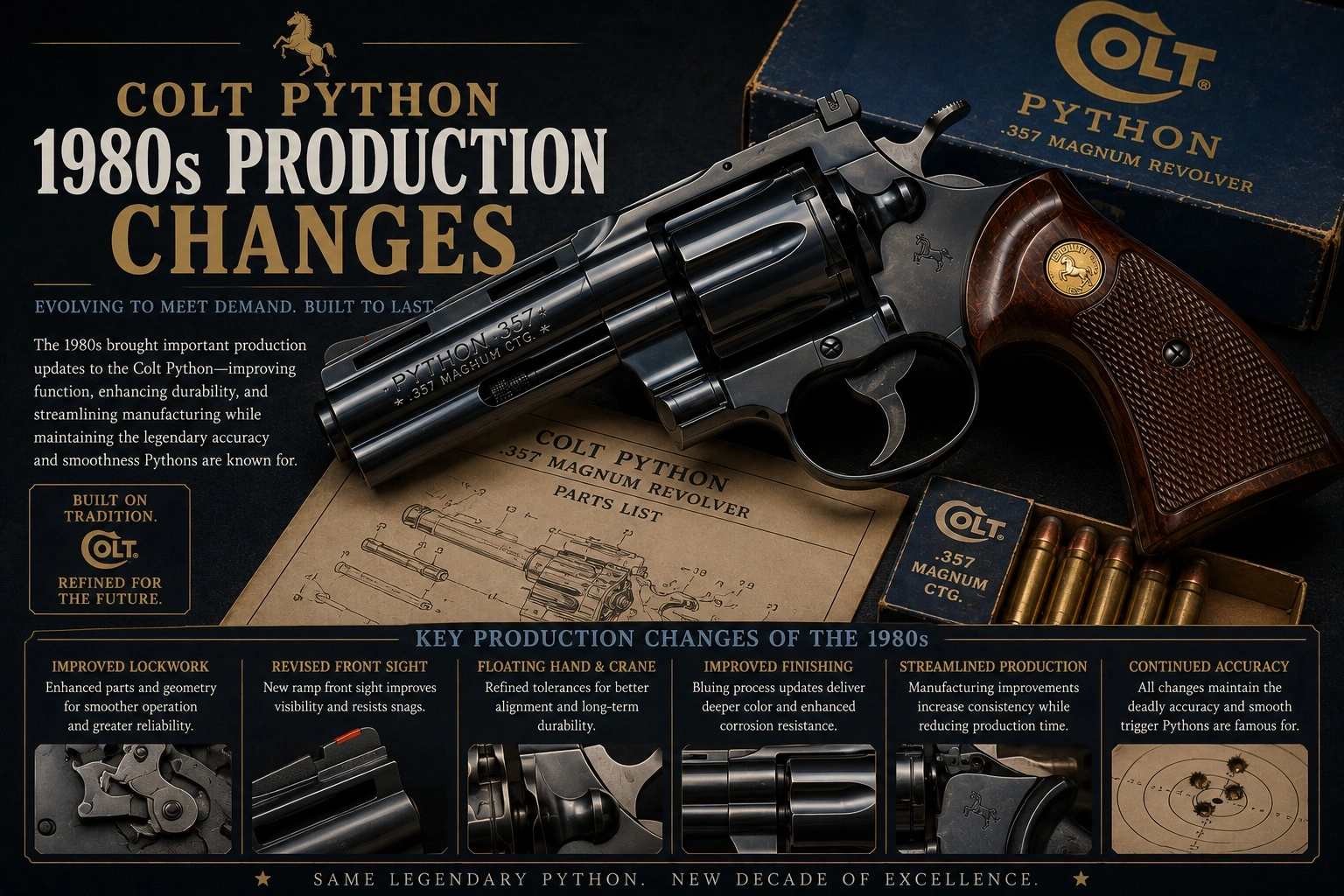
1980s Production Changes
The 1980s brought stainless options, 8-inch barrels, scoped hunting packages, Silhouette-style configurations, and a broader market for premium revolver variants.
Part 8 of 10
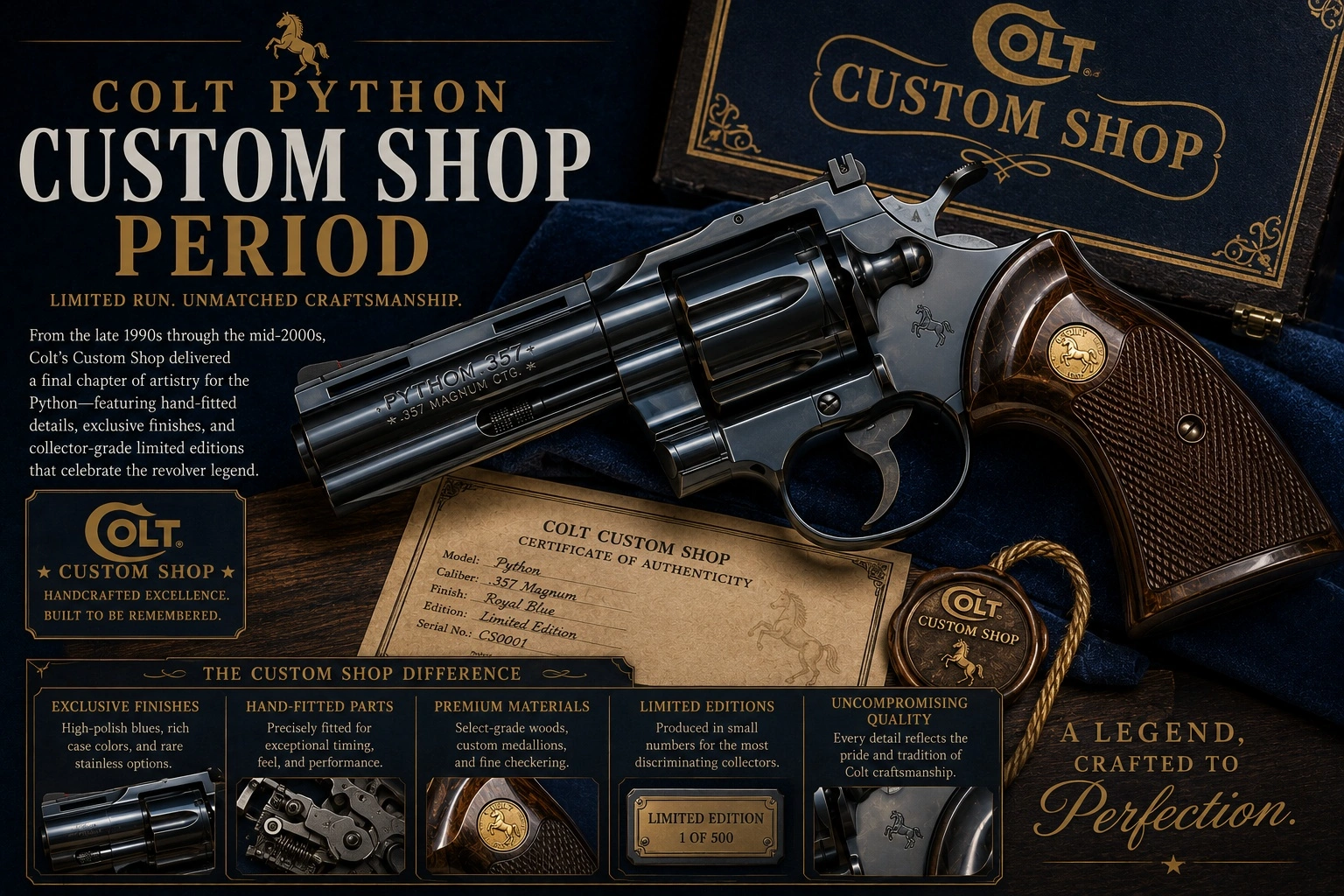
Custom Shop Period
Late first-generation Python production moved into the Custom Shop and Python Elite era, making rollmarks, cases, paperwork, finish terms, and Colt Archive support especially important.
Part 9 of 10
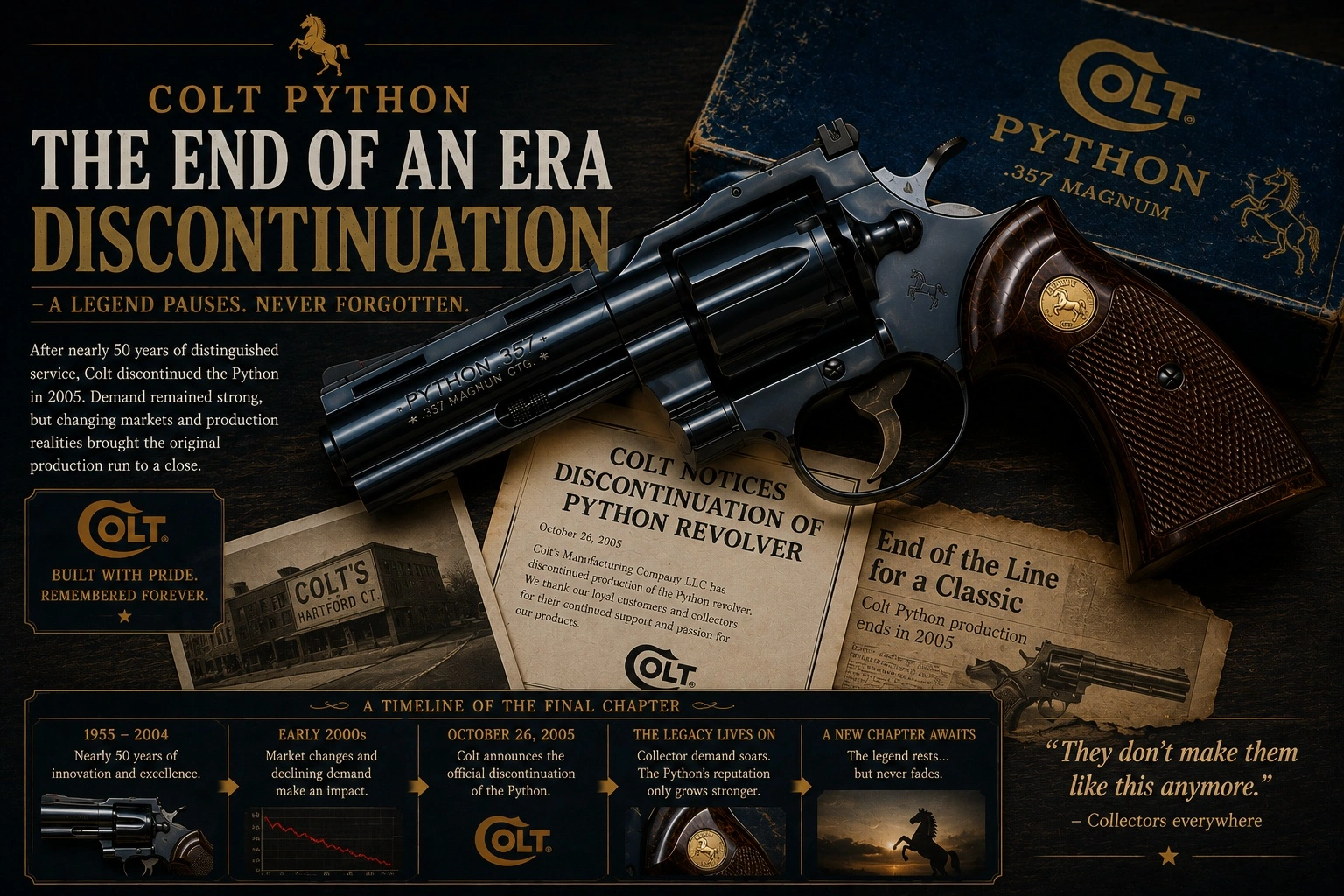
Discontinuation
This page separates the end of regular production, the late Custom Shop tail, and the collector-market impact that followed the original Python's disappearance.
Part 10 of 10
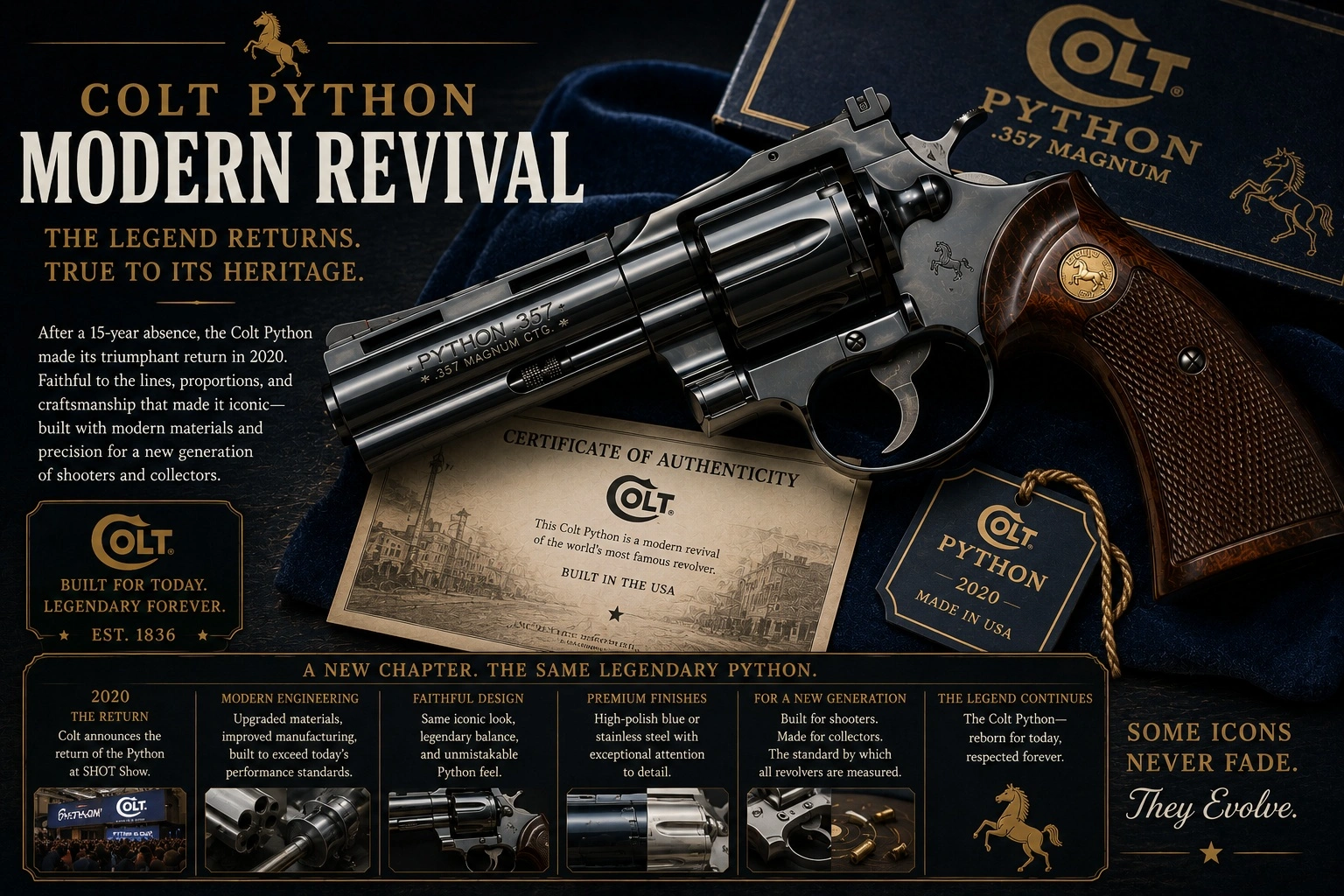
Modern Revival
The 2020 revival returned the Python name with modern manufacturing, redesigned internals, stronger stainless construction, and clear differences from old Royal Blue-era hand-fitted guns.
Condensed Timeline Milestones
| Period | Series Focus | Collector Meaning |
|---|---|---|
| 1955 | Introduction of the Colt Python .357 Magnum | Sets the first-generation collector baseline: premium positioning, target sights, distinctive ventilated rib and underlug profile, and high-polish finish expectations. |
| 1955-1964 | Early no-letter era and hollow/counter-bored underlug discussion | Early production cues can matter greatly, but transition-year examples should be described carefully rather than forced into hard cutoffs. |
| 1960s-1970s | Royal Blue, stocks, E/I-frame reputation, and growing production | Original finish, correct stocks, sharp rollmarks, and mechanical condition become major value drivers as serial ranges broaden. |
| Late 1969-1985 | Letter-prefix and suffix serial-number eras | Serial numbers help organize production, but Colt's own lookup guidance makes clear that online serial data is approximate and not a substitute for factory records. |
| 1980s | Long barrels, stainless options, Hunter/Silhouette-style packages, and specialized variants | Collector evaluation expands beyond blue 4-inch and 6-inch examples to finish, case, optic, mount, and accessory correctness. |
| 1997-mid 2000s | Custom Shop / Python Elite and end of first-generation production | Late examples require careful rollmark, case, serial, finish, and paperwork review because "Custom Shop" is both a production context and a collector claim. |
| 2020-present | Modern revival | The reintroduced Python is a redesigned modern revolver. It belongs in the Python story, but it should not be captioned as a continuation of old Royal Blue-era hand-fitted production. |
How to Use the Series
Verification Notes for Captions and Listings
A strong Colt Python caption should say what is known and how it is known. "1962 Colt Python, 6-inch, Royal Blue, no-letter serial range, with Colt Archive letter" is more useful than "rare early Python." Likewise, "2020-production Python, stainless, redesigned lockwork" is clearer than blending modern and first-generation descriptions.
When the evidence is incomplete, use cautious language: "believed original finish," "period-correct stocks," "serial range suggests," or "configuration appears consistent with." Those phrases protect the integrity of the article and avoid overstating what a photograph or serial table alone can prove.
Research and Source Plan
The series uses a layered source approach: Colt documentation for official verification, contemporary and collector publications for broad production history, auction catalogs for documented examples, and the Gun Collectors Club serial tables for quick collector orientation. The purpose is not to replace factory records, but to give collectors a structured way to know what to verify next. If you're getting deeper into classic revolvers, here's exactly how to start collecting handguns in a structured, intentional way.
Have you ever said, "I Wish I Had That One Back?" I've said it 5 times for sure, and got it back just once.

Collector’s Note: Why “A Bad Penny Always Turns Up”
Among coin collectors, the phrase “a bad penny always turns up” has deeper roots than most people realize. Long before it became a comment about unwelcome people or problems, it described a very real issue in early coinage.
In medieval England, pennies were struck from precious metal, and dishonest traders often clipped, shaved, or filed them to steal a little silver from each coin. These damaged pieces — bad pennies — were lighter, misshapen, and obviously inferior. Nobody wanted to be stuck with one, so people passed them along as quickly as possible.
The result was predictable: The same flawed coins kept reappearing in circulation.
By the 1500s, writers were already complaining that “the bad penny ever cometh back,” and the saying stuck. Over time it shifted from literal currency to a metaphor for anything that keeps resurfacing no matter how often you try to get rid of it.
- Early economies: Constant battles with counterfeit and clipped coinage.
- Authentication: Weight, edges, and wear patterns matter when judging a coin.
- History: Even a humble penny can carry centuries of human behavior and trade.
A “bad penny” isn’t just a figure of speech — it’s a window into the practical realities of old money and the people who handled it.
It must have been about 1996 that I bought this Colt Python at a gun show in Birmingham, Alabama. I paid a whopping $600 for it. And, I believe it was 2006 — ten years later — that I sold it to a fellow from Tennessee at a gun show in Huntsville, Alabama for $1,100.
The very next day, Mr. Tennessee was at the same gun show and asked if I wanted the gun back at the same price and I said yes, yes I do. And I've never tried to sell old “Bad Penny” again.
— Greg Cook

Core Sources and Verification Links
Use these references with care. They help establish the broad timeline, but individual revolvers still need configuration review and, when appropriate, factory documentation.