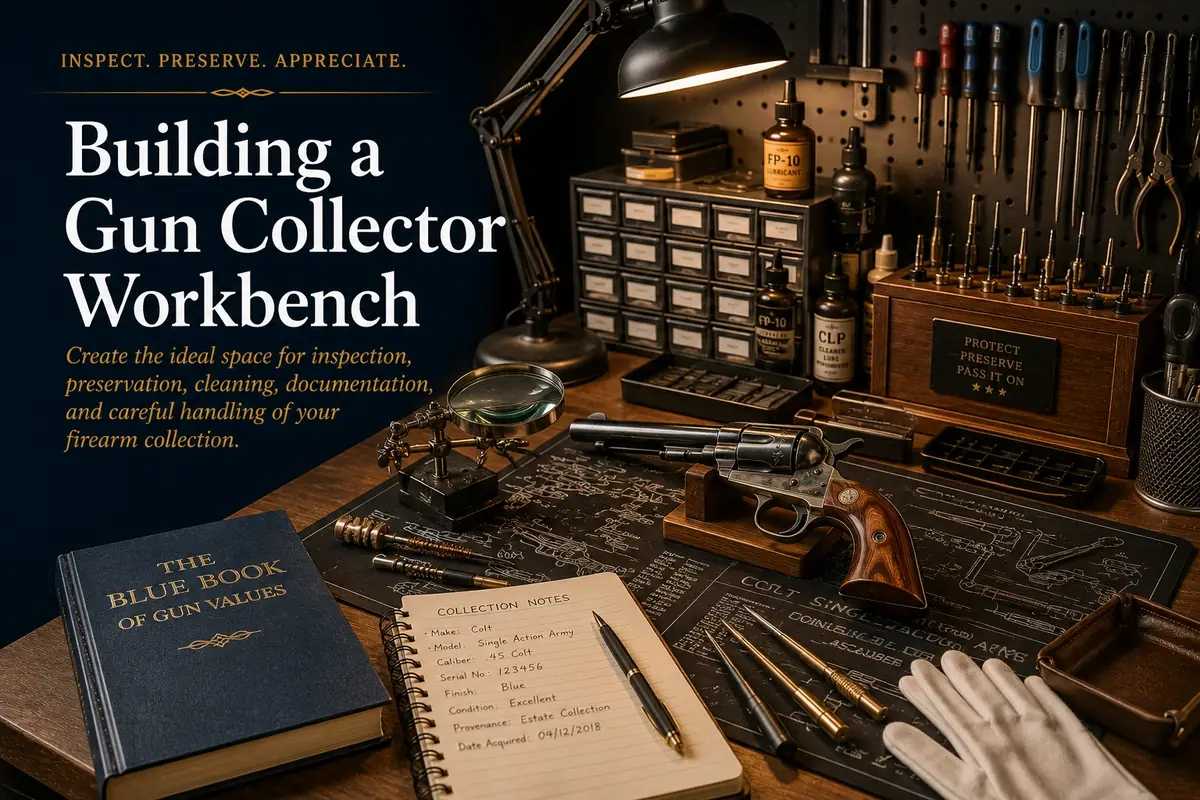
A gun collector workbench is different from a gunsmith's bench, a reloading bench, or a general garage table. My idea of a collector bench is not a place to force parts, scatter solvents, or treat every firearm like a project. It is a controlled workspace where a collector can inspect, wipe down, photograph, document, and preserve firearms without adding unnecessary wear.
That distinction matters. A collectible Colt, Smith & Wesson, Winchester, Turnbull, Browning, or military firearm may not need much done to it. In many cases, the best thing the collector can do is handle it carefully, document it well, preserve it properly, and avoid creating new problems.
My workbench philosophy is simple: good light, soft surfaces, organized tools, clean hands, and no hurry.
My Collector Workbench Philosophy
I do not think a collector bench should feel like a repair shop unless repair work is actually being performed by someone qualified to do it. For most collecting work, the bench should support three things: observation, documentation, and preservation.
That means the bench should make it easy to:
- inspect condition without rushing;
- photograph markings and serial numbers;
- wipe down metal after handling;
- keep screws, magazines, grips, and accessories together;
- avoid scratches, dents, and misplaced parts;
- record notes for insurance, estate, or collector files.
Start With a Safe Bench Surface
The first accessory I would buy is not a screwdriver set. It is a proper mat. A padded bench mat protects finishes, keeps small parts from rolling away, and provides a cleaner surface than bare wood, laminate, metal, or a kitchen table.
For collector work, I prefer a surface that is:
- soft enough to protect blueing and wood;
- firm enough that parts do not disappear into it;
- large enough for rifles or long-barreled handguns;
- easy to clean before each session;
- not so oily or rubbery that it leaves residue.
For very fine finishes, I still like using a clean microfiber cloth or soft pad under the firearm even on top of a bench mat.
Lighting Is the Heart of the Bench
Good lighting changes everything. It helps reveal rust freckles, cracks in grips, stock repairs, altered screw heads, faint rollmarks, and finish wear that may not be obvious in normal room light. For photography and documentation, lighting is even more important.
LED lighting is ideal because it is bright, adjustable, and cool. I like the idea of using both overhead light and movable side lighting. Side light can reveal engraving, cartouches, proof marks, and subtle finish details.
| Workbench Item | Collector Purpose |
|---|---|
| Padded bench mat | Protects finishes and keeps small parts controlled. |
| LED task lights | Improves inspection, photography, and documentation. |
| Magnifier | Helps examine markings, proof stamps, cracks, and finish details. |
| Parts trays | Prevents screws, magazines, grips, and accessories from getting mixed up. |
| Microfiber cloths | Removes dust and fingerprints before storage or photography. |
Magnifiers and Close Inspection
A magnifier is one of the most useful collector tools on the bench. It helps with small markings, inspector stamps, serial numbers, grip medallions, sight markings, engraving, and tiny cracks around old stocks or grips.
For older firearms, magnification can help separate honest wear from damage, amateur alterations, or parts that do not belong. A collector does not need to become an expert overnight, but a magnifier encourages careful observation.
Use Proper Screwdrivers
Damaged screw heads are one of the first things experienced collectors notice. The wrong screwdriver can turn a clean firearm into a less desirable one in seconds. For collector work, cheap tapered hardware-store screwdrivers are often the wrong choice.
Use hollow-ground gunsmith-style screwdrivers that fit the slot. Better yet, if a firearm does not need to be disassembled, do not disassemble it. The bench should support careful inspection, not unnecessary curiosity.
My rule is simple: if I am not improving the firearm or documenting something important, I do not take it apart just to prove I can.
Parts Trays Keep You Out of Trouble
Small trays are inexpensive and useful. They keep screws, magazines, grips, tags, sight inserts, sling swivels, tools, and paperwork from getting mixed up. For firearms with boxes or accessories, trays help keep the whole package together while the gun is being inspected or photographed.
Magnetic trays can be helpful for some work, but I am cautious around delicate finishes and small parts that may scratch if dragged across a tray. For collector handling, soft-lined trays or simple divided organizers often make more sense.
Gloves, Cloths, and Handling Habits
Gloves are useful for high-condition guns, polished blue finishes, nickel, engraved firearms, and pieces being photographed for documentation. They are not magic, but they reduce fingerprints and remind you to slow down.
Microfiber cloths and silicone cloths belong within reach. Any firearm that has been handled should be wiped down before returning to the safe. Fingerprints do not always show immediately, but they can create problems over time.
Storage Bins and Bench Organization
A collector bench should not become a junk drawer. Storage bins, labels, and small organizers help separate cleaning supplies, documentation supplies, photography accessories, and firearm-specific parts.
I like the idea of organizing by purpose:
- inspection tools;
- cleaning and wipe-down supplies;
- photography and documentation gear;
- archival tags and labels;
- small parts and accessories;
- safe and storage supplies.
Cleaning Stands and Rifle Rests
A cleaning stand or rifle rest can be useful even when you are not doing aggressive cleaning. It supports the firearm safely, keeps hands free, and makes inspection easier. For rifles and shotguns, a stable rest reduces the chance of a firearm rolling or being laid against a hard edge.
For collector purposes, look for supports that are stable and non-marring. Avoid rests that clamp too aggressively or put pressure on delicate stocks, barrels, or finishes.
Make Documentation Part of the Bench
The bench should also be a documentation station. A phone tripod, LED lights, archival tags, inventory cards, and a notebook can turn inspection time into useful collection records. Photograph serial numbers, markings, boxes, papers, and condition details while the firearm is already out.
This is especially important for insurance, estate planning, inherited collections, and long-term organization. The best time to document a firearm is when it is already on the bench under good light.
From My Bench: Workbench Gear Worth Considering
For a collector workbench, I would start with a padded mat, LED task lighting, magnifier, hollow-ground screwdrivers, microfiber cloths, gloves, parts trays, storage bins, and a stable cleaning stand or rifle rest. The goal is not to own every tool. The goal is to create a calm, organized workspace that protects the firearm while helping you study it.
Shop Bench ToolsPaid link. As an Amazon Associate I earn from qualifying purchases. I only link to products, books, tools, and accessories that fit the editorial purpose of Gun Collectors Club.
What I Would Avoid
- Hard bare surfaces that can scratch metal or wood.
- Cluttered benches where small parts can disappear.
- Improper screwdrivers that damage screw slots.
- Strong solvents used casually around old finishes.
- Leaving firearms on foam, leather, or dirty cloths.
- Taking apart collectible guns without a real reason.
- Mixing accessories from multiple firearms during inspection.
A Simple Collector Workbench Setup
A practical collector bench does not have to be expensive. Start with the basics and improve the setup as your collection and habits develop.
- Stable table or bench in a clean, dry room.
- Large padded mat.
- LED task light and movable side light.
- Magnifier or lighted magnifying glass .
- Microfiber and silicone cloths.
- Small parts trays and labels.
- Phone tripod or camera support.
- Notebook, inventory cards, or digital record system.
- Storage bins for tools and accessories.
- Cleaning stand or rifle rest for long guns.
Collector Takeaway
A gun collector workbench should reflect the collector's values. If the collection is about history, originality, condition, and craftsmanship, the bench should support those values. It should protect finishes, slow down handling, improve inspection, and make documentation easier.
The best bench is not the one with the most tools. It is the one that helps you treat every firearm like it matters. For me, that means light, order, soft surfaces, careful notes, and enough discipline to know when the smartest move is simply to look, document, wipe down, and put the gun away properly.
Continue the Collector Utility Series
This article is part of the Gun Collectors Club preservation and gear guide series. These related pages help connect storage, preservation, documentation, display, and collector workbench decisions.

About Greg Cook
Greg Cook writes about firearms collecting, personal history, and the stories behind interesting guns. His Army MOS was 76Y, Unit Armorer, and he brings that practical background to his collector articles.