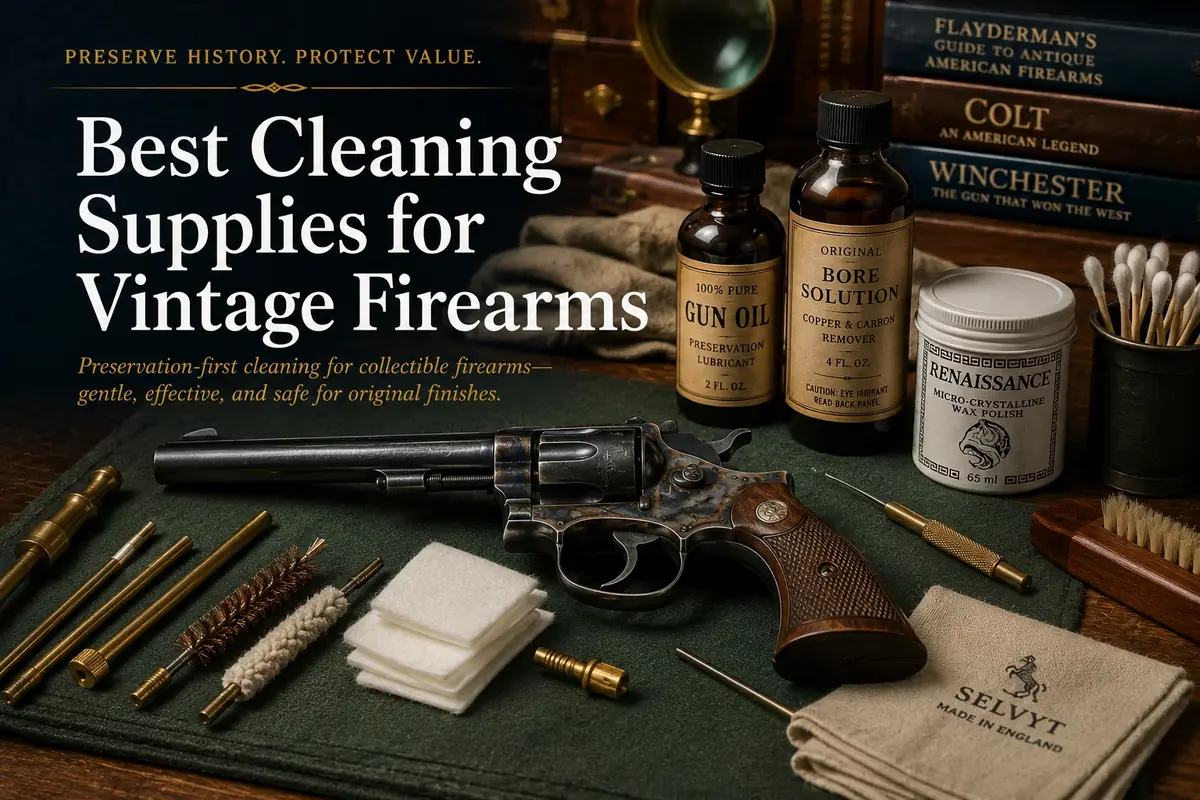
Vintage firearm cleaning should begin with restraint. A collectible gun is not a dirty appliance to be scrubbed back to factory brightness. It is an object with history, finish wear, patina, markings, wood, and sometimes value that depends heavily on originality.
The right cleaning supplies help preserve the firearm without creating new damage. The wrong supplies can remove blueing, round screw slots, scratch nickel, dull case coloring, stain wood, or erase honest age that should have been left alone.
For collector firearms, the first rule is simple: clean only as much as necessary, and do no harm.
Preservation-First Cleaning
A preservation-first approach is different from a tactical or high-volume range cleaning routine. The goal is not to make every surface shine. The goal is to remove harmful moisture, fingerprints, powder residue, old grime, and active corrosion risk while preserving original materials.
Before cleaning any vintage firearm, ask:
- Is this gun collectible because of its original finish?
- Could aggressive cleaning reduce value?
- Are there markings, stamps, cartouches, or engraving that need protection?
- Is this dirt, dried oil, active rust, or honest patina?
- Would a specialist be a better choice for this firearm?
The Basic Collector Cleaning Kit
A collector does not need a huge box of harsh products. A small, thoughtful kit is usually better.
| Supply | Collector Purpose |
|---|---|
| Quality gun oil | Protects metal surfaces and helps prevent corrosion. |
| Cotton patches | Applies oil or solvent and removes residue gently. |
| Cleaning rods or pull-through systems | Clean bores while minimizing crown and rifling damage. |
| Silicone cloths | Wipe fingerprints from exterior metal before storage. |
| Non-abrasive tools | Help remove grime without scratching finishes or markings. |
Gun Oils for Vintage Firearms
A light protective oil is one of the most important supplies for a collector. It helps protect exposed steel from fingerprints, humidity, and corrosion. The key is moderation. Too much oil can migrate into wood, soften old stocks, attract dust, or pool in places where it does not belong. Hoppe's No. 9 Lubricating Oil is a quality product that works well on firearms, with a needle applicator that's particularly useful for precision application.
Use oil sparingly on a clean patch or cloth. Wipe metal surfaces lightly rather than soaking the firearm. Pay attention to hidden areas where fingerprints often land, including barrels, cylinders, slides, receivers, trigger guards, and backstraps.
Cotton Patches and Soft Cloths
Cotton patches are simple and useful. They apply oil, remove residue, and help clean bores without introducing aggressive abrasion. Keep a supply of clean patches on the bench and discard them as soon as they pick up grit or residue. 1000PCS Patches+ 200PCS Pointed/Round Swabs+ 2PCS Gun Cloths, Lint Free Gun Cleaning Patches,6" Long Cotton Swabs/Tips, Large Reusable Microfiber Rags.
Microfiber cloths and silicone cloths also belong in a collector's setup. Use microfiber for dust and handling. Use silicone cloths for a quick exterior wipe-down before returning firearms to the safe.
Cleaning Rods and Bore Protection
Cleaning rods require care. A poor rod, dirty rod, or careless angle can damage the muzzle crown or bore. For collectible rifles and pistols, use rods and jags that fit properly, and avoid dragging grit through the bore. I find this gun cleaning kit comprehensive, with everything needed for various handguns and rifles,
When possible, clean from the chamber end rather than the muzzle end. If that is not practical, use appropriate guides and proceed slowly. For some collector firearms, a careful pull-through system may be useful, but it should still be clean, properly sized, and used gently.
Silicone Cloths for After-Handling Wipe-Downs
Silicone cloths are one of the easiest and most useful collector supplies. They are not a substitute for real cleaning, but they are excellent for removing fingerprints from exterior metal surfaces before storage. Birchwood Casey Gun & Reel Silicone Single Cloth | Lightweight Cotton 11"x14" Cleaning Rag for Gun, Sporting Equipment & Precision Instruments
This matters because fingerprints contain oils and salts. On blued steel, polished nickel, and older finishes, fingerprints can eventually leave visible marks if ignored.
Non-Abrasive Tools
Non-abrasive tools are essential around vintage firearms. Nylon brushes, cotton swabs, wooden picks, soft cloths, and carefully chosen cleaning pads are generally safer than steel tools or harsh abrasives.
Avoid using anything that can scratch, polish, or cut into original finish unless you fully understand the risk. Collectors should be especially cautious around:
- case coloring;
- old blueing;
- nickel finishes;
- engraving;
- wood cartouches;
- proof marks and inspector stamps;
- gold inlay or special-order embellishment.
Cleaning Around Wood Stocks and Grips
Wood requires restraint. Many vintage stocks and grips have original finish, oil, handling wear, dents, and age that should not be scrubbed away. Harsh solvents can stain wood, lift finish, or migrate into areas where they are hard to remove.
Avoid soaking wood with oil or cleaner. If the firearm needs more than a gentle wipe-down, stop and consider whether the piece deserves specialized conservation advice.
Active Rust vs. Patina
Collectors should learn the difference between active rust and stable age. Active rust is a problem that can continue damaging metal. Patina may be part of the firearm's age, story, and originality.
Do not attack every dark spot as if it must be erased. Removing patina or aggressively polishing metal can be worse than leaving it alone. If a valuable firearm has visible corrosion, proceed carefully and consider expert help.
Cleaning Mistakes That Hurt Collector Value
- Polishing original blueing to make it look brighter.
- Using steel wool casually on collectible finishes.
- Scrubbing cartouches, proof marks, or engraving.
- Using the wrong screwdriver and damaging screw slots.
- Leaving solvent on wood stocks or grips.
- Over-oiling and letting oil soak into wood.
- Cleaning away original grease, labels, or old preservation evidence without documenting it.
From My Bench: Cleaning Supplies Worth Considering
For vintage firearms, I would start with quality gun oil, cotton patches, properly sized rods or pull-through tools, silicone cloths, microfiber cloths, nylon brushes, cotton swabs, wooden picks, gloves, and a padded bench mat. The emphasis should be careful preservation, not aggressive restoration.
Gun Collector EssentialsPaid link. As an Amazon Associate I earn from qualifying purchases. I only link to products, books, tools, and accessories that fit the editorial purpose of Gun Collectors Club.
A Simple Collector Cleaning Routine
- Confirm the firearm is unloaded and remove ammunition from the work area.
- Place the firearm on a clean padded mat.
- Photograph condition or markings before significant cleaning.
- Remove dust and loose debris gently.
- Clean the bore only as needed, using proper rods and patches.
- Wipe exterior metal lightly with oil or a silicone cloth.
- Avoid soaking wood, grips, or old cases.
- Inspect contact points, screws, sights, and hidden areas.
- Return the firearm to humidity-controlled storage.
Collector Takeaway
The best cleaning supplies for vintage firearms are the ones that help preserve originality. Collectors should avoid the urge to over-clean, over-polish, or make every old gun look new. Original finish, honest wear, and documented condition are often central to value.
Grace USA's 3 Piece Peacemaker Screwdriver set is precision Hollow Ground to fit Colt SAA trigger/hammer screws, grip and grip frame screws, including most clones. The set is precision manufactured and hand assembled entirely within the United States, and is designed specifically to serve the needs of both professional and hobbyist gunsmiths.
A careful kit of oils, patches, rods, silicone cloths, and non-abrasive tools can protect a collection for decades. The goal is not tactical readiness or cosmetic perfection. The goal is stewardship: preserving firearms history without becoming the person who accidentally erased it.
Continue the Collector Utility Series
This article is part of the Gun Collectors Club preservation and gear guide series. These related pages help connect storage, preservation, documentation, display, and collector workbench decisions.

About Greg Cook
Greg Cook writes about firearms collecting, personal history, and the stories behind interesting guns. His Army MOS was 76Y, Unit Armorer, and he brings that practical background to his collector articles.