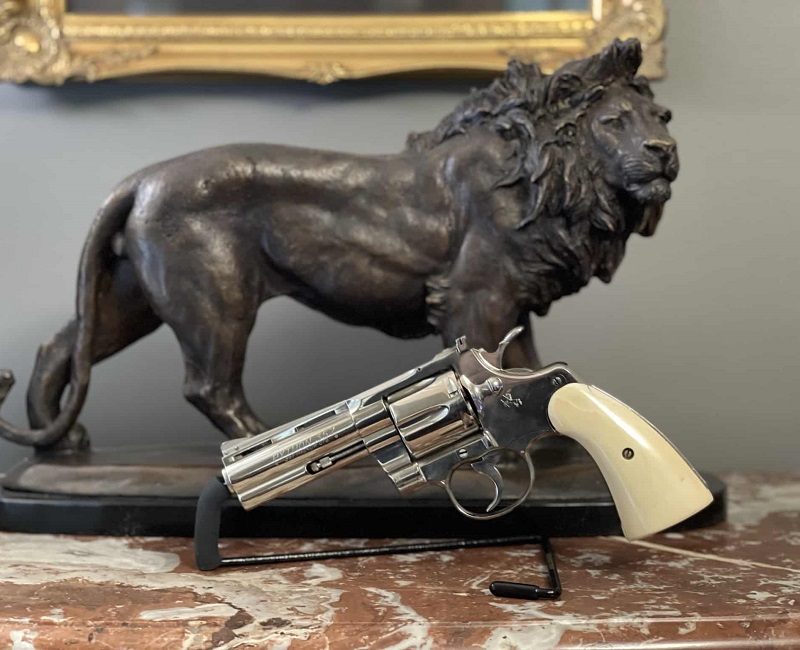
The Colt Python is one of the few revolvers that attracts both gun collectors and broader design-minded collectors. It has the look, the finish, the reputation, and the production story that make people study small differences: serial-number range, barrel length, finish, underlug style, grips, box, papers, and factory letter.
This guide is intended as a collector landing page. It points readers toward the serial-number tables, explains the major production eras, and gives context for why early Pythons — especially pre-64 examples — draw so much attention.
A Python is rarely judged by one feature. The serious collector looks at the whole package: year, configuration, originality, condition, documentation, and whether the gun still has the feel that made the Python famous.
Quick collector checklist
Dating a Colt Python
The serial number establishes the production era, but dating is only the beginning of collector evaluation. Early Pythons generally use no-letter numbers; later production introduces prefixes, suffixes, and additional letter blocks. Those ranges belong on the dedicated dating page rather than being duplicated throughout this collector guide.
Use the complete year-by-year reference
For beginning and ending serial ranges, letter-prefix and suffix eras, and production-year tables, use Colt Python serial numbers by year. Then return here to evaluate the finish, barrel length, originality, condition, configuration, and documentation that determine the collector story.
Why the pre-64 Python matters
Collectors often use “pre-64” as shorthand for a broader manufacturing story. It is not magic by itself, and it does not automatically make every gun superior. But it points to a time when many American firearms still carried more traditional machining, more hand-fitting, deeper finish work, and a greater sense of final polish.
That context is why the Python fits naturally inside the broader Baby Boom gun era. The 1955–1964 period was the intersection of postwar manufacturing confidence, rising consumer prosperity, and classic American gunmaking.
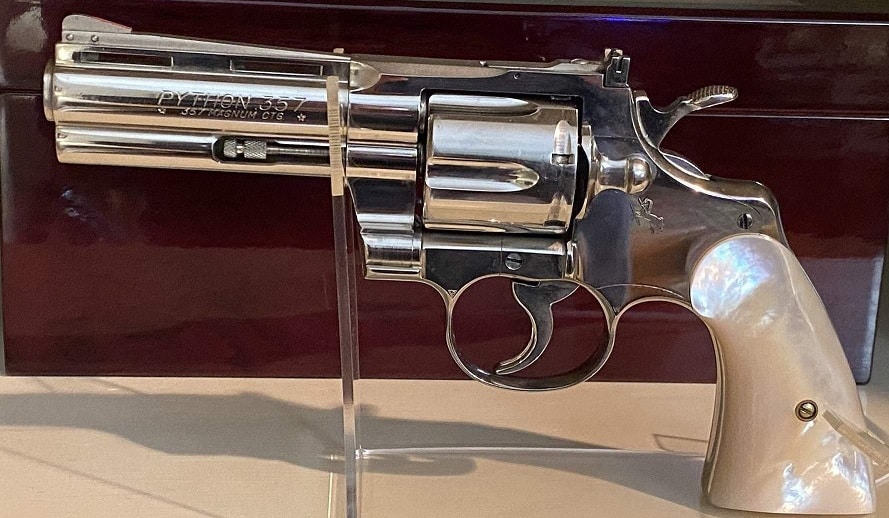
Hollow underlug vs. solid underlug
The early Python’s barrel profile is one of the most discussed collector details. Early examples used a hollow underlug. During the 1964 production period, Colt moved toward the solid underlug commonly associated with later Pythons.
From a practical shooting standpoint, the solid underlug can be described as additional forward weight. From a collector standpoint, the hollow underlug is a visible marker of the earliest production character. It is one of those details that helps separate an early Python from the larger run of later production guns.
| Feature | Collector View |
|---|---|
| Hollow underlug | Associated with early Python production and especially attractive to collectors studying pre-64 examples. |
| Solid underlug | More common on later production and part of the Python’s familiar heavy-barrel identity. |
| 1964 transition | A year worth studying carefully because production details can overlap and condition still controls value. |
Finish discussion: Royal Blue, nickel, and stainless
The Colt Python’s finish is a major part of its collector appeal. The early Royal Blue finish is famous because it was built on a high-polish surface that gave the revolver visual depth. When people say an old Python has a “liquid” blue look, they are usually responding to the polishing work beneath the bluing as much as the bluing itself.
Nickel-finished Pythons have their own following, especially when original and well preserved. Later stainless and Ultimate Stainless examples appeal to a different collector eye. They may not have the same pre-64 aura, but they remain part of the Python story and can be extremely desirable depending on configuration and condition.
Colt Python barrel lengths
Barrel length changes the balance, appearance, scarcity, and collector audience of a Python. The 6-inch barrel is the iconic target configuration, while the 4-inch gun has the classic service profile. Original 2.5-inch examples command special attention because short-barrel configuration and condition must both be verified carefully. The 8-inch Python belongs more to the later target and hunting story.
| Barrel length | Collector perspective |
|---|---|
| 2.5 inch | Scarce, highly sought-after short-barrel configuration; originality is especially important. |
| 4 inch | Classic service and plainclothes profile with broad collector appeal. |
| 6 inch | The most recognizable target and display configuration. |
| 8 inch | Later target and hunting configuration with a distinct collector following. |
Major Colt Python variants
The core Python was built around several barrel lengths and finishes, but the collector world also recognizes special packages, short runs, and later Custom Shop models.
Common collector categories
- 4-inch Royal Blue: classic service and plainclothes profile.
- 6-inch Royal Blue: iconic target and display configuration.
- 2.5-inch Python: scarce and highly sought after in strong condition.
- Nickel Python: dramatic presentation value when original and clean.
- 8-inch Python: later target and hunting appeal.
- Python Hunter / specialty packages: package completeness becomes a large part of value.
- Ultimate Stainless / later Custom Shop examples: different era, but still desirable to Python collectors.
Collector pricing philosophy
Python pricing is not just about a year on a chart. In fact, two Pythons from the same year can be very different collector objects. A worn early gun with changed grips and no documentation may be less appealing than a later example with original box, papers, correct stocks, and excellent finish.
When I think about Python value, I look at six things first:
- Originality: finish, grips, sights, and configuration.
- Condition: wear, polish loss, cylinder line, muzzle, screw slots, and bore.
- Year and serial range: especially early no-letter and pre-64 examples.
- Configuration: barrel length, finish, and special-order features.
- Documentation: Colt Archive letter, box, papers, tags, and provenance.
- Story: why the gun matters and how it fits into a collection.
The best Python is not always the most expensive one. It is the one where condition, originality, configuration, and story all line up.

Collector Reference Library
For Python collectors, good reference material matters. Factory letters, serial-number tables, collector books, and careful side-by-side comparisons are often more useful than online opinions alone.
Browse My Gear and BooksAs an Amazon Associate I earn from qualifying purchases. I only link to products, books, tools, and accessories that fit the editorial purpose of Gun Collectors Club.
Related Colt Python Pages

About Greg Cook
Greg Cook writes about firearms collecting, personal history, and the stories behind interesting guns. His Army MOS was 76Y, Unit Armorer, and he brings that practical background to his collector articles.
Sources Consulted
- R. L. Wilson, The Book of Colt Firearms
- R. L. Wilson, Colt: An American Legend
- Colt factory catalogs, period advertising, and historical production references
- Colt Archive Services guidance for factory letters and documented shipment details
- Author photographs, collector notes, and comparison of surviving Colt Python examples