Manufacturer: Browning Arms Company
Browning Resources:
Browning Firearms Hub
Browning A5 Serial Number Lookup: Start Here
Use this Browning A5 serial number lookup to estimate when your Auto-5 was made. Copy the entire serial number exactly as marked—including any letters—then match it to the correct gauge, model, and production country. The serial number usually narrows the manufacture period, but the result should be verified against the shotgun’s physical markings and configuration.
- Record the complete number.
Include every prefix, suffix, and letter; do not search only the numeric portion. - Identify the variant.
Confirm whether the gun is a Standard, Light Twelve, Sweet Sixteen, Magnum, or another Auto-5 configuration. - Check production markings.
Look for Belgian FN or Japanese Miroku markings, plus gauge, proof, barrel, and choke information. - Use the matching chart or tool.
Compare the number with the correct sequence, then verify the result with the identification notes below.
Important: A replacement barrel, altered stock, refinishing, or mismatched parts can make a serial-number date look more certain than the complete firearm evidence supports.
Choose the Correct Lookup
Browning A5 Date Charts and Serial Number Tools
Start with the general A5 lookup, then switch to the dedicated Light Twelve, Sweet Sixteen, or Belgian guide when the model letters and proof marks show that a variant-specific sequence applies.
The Browning Auto-5, commonly called the A5, was produced across a long span of Belgian and Japanese manufacturing, which is why the model name alone is not enough to date a gun. Serial format, gauge, model letters, proof marks, and country-of-origin markings should be read together before assigning a manufacture year.
Why Collectors Still Value the Browning Auto-5
The Browning Auto-5 earns repeat attention because it answers several questions at once: it is a John Moses Browning design, it is easy to recognize by its squared humpback receiver, and it exists in enough gauges, grades, and production periods to keep collectors comparing examples. A visitor may arrive looking for a serial number, but the real collector work is broader than a date range. The markings, gauge, barrel, choke, country of manufacture, stock condition, friction-ring setup, and overall originality all help tell the story of a particular A5.
Belgian Auto-5 shotguns often carry the strongest traditional collector appeal, especially earlier FN-made guns with clean metal, attractive walnut, and honest field wear. Japanese Miroku production should not be dismissed, however. Those later guns are usually well made, mechanically dependable, and often attractive to shooters who want an A5 they can actually use. The Sweet Sixteen remains one of the most searched variations because it combines field balance with a name that has become part of Browning collector vocabulary.
This page is organized as a practical hub. Use the serial-number material as the starting point, then compare your gun against the photos, feature notes, and related shotgun pages. Readers working through Browning, Winchester, and Remington long guns should also visit the broader Browning shotgun page, the Winchester 94 guide, and the Remington 870 guide for comparison across classic American sporting arms.
The Browning Auto-5
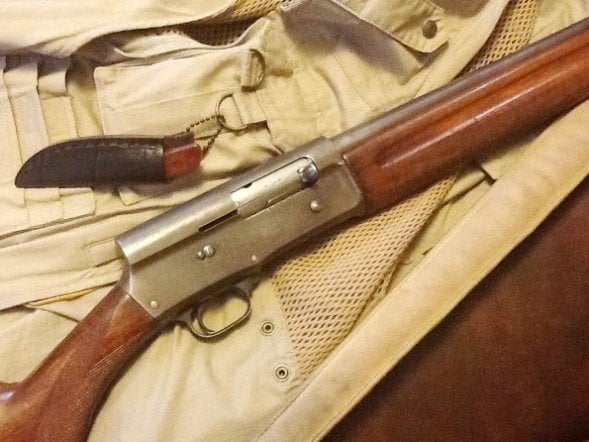
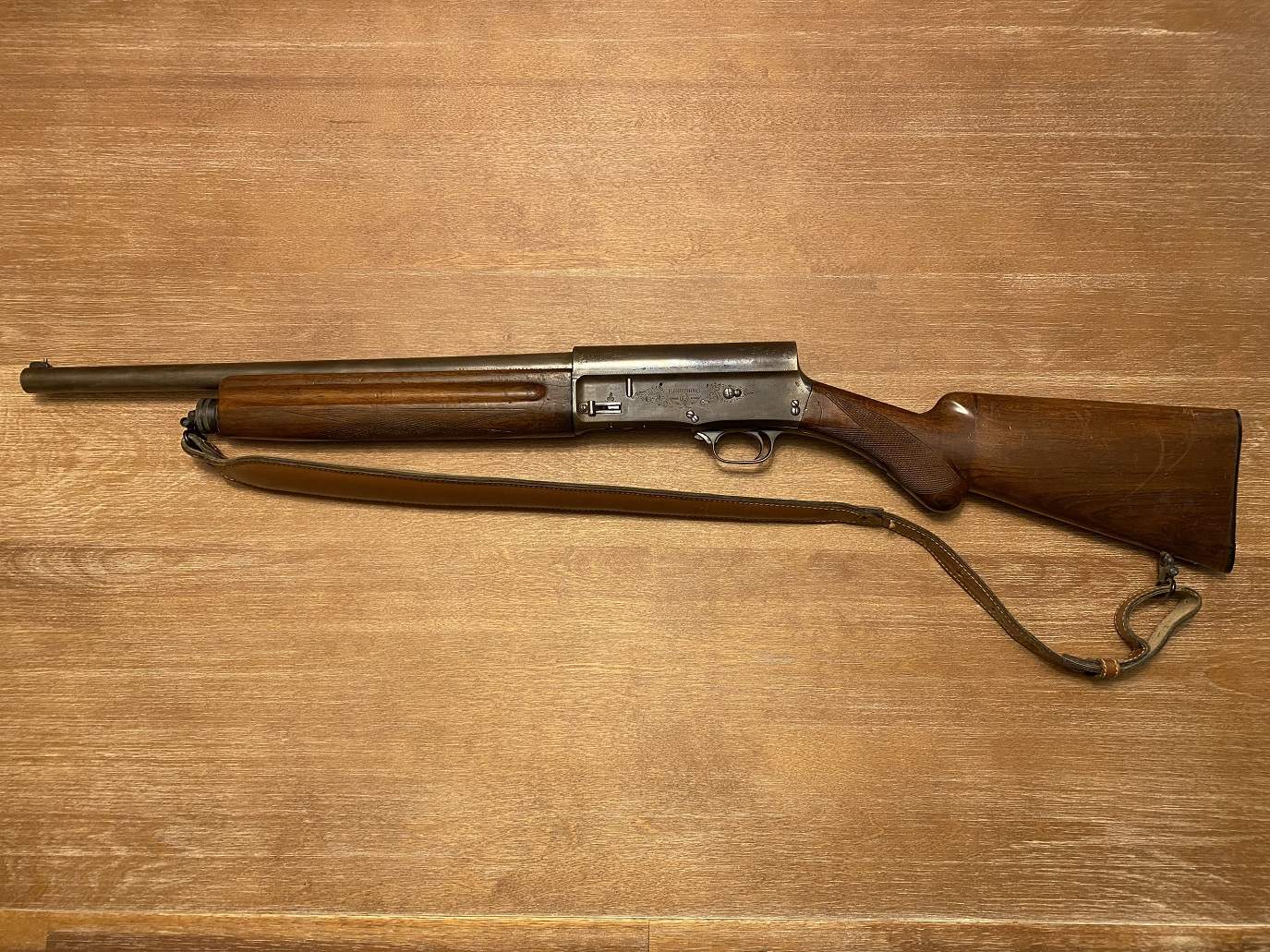
The Browning Auto-5 was the first successful semi-automatic shotgun design. John Browning created a long-recoil action shotgun with a distinctive humpback receiver, a visual profile that makes the A5 instantly recognizable even from across a gun room.
First produced in 1902, the Auto-5 remained in production for almost a century. More than 2.7 million units were produced, and the design’s long service life is a big part of its appeal to collectors today.
After handling any collectible firearm, wipe all exposed metal surfaces with a Birchwood Casey Gun & Reel Silicone Cloth to remove fingerprints and leave behind a protective silicone coating that helps guard against rust during storage.
Decoding the A5 Serial Number
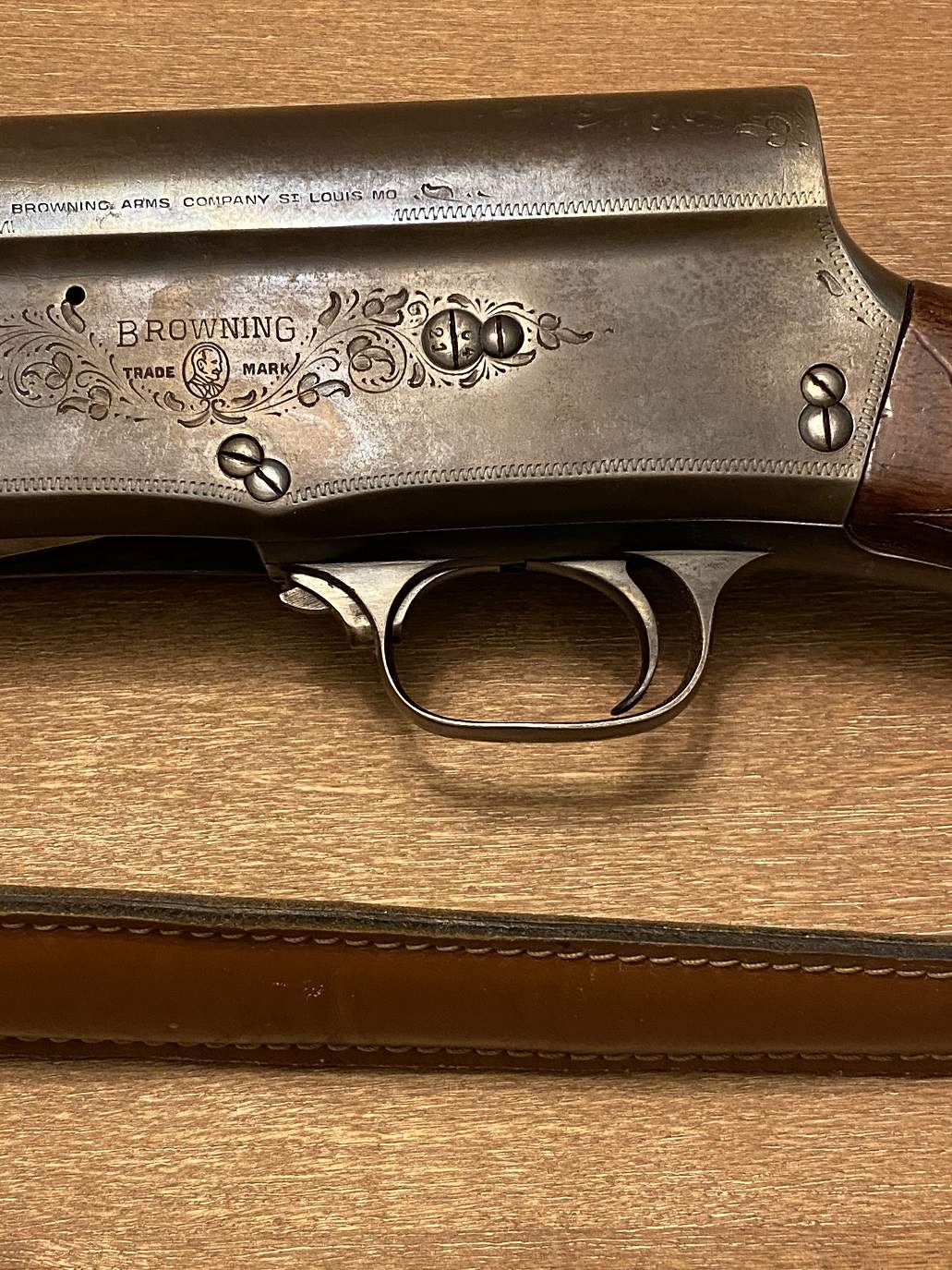
The Browning A5 has the distinction of being the first mass-produced semi-automatic shotgun. If your gun has a letter in the serial number, that letter helps identify the model after 1953.
- G = Lightweight
- M = Standard Weight
- V = 12 Gauge Magnum
- S = Sweet Sixteen
- X = 20 Gauge
Researching another model? The firearm serial-number guide directory routes you to the appropriate maker, model, and lookup tool.
Development and Features
John Browning designed the Auto-5 in the late 1890s and patented it in 1900. After facing rejection from some American manufacturers, he worked with Fabrique Nationale in Belgium, and the Auto-5 became one of the most successful shotgun designs ever produced.
The shotgun was offered in multiple gauges and configurations, including 12 gauge, 16 gauge, and 20 gauge models. The Light Twelve, Sweet Sixteen, and Magnum Twenty all became meaningful names to hunters and collectors.
Need to Date a Specific Auto-5 Variant?
The letter in your serial number tells you which guide to use. Each variant ran its own independent serial sequence — cross-referencing the wrong chart will produce a wrong date.
- G or L prefix → Browning Light Twelve Serial Number Lookup
- S prefix → Browning Sweet Sixteen Serial Number Lookup App · Collector Guide
- M, H, or V prefix → Browning Auto-5 Serial Number Guide
- All gauges / Belgian proof marks → Belgium Browning Serial Number Guide
Belgian vs Japanese Browning Auto-5 Shotguns
One of the most common collector questions involves the difference between Belgian-made and Japanese-made Browning Auto-5 shotguns. Both are quality firearms, but collectors often place a premium on earlier Belgian production examples manufactured by Fabrique Nationale in Belgium.
Use the Belgian vs Japanese Browning A5 Identification Guide for a direct comparison of FN and Miroku markings, proof marks, serial formats, choke systems, ribs, safeties, finish, and collector implications.
Belgian-Made Auto-5 Shotguns
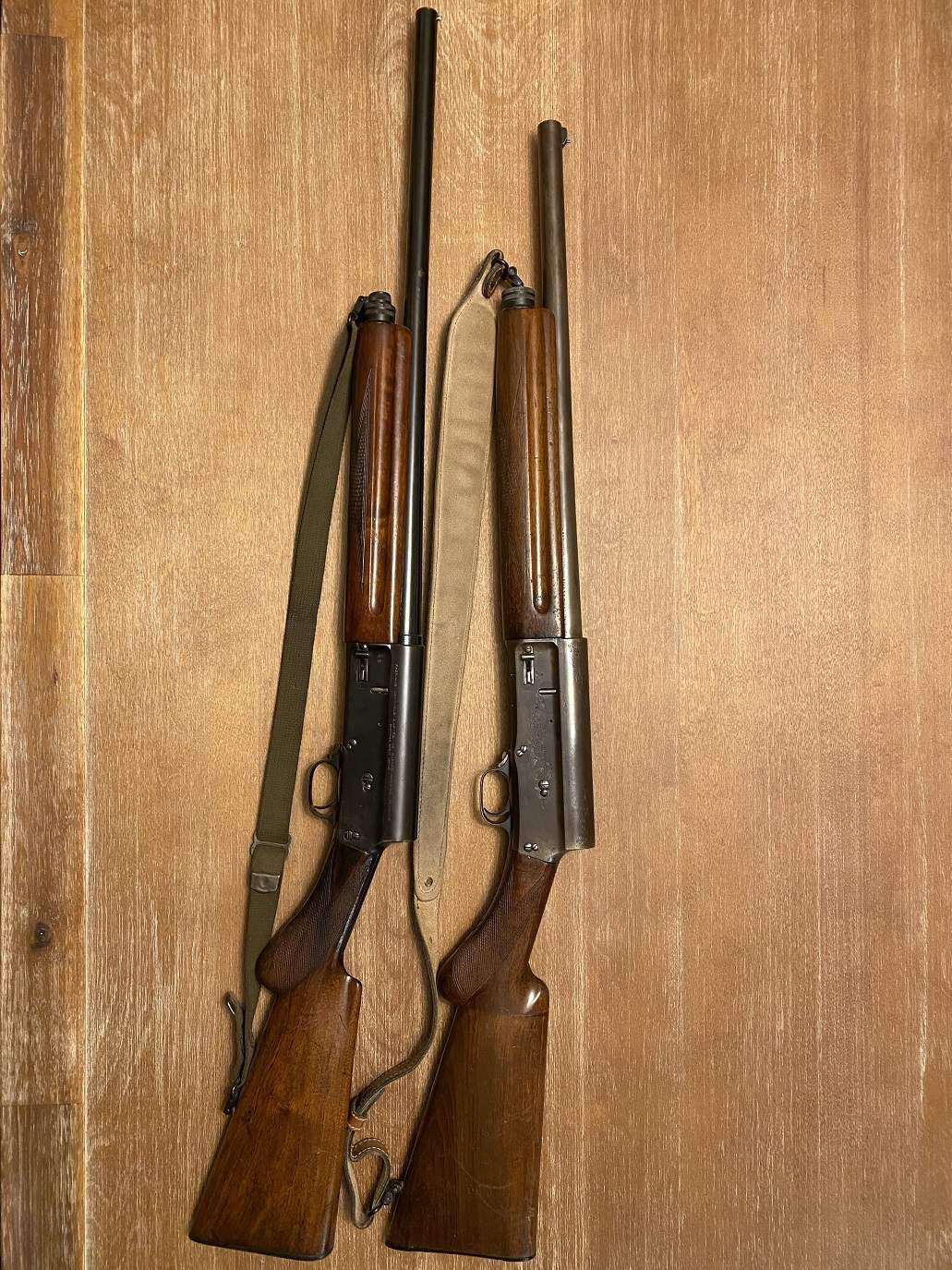
Belgian-produced Auto-5 shotguns are generally associated with classic Browning craftsmanship, deep polished bluing, walnut stocks, and early production history tied closely to John Moses Browning’s original design. These guns were manufactured primarily by FN (Fabrique Nationale) in Belgium.
- Typically marked “Made in Belgium”
- Earlier production dates
- Often preferred by traditional collectors
- Strong collector demand in higher-condition examples
- Commonly associated with Light Twelve and Sweet Sixteen models
Japanese-Made Auto-5 Shotguns
Later Auto-5 production shifted to Miroku in Japan. Japanese-made Browning shotguns developed a strong reputation for quality machining, fit, reliability, and consistent production standards.
- Typically marked “Made in Japan”
- Excellent mechanical quality
- Often more affordable than Belgian examples
- Popular among shooters and hunters
- Later production configurations and choke systems
Collector Takeaway: Belgian Auto-5 shotguns often command stronger collector premiums, but Japanese-made A5 shotguns remain respected firearms with excellent craftsmanship and long-term collector potential.
Collector Checklist
When evaluating an Auto-5, begin with the basics: confirm the serial number, gauge, production marking, barrel length, choke marking, and receiver condition. Then look for the details that collectors reward, including original finish, unaltered screws, correct stocks, clean checkering, a healthy bore, and an action that cycles correctly with the friction rings installed for the intended load.
Condition and Originality
Many Auto-5 shotguns were used hard in the field, so honest hunting wear is common. Collector value rises when the shotgun remains mechanically sound and visually original. Refinished metal, cut stocks, replacement pads, extra holes, non-original barrels, or mismatched parts should be noted before assigning premium value.
Original finish, matching components, and documented history can significantly influence the value of a Browning Auto-5. Our Firearm Condition and Value Guide provides a detailed overview of how collectors evaluate condition and originality.
Documenting rare configurations with quality photographs is equally important. See our guide to Photographing Gun Collections for tips on creating accurate records for insurance, estate planning, and collector reference purposes.
Sweet Sixteen and Gauge Notes
The Sweet Sixteen is one of the most recognized Auto-5 variations. Its appeal comes from the way the 16 gauge balances between 12-gauge authority and 20-gauge handling. Twelve-gauge Light Twelve and Magnum models remain important, while 20-gauge guns draw their own audience among hunters and Browning collectors.
Value Factors for Browning A5 Collectors
Auto-5 values are shaped by gauge, production era, condition, originality, and documentation. High-condition Belgian examples, Sweet Sixteen guns, desirable vent-rib barrels, and clean pre-war or early postwar guns tend to draw the most collector attention. Shooter-grade Japanese guns may be more affordable while still offering excellent quality.
Sales Numbers and Popularity
Over its nearly 100-year production run, more than 2.7 million Auto-5 shotguns were manufactured. That number helps explain why the A5 is so familiar, yet certain variations, early examples, high-condition guns, and desirable gauges remain collectible.
Because the A5 was produced for so long, collector value depends heavily on condition, configuration, originality, and where a particular gun fits in the production timeline.
FN Auto-5 Pre-WWII Serial Number Table
The following table is a quick reference for pre-war FN Auto-5 production years and serial number ranges.
| Year of DOM | Begin Serial Number | End Serial Number |
|---|---|---|
| 1924 | 3000 | 18000 |
| 1925 | 18001 | 33000 |
| 1926 | 33001 | 48000 |
| 1927 | 48001 | 63000 |
| 1928 | 63001 | 78000 |
| 1929 | 78001 | 93000 |
| 1930 | 93001 | 108000 |
| 1931 | 108001 | 123000 |
| 1932 | 123001 | 138000 |
| 1933 | 138001 | 153000 |
| 1934 | 153001 | 168000 |
| 1935 | 168001 | 183000 |
| 1936 | 183001 | 198000 |
| 1937 | 198001 | 213000 |
| 1938 | 213001 | 228000 |
| 1939 | 228001 | 229000 |
How to Identify a Browning Auto-5
Collectors typically identify Browning Auto-5 shotguns using serial numbers, production markings, gauge designations, barrel types, and country-of-origin markings. The distinctive humpback receiver profile remains the quickest visual identifier.
Common Identification Features
- Humpback receiver profile
- Long-recoil operating system
- Belgian or Japanese production markings
- Gauge markings and model suffix letters
- Sweet Sixteen and Light Twelve designations
- Vent-rib and barrel configuration variations
The A5 in Hunting and Sport Shooting
The Auto-5’s reliability and semi-automatic action made it a favorite among hunters and sport shooters. Its ability to fire follow-up shots quickly was revolutionary for its time, especially for bird hunting, waterfowl, and upland game.
Variants and Collectibility
Throughout its production life, the Auto-5 appeared in multiple variants. The Sweet Sixteen became especially popular because of its balance, field handling, and weight. Collectors often pay attention to gauge, model markings, barrel configuration, originality, and overall condition.
Early examples, high-condition guns, Belgian-made examples, and desirable variations often receive special collector attention. As with most collectible firearms, original finish, correct parts, and documentation can matter as much as the serial number range.
Impact and Legacy
The Browning Auto-5 stands as a major achievement in firearms design. Its semi-automatic action influenced later shotgun development, and its long production run helped establish it as one of the most important sporting shotguns of the twentieth century.
Collector Takeaway: The Browning Auto-5 is common enough to study, but special enough to collect. Condition, gauge, configuration, and originality are what separate an ordinary A5 from a standout collector piece.
Browning A5 Serial Number FAQ
How do I use the Browning A5 serial number lookup?
Record the complete serial number, including every prefix or suffix letter. Identify the gauge, model designation, and country-of-origin marking, then use the matching Auto-5, Light Twelve, Sweet Sixteen, or Belgian production chart. Confirm the result against the physical markings on the shotgun.
Can a Browning A5 serial number confirm the exact manufacture year?
A serial number can often identify or narrow the production year, but it should not be used by itself when sequences overlap or parts have been replaced. Verify the estimate with the model letters, gauge, proof marks, country-of-origin mark, barrel, and receiver features.
What markings should I check when the serial number is inconclusive?
Check the serial-number letters, gauge marking, model name, Belgian or Japanese country mark, proof marks, barrel and choke markings, receiver configuration, and any evidence of replacement parts. These details help confirm which production chart applies.
How do I research a Belgian Browning A5 serial number?
Use the Belgian Browning serial guide and compare the serial format with FN proof marks and the Made in Belgium marking. Do not apply later Japanese Miroku sequences to a Belgian-produced shotgun.
Which lookup should I use for a Sweet Sixteen or Light Twelve?
Use the dedicated Sweet Sixteen or Light Twelve lookup because those variants can use model-specific serial sequences. Cross-referencing a serial number against the wrong Auto-5 chart can produce an incorrect date.
From My Bench
For collector research, storage, cleaning, and display, I keep a curated list of tools, books, and bench items that fit the way I maintain and document firearms.
Browse My Gear ListAs an Amazon Associate I earn from qualifying purchases. I only link to products, books, tools, and accessories that fit the editorial purpose of Gun Collectors Club.

About Greg Cook
Greg Cook writes about firearms collecting, personal history, and the stories behind interesting guns. His Army MOS was 76Y, Unit Armorer, and he brings that practical background to his collector articles.