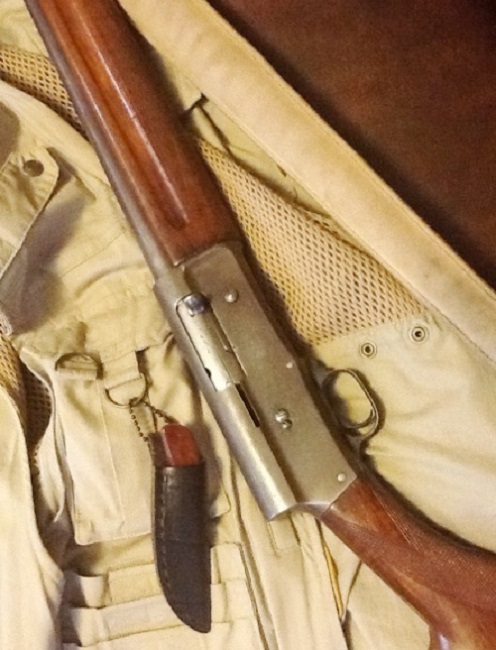
This page is the deeper reference companion to the Browning A5 serial number lookup. The lookup page is where you go when you want a quick production-year answer. This guide explains why Auto-5 serial numbers can be confusing in the first place: FN production, Browning importation, wartime interruptions, gauge and model codes, Belgian proof marks, Japanese Miroku conventions, and the little date-code quirks that make two similar-looking guns tell different stories.
The Browning Auto-5 was produced over such a long span that no single serial-number rule covers every gun. A collector has to read the whole shotgun: receiver number, letters before or after the number, barrel markings, gauge, chamber length, proof marks, stock shape, rib style, buttplate, and whether the barrel still belongs with the receiver.
If you already have the serial in hand, date your Browning Auto-5 by serial number before working through the production-era details below.
FN and Browning Production Eras
The Auto-5 story begins with John Browning’s long-recoil shotgun design and FN manufacture in Belgium. For American collectors, the name on the gun may say Browning, but the early and classic production story is closely tied to Fabrique Nationale in Herstal, Belgium. Browning handled the American sporting identity; FN did the manufacturing that gave Belgian Auto-5s their reputation for machining, fit, proofing, and old-world finish.
| Era | Collector Meaning | Serial-Number Concern |
|---|---|---|
| Early FN Belgian Production | Strong historical appeal and early Auto-5 character. | Early serials must be read with markings, proof marks, and configuration. |
| Pre-War and Interwar Guns | Classic Belgian workmanship and early sporting-gun appeal. | Numbers may not follow later Browning consumer charts cleanly. |
| Wartime and Immediate Postwar Disruption | Production and supply were interrupted, and American-market guns can create dating confusion. | Do not force wartime and immediate postwar guns into later letter-code systems. |
| Postwar Belgian Sporting Era | The period many American hunters remember: Light Twelve, Sweet Sixteen, Magnum, ribbed barrels, and field guns. | Letter and model codes become increasingly important. |
| Late Belgian / Transition Era | Flat-knob stocks, changing features, and late FN-era configurations. | Stock shape, barrel type, and serial format should be evaluated together. |
| Japanese Miroku Production | Excellent build quality, often desirable as shooters and late-production collectibles. | Japanese serial conventions and markings should not be read as Belgian FN numbers. |
Why Browning Date Codes Can Be Tricky
Browning did not use one simple Auto-5 numbering pattern from start to finish. Collectors run into numeric serials, letter prefixes, letter suffixes, model letters, gauge designations, and later Japanese-style conventions. A number that seems obvious at first glance may be misleading if the letter is ignored.
That is especially true with postwar guns. Around the 1950s and 1960s, Browning serial-number interpretation often depends on letters that identify weight, model family, or gauge. The surrounding code can matter as much as the digits. A gun that begins with a year digit, for example, still needs its model letter and remaining serial sequence interpreted in context.
Serial Number Examples and How to Read Them
When working with an Auto-5, write the number exactly as stamped. Do not clean it up, shorten it, or move letters around. A collector note that says “serial 12345” may be useless if the actual receiver says “S12345,” “12345S,” or includes a model letter after a year digit.
| What You See | What It May Suggest | Collector Caution |
|---|---|---|
| Plain numeric serial | Often earlier or pre-code style numbering depending on range and configuration. | Confirm with proof marks, receiver markings, and physical features. |
| Letter before the number | May identify model, weight, gauge, or production convention. | The same letter can mean different things in different Browning contexts, so use the correct era. |
| Number followed by a letter | May indicate a suffix-style production or model code. | Never drop the suffix when asking for help or using a chart. |
| Year digit plus model letter plus serial sequence | Common source of confusion on mid-century guns. | The first digit alone is not the whole production year; read the full code. |
| Japanese-marked receiver | Later Miroku production with its own conventions. | Do not date it from Belgian FN charts. |
Belgian FN Production and Proof Marks
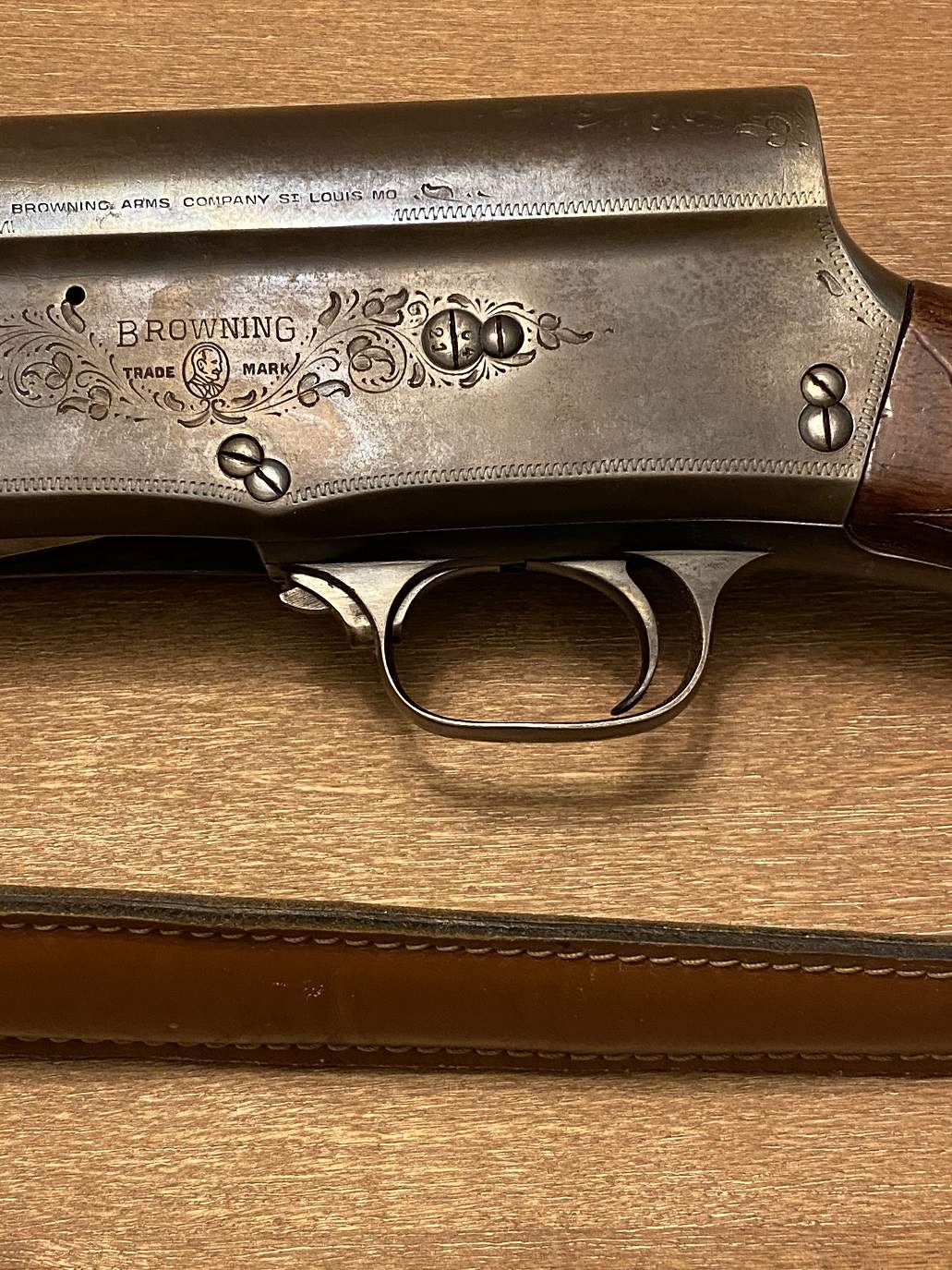
Belgian Auto-5 shotguns are often the first guns collectors ask about because they connect directly to FN manufacture and the classic Browning sporting era. Belgian manufacture is usually indicated by receiver and barrel markings, and many guns also carry Belgian proof marks from the Liège proof system.
Proof marks are not decoration. They are part of the gun’s identity. Marks such as Belgian proof symbols, inspector marks, and smokeless-powder proofs can help confirm origin and period. They can also reveal whether a barrel belongs in the same general era as the receiver.
Belgian Identification Clues
- FN or Browning markings consistent with Belgian manufacture.
- Liège-style proof marks on barrel flats or barrel markings.
- Receiver and barrel finish that appear consistent in age and wear.
- Correct chamber, choke, rib, and gauge markings for the model being claimed.
- Stock shape and buttplate style consistent with the production period.
Japanese Miroku Serial Conventions
Japanese-made Auto-5 shotguns built by Miroku are sometimes unfairly dismissed by collectors who focus only on Belgian guns. That is a mistake. Miroku-built Browning shotguns are usually beautifully made, reliable, and often better suited for regular field use than a fragile early Belgian collector piece.
The important point is not that Japanese Auto-5s are inferior. The point is that they live in a different identification lane. Japanese production should be dated and evaluated by its own markings and conventions rather than forced into FN Belgian serial-number patterns. When a gun is marked for Japanese manufacture, let that evidence lead the identification. For a closer comparison of markings and collector considerations, see the Belgian versus Japanese Browning Auto-5 guide.
| Feature | Belgian FN Auto-5 | Japanese Miroku Auto-5 |
|---|---|---|
| Manufacture | Fabrique Nationale, Herstal, Belgium. | Miroku, Japan. |
| Collector Appeal | Often stronger historical and vintage collector appeal. | Often valued as high-quality late-production shooters and modern collectibles. |
| Markings | Belgian origin and proof marks are central clues. | Japanese/Miroku origin markings guide identification. |
| Fit and Finish | Classic FN polish, machining, and traditional Browning character. | Excellent machining and finish, often very consistent. |
| Dating Risk | Misreading letter codes or ignoring proof marks. | Trying to use Belgian charts on Japanese production. |
Stock Shape and Production Clues
Stock shape is not a serial number, but it is a useful clue. The classic round-knob pistol grip belongs to much of the early and mid-century Auto-5 identity. Later flat-knob stocks and transitional features can help place a shotgun in context, especially when the serial number falls near a changeover period.
Browning Auto-5 Stock Transition Timeline
The table below summarizes major Auto-5 stock profile changes. Use it alongside the serial number, not instead of it.
| Era | Years | Stock Type | Notes |
|---|---|---|---|
| Round-Knob | 1903–1966 | Classic rounded pistol-grip knob | The traditional FN profile most collectors associate with older Auto-5 shotguns. |
| Transitional | Late 1966 | Mix of round-knob and flat-knob features | Factory transition periods can produce legitimate overlap. |
| Flat-Knob | 1967–1975 | Square or flat-bottom pistol-grip knob | A more modern profile that helps date late Belgian-era guns. |
| FN to Miroku Era | 1976–1987 | Flat-knob and later contour changes | Evaluate with markings, finish, and Japanese production clues. |
| Late Production | 1988–1998 | Modernized stocks and pads on some models | Late Auto-5s may have modern recoil pads and updated handling geometry. |
Common Auto-5 Serial Number Mistakes
Most wrong Auto-5 dates come from reading only part of the gun. The error is understandable: people want a single year. But the Auto-5 rewards patience. Read the whole number, then the whole shotgun.
- Ignoring letters: A prefix or suffix can change the interpretation completely.
- Using the barrel number alone: Barrels can be replaced, swapped, or added later.
- Assuming Belgian equals high value: Condition and originality still control value.
- Reading Japanese guns from Belgian charts: Miroku production has its own conventions.
- Overlooking stock and rib changes: Round-knob, flat-knob, vent rib, solid rib, and plain barrel features all matter.
- Confusing Sweet Sixteen claims: Confirm gauge, model marking, weight, and serial convention before accepting the label.
- Dating from family memory only: Grandpa may have bought it in 1963; that does not always mean it was made in 1963.
Sweet Sixteen, Light Twelve, and Magnum Notes
The Auto-5 was not one uniform shotgun. Sweet Sixteen, Light Twelve, standard-weight guns, Magnum models, ribs, barrels, and grade variations all change collector interest. The Sweet Sixteen receives special attention because it combines the Auto-5 action with a 16-gauge handling balance many upland hunters still admire.
For Sweet Sixteen identification, do not rely on a casual description. Confirm the gauge, weight markings, serial convention, barrel markings, and stock configuration. Many 16-gauge Auto-5s are desirable, but not every 16-gauge gun should automatically be described or priced as the exact collector variant a seller claims.
Barrel Matching and Replacement Barrels
Auto-5 barrels are often changed because hunters wanted a different choke, rib, chamber length, or barrel length. Some guns were used hard for decades, and a replacement barrel made practical sense. From a collector standpoint, however, a later barrel can change the value story.
When evaluating a barrel, compare the finish wear, markings, proof marks, rib type, chamber marking, choke marking, and general age against the receiver. A replacement barrel is not automatically bad. It simply means the gun should be described honestly.
Collector Pricing Philosophy
Auto-5 values are driven by condition, originality, scarcity, configuration, and story. The highest prices usually follow guns that combine a desirable era, desirable gauge, strong original finish, correct parts, attractive wood, and clear provenance.
| Value Factor | Why It Matters |
|---|---|
| Original finish | Refinishing may improve appearance, but it often lowers collector value. |
| Correct barrel | Collectors generally prefer original or period-correct barrels over later replacements. |
| Belgian or Japanese origin | Belgian FN and Japanese Miroku guns can both be excellent, but the market values them differently. |
| Gauge and model | Sweet Sixteen, Light Twelve, Magnum, and special configurations move in different collector lanes. |
| Wood condition | Cracks, sanding, recoil-pad replacements, and altered checkering can materially reduce desirability. |
| Documented provenance | Family history, original paperwork, and honest ownership history can strengthen the story. |
My Auto-5 Identification Workflow
- Photograph the entire shotgun from both sides.
- Record the complete serial number exactly as stamped, including letters.
- Photograph receiver markings and barrel markings separately.
- Confirm gauge, chamber length, choke, rib type, and barrel length.
- Look for Belgian proof marks or Japanese/Miroku markings.
- Compare stock shape, buttplate, checkering, and recoil pad to the claimed era.
- Use the serial-number chart or lookup tool only after the physical evidence is recorded.
Companion Lookup Tool
Use the Browning A5 Serial Number Lookup App
After you have recorded the complete serial number and markings, use the GCC lookup tool for a quick production-year check. This reference page explains the context; the app is the faster date-checking companion.
Open Lookup Tool in New WindowRelated Gun Collectors Club Pages
Use this page as the reference explanation, then move to the lookup tool, the main A5 page, or the broader Browning hub for related models.
Reference Books and Collector Tools
Good Auto-5 research starts with clear photographs, a clean bench, and the right reference material. I keep a curated list of books, tools, cleaning gear, and collector supplies for this kind of work.
Browse My Gear ListAs an Amazon Associate I earn from qualifying purchases. I only link to products, books, tools, and accessories that fit the editorial purpose of Gun Collectors Club.

About Greg Cook
Greg Cook writes about firearms collecting, personal history, and the stories behind interesting guns. His Army MOS was 76Y, Unit Armorer, and he brings that practical background to his collector articles.
Sources Consulted
This guide was prepared from Gun Collectors Club Browning reference notes, collector observations, Browning Auto-5 markings, FN/Browning production-era research, and comparison with known Belgian and Japanese Auto-5 examples.