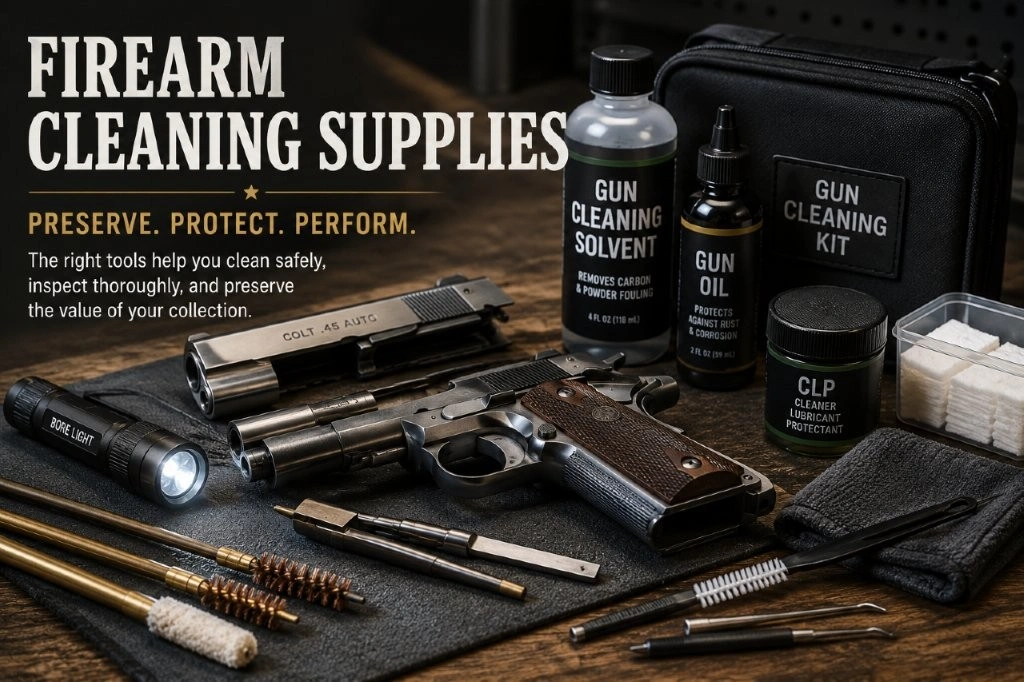
Start with preservation-minded basics
Older firearms deserve a slower and more careful approach than a modern range gun. Use tools that support inspection and gentle upkeep, and avoid anything that removes original finish, rounds screw slots, or changes the collector character of the firearm.
Recommended tools and supplies
Bore Light
A compact bore light helps you inspect rifling, chambers, fouling, pitting, and obstruction concerns before deciding whether deeper cleaning is needed.
- Choose a compact LED style that fits common calibers.
- Use it for inspection, not as a substitute for safe handling.
Gunsmith Screwdriver Set
Proper hollow-ground screwdrivers reduce the chance of damaging vintage screw heads during basic inspection or careful disassembly.
- Look for multiple bit sizes and hollow-ground tips.
- Avoid forcing a bit that does not fit the slot.
Cleaning Mat
A padded bench mat keeps small parts organized and helps protect wood, bluing, nickel, and case-colored finishes while you inspect a firearm.
- Choose oil-resistant material.
- A light-colored mat makes small screws easier to see.
Cotton Patches & Swabs
Soft patches and swabs are useful for light surface cleaning, tight corners, and controlled application of oil or preservative.
- Keep several sizes on hand.
- Use gentle pressure around markings and edges.
Firearm Oil or CLP
A small amount of quality oil can help protect metal surfaces after inspection or cleaning, especially before storage.
- Apply sparingly; excess oil can migrate into wood.
- Wipe exterior metal after handling.
Silicone Gun Cloth
A silicone-treated cloth is one of the simplest tools for wiping fingerprints and handling marks from exterior metal surfaces.
- Keep one near the safe or display area.
- Use after photographing or showing a firearm.
Collector cleaning checklist
- Document condition with photos before cleaning.
- Use the least aggressive method that accomplishes the goal.
- Protect screw heads, proof marks, cartouches, and serial-number areas.
- Do not polish collectible finishes to make them look new.
- Store the firearm only after surfaces are dry and lightly protected.
- Keep notes about what was cleaned, when, and with what products.
Related GCC research pages
Collector FAQ
What firearm cleaning supplies should collectors keep on hand?
A bore light, hollow-ground screwdriver set, cleaning mat, cotton patches, swabs, light firearm oil or CLP, and silicone gun cloth cover most careful inspection and light preservation tasks.
Should collectible firearms be polished?
Generally no. Aggressive polishing can remove original finish, soften markings, and reduce collector value. Preservation should usually be gentle and reversible.
Why use a gunsmith screwdriver set?
Hollow-ground bits fit screw slots better than ordinary tapered screwdrivers and reduce the risk of damaged screw heads on older firearms.

About Greg Cook
Greg Cook writes about firearms collecting, personal history, preservation, documentation, and the stories behind interesting guns. His Army MOS was 76Y, Unit Armorer, and he brings that practical background to his collector articles.