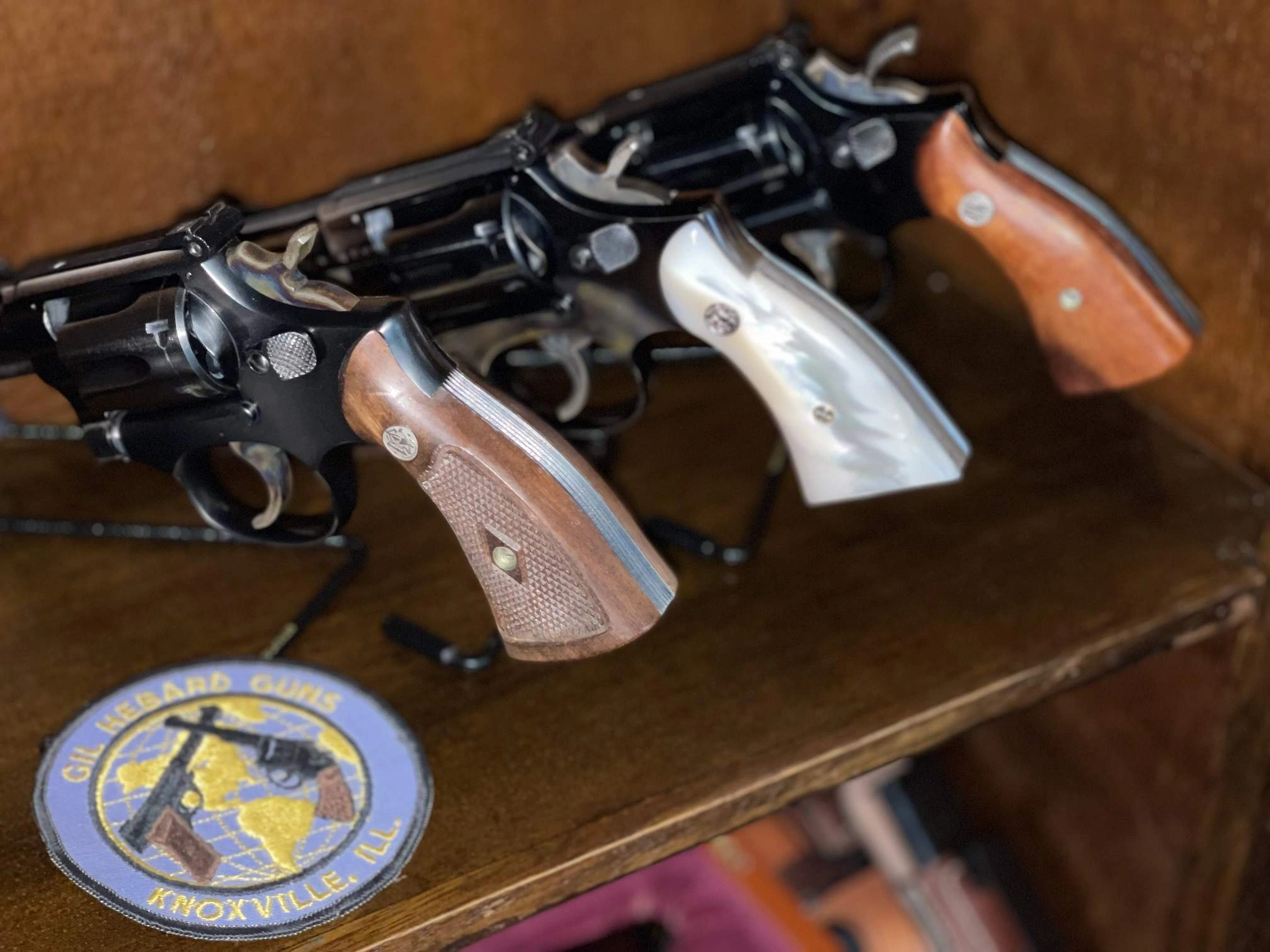
Gilbert Burnside “Gil” Hebard (1918–2012) was one of the quiet giants of 20th-century American pistol shooting. From Knoxville, Illinois, he built a national mail-order handgun business, competed at a high level, published influential shooting instruction, and helped connect ordinary shooters with the specialized pistols, parts, sights, books, and knowledge they needed.
Hebard’s life bridged the golden age of bullseye pistol competition and the practical needs of American handgunners. He was a shooter, merchant, editor, promoter, and problem solver. Long before internet forums and specialty websites, Gil Hebard Guns served as a kind of clubhouse by mail for serious pistol people.
Early Life and Path to Shooting
Gil Hebard was born April 7, 1918, in Knoxville, Illinois. He graduated from Knoxville High School in 1936, where he participated in track and football, played trumpet, and led a small dance band that performed around the region. He later attended Brown Business College in Galesburg and spent time at Knox College before his path turned toward firearms and competitive shooting.
Like many men of his generation, Hebard came into adulthood during an era when marksmanship was both practical and competitive. After World War II, returning veterans, NRA competition, surplus arms, and a growing shooting culture helped fuel civilian interest in precision pistol work. Hebard had the rare ability to understand both sides of that culture: the discipline of the firing line and the practical problems of getting good equipment into shooters’ hands.
Founding Gil Hebard Guns
In 1950, Hebard founded Gil Hebard Guns in Knoxville, Illinois. That small Midwestern town became an unlikely national hub for pistol shooters. With his wife Mary Elizabeth “Lib” Hebard, whom he married on February 14, 1944, he built a specialty business centered on Colt and Smith & Wesson handguns, target pistols, sights, parts, accessories, books, and custom services.

The company was known for annual catalogs that were far more than price sheets. They included articles, advice, match information, equipment notes, maintenance help, and practical commentary for pistol shooters. A Hebard catalog could be read like a handbook, and many shooters treated it that way.
That catalog-based model was forward-thinking for its time. It connected rural and urban shooters alike with target-grade equipment that local gun counters often did not stock. In an era when mail-order firearms and parts were common, Hebard’s shop gave bullseye shooters a reliable source for the gear and information they needed.
Pistolsmithing, Kit Guns, and Specialized Work
Hebard’s business served competitive target shooters, hunters, collectors, and recreational handgunners. It also became associated with quality pistolsmithing and specialized target work. Well-known craftsmen, including names such as Jim Clark Sr. and Richard Shockey, were part of the broader circle of skilled pistolsmiths connected to the kind of work Hebard’s customers wanted.
One of the most interesting collector stories tied to Hebard is the Colt target-pistol kit program of the 1960s. Colt shipped specialized, fully finished but unassembled target-grade components to Hebard’s company, allowing customers to assemble or customize pistols with preferred sights and features. The rare .38 Special Mid-Range kit pistols, with H-suffix serial numbers, are especially desirable today.
Hebard’s practical genius was matching serious shooters with the parts, pistols, and written knowledge they needed — often before anyone else made that process easy.
Competitive Achievements and Recognition
Gil Hebard was not merely a businessman serving shooters from behind a counter. He was a serious competitor who understood the discipline from the inside. He earned NRA recognition in pistol competition and became widely respected among bullseye shooters for both performance and contribution.
In 1975, he received the Jurras Top 10 Outstanding American Handgunner Award. In 1999, the NRA recognized him as Handgunner of the Year and inducted him into its Hall of Fame. Those honors reflected more than marksmanship. They recognized his role in building the shooting community, improving access to equipment, and preserving practical shooting knowledge.

The Pistol Shooter’s Treasury
Hebard’s most enduring contribution in print was The Pistol Shooter’s Treasury, a compact but influential collection of articles by world-class pistol shooters and recognized authorities. First published around 1960 and later expanded, it preserved the thinking of mid-century pistol champions in a form ordinary shooters could study.
The book included material on fundamentals, mental approach, match ammunition, sight adjustment, equipment selection, and technique. Its plain layout and practical tone made it approachable, while the quality of the contributors gave it lasting authority. For many pistol shooters, it was the kind of book that moved from the reading chair to the range bag.
The book’s appeal is easy to understand. It did not try to be slick. It tried to be useful. That was the Hebard way.
Impact on American Pistol Culture
Hebard’s catalogs, books, kits, and correspondence helped professionalize the way civilian shooters approached handgun competition. He promoted better sights, better triggers, accurizing, careful maintenance, and disciplined practice. He made specialized knowledge available to shooters who might never meet a national champion in person.

Before online communities, a shooter learned through clubs, matches, magazines, books, and catalogs. Hebard’s operation sat at the center of that world. His business helped sustain bullseye shooting by keeping shooters supplied and informed. His editorial work helped preserve the advice of top competitors. His name became shorthand for a serious, practical, accuracy-first approach to handgunning.
Personal Life and Later Years
Gil and Lib Hebard operated the business as a true partnership. Lib, a former teacher, supported the enterprise while the Hebard name became known far beyond Knoxville. Gil remained active in the business until health issues forced him to step back in 2012. He died at his Knoxville home on October 28, 2012, at age 94.
The closing of Gil Hebard Guns after his death marked the end of a particular era: a time when a small-town shop, a printed catalog, and a trusted name could influence shooters across the country.
Conclusion: A Quiet Giant of the Gun World
Gil Hebard represented the best of the mid-20th-century American shooter-entrepreneur. He was self-taught, exacting, community-oriented, and practical. He shot well, wrote clearly, sold useful equipment, and treated knowledge as something to be shared.
His catalogs, kit guns, book, and competitive record left a permanent mark on American pistol shooting. In a digital and mass-market firearms world, Hebard’s story reminds collectors of an older culture built around precision, craftsmanship, correspondence, and trust.
From My Bench
Collectors who study provenance, factory letters, old catalogs, and target pistols need a few basic tools for documentation and preservation.
Browse My Gear ListAs an Amazon Associate I earn from qualifying purchases. I only link to products, books, tools, and accessories that fit the editorial purpose of Gun Collectors Club.

About Greg Cook
Greg Cook writes about firearms collecting, personal history, and the stories behind interesting guns. His Army MOS was 76Y, Unit Armorer, and he brings that practical background to his collector articles.
References and Sources
This collector profile draws from publicly available obituaries, collector-source descriptions, NRA and shooting-sports references, auction and product histories, and surviving Hebard catalog and book references. Important source categories include obituary notices, The Pistol Shooter’s Treasury references, auction descriptions for Colt kit guns, and contemporary collector discussion of Gil Hebard Guns.