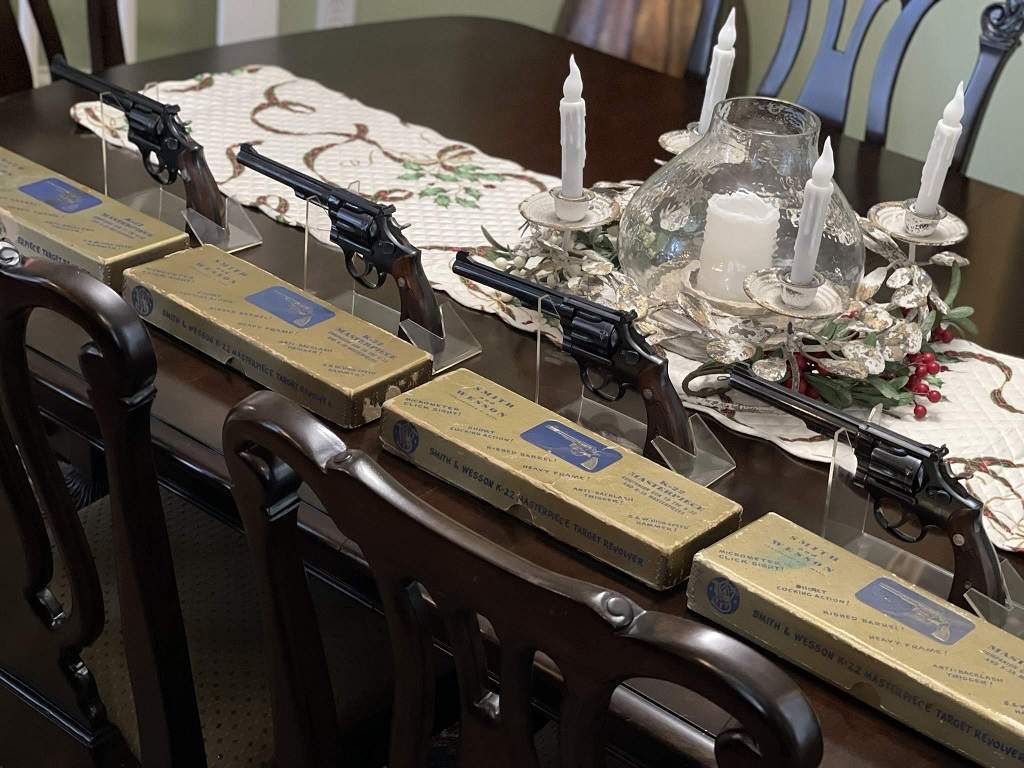
This article is Part I of the K-22 Masterpiece Series. It explains the post-war, pre-Model 17 Smith & Wesson K-22 Masterpiece revolvers and provides a simple visual guide to the 5-screw, 4-screw, and 3-screw changes that collectors use when identifying these guns.
For the expanded long-form history and collector reference, read the complete Smith & Wesson K-22 Masterpiece Overview.
The K-22 Masterpiece Series
Five revolvers. One post-war story. This series follows the K-22 Masterpiece from the first 1946 showcase gun through the late pre-Model 17 examples.
How To Tell If You Have a 5-Screw, 4-Screw or 3-Screw Gun
The basic identification process is easier than many collectors expect. You do not have to remove the grips, disassemble the gun, or start with a serial-number chart. Start by looking for two visible screws.
Step One: Look for the Fifth Screw
If your revolver has the fifth screw on the upper rear frame, stop. You have a 5-screw gun. For collectors, this feature is one of the quickest visual clues that the revolver belongs to the earlier style of Smith & Wesson production.
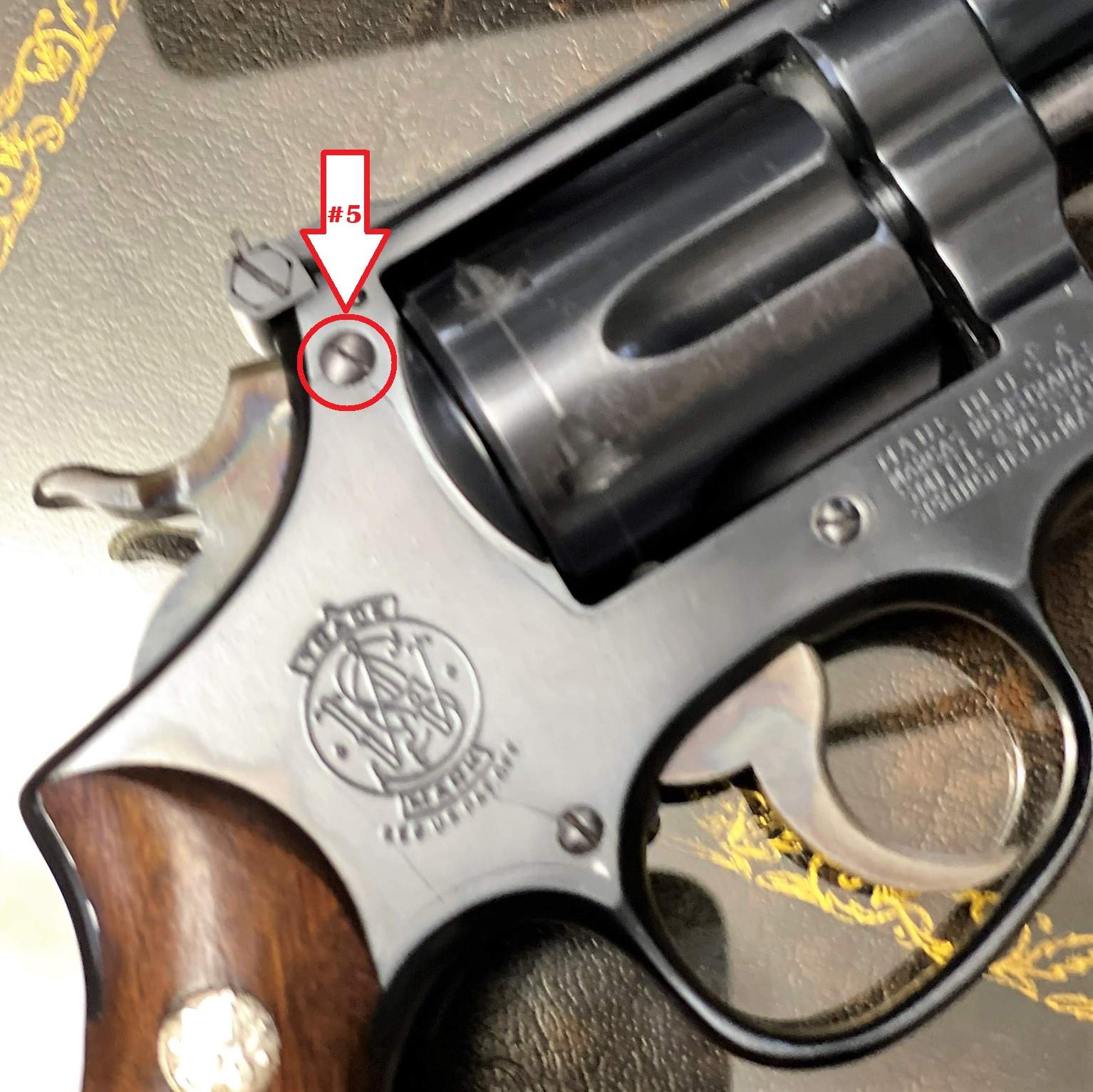
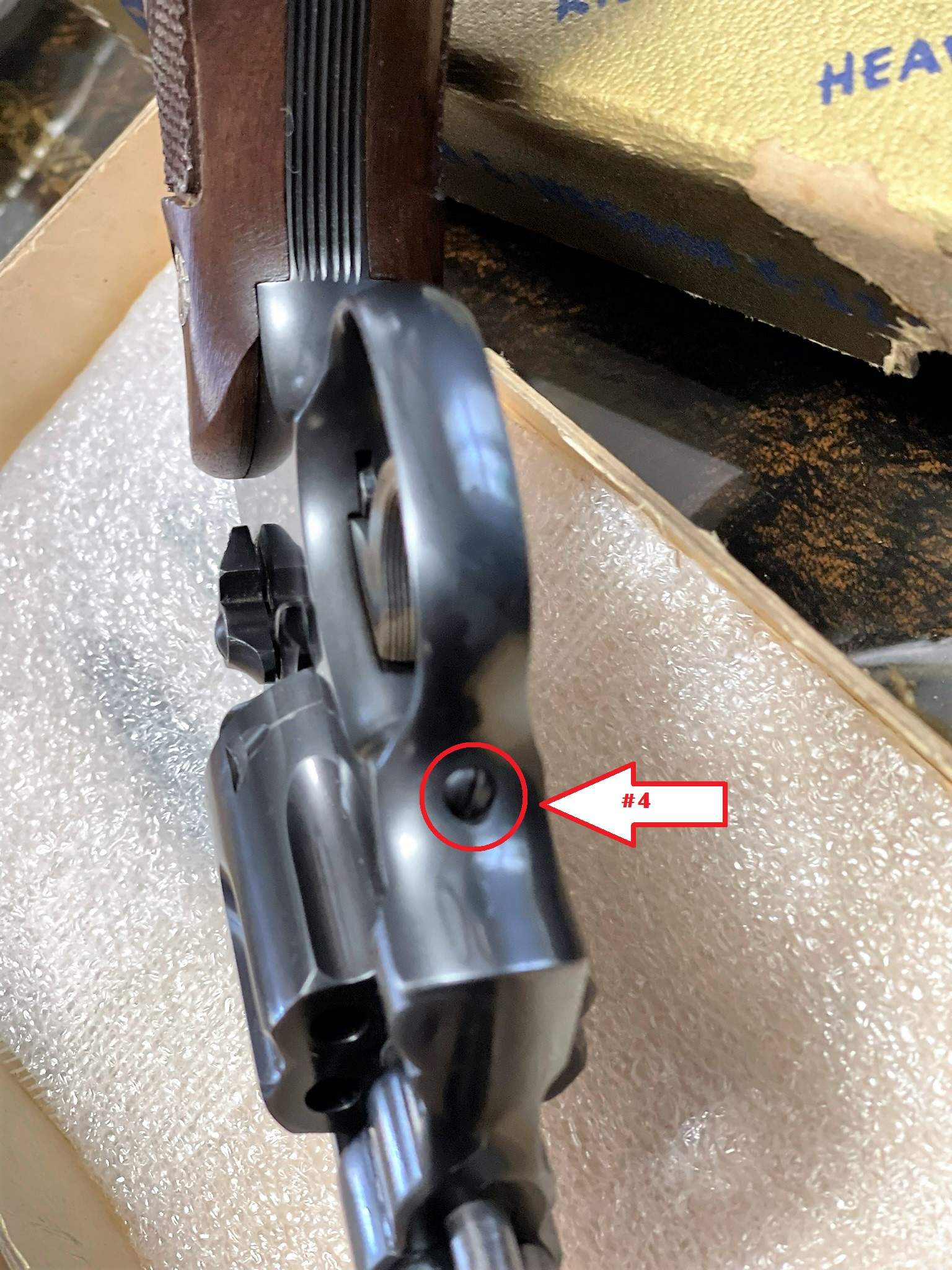
Step Two: Look for the Trigger Guard Screw
If the fifth screw is not present, look at the front of the trigger guard. If that screw remains, you have a 4-screw gun. If that screw is also gone, you have a 3-screw gun.
Collector Takeaway: Screw counts are not just trivia. They tell you where the revolver sits in Smith & Wesson’s transition from older hand-fitted production toward later cost-saving manufacturing changes.
Once you have identified the screw configuration, the next step is dating the revolver by serial number — the Smith & Wesson K-Frame Serial Number Master Guide covers every pre-Model 17 K-22 production range from K101 (1946) through K317,822 (1957).
Pre-17 Means Prior to the Model 17 Marking
In November of 2021, I bought my first Smith & Wesson K-22 Masterpiece. I fell in love with the gun immediately. So much in fact, that I had the idea to buy one for my son and two sons-in-law for Christmas. These guns were made to shoot, and I believed the K-22 could help them develop an interest and appreciation for old guns.
After S&W began calling the K-22 Masterpiece the Model 17 in 1958, the company added dash numbers each time a significant change was made. The complete serial number ranges for both the pre-Model 17 and Model 17 eras are documented in the K-Frame Serial Number Master Guide. The earlier post-war guns, however, belong to the pre-Model 17 period — the era this series is about.
The Four Revolvers That Started This Series
The 1948 gun came from a seller in Iowa. The 1950 gun was purchased from a dealer in Virginia. The 1953 example came from a large retailer in Minnesota. And the first K-22 I purchased — the 1957 specimen — made its way from North Carolina.
The 1948, 1950, and 1953 guns are all 5-screw guns. The 1957 gun is a 4-screw. That small mechanical distinction became the doorway into a larger story about post-war Smith & Wesson craftsmanship.
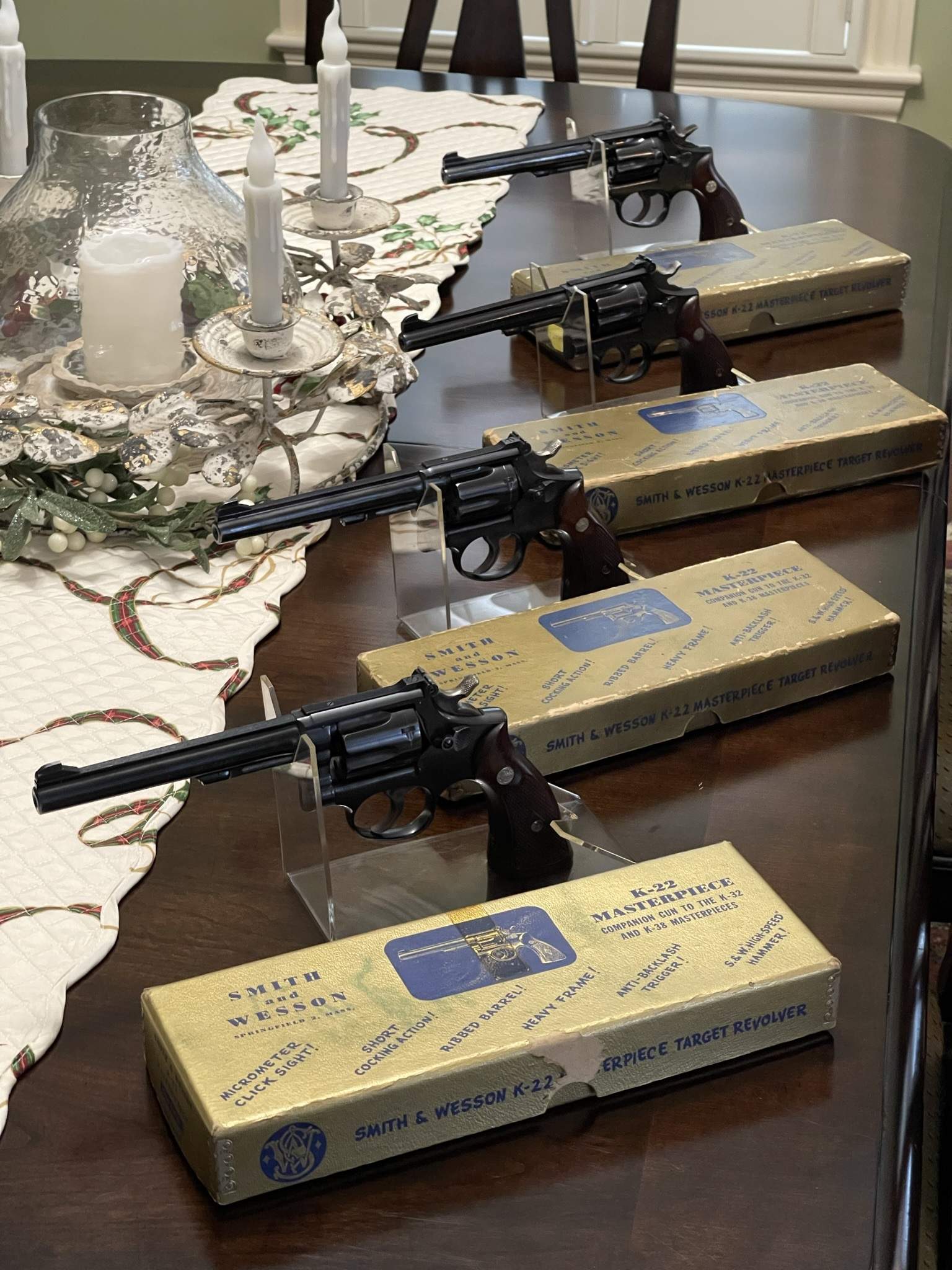
The 1950s Were a Different Time
If you are interested in collecting and shooting old guns, the K-22 Masterpiece is an ideal gun to have. When Colt introduced the Python in 1955, Colt guaranteed 2-inch groups at 15 yards. Smith & Wesson guaranteed the K-22 to shoot 1½-inch groups at 50 yards. Like I said, a different time.
These revolvers were not merely built to function. They were built to prove a point.
Why the K-22 Matters
The K-22 Masterpiece represents a period when craftsmanship, precision, and pride in manufacturing were visible in the finished gun. The revolver was meant to be accurate, balanced, handsome, and durable. It was a serious target revolver chambered in .22 Long Rifle, and that combination made it approachable without making it ordinary.
That is why this series deserves more than a quick mention. The K-22 is not just one gun. It is a story about an era.
Collector Takeaway: The K-22 Masterpiece is not just about screw counts — it represents a period when craftsmanship, precision, and pride in manufacturing were still central to the finished product.
What Comes Next
Part II moves to the most historically important revolver in this group: the 1946 factory showcase K-22. That gun connects Smith & Wesson factory history, Gil Hebard, Roy Jinks, and the post-war relaunch of the K-22 Masterpiece line.
Read Part II: The 1946 Showcase Gun
For production date research on any K-22 in this series, the Smith & Wesson K-Frame Serial Number Master Guide is the companion reference — covering every post-war K-22 serial range from 1946 through the Model 17 era.
From My Bench
For Smith & Wesson history, collector research, display, cleaning, and bench work, I keep a curated list of books and tools that fit the way I work.
Browse My Gear ListAs an Amazon Associate I earn from qualifying purchases. I only link to products, books, tools, and accessories that fit the editorial purpose of Gun Collectors Club.
Continue Through the Smith & Wesson Cluster
This page is part of the Gun Collectors Club Smith & Wesson research cluster. Use these companion pages to move between company history, serial-number dating, Model 10 variants, K-22 target revolvers, magnum duty guns, galleries, and modern S&W arms.
Hub & serial research
Model 10 research
K-22 / Model 17 target revolvers
- K-22 Masterpiece Series Guide
- Post-War Pre-17 K-22 Overview
- 1946 K-22 Masterpiece
- 1948 K-22 Masterpiece
- 1953 K-22 Masterpiece
- 1957 K-22 Masterpiece
- 1960 Model 17-1 K-22
Smith & Wesson photo galleries
Magnum, duty & J-frame revolvers
Modern S&W arms & accessories

About Greg Cook
Greg Cook writes about firearms collecting, personal history, and the stories behind interesting guns. His Army MOS was 76Y, Unit Armorer, and he brings that practical background to his collector articles.