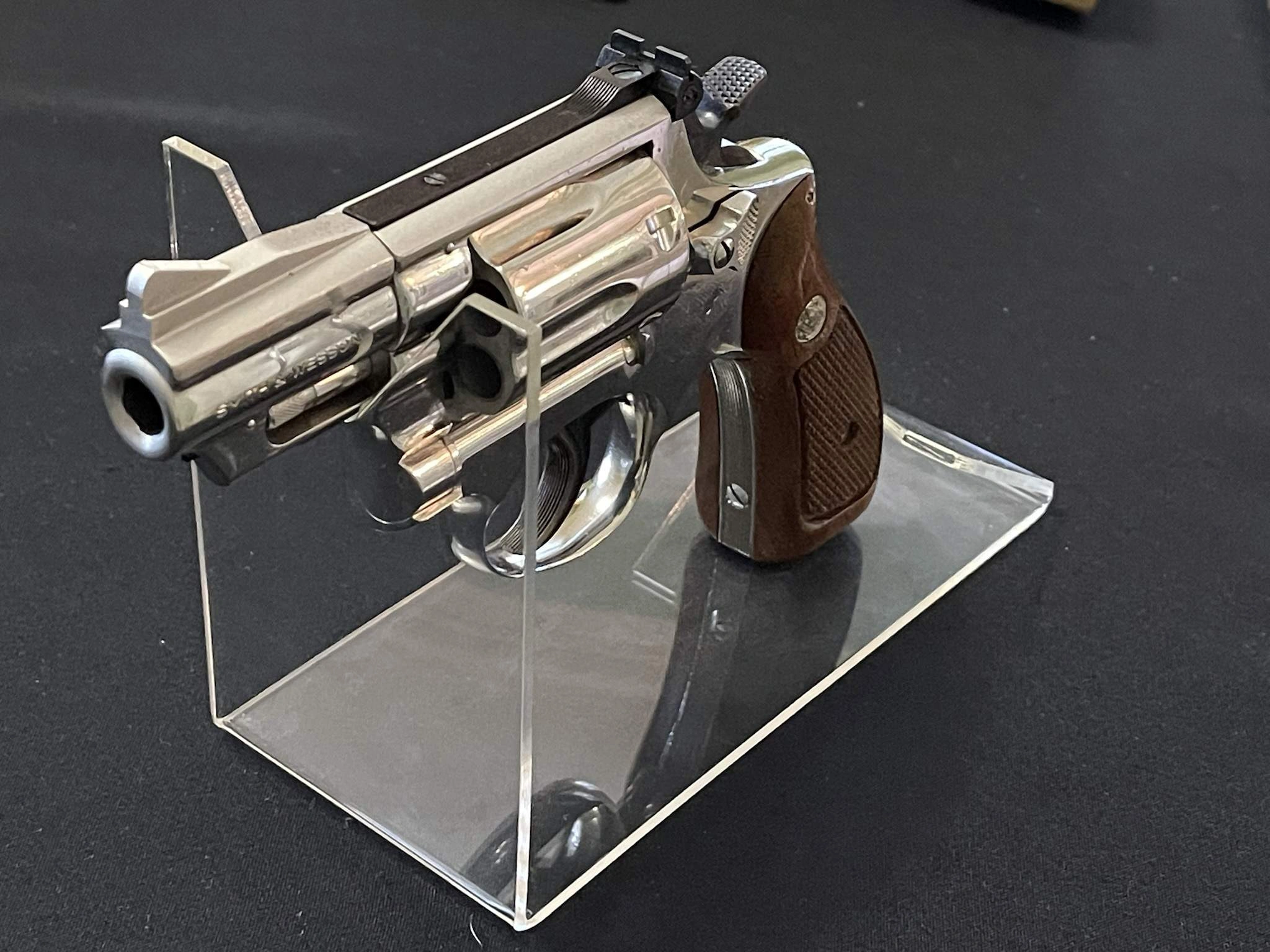
The Smith & Wesson Model 19 dash number is one of the first details I check on a Combat Magnum. The dash number does not replace the serial number, but it tells you which engineering version you are holding and helps separate early pinned-and-recessed collector guns from later production changes.
This guide covers the original Model 19 and the major dash-number changes through the 19-7. Use it alongside the Model 19 Serial Number Dates, the S&W K-Frame Serial Number Master Guide, and the K-Frame Lookup Tool when dating a specific revolver.
Serial Number Companion
Date the Serial Number After You Identify the Dash
Once you know the dash number, use the serial-number table or lookup tool to narrow the production year. A 19-3, for example, tells you the engineering version, but the grip-frame serial number is what places the revolver into a year range.
Model 19 Serial Number Dates Open K-Frame Lookup ToolWhere to Find the Model 19 Dash Number
Open the cylinder and look inside the yoke cut on the frame. Smith & Wesson commonly stamped the model designation there. On a Model 19, the marking may appear as MOD. 19, MOD. 19-1, MOD. 19-2, and so on. The dash number follows the model number and reflects an engineering change.
The serial number is different. On traditional K-frame revolvers, the serial number of record is on the bottom of the grip frame and may be hidden by the stocks. If the gun wears large target stocks, you may need to remove them carefully to see the full serial number.
Smith & Wesson Model 19 Dash Number Table
| Dash Number | Approximate Period | Collector Meaning |
|---|---|---|
| Model 19 | 1957-1959 | Original numbered Combat Magnum period. Early examples are especially interesting to collectors because they connect directly to the pre-dash Model 19 era. |
| Model 19-1 | 1959-1961 | Early engineering change period. These remain classic early K-frame magnums and should be evaluated closely for originality, stocks, finish, and serial range. |
| Model 19-2 | 1961-1967 | Important 1960s collector period. Many buyers associate this era with excellent polish, classic S&W workmanship, and strong pre-1970s appeal. |
| Model 19-3 | 1967-1977 | One of the best-known vintage Model 19 variations. These are pre-lock, pinned-barrel, recessed-cylinder revolvers, and many 1970s examples appear in K-prefix serial ranges. |
| Model 19-4 | 1977-1982 | Late pinned-and-recessed period before the major 1982 change. Clean boxed examples remain attractive to collectors. |
| Model 19-5 | 1982-1988 | Major collector dividing line. The 19-5 era is generally associated with the end of the pinned barrel and recessed cylinder on the Model 19. |
| Model 19-6 | 1988-1994 | Later production era with additional manufacturing changes. Collectors usually compare these against earlier pinned-and-recessed guns and later pre-lock examples. |
| Model 19-7 | 1994-1999 | Final original-production dash-number period before the classic Model 19 line left regular production. Condition and configuration drive appeal. |
Model 19: The Original Numbered Combat Magnum
The original Model 19 marking belongs to the first numbered Combat Magnum period. Earlier guns before the model-number system are normally discussed as .357 Combat Magnums, while the Model 19 name begins with Smith & Wesson's late-1950s model-number system. For collectors, a no-dash Model 19 deserves careful inspection because early details, stocks, finish, and serial range can make a meaningful difference.
Model 19-1
The 19-1 is an early engineering-change variation. It does not have the same broad casual recognition as the 19-3, but serious Smith & Wesson collectors pay attention to these early dash guns because they sit close to the beginning of the numbered Combat Magnum story.
Model 19-2
The 19-2 carries strong 1960s collector interest. Many examples from this period are valued for classic Smith & Wesson finish, clean barrel markings, and early K-frame magnum appeal. As always, the dash number should be considered with the serial number, barrel length, stocks, box label, and condition.
Model 19-3
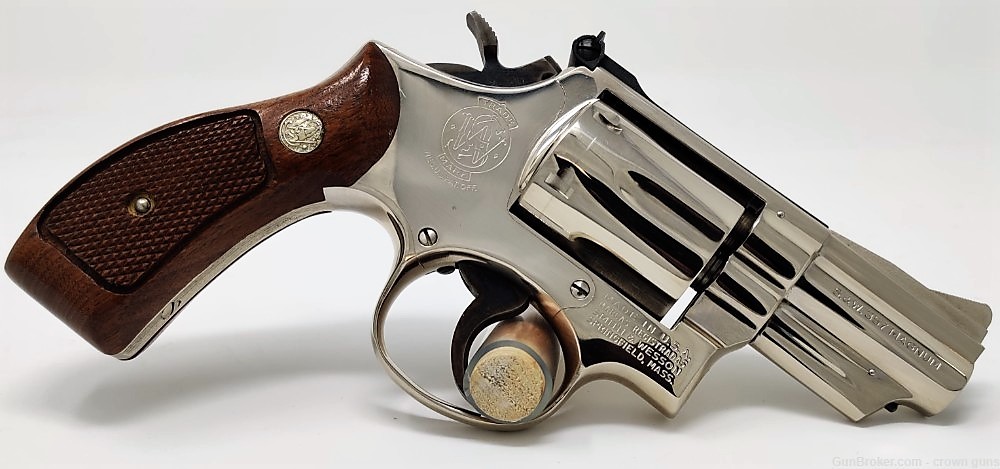
The 19-3 is the version many collectors encounter when researching 1970s Combat Magnums. It is especially attractive because it remains in the pinned-and-recessed era and overlaps with common 1K through 9K serial-number clusters. A 19-3 with original nickel or blue finish, correct stocks, matching box, tools, papers, and factory-letter support can be much stronger than an ordinary shooter-grade example.
Model 19-4
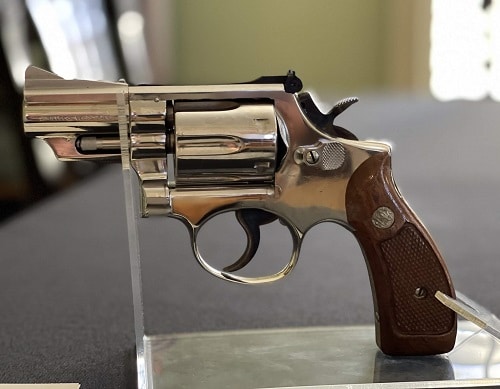
The 19-4 belongs to the late 1970s and early 1980s transition period. It is still generally part of the pinned-and-recessed collector conversation, which makes it important for buyers who want a late classic Model 19 before the 1982 change. Condition, barrel length, and documentation remain the real value drivers.
Model 19-5
The 19-5 is one of the most important collector dividing lines because it is associated with the end of the pinned barrel and recessed cylinder on the Model 19. That does not make every 19-5 undesirable. It means collectors should understand whether they are buying a classic pinned-and-recessed gun or a later production revolver with different manufacturing features.
Model 19-6
The 19-6 represents later original-production Model 19 collecting. These guns may be excellent shooters and still carry strong Combat Magnum appeal, but they are normally judged differently from earlier pinned-and-recessed examples. For a 19-6, focus on mechanical condition, bore, timing, original finish, stocks, box, and whether the revolver remains clean and unaltered.
Model 19-7
The 19-7 is the final dash-number family before the classic Model 19 left regular production in 1999. These examples appeal to collectors who want a late pre-lock Combat Magnum, especially when the gun remains in excellent condition with its original box and paperwork.
Pinned and Recessed: Why Dash Numbers Matter
For many Smith & Wesson collectors, the phrase pinned and recessed is shorthand for a desirable older production style. A pinned barrel has a visible frame pin retaining the barrel. A recessed cylinder has counterbored chambers that enclose the cartridge rims. On the Model 19, the change away from those features is one reason the 19-5 matters so much in collector discussions.
Barrel Lengths, Finishes, and Collector Appeal
Dash number is only one part of the Model 19 story. A 2 1/2-inch nickel revolver, a 4-inch blue duty gun, and a 6-inch target-style example can all share the same dash number but appeal to different buyers. Short-barrel nickel examples often receive strong attention, while 4-inch guns represent the classic police Combat Magnum profile.
| Feature | Collector Note |
|---|---|
| 2 1/2-inch barrel | Compact Combat Magnum profile; especially popular when original, clean, and matched with the correct stocks. |
| 4-inch barrel | Classic duty configuration and the profile many collectors picture when they think of the Model 19. |
| 6-inch barrel | Target and sporting appeal; condition can matter more than barrel length alone. |
| Blue finish | Traditional S&W appearance; polish, edge wear, and originality are important. |
| Nickel finish | Strong display value when factory original and clean; refinish or flaking can sharply reduce value. |
| Box and papers | Matching label, tools, papers, and factory-letter support can move a gun into a stronger collector tier. |
Smith & Wesson Model 19
Use Photos to Confirm the Details
Good photographs help document the dash marking, serial number, stocks, finish, box label, and condition. When comparing a Model 19, collect clear images of the yoke cut, grip-frame serial number, barrel markings, cylinder face, forcing cone, stocks, and box label.
S&W 19-3 Photo Gallery
Photo Notes


Common Model 19 Dash-Number Mistakes
- Confusing dash number with serial number: MOD. 19-3 is not the serial number. It is the engineering version.
- Using yoke assembly numbers as serial numbers: assembly numbers can appear in the crane/yoke area and should not be used for production dating.
- Ignoring the stocks: target stocks can hide the serial number on the bottom of the grip frame.
- Overpaying for a story: agency markings, special-order claims, and rare barrel-length claims should be documented.
- Judging only by age: earlier is not always better if the revolver has poor timing, refinish evidence, altered parts, or heavy wear.
From My Library
For readers researching Smith & Wesson history and Model 19 variations, Roy Jinks and the Smith & Wesson Historical Foundation remain important reference points. A factory letter can be especially useful for high-grade or unusual examples.
History of Smith & WessonAs an Amazon Associate I earn from qualifying purchases. I only link to products, books, tools, and accessories that fit the editorial purpose of Gun Collectors Club.
Collector Resources
Collector Tools & Supplies
Serious collectors rely on a few basic tools to inspect, document, preserve, and store collectible firearms. These internal guides cover the supplies most useful for research, safe storage, photography, and collection records.
Continue Through the Smith & Wesson Cluster
This page is part of the Gun Collectors Club Smith & Wesson research cluster. Use these companion pages to move between serial-number dating, Model 10 variants, K-22 target revolvers, magnum duty guns, galleries, and modern S&W arms.
Hub & serial research
Model 19 / .357 Magnum
- S&W .357 / Model 19 Collector Guide
- Model 19 Dash Number Guide
- Model 19-3 Photo Gallery
- Smith & Wesson Model 58
K-22 / Model 17 target revolvers
Modern S&W arms & accessories

About Greg Cook
Greg Cook writes about firearms collecting, personal history, and the stories behind interesting guns. His Army MOS was 76Y, Unit Armorer, and he brings that practical background to his collector articles.
Research Sources Consulted
This guide was prepared as a collector-facing companion to the Model 19 serial-number and .357 Magnum pages. Dash-number information should be confirmed against factory records and established Smith & Wesson references for high-value examples.
- Roy G. Jinks, History of Smith & Wesson
- Smith & Wesson Historical Foundation factory-letter guidance
- Smith & Wesson collector catalogs and period product literature
- Standard Catalog of Smith & Wesson reference data
- Author observations and collector notes from documented Model 19 examples