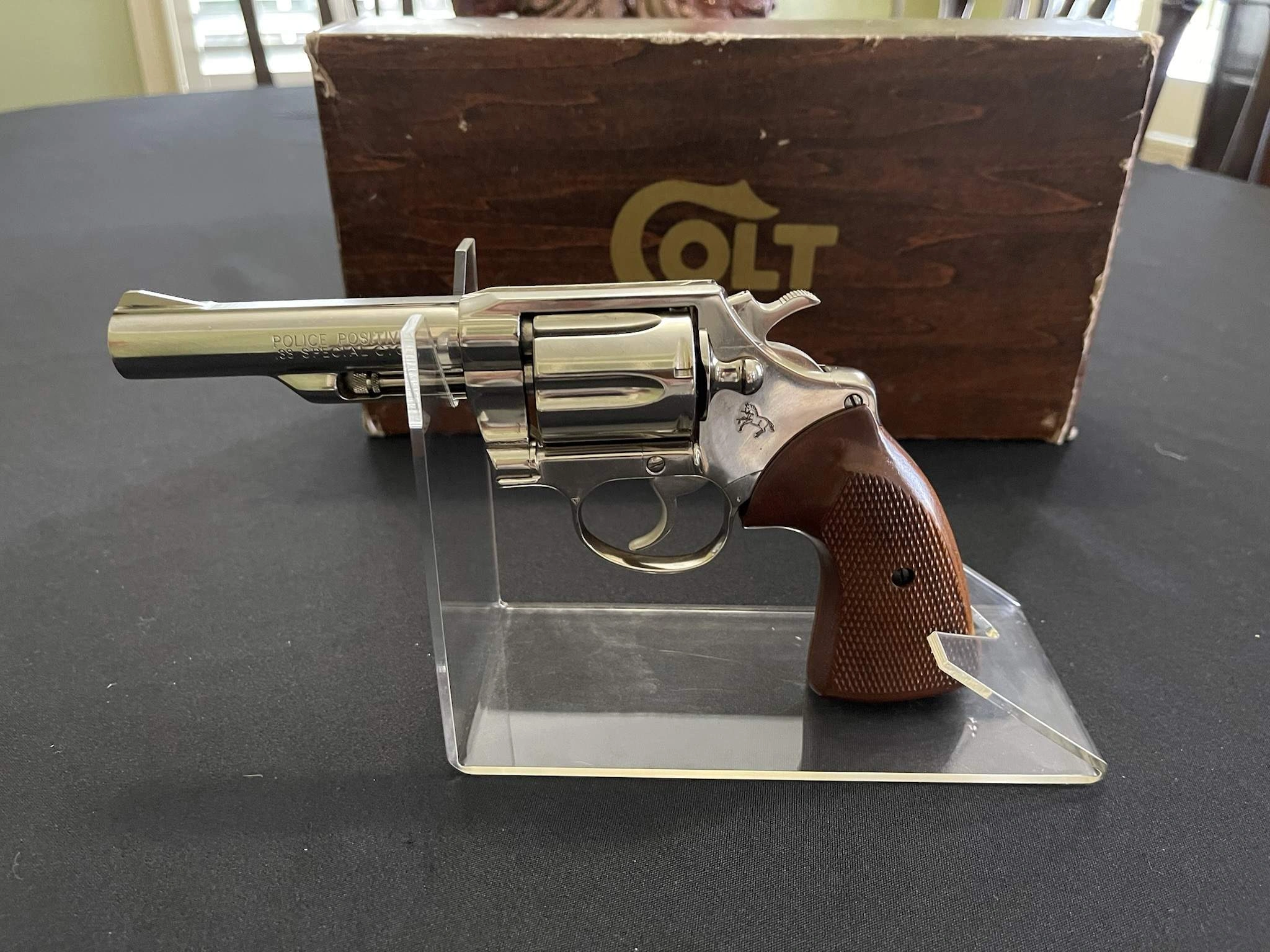
The Colt Police Positive is one of those revolvers that makes me slow down before I say anything about value. It is old enough to be interesting, common enough to be overlooked, and connected to enough better-known Colt D-frame revolvers that it deserves more respect than it usually gets.
For additional model and manufacture-year context, visit the Police Positive collector research in the Colt serial-number lookup tool.
I do not like throwing around words like “rare,” “investment grade,” or “museum quality” just because a revolver has honest age on it. A Colt Police Positive can be valuable, but most of the value is not in the name alone. It is in the exact model family, condition, original finish, chambering, issue period, barrel length, grips, mechanical condition, paperwork, and story.
Value guide baseline: The numbers on this page are collector ranges, not offers, appraisals, or insurance values. A clean Police Positive may sell like an affordable old Colt one week and like a specialty D-frame the next. Use the ranges to decide whether the gun deserves deeper research, not as the final word.
Collector Series
Colt Police Positive Series
The Police Positive pages now work as a single collector series: start with identification, follow the timeline, date the revolver, then evaluate value and provenance.
Quick Value Snapshot
For ordinary Colt Police Positive and Police Positive Special revolvers, the modern market often clusters in the few-hundred-dollar range, with condition and configuration driving the spread. Current market summaries show used Police Positive Special averages around the low $400s, while broad retail valuation guides often put typical Colt Police Positive examples roughly in the $300 to $800 range. That tracks with what I see as a practical collector reality: most examples are not Python money, but nice examples are no longer throwaway guns.
| Category | Typical Collector Range | What Moves It Up or Down |
|---|---|---|
| Rough / parts / poor bore | $100-$250 | Heavy pitting, timing issues, missing parts, altered barrel, poor bore, or unattractive refinish. Some still have parts value, but collector value is limited. |
| Honest shooter grade | $250-$450 | Mechanically sound but worn. Finish wear, replaced grips, no box, and ordinary chambering usually keep it here. |
| Very good standard Police Positive | $400-$700 | Original finish, correct stocks, good bore, strong markings, and no major mechanical issues. Early pre-war condition helps. |
| Excellent Police Positive Special | $500-$900 | .38 Special chambering, strong pre-war finish, desirable barrel length, original stocks, and crisp mechanics can push it above ordinary examples. |
| Target / boxed / high-condition examples | $800-$1,500+ | Target configuration, box, papers, high original finish, scarce barrel length, or police-contract markings can move the gun above generic guides. |
| Documented provenance or factory special features | Case-by-case | Factory engraving, famous ownership, verified shipment, department documentation, or historical provenance can overwhelm ordinary price guides. |
These ranges are intentionally conservative. A live auction, local shop, estate sale, online marketplace, or specialty Colt collector may produce a different number. The tighter the condition and documentation, the less useful a generic range becomes.
Why the Police Positive Is Collectible
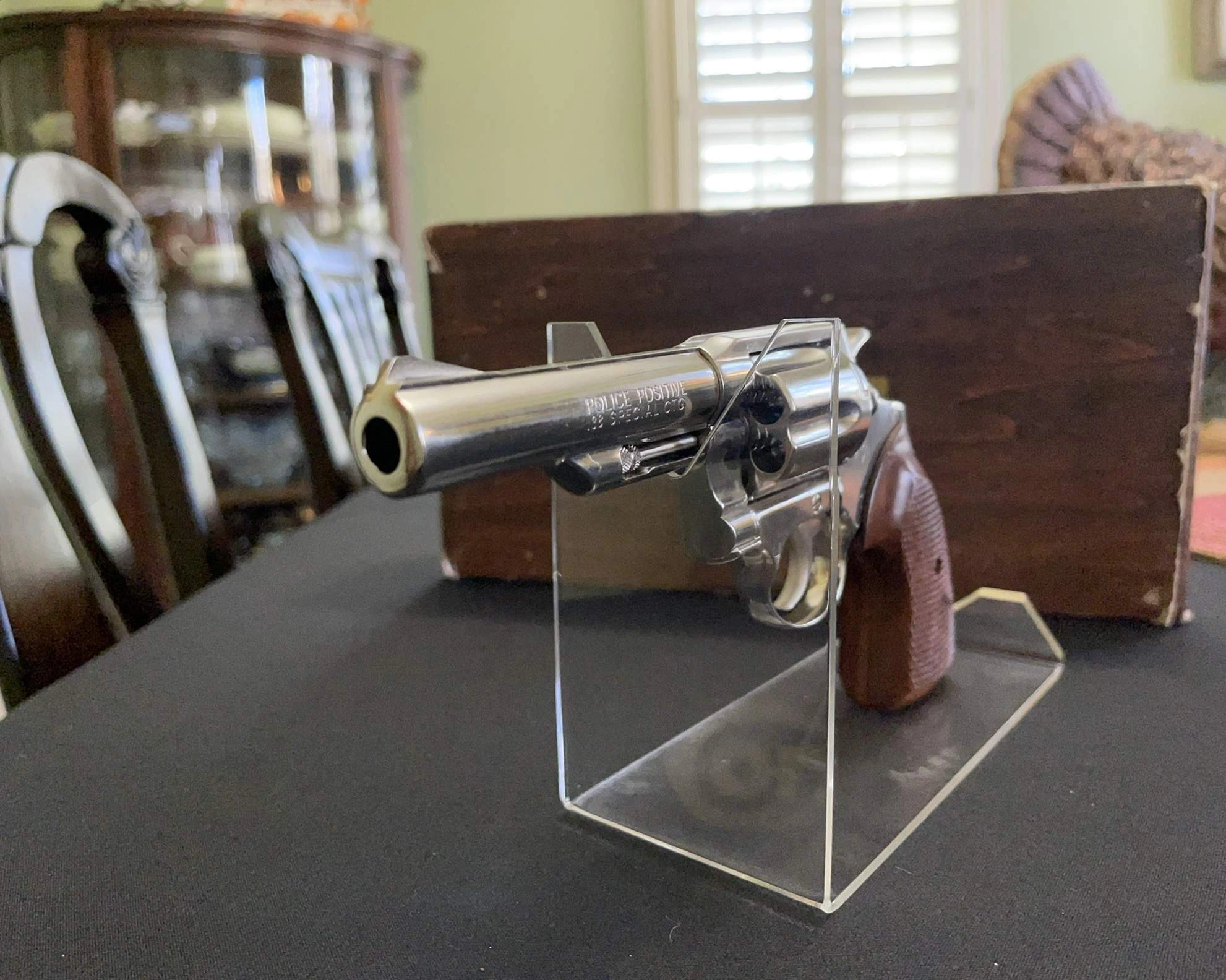
The Police Positive is collectible because it sits in the middle of Colt’s law-enforcement revolver story. It is not just a small old revolver. It connects the New Police, the Positive Lock safety, the Police Positive Special, the Detective Special, the Cobra, the Agent, the Viper, and even the broader D-frame family that helped Colt stay relevant in the twentieth-century revolver market.
That does not mean every example is expensive. In fact, one of the strange things about the Police Positive is that it has long been underappreciated compared with its better-known offspring. Gun Digest once called it the “Rodney Dangerfield of revolvers,” and that is still a pretty fair collector shorthand. It gets respect from people who study Colt D-frames, but casual buyers often walk past it.
That underappreciation is exactly what makes the model interesting. A collector can still buy history, mechanics, and Colt workmanship without paying Python prices. But the trick is buying the right example, not just the first one that says Colt on the barrel.
What Collectors Want Most
- Original condition. Original blue or nickel with honest wear usually beats a shiny refinish with soft markings. A tired original gun and a refinished gun are two different value conversations.
- Correct identification. Standard Police Positive, Police Positive Special, Police Positive Target, Bankers Special, Detective Special, and late Police Positive markings should not be blended together.
- Pre-war quality. Early Colt polishing, hard rubber stocks, walnut transition features, and period finish can make even modest chamberings interesting.
- Target and special variants. Police Positive Target revolvers, Bankers Special revolvers, and unusual D-frame branches bring more collector attention than ordinary fixed-sight examples.
- Documentation. A box, papers, factory letter, department records, family history, or shipment documentation can move a gun out of the generic price-guide lane.
Model Family Is the First Value Filter
The first mistake in valuing a Police Positive is treating the name as one model. It is better to treat the Police Positive as a family with several branches. The standard Police Positive is usually not valued the same way as a Police Positive Special. A Police Positive Target is a different animal again. A Bankers Special or Detective Special may share ancestry, but it deserves its own value logic.
Standard Police Positive
The standard fixed-sight .32 or .38 New Police examples are the foundation. They are historically important, but many remain affordable unless condition, age, finish, stocks, or provenance lifts them.
Police Positive Special
The Special usually attracts more practical buyer interest because of .38 Special and .32-20 associations. Pre-war examples with strong finish and correct stocks are the ones I would study first.
Police Positive Target
The Target models deserve a closer look. Adjustable sights, smaller-caliber target use, and fewer surviving clean examples can produce stronger collector interest than ordinary service guns.
Late Fourth Issue
The 1977-1978 late guns are not pre-war Colts, but they are end-of-era D-frames. The shrouded ejector rod and short production window give them a story beyond ordinary utility.
Condition: The Biggest Driver
Condition is where most Police Positive value is won or lost. With a working Colt revolver, I care about the mechanical condition first: lockup, timing, cylinder carry-up, bore, forcing cone, crane fit, cylinder gap, and whether the gun has been abused. A glossy gun with mechanical problems is not automatically a better buy than a holster-worn gun that still locks up correctly.
Cosmetically, original finish is the dividing line. Honest muzzle wear, high-edge wear, and grip wear can be acceptable. Pitting under a new finish, washed-out markings, rounded edges, buffed sideplates, and mixed polish patterns are warning signs. A refinish can make a revolver attractive, but it usually knocks the gun down as a collector piece unless the work itself has a documented reason.
My rule is simple: I would rather own a clean, honest, slightly worn Police Positive than a shiny old Colt that has had the story buffed off of it.
Blue, Nickel, and Refinish Questions
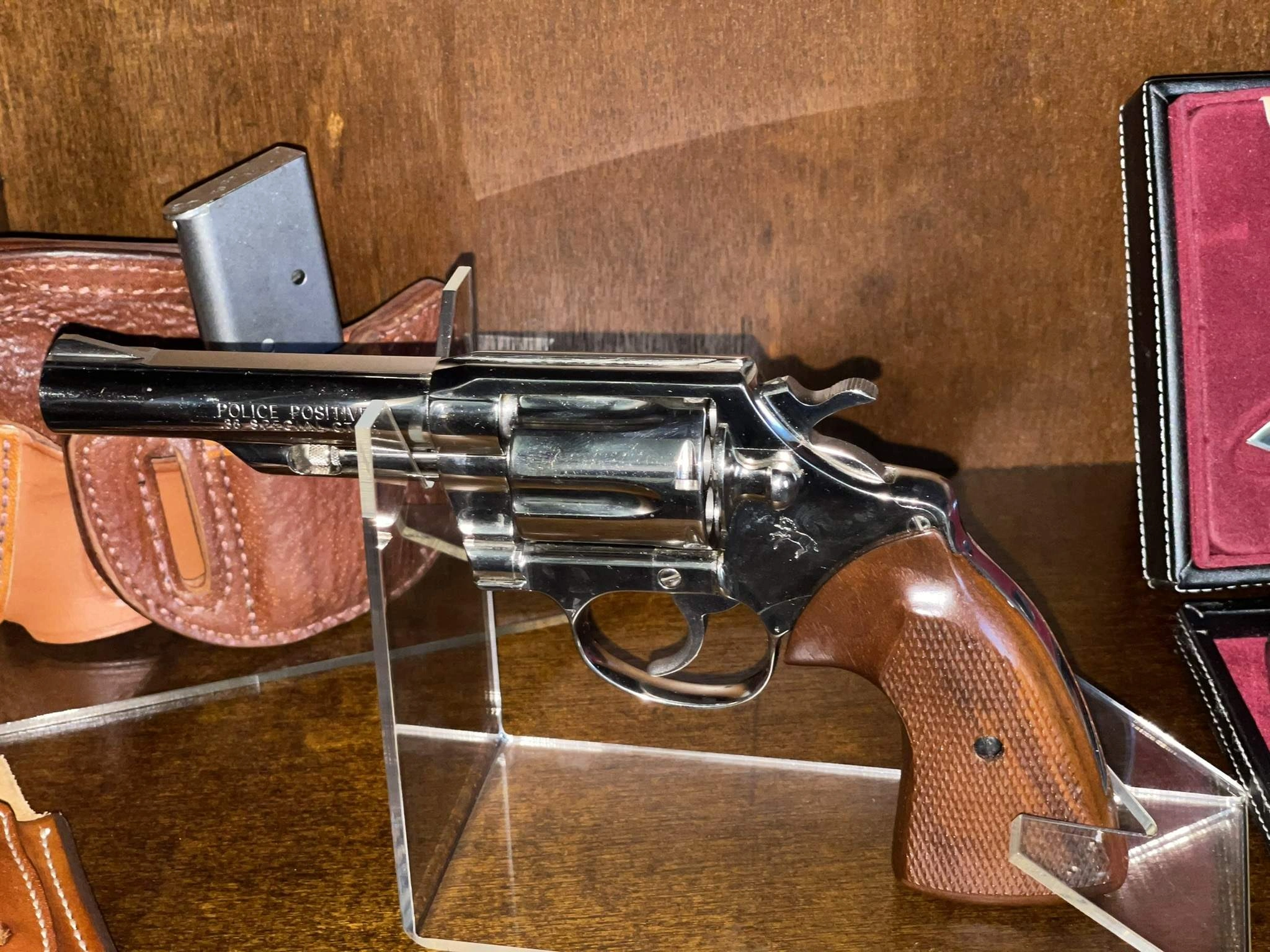
Blue was the standard finish and is still the finish most collectors judge carefully. A pre-war Colt with strong original blue is always going to get my attention. Nickel can be desirable too, especially when the plating is original and in strong condition, but nickel also makes problems easier to hide and harder to repair cleanly. Flaking, bubbling, and polishing under the plating need close inspection.
A refinished Police Positive is not worthless. It may still be a fine shooter or display piece. But the value should reflect what it is. Refinished metal, replaced stocks, altered sights, non-factory engraving, and swapped barrels should be described plainly. That kind of honesty builds trust, and it keeps the buyer from paying original-condition money for a cosmetic rebuild.
Grips, Stocks, and Small Parts
Police Positive grips can tell part of the story, but they can also lie. Early hard rubber stocks, later walnut stocks, medallions, service stocks, and late grips all have their own context. Because grips are easy to change, I treat them as evidence, not proof.
When I inspect a gun, I look for fit around the frame, screw condition, checkering wear, medallion style, whether the grip wear matches the metal wear, and whether there are cracks or chips. Original stocks can add value; incorrect stocks can lower it; replacement stocks can be perfectly acceptable on a shooter-grade revolver if the price reflects it.
Pre-War vs Post-War Values
Pre-war Colt revolvers generally have stronger collector pull because of finish quality, early features, hard rubber or early walnut stocks, and the romance of the police revolver era. A pre-war Police Positive with honest condition can be a better collector buy than a later example that is mechanically fine but historically ordinary.
Post-war Police Positive Special revolvers should not be dismissed, though. They can make excellent collection examples when condition is strong and the gun is complete. A later boxed example with paperwork may tell a more complete story than an earlier gun with missing stocks, an uncertain refinish, and no documentation.
Police Positive Target Premiums
The Police Positive Target is the value outlier. American Rifleman notes that the Target variation can carry an 80 to 90 percent premium over standard fixed-sight models. That does not mean every Target model is expensive, but it does mean a clean adjustable-sight example deserves more attention than a common fixed-sight service revolver.
With Target models, sight completeness and originality matter. A missing rear sight, wrong sight blade, altered barrel, replacement grips, or refinished metal can reduce the advantage quickly. On the other hand, a clean pre-war Target with honest finish and correct parts can be one of the best Police Positive-family buys.
The Fourth Issue Value Question
The Fourth Issue Police Positive interests me because it is easy to misunderstand. It is not a pre-war service revolver, and it is not a Python. It is a late D-frame Colt that arrived when the revolver world was changing. The shrouded ejector rod gives it a modernized look, and the short 1977-1978 window gives it a better story than many ordinary late service revolvers.
I would not call every Fourth Issue example “rare” just to push a price. But I do think clean Fourth Issue guns deserve a separate mental category. A nickel example with correct grips, strong finish, and clean mechanics is a much more interesting gun than a worn example with little condition left. Boxed late examples deserve even more attention because the box helps document the end-of-line story.
Premium Features That Can Matter
| Feature | Why It Matters | Documentation Needed |
|---|---|---|
| Factory letter | Can confirm shipment date, destination, configuration, finish, barrel length, and sometimes special features. | Colt Archive Letter, not just a serial-number estimate. |
| Original box and papers | Helps establish completeness and can make late or high-condition examples more desirable. | Box label, serial match, manual, hang tag, paperwork photos. |
| Police department marking | Can create a real historical story if the marking is authentic and traceable. | Agency records, letter, contract information, or strong provenance. |
| Target configuration | Adjustable-sight Target models are less ordinary than fixed-sight service guns. | Correct sights, matching barrel/configuration, condition, and serial context. |
| Original nickel | Can be attractive and desirable when factory original and not flaking or polished over problems. | Condition review and preferably a Colt letter for higher-value examples. |
| Famous or traceable provenance | Provenance can overwhelm ordinary model values, but only when it is documented. | Letters, affidavits, auction provenance, family documentation, chain of custody. |
Provenance: When the Story Becomes the Value
Most Police Positive revolvers are valued as collectible old Colt revolvers. A few are valued as artifacts. The Al Capone Police Positive is the extreme example: an ordinary model became extraordinary because the provenance was the story. Christie’s described the revolver by serial number, configuration, ownership chain, supporting correspondence, affidavit, and a Colt factory archive letter.
That lesson matters even for normal collectors. A police-marked revolver, family heirloom, detective’s sidearm, shopkeeper’s revolver, or boxed shipment can become more meaningful when the evidence is preserved. The value does not come from making the story bigger. It comes from proving the story you already have.
Why I Would Letter Any Old Colt Worth Keeping
Colt’s online serial-number lookup is useful, but Colt itself cautions that lookup results are approximate and not a comprehensive database. For value work, the lookup is the first step, not the finish line.
If you own an old Colt that you plan to keep, sell, insure, or pass down, I would strongly consider ordering a Colt Archive Letter. Colt describes the archive letter as a way to document original specifications and delivery information when records are available. That is exactly the sort of evidence that can matter when a value claim depends on original finish, special order features, shipment destination, engraving, or unusual configuration.
My advice: Use Colt’s serial-number lookup first, then order a Colt Archive Letter for any old Colt you own that has real collector interest. The letter may not always produce a dramatic story, but it can preserve the truth before the next owner has to guess.
How I Read Current Market Data
Current price aggregators are useful, but they can flatten the model. They may combine standard Police Positive revolvers, Police Positive Specials, Target models, late guns, altered examples, and high-condition examples into a single average. That average is helpful for a quick reality check, but it should not be used to price a specific revolver without reading the description and looking at the photographs.
As of this writing, the current aggregated numbers I found place ordinary Police Positive Special used averages around the low $400s, and Police Positive Target averages somewhat higher. Recent examples also show why averages can mislead: rough or ordinary examples may land in the low hundreds, while high-condition, Target, contract-marked, boxed, or documented examples can push much higher. That is exactly why this page focuses on value factors rather than one magic number.
What Hurts Value
- Refinished metal without disclosure: A refinish is not a crime, but pretending it is original is a problem.
- Buffed markings: Soft barrel legends, rounded edges, and washed roll marks lower collector confidence.
- Wrong grips: Replacement stocks may be fine on a shooter, but they matter on a high-condition collector gun.
- Mechanical problems: Timing, lockup, endshake, carry-up, and bore condition all affect value.
- Wrong chambering assumptions: Standard Police Positive .38 New Police / .38 S&W is not the same value discussion as Police Positive Special .38 Special.
- Unproven “rare” claims: Rare features need evidence. The adjective alone does not add money.
Buying Advice
If I were buying one Police Positive to keep, I would look for original condition first, then model interest. A pre-war Police Positive Special in .38 Special with strong original blue, correct stocks, good mechanics, and a clean bore would be high on my list. A Police Positive Target would get a second look. A Fourth Issue in crisp condition would interest me as an end-of-era D-frame. A rough refinished example would only interest me at shooter money.
I would avoid any listing that leans too hard on “rare” while avoiding the facts. Tell me the serial range. Show me the barrel markings. Show me the cylinder, crane area, butt, grips, and both sides of the frame. Tell me whether it is original finish, refinished, rebarreled, or uncertain. The more honest the listing, the easier it is to pay a fair price.
Selling Advice
If you are selling a Police Positive, the best way to increase trust is not hype. It is documentation. Give the buyer clean photographs, exact model markings, chambering, barrel length, finish description, mechanical notes, serial-number date estimate, and whether you have a Colt letter. If you do not know whether the finish is original, say so.
A well-described ordinary Colt can bring a better result than a poorly described “rare” Colt. Serious collectors are used to seeing inflated language. What gets their attention is evidence.
Insurance and Estate Notes
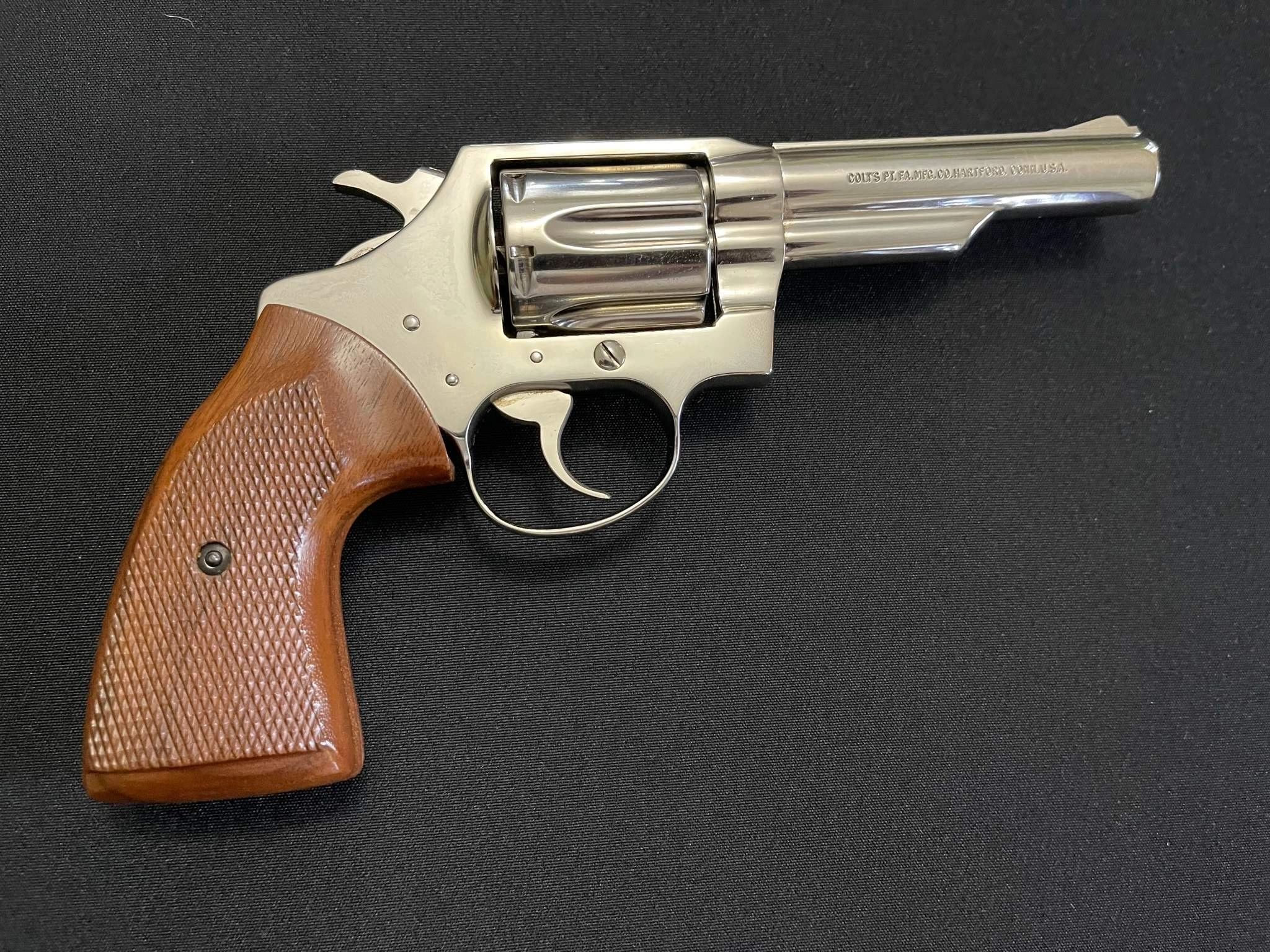
For an insurance schedule or estate inventory, I would not rely only on a single online price. Record the serial number separately, photograph the revolver, identify the correct model family, note visible condition, and save comparable sales or valuation references as of the date you prepare the inventory. If the Colt has unusual features, order the archive letter before the story gets separated from the gun.
As a CPA, I also think documentation matters because memory gets expensive later. A future heir may not know the difference between a standard Police Positive, a Police Positive Special, and a Detective Special. A clear inventory note can save them from selling a documented old Colt as a generic revolver.
My Practical Collectability Ranking
| Rank | Category | Why It Gets Attention |
|---|---|---|
| 1 | Documented provenance / factory special features | Factory engraving, named ownership, shipment history, or rare documented features can outweigh normal model pricing. |
| 2 | Police Positive Target and specialty branches | Adjustable sights, chambering, and fewer clean surviving examples can lift these above ordinary fixed-sight guns. |
| 3 | High-condition pre-war Police Positive Special | .38 Special appeal, pre-war Colt finish, and correct features make these strong D-frame collector candidates. |
| 4 | High-condition standard Police Positive | Historically important, still affordable in many cases, and especially appealing with correct early stocks and original finish. |
| 5 | Clean late Fourth Issue examples | End-of-era D-frame appeal, short production window, shrouded ejector rod, and good cross-linking with Viper-era Colt interest. |
| 6 | Ordinary shooter-grade examples | Still worthwhile old Colts, but value should be practical unless condition or documentation changes the story. |
Collector Takeaway
The Colt Police Positive is not a sleeper because every example is suddenly expensive. It is a sleeper because a thoughtful collector can still find real Colt history without chasing the most obvious blue-chip names. The model rewards careful eyes: original finish, correct grips, precise chambering, honest mechanics, issue period, and documented story.
My advice is to buy the evidence, not the adjective. If the gun is ordinary, pay ordinary money and enjoy it. If the gun is special, prove why. That is the difference between collecting old Colts and merely accumulating old revolvers.
From My Bench
For valuing a Police Positive or any other old Colt, I photograph the complete revolver first, then close-ups of the barrel markings, cylinder, crane area, serial-number location, grips, sights, box label, and any department or owner markings. The photos become part of the value record.
Collector GearAs an Amazon Associate I earn from qualifying purchases. I only link to products, books, tools, and accessories that fit the editorial purpose of Gun Collectors Club.

About Greg Cook
Greg Cook is a CPA and firearms collector who writes about gun collecting, history, provenance, ownership impressions, and the practical details that make individual firearms memorable. His Army MOS was 76Y, Unit Armorer.
Sources and References
These sources informed the value ranges, collectability discussion, production context, provenance section, and factory-letter guidance. Values change; treat these as research anchors, not appraisals.
- TrueGunValue: Colt Police Positive Special price and historical value — used for current used-market average, 12-month average, and recent-sale context.
- TrueGunValue: Colt Police Positive Target price and historical value — used for Target-model current-market comparison.
- WeBuyGuns: Colt Police Positive Value & Current Market Price — used as a broad 2026 retail valuation range by condition.
- American Rifleman: “What’s It Worth? Colt Police Positive Special” — used for historical appraisal context, New Police background, Positive Lock development, Police Positive Special development, and early value comparison.
- American Rifleman: “The Colt Police Positive: A Look Back” — used for model history, chamberings, barrel lengths, Target-model premium, Detective Special lineage, total production context, and 1995 end-of-line discussion.
- American Rifleman: “I Have This Old Gun: Colt Police Positive” — used for Positive Lock / hammer-block explanation, Colt fit-and-finish comments, and broad Police Positive family context.
- Gun Digest: “Nobody Wants This Colt” — used for the underappreciated-collector argument and the Police Positive family tree of related Colt revolvers.
- Colt Serial Number Lookup — recommended as the first stop for a production-date estimate, with Colt’s caution that lookup results are approximate.
- Colt Archive Services — used for factory-letter guidance, original specifications, delivery information, and documentation value.
- Christie’s: Al Capone Colt Police Positive lot — used as an example of provenance overwhelming normal model-value ranges.
- Gun Collectors Club: Colt Police Positive Guide — related GCC pillar page for Fourth Issue context, Positive Lock background, issue table, and Police Positive / Detective Special discussion.
- Gun Collectors Club: Colt Police Positive Timeline — companion timeline article for issue-era and family-tree research.
- Gun Collectors Club: Colt Police Positive Serial Number Guide — companion serial-number article for production-date orientation.
Colt Police Positive Research Path
Use this values page with the related GCC Police Positive articles so readers can move from value factors into identification, timeline placement, and serial-number research.