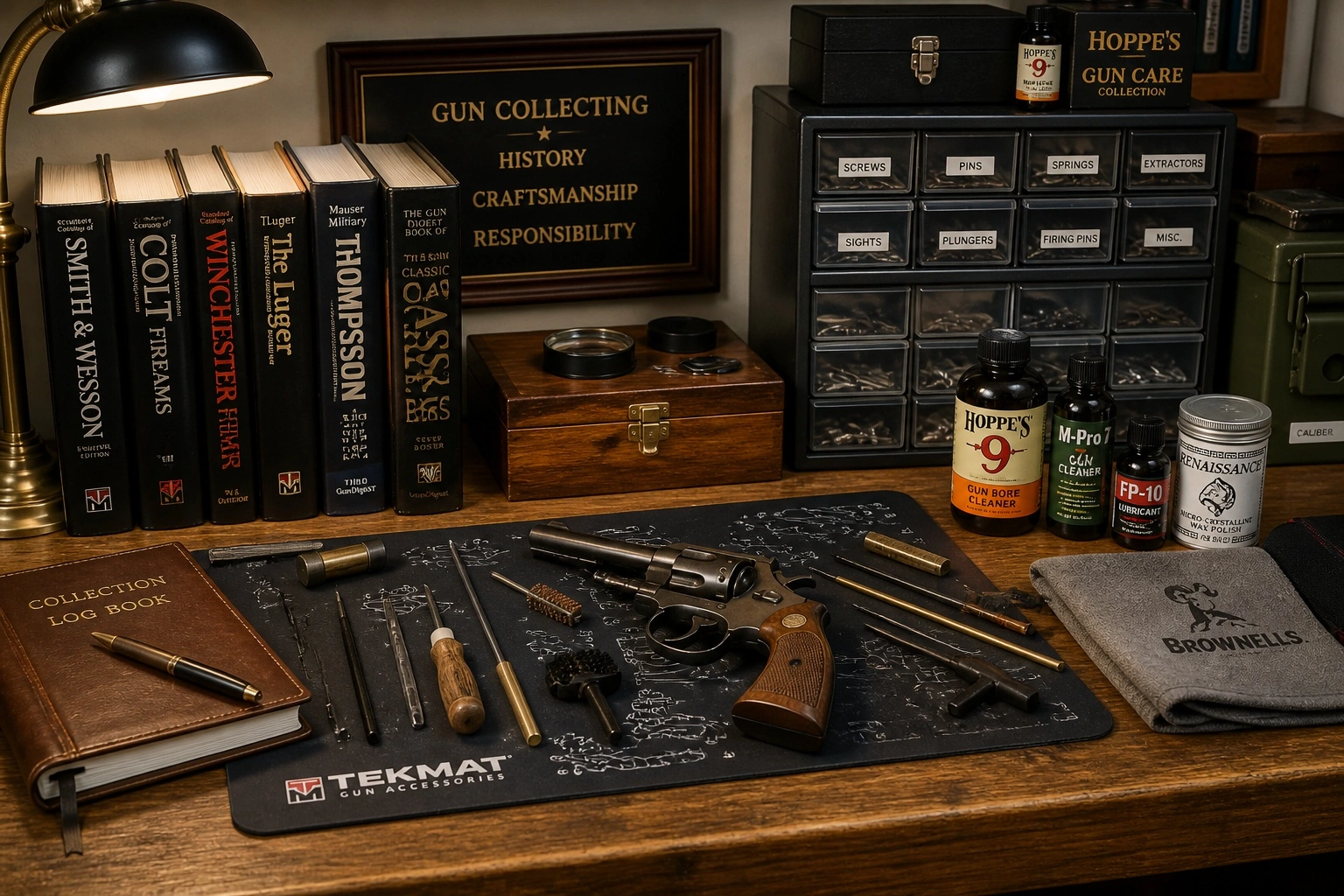
If you own more than a few firearms, you already have a collection whether you think of it that way or not. At some point, every collector faces the same question: what is this gun collection actually worth?
The answer is rarely a single number. Firearm value is not what you paid, what you hope it is worth, or what someone casually says at a gun show. A useful value comes from the intersection of condition, originality, rarity, demand, and recent market evidence.
In This Guide
Step 1: Understand the Different Types of Firearm Value
Before assigning numbers, define what kind of value you are measuring. A dealer, an insurance company, an auction bidder, and an estate may all look at the same gun differently.
| Type of Value | What It Means | When It Matters |
|---|---|---|
| Retail value | What a buyer might pay from a dealer or private seller. | Buying, selling, and general market comparison. |
| Wholesale value | What a dealer may pay when buying for resale. | Fast liquidation or trade-in situations. |
| Auction value | What the market actually paid in a public sale. | Comparable sales and realistic pricing. |
| Insurance value | Replacement cost, often higher than liquidation value. | Coverage limits and scheduled property policies. |
| Estate value | Fair market value for planning or estate administration. | Heirs, executors, and estate planning files. |
Collectors get into trouble when they mix these categories. Retail value, insurance value, and quick-sale value are not the same thing.
Step 2: Condition and Originality Drive Gun Values
Condition is usually the single biggest driver of value. A small difference in finish, originality, box, papers, or mechanical condition can change the price dramatically.
- Original finish versus refinished metal
- Factory configuration versus later alterations
- Matching parts, correct grips, and correct sights
- Bore condition and mechanical timing
- Box, papers, tools, letters, receipts, or provenance
Collectors often pay premiums for originality, not perfection. Honest wear on a desirable, correct gun can be more attractive than a refinished example that looks better at first glance.
Step 3: Use Real Sales Data, Not Asking Prices
The most reliable valuation method is to look at what comparable guns actually sold for. Asking prices are useful only when they are supported by completed sales.
Useful sources include completed auction results, dealer archives, specialty auction houses, and marketplaces that show closed transactions. When comparing sales, match the details as closely as possible: model, caliber, barrel length, finish, condition, documentation, and accessories.
Step 4: Rarity Does Not Always Mean Value
A gun can be rare and still not especially valuable. Value comes from the combination of scarcity and demand. A limited-production model with strong collector interest may command a premium. An obscure variation with little buyer demand may not.
Look for signals such as documented factory letters, limited production runs, special-order features, historic ownership, condition rarity, and strong collector communities around the model.
Step 5: Build a Simple Gun Collection Inventory
Most collectors wait too long to document what they own. A simple inventory can prevent confusion later and helps you make better decisions while you are still actively managing the collection.
- Make, model, caliber, and serial number
- Purchase date and purchase price
- Estimated current value and source of estimate
- Condition notes and known defects
- Photos, receipts, factory letters, and provenance notes
- Storage location and transfer considerations
Step 6: Estimate the Total Collection Value
Once individual values are estimated, decide whether you are valuing the collection as a long-term retail collection or as a liquidation package. A carefully sold collection may bring more than a rushed bulk sale.
For planning purposes, it can be helpful to group firearms into tiers: high-value collector pieces, solid middle-market guns, common shooters, and accessories or parts. This keeps one exceptional gun from distorting the way you think about the whole collection.
Gun Collection Valuation for Estate Planning
Valuation becomes especially important when a collection may one day be handled by someone who does not know firearms. Your heirs may not know which gun is ordinary, which one is rare, or which box of paperwork belongs with which firearm.
For that reason, valuation and documentation belong together. A good inventory helps heirs avoid selling a valuable piece too cheaply, over-insuring ordinary items, or separating documentation from the gun it supports.
Related guide: Estate Planning for Gun Collections.
Collector Takeaway
Valuing a gun collection is not about finding one magic number. It is about understanding a realistic range and knowing why a particular firearm belongs in that range.
The best collections are not just valuable. They are understood, documented, and easier for the next person to handle.
From My Bench
If you are documenting or maintaining your own collection, I keep a curated list of reference books, cleaning gear, storage items, and bench tools that fit the way I work.
Browse My Gear ListAs an Amazon Associate I earn from qualifying purchases. I only link to products, books, tools, and accessories that fit the editorial purpose of Gun Collectors Club.

About Greg Cook
Greg Cook writes about firearms collecting, personal history, and the stories behind interesting guns. As a CPA and longtime collector, he brings a practical perspective to valuation, documentation, and long-term collection planning.