Use this Colt Police Positive .38 Special serial numbers guide to estimate when your revolver was manufactured. Compare your serial number with Colt production records, then verify barrel markings, frame configuration, grips, finish, and other identifying features to identify the correct production series.
To compare this firearm with Colt production records, use the Police Positive model research in the Colt serial-number lookup tool.
Colt Police Positive Quick Answer
- Production: 1907–1978, with a Mark V revival in 1994–1995.
- Best dating method: Compare the serial number with production tables and verify physical features.
- Frame: Colt D-Frame.
- Factory verification: Colt Archive Letter.
Collectors today study Colt Police Positive revolvers for their historical police use, compact D-frame size, production variations, Positive Lock safety system, and connection to the broader evolution of Colt double-action revolvers. Early examples from the pre-war years remain especially desirable, although later production revolvers—including the short-lived Fourth Issue guns from 1977–1978—have developed their own collector following.
The Police Positive line served police officers, security guards, detectives, and civilian owners for decades. Its reputation for reliability, manageable size, and modern safety features helped Colt compete aggressively with Smith & Wesson and other revolver manufacturers during the early and middle decades of the twentieth century.
Understanding the production years, issue changes, grips, barrel configurations, and relationship to the Colt Detective Special helps collectors identify authentic examples and place individual revolvers within Colt’s broader D-frame family history.
Collector Series
Colt Police Positive Series
The Police Positive pages now work as a single collector series: start with identification, follow the timeline, date the revolver, then evaluate value and provenance.
Colt Police Positive .38 Special Serial Numbers
Many collectors search for Colt Police Positive .38 Special serial numbers to estimate the manufacture year of a revolver. Serial numbers provide an excellent starting point, but should always be confirmed with barrel markings, grip style, frame features, and production-era characteristics.
- Record the complete serial number.
- Determine whether the revolver is a Police Positive or Police Positive Special.
- Compare the number with production tables.
- Verify identifying features.
- Use a Colt Archive Letter when exact factory information is required.
Colt Police Positive Production Years
The Colt Police Positive remained in production across multiple generations from 1907 through 1978, with a brief revival during the mid-1990s. Because the revolver evolved over several decades, collectors often divide production into five major issue variations.
Earlier revolvers typically featured classic pre-war Colt polishing and hard-rubber grips, while later guns incorporated ramped sights, improved lockwork, shrouded ejector rods, and updated grip styles. Production-era changes can significantly affect collector interest and value.
Police Positive vs Detective Special
The Colt Detective Special evolved directly from the Police Positive platform and became one of the most recognizable concealed-carry revolvers ever produced. Both revolvers share Colt’s D-frame design, but the Detective Special used a shorter barrel and compact configuration intended for detectives, undercover officers, and plainclothes carry.
- Police Positive: Usually associated with uniformed police carry and longer barrel lengths.
- Detective Special: Compact concealment-oriented D-frame revolver.
- Shared lineage: Both revolvers descend from Colt’s early twentieth-century D-frame platform.
- Collector crossover: Many Colt collectors pursue both revolvers together.
Historical Police Use
During the early twentieth century, Colt Police Positive revolvers became common sidearms among police departments, railroad officers, guards, and private security personnel across the United States. The revolver’s Positive Lock safety system gave Colt an important marketing advantage during an era when revolver drop safety was becoming increasingly important.
By the 1920s and 1930s, Colt revolvers such as the Police Positive and Official Police dominated much of the American law-enforcement handgun market. Even after larger magnum revolvers appeared, the Police Positive remained popular because of its manageable size and practical handling characteristics.
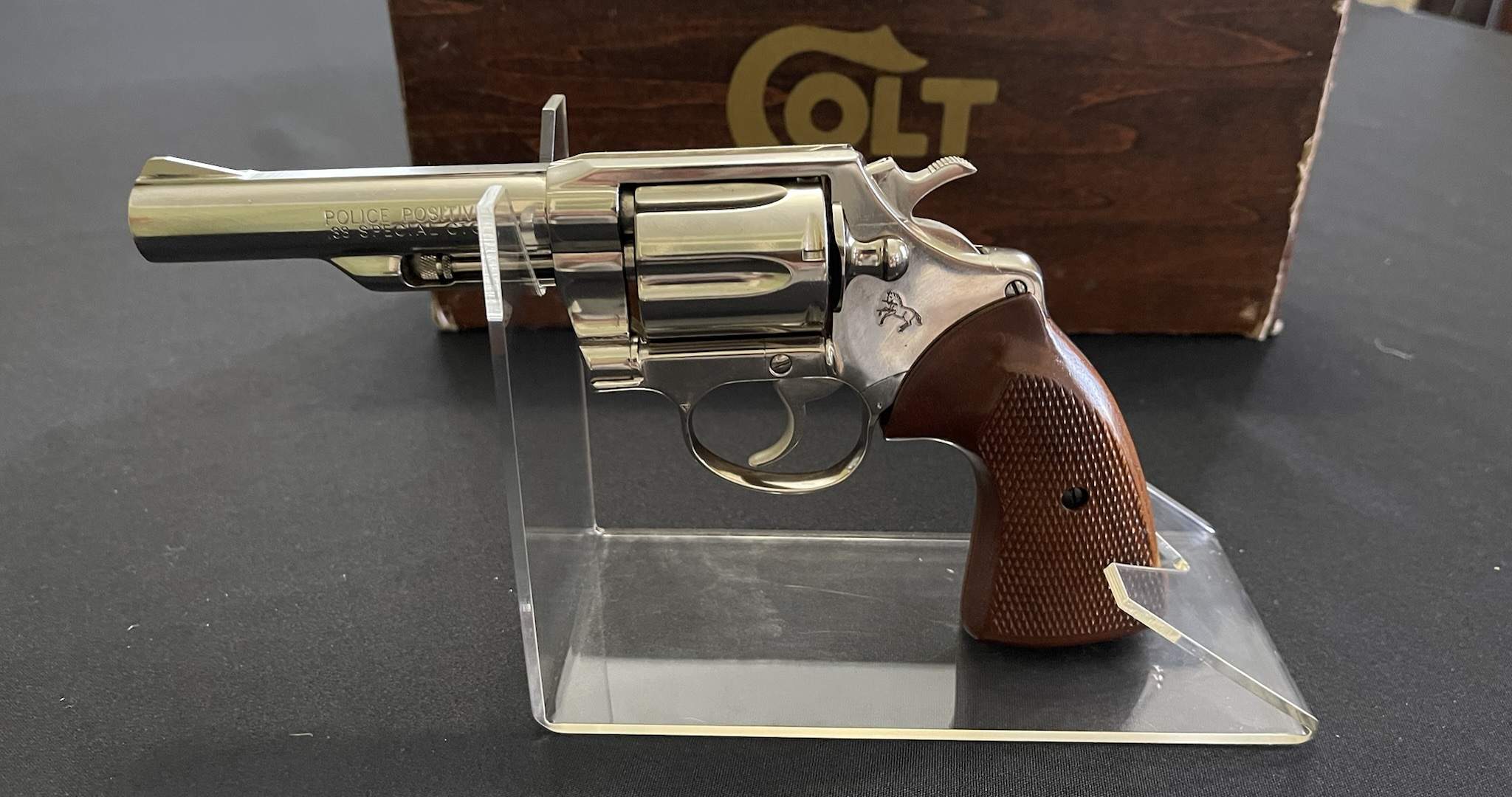
The Positive Lock Safety
As I write this, I’m thinking of the internal hammer block safety Colt called the Positive Lock. The Positive Lock prevented an accidental discharge even if the hammer was struck or the pistol was dropped.
Colt’s Positive Lock safety functioned by preventing the firing pin from striking the primer unless the trigger was deliberately pulled. Intended to address deficiencies of earlier models such as the Single Action Army, it allowed the revolver to be safely carried with all six chambers loaded.
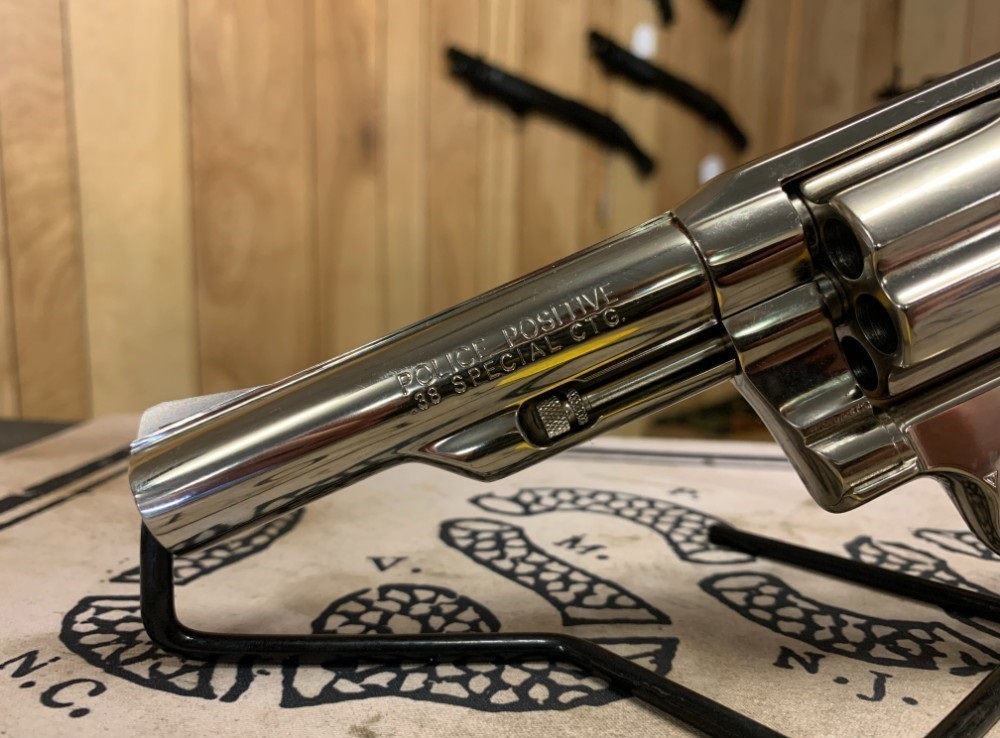
Five Issues of the Colt Police Positive Special
There are five issues or versions of the Colt Police Positive Special. For collectors, the issue helps narrow down features, grips, sights, and production context.
| Issue | Years | Collector Notes |
|---|---|---|
| Issue 1 | 1907–1928 | Blued or nickel finish. Hard black rubber grips until 1923, then checkered walnut grips with silver medallions from 1923 to 1928. |
| Issue 2 | 1928–1946 | Wood grips were smooth at first and then changed back to checkered. The top strap was grooved to reduce glare, the trigger was textured, and the space between the trigger guard and grip frame was widened. |
| Issue 3 | 1947–1976 | Ramped front sight, improved cylinder retention system, grooved trigger, and several grip changes through the 1950s and 1960s. |
| Issue 4 | 1977–1978 | New shrouded ejector rod to modernize the look. Blued or nickel finish. The word “Special” was dropped from the name and used only in reference to the .38 Special chambering. |
| Issue 5 | 1994–1995 | The last of the Police Positive series, also known as the Mark V, with heavy 4-inch barrels and rubber grips. |
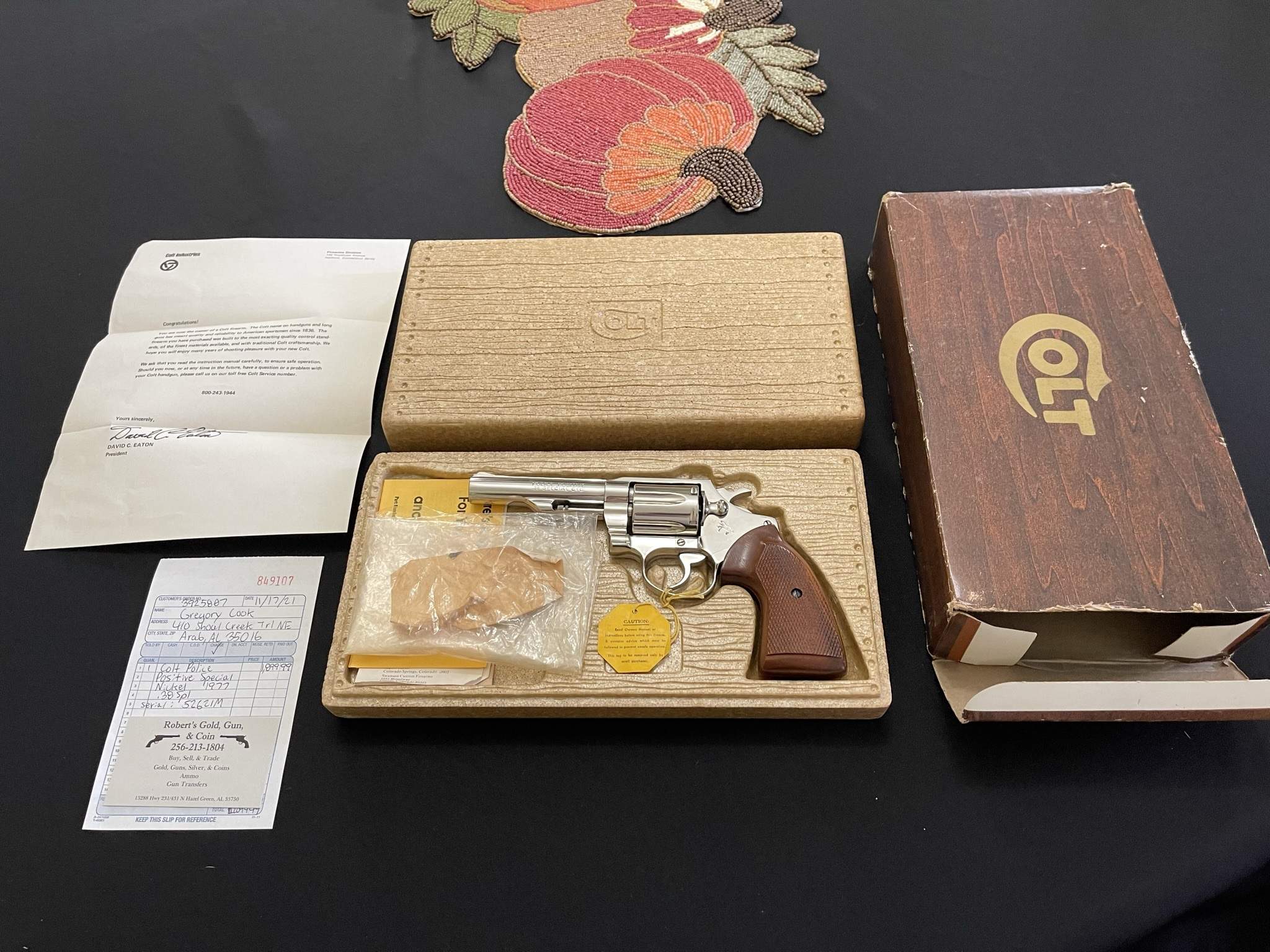
End of an Era
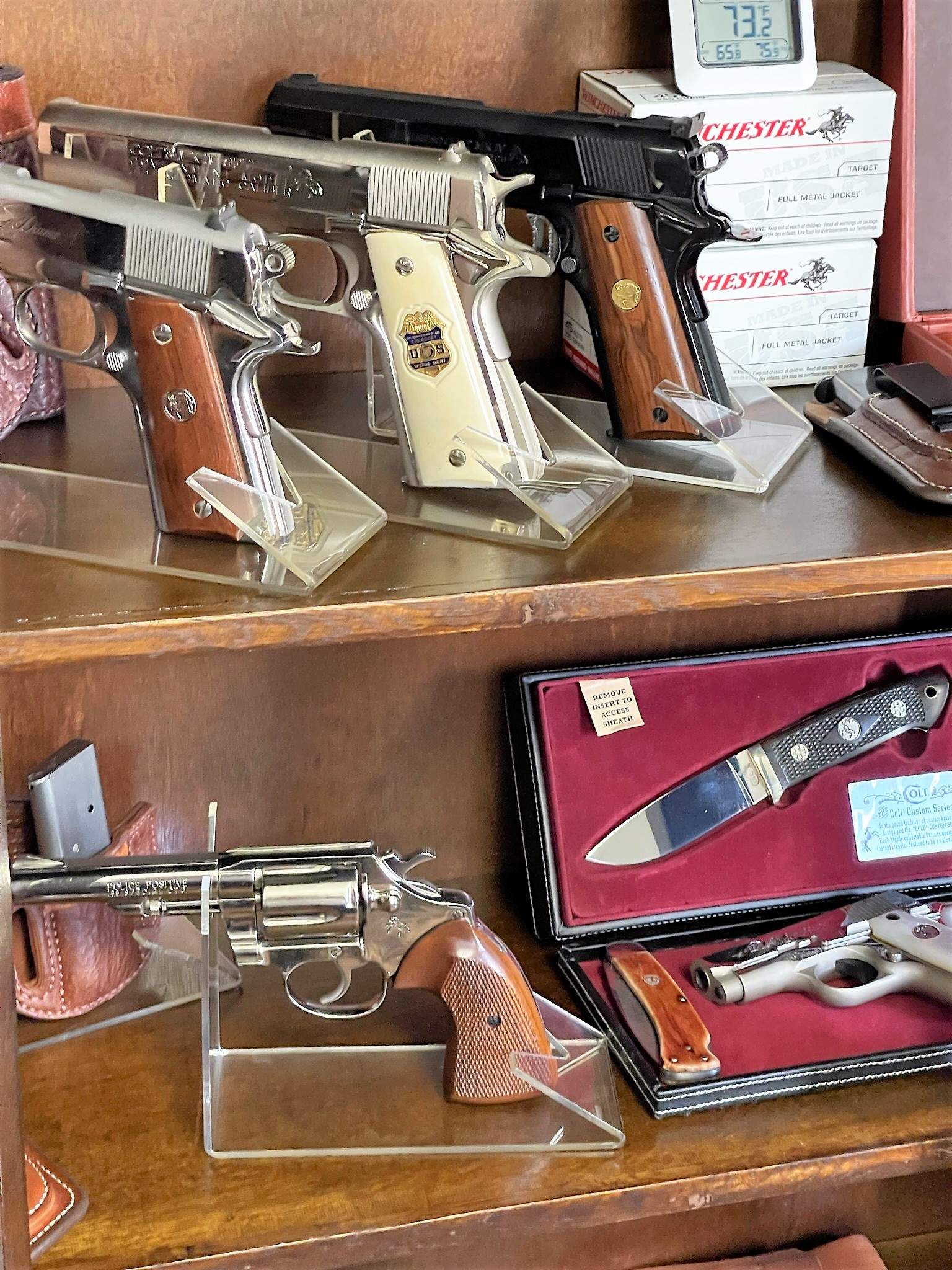
If you’ve read my blog, you know how irritated I get at sellers using unwarranted descriptions like “ultra rare,” but in this case I think “rare” can be used for a one-year production gun. I don’t have the inside scoop on Fourth Series sales numbers, but I plan to research and learn as much as I can. My gut tells me this model was not very popular by 1977.
This gun has the distinction of being only the second gun added to my collection without me even considering having a holster made for it. I just don’t see me ever carrying this gun. I was not actively seeking this model when I bought it; I was shopping for something else altogether. As I scrolled past it, I backed up because a bell was going off: “VIPER.”
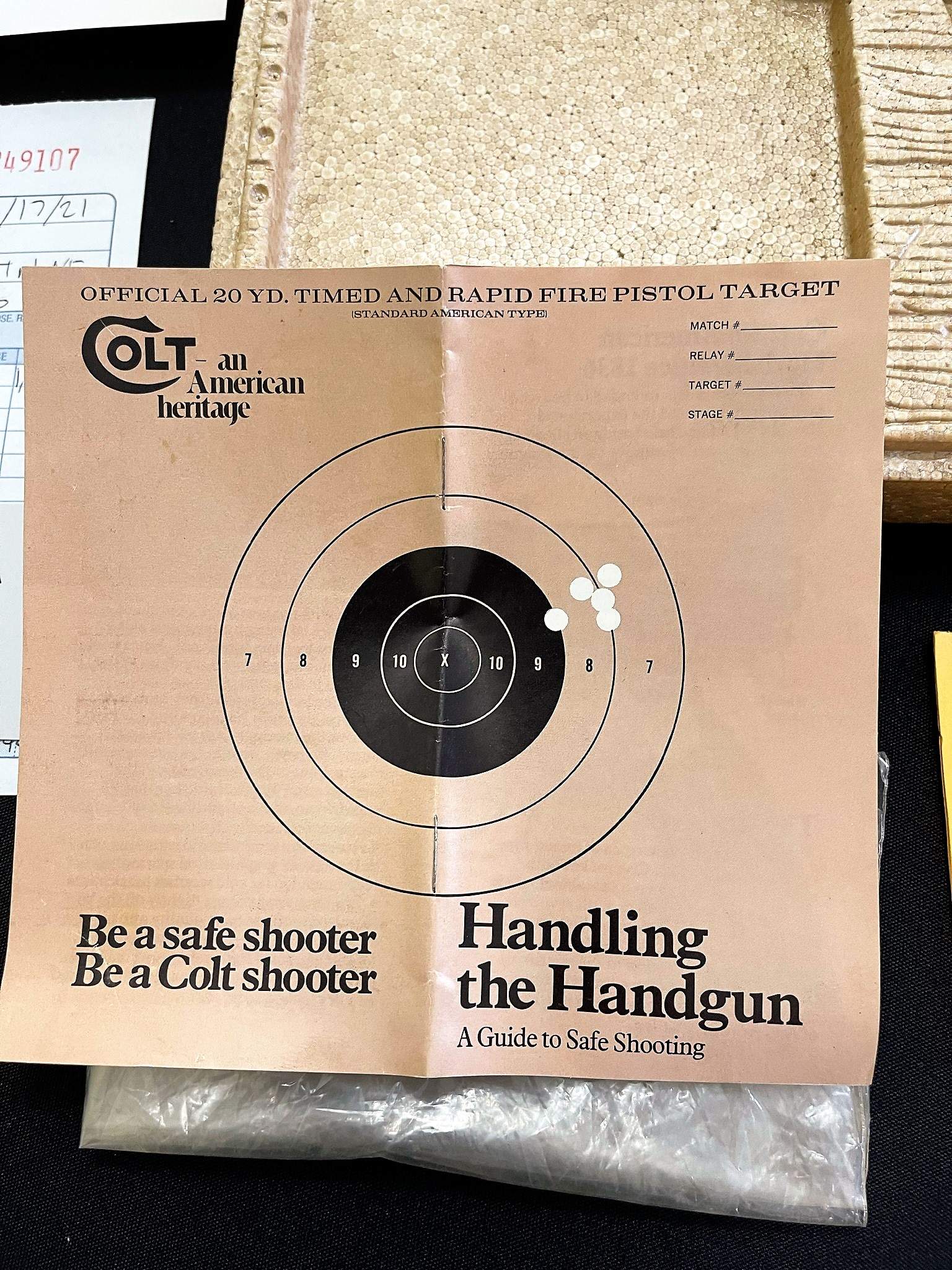
Semi-Automatics Take the Lead
If you are still here reading about this old Police Positive, I have to assume that you are a true Colt lover. The Police Positive was very successful. Along with the Colt Official Police, it dominated the law enforcement firearms market in the early 1900s. But by the time this Fourth Issue was released in 1977, it was the end of an era.
American gangster Al Capone used a Police Positive: a nickel .38 with walnut grips and a 4-inch barrel, manufactured in 1929. In June 2011, a private collector sold it at Christie’s for $109,080.
Collector Takeaway
A Late D-Frame Colt with a Short Production Window
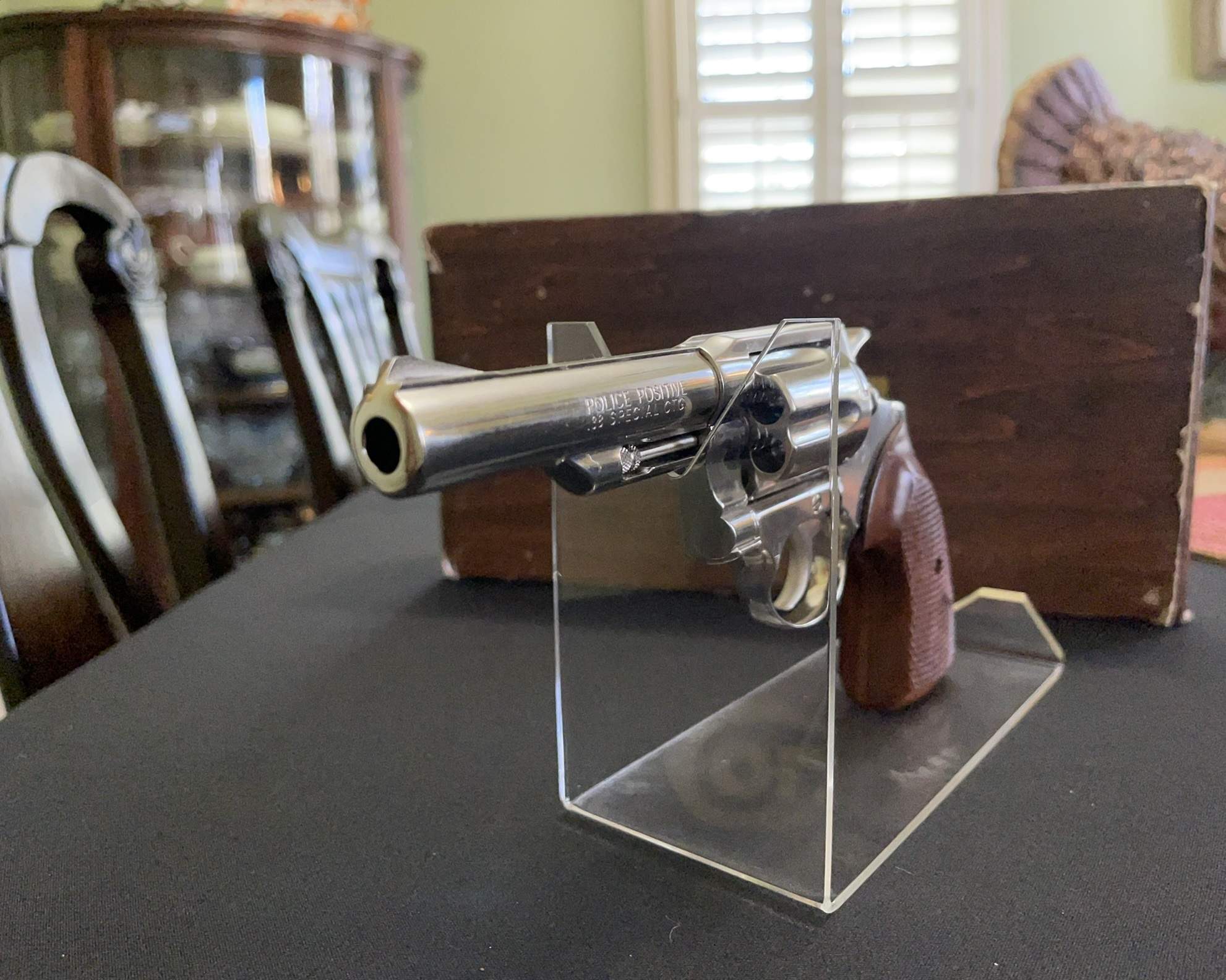
The Fourth Issue Police Positive is interesting because it sits at the end of a long Colt revolver line. Its shrouded ejector rod, .38 Special chambering, and one-year production window make it a useful study piece for Colt D-frame collectors.
Photo Notes
Related Revolver Reading
Display Stands I Use
The original page highlighted a USA-made handgun pistol holder and countertop barrel-style gun hanger for display use.
Gun Display StandsAs an Amazon Associate I earn from qualifying purchases. I only link to products, books, tools, and accessories that fit the editorial purpose of Gun Collectors Club.

About Greg Cook
Greg Cook is a CPA and firearms collector who writes about gun collecting, history, provenance, ownership impressions, and the practical details that make individual firearms memorable. His Army MOS was 76Y, Unit Armorer.
Frequently Asked Questions
How do I use Colt Police Positive serial numbers?
Compare your serial number with published production tables, then confirm the result using the revolver's markings and features.
Can a serial number identify the exact manufacture year?
Usually it provides an estimate. A Colt Archive Letter is the best source for factory-confirmed shipping information.
Where is the serial number located?
Most Police Positive revolvers have the serial number on the frame and crane area, depending on production period.
What is the difference between the Police Positive and Police Positive Special?
The Police Positive Special uses the longer cylinder designed for .38 Special cartridges and has its own production history.
Sources and References
These references support the Police Positive production, issue, safety, serial-number, archive-letter, and provenance context used throughout the series.
- American Rifleman: “The Colt Police Positive: A Look Back” — used for model history, Positive Lock context, Police Positive Special development, Target model, Detective Special lineage, and broad production history.
- American Rifleman: “I Have This Old Gun: Colt Police Positive” — used for Police Positive family context and Positive Lock description.
- American Rifleman: “What’s It Worth? Colt Police Positive Special” — used for Police Positive Special historical and collecting context.
- Colt Serial Number Lookup — recommended as the first stop for a production-date estimate.
- Colt Archive Services — used for factory-letter and documentation guidance.
- GCC: Colt Police Positive Timeline — companion series timeline.
- GCC: Colt Police Positive Serial Number Guide — companion serial-number tables.
- GCC: Colt Police Positive Collectability and Values — companion values article.