The Ruger Flat Gate Single-Six: The Revolver That Helped Build an Empire
When collectors discuss the most influential American firearms of the twentieth century, familiar names often dominate the conversation. Colt's Single Action Army, Smith & Wesson's Military & Police, Winchester's Model 94, and Browning's Auto-5 all deserve their places in history. Yet one revolver that often receives less attention than it deserves is the Ruger Single-Six.
For serial-number dating, model-family context, and links to the complete Ruger revolver reference library, begin with the Ruger Revolver Serial Number Hub.
At first glance, the Single-Six appears to be a modest .22 caliber single-action revolver inspired by the Colt Peacemaker. It does not carry the frontier pedigree of an original Colt, the target-shooting prestige of a pre-war Smith & Wesson, or the romance of an old Winchester saddle gun. But collectors know that historical importance is not always measured by engraving, rarity, or price. Sometimes a firearm matters because it changed what ordinary American shooters could afford, own, and enjoy.
The Ruger Single-Six did exactly that. Introduced in 1953, it arrived during a remarkable moment in American history. The nation was prosperous, veterans had returned from World War II, outdoor recreation was growing, and television westerns were turning sixguns into cultural icons again. Ruger gave that market a reliable, affordable, modern rimfire revolver dressed in traditional western clothing.
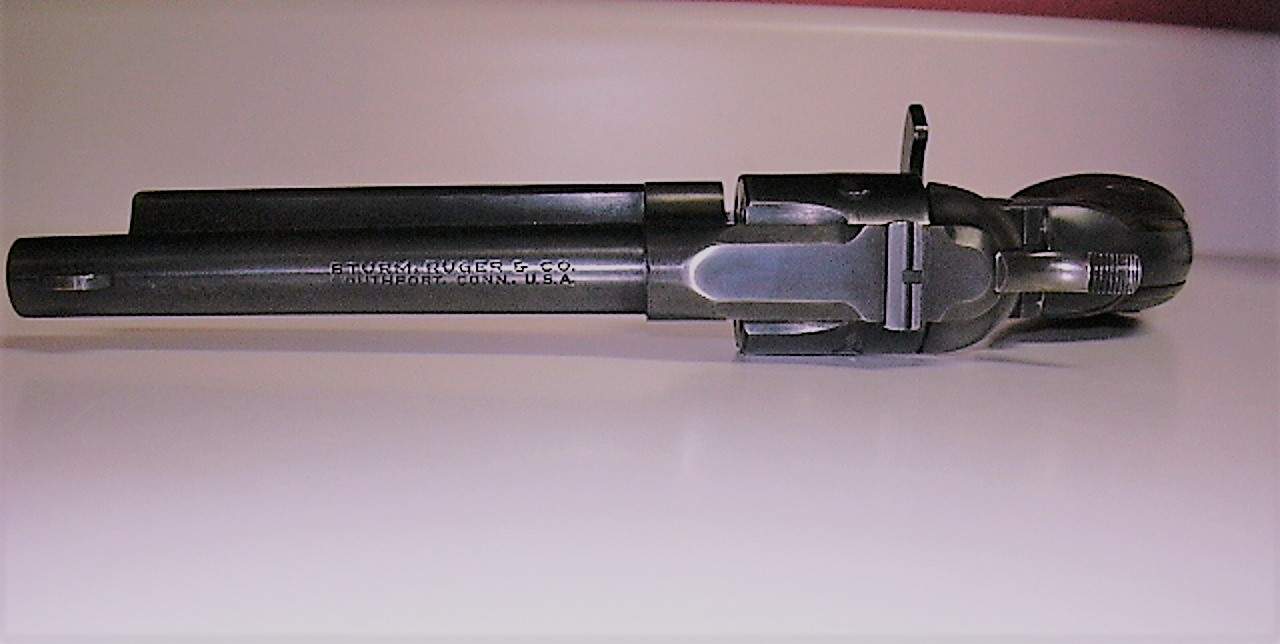
The example featured here is a 1955 Ruger Single-Six Flat Gate from my personal collection. It remains the only Ruger firearm I currently own, but it occupies a special place because it represents far more than a single revolver. It represents the formative years of Sturm, Ruger & Co., the rise of post-war recreational shooting, and the beginning of one of the great American firearms manufacturing stories.
America After World War II
The years immediately following World War II created one of the most favorable environments for firearms manufacturers in American history. Millions of veterans returned home with firearms experience. The American economy expanded rapidly. Families bought homes, cars, televisions, fishing rods, camping gear, and sporting firearms. Gun clubs flourished, hunting remained part of family life, and recreational shooting became a common weekend activity.
This was also the beginning of what I often think of as the Baby Boom firearms era — roughly 1946 through 1964. During these years, many of the firearms that collectors now study with special interest were either introduced, revived, or refined. Smith & Wesson's post-war K-frames, Colt's mid-century revolvers, Browning sporting arms, Winchester rifles, and early Rugers all belong in that conversation.
Established companies had the advantage of name recognition, dealer networks, and deep catalogs. But the post-war market was large enough to create opportunities for newcomers. A new company could succeed if it offered something reliable, well-designed, and priced for the average shooter.
That opportunity was exactly what William B. Ruger saw.
William B. Ruger and Alexander Sturm
William Batterman Ruger was not merely a firearms designer. He was a practical manufacturer with an instinctive understanding of what shooters wanted and what factories could produce efficiently. His genius was not limited to inventing mechanisms. He understood value, styling, tooling, production, and market timing.
In 1949, Ruger partnered with Alexander McCormick Sturm to form Sturm, Ruger & Co. in Southport, Connecticut. Sturm brought capital, artistic ability, and design influence. Ruger brought mechanical imagination and manufacturing ambition. The famous Ruger eagle emblem originated with Sturm, and although Alexander Sturm died young in 1951, his name and symbol remained permanently attached to the company.
The partnership began with the Ruger Standard .22 Automatic Pistol. That pistol provided the young company with its first success and proved that a new American firearms maker could compete against established names. But one successful pistol was not enough to build a lasting company. Ruger needed more products, and he needed them to match the mood of the country.
The next great opportunity came from America's renewed love affair with the Old West.
America Falls in Love with the West Again
To understand the success of the Single-Six, modern collectors must remember the cultural environment of the early 1950s. America was fascinated with westerns. Movie heroes such as Roy Rogers and Gene Autry had already shaped a generation, and television carried that fascination into living rooms across the country. Hopalong Cassidy, The Lone Ranger, Gunsmoke, Wyatt Earp, and countless other western programs turned sixguns into familiar symbols of American identity.
Children played cowboys. Adults watched westerns. Sporting goods stores sold holsters, rifles, revolvers, and ammunition to families who spent weekends outdoors. The Colt Single Action Army remained the visual standard for the western revolver, but original Colts were not practical purchases for many ordinary shooters.
Ruger understood the gap. Shooters wanted the look and feel of a traditional sixgun, but they also wanted low-cost ammunition, modern reliability, and a price that made sense. A .22 Long Rifle single-action revolver was the perfect answer.
The Birth of the Single-Six
Introduced in 1953, the Ruger Single-Six combined old-west styling with modern manufacturing. It looked familiar, but it was not a simple copy of the Colt Single Action Army. Ruger used modern production methods, including investment casting and practical internal design choices, to create a strong, economical revolver that could be sold at a reasonable price.
That balance was the heart of Ruger's early success. Bill Ruger respected traditional firearms, but he was not trapped by traditional manufacturing. He could borrow the emotional appeal of an older design while rethinking how that firearm should be built for a post-war marketplace.
The Single-Six appealed to nearly everyone. Hunters used it for small game. Farmers and outdoorsmen carried it as a practical field revolver. Target shooters enjoyed inexpensive practice. Parents used it to teach young shooters. Dealers liked it because it sold. Ruger liked it because it helped move the company from survival toward growth.
The Single-Six was not just another .22 revolver. It was the firearm that proved Ruger could become more than a one-product pistol company.
The Flat Gate Years: 1953–1957
Among Ruger collectors, few terms generate more immediate recognition than "Flat Gate." Mention the phrase at a collector meeting or gun show and experienced Ruger enthusiasts immediately understand that the firearm belongs to the company's earliest revolver period.
The loading gate on a traditional single-action revolver allows access to the cylinder chambers for loading and unloading. On the earliest Single-Six revolvers, Ruger used a gate that was visibly flat across its outer surface. Later production adopted a more contoured gate that blended more smoothly into the frame.
To a casual shooter, the difference may seem minor. To a collector, it is one of the model's defining features. The Flat Gate serves as an immediate visual marker of an early production Single-Six and ties the revolver directly to the years when Ruger was still becoming Ruger.
The example shown here was manufactured in 1955, placing it squarely within the desirable Flat Gate period. That matters because the revolver was made after the Single-Six had proven itself, but before Ruger had become the dominant American manufacturer it would later be. It captures the company during its entrepreneurial years.
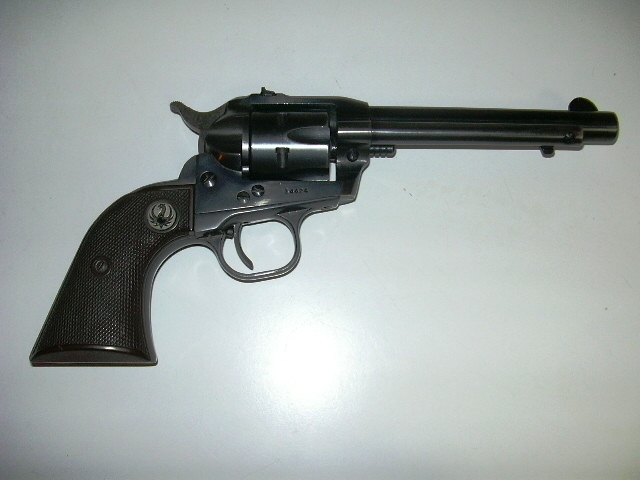
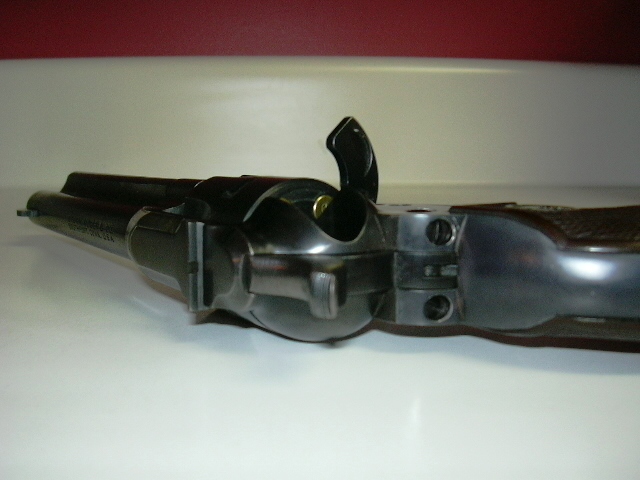
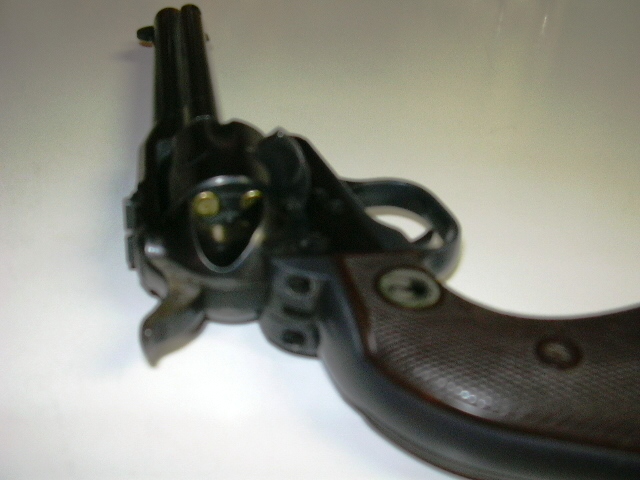
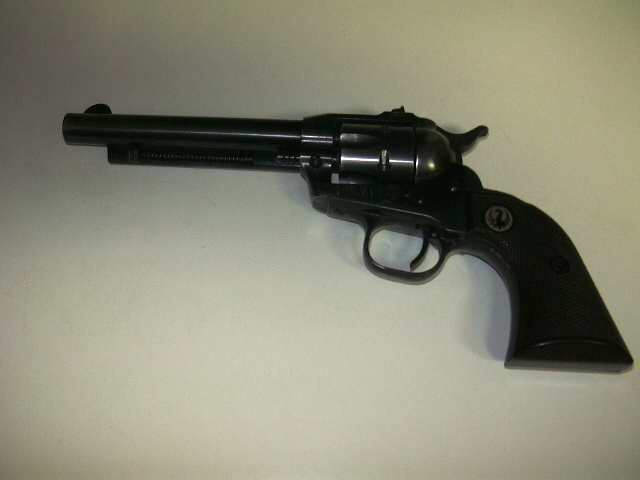
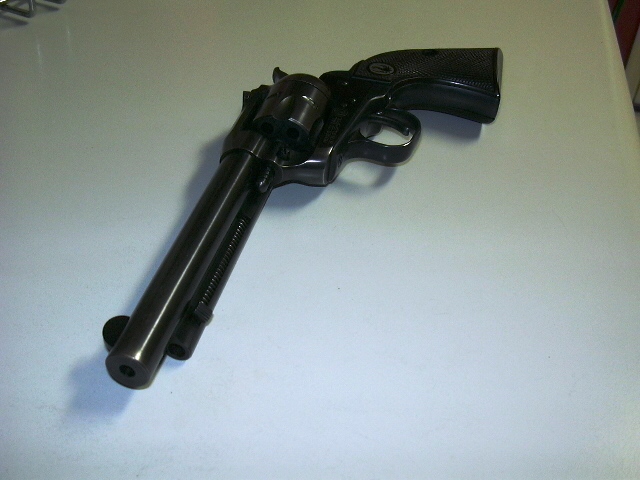
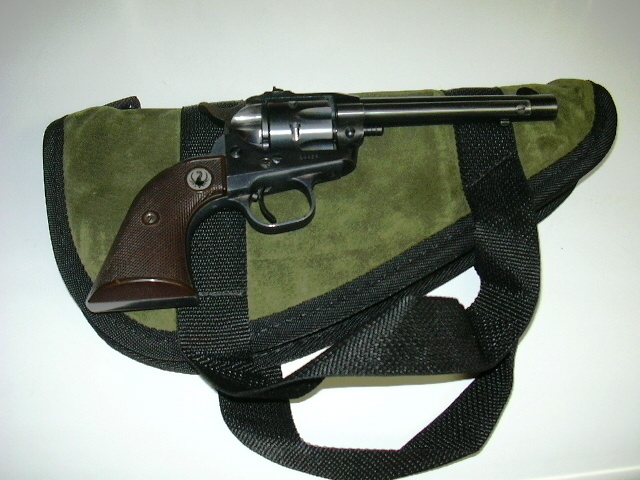
The very early serial number, the flat loading gate, which was only produced for four years, and the condition of this gun all intrigued me.
Examining the Featured 1955 Revolver
This 1955 Flat Gate is the only Ruger in my collection. I acquired it at the urging of a friend who is a very knowledgeable dealer, and the more I studied it, the more I understood why it belonged on Gun Collectors Club.
The first thing that stands out is condition. Many early Single-Six revolvers lived hard lives. They rode in pickup trucks, tackle boxes, holsters, hunting camps, glove compartments, and farm buildings. They were used for plinking, pests, small game, and teaching new shooters. Ruger built them as practical firearms, and owners used them that way.
This revolver appears to have avoided much of that hard service. The photographs show a crisp, clean revolver with the kind of preservation collectors hope to find but rarely encounter. The early configuration, the visual presence of the flat loading gate, and the overall appearance all work together to make this an unusually strong example for study.
That is the difference between a simple old gun and a meaningful collector piece. A worn Single-Six can still be historically interesting, but a well-preserved Flat Gate allows the collector to see the design as it appeared when Ruger was still building its reputation one revolver at a time.
Flat Gate Identification Guide
One reason early Ruger Single-Six revolvers attract so much collector interest is that they are relatively easy to identify once you know what to examine. The flat loading gate is the most obvious feature, but it should not be the only one considered.
Collectors should evaluate the entire revolver: serial number range, barrel markings, grip frame configuration, finish, cylinder condition, screw condition, evidence of replacement parts, and signs of refinishing. Originality matters. A revolver with honest wear and original finish will often be more desirable than a refinished example that appears cosmetically superior.
| Feature | Early Flat Gate Single-Six | Later Production Single-Six |
|---|---|---|
| Loading gate | Flat outer profile | More contoured profile |
| Collector significance | Direct connection to Ruger's earliest revolver years | Still collectible, but generally less tied to the founding era |
| Historical appeal | Represents the period when Ruger was proving itself | Represents the mature Old Model production era |
| Condition sensitivity | High, because many early examples were used hard | Varies by configuration, finish, box, and originality |
| Best collector examples | Original finish, correct parts, sharp markings, strong provenance | Original examples with boxes, papers, extra cylinders, or uncommon variations |
Ruger's Rise: 1949–1964
The Flat Gate Single-Six did not emerge from an established firearms empire. It appeared during a remarkable fifteen-year period in which Sturm, Ruger & Co. evolved from a small Connecticut startup into one of America's most respected firearms manufacturers.
| Year | Milestone | Collector Context |
|---|---|---|
| 1949 | William B. Ruger and Alexander McCormick Sturm founded Sturm, Ruger & Co. | The company begins as a small post-war startup in Southport, Connecticut. |
| 1949 | The Ruger Standard .22 pistol is introduced. | This first product gives the company its initial commercial success. |
| 1951 | Alexander Sturm dies at a young age. | The Sturm name and eagle emblem remain central to Ruger's identity. |
| 1953 | The Ruger Single-Six is introduced. | Ruger enters the revolver market at the height of America's western boom. |
| 1955 | The featured Flat Gate revolver is manufactured. | This example belongs to the heart of Ruger's early revolver period. |
| 1957 | The Flat Gate period gives way to later loading-gate styling. | The change creates one of the clearest collector distinctions among early Single-Six revolvers. |
| 1958 | The Ruger Bearcat enters production. | Ruger expands its single-action rimfire family. |
| 1964 | Ruger is no longer merely a promising newcomer. | By the mid-1960s, Ruger is firmly established as a major American firearms maker. |
Why Collectors Chase Flat Gates Today
The market for collectible firearms is driven by several forces: rarity, condition, historical significance, and emotional connection. The Flat Gate Single-Six benefits from all four.
The production period was short. The feature is easy to recognize. The revolver belongs to the first generation of Ruger single actions. Many examples were used hard. And perhaps most importantly, the Single-Six carries enormous nostalgia for shooters who learned marksmanship with one of these revolvers in the family.
That emotional connection should not be dismissed. Many collectible firearms become important because they were once ordinary. They were tools, companions, training guns, hunting guns, and family guns. Decades later, collectors rediscover them and realize that ordinary use created extraordinary history.
A Flat Gate in excellent condition therefore offers two forms of appeal. It is historically important to Ruger collectors, and it also speaks to the broader American shooting culture of the 1950s.
Building the Ruger Legacy
The importance of the Single-Six extends far beyond its own production history. The revolver helped establish Ruger's credibility as a firearms manufacturer. It generated revenue, strengthened dealer confidence, and demonstrated that Bill Ruger's manufacturing philosophy could succeed beyond the original Standard pistol.
Final Thoughts
When I study firearms from the Baby Boom era, I am looking at more than mechanical objects. I am looking at the tools, traditions, and ideas that shaped post-war American shooting culture. Few firearms illustrate that period better than the Ruger Flat Gate Single-Six.
It is practical rather than extravagant. Innovative rather than old-fashioned. Modern while still honoring the past. Most importantly, it represents the years when Bill Ruger and his small company were proving that they belonged alongside the legendary names of the American firearms industry.
More than seventy years after its introduction, the Single-Six remains one of the most important revolvers in Ruger history. Among those early examples, the Flat Gate stands as perhaps the most recognizable symbol of Ruger's remarkable rise from startup manufacturer to American firearms icon.
The success of the Single-Six also helped prepare the way for later Ruger classics. The Blackhawk, Bearcat, 10/22, and many later Ruger firearms all benefited from the reputation that the company built during these early years. The Flat Gate is therefore not merely a variation. It is a starting point.

About Greg Cook
Greg Cook writes about firearms collecting, personal history, and the stories behind interesting guns. His Army MOS was 76Y, Unit Armorer, and he brings that practical background to his collector articles.
Sources and Research Notes
This article was rewritten from the original Gun Collectors Club Ruger page and expanded around the featured 1955 Flat Gate Single-Six. Historical framework was checked against Sturm, Ruger & Co. company-history references, Ruger's official serial-number history pages, and standard collector references on early Ruger revolvers.
For the featured revolver itself, the most important evidence remains the firearm shown in the photographs: its condition, loading gate, early configuration, and collector context.