Colt Lawman Serial Number Lookup
Enter your Lawman Mk III serial number to find its estimated year of manufacture.
Mk III only. Covers listed 1969–1978 ranges, including expanded J-suffix dates. Later serials and gaps need Colt verification. Shared ranges do not establish the model or originality.
The Colt Lawman Mk III was designed as a practical working revolver, offering Colt .357 Magnum performance without the premium finish and cost of the Python. Produced as part of Colt’s Mk III revolver family, the Lawman appealed to police officers, security personnel, and private buyers who wanted a strong fixed-sight Colt at a lower price point.
Long before the Lawman Mk III appeared, Colt established its reputation with service revolvers such as the Colt Police Positive collector guide, whose D-frame lineage helped shape decades of Colt double-action revolver development.
Collectors today study the Lawman Mk III by production year, barrel length, ejector-rod style, finish, grip type, serial-number range, and whether the revolver still wears its original service configuration. Early exposed-ejector-rod examples, especially clean 2-inch guns, remain especially interesting because they sit near one of the model’s most visible transition points.
How to Identify a Colt Lawman Mk III
Collectors typically identify the Colt Lawman by its Mark III frame and action system, fixed sights, .357 Magnum chambering, service-oriented barrel profile, and practical grips. The barrel marking, serial-number era, butt style, finish, and ejector-rod treatment help narrow down the variation.
Common Identification Features
- Model family: Colt Mark III medium-frame revolver line.
- Chambering: .357 Magnum, with a six-shot cylinder.
- Sights: Fixed service sights rather than the Trooper’s adjustable target sights.
- Barrel lengths: 2-inch snubnose and 4-inch service barrel.
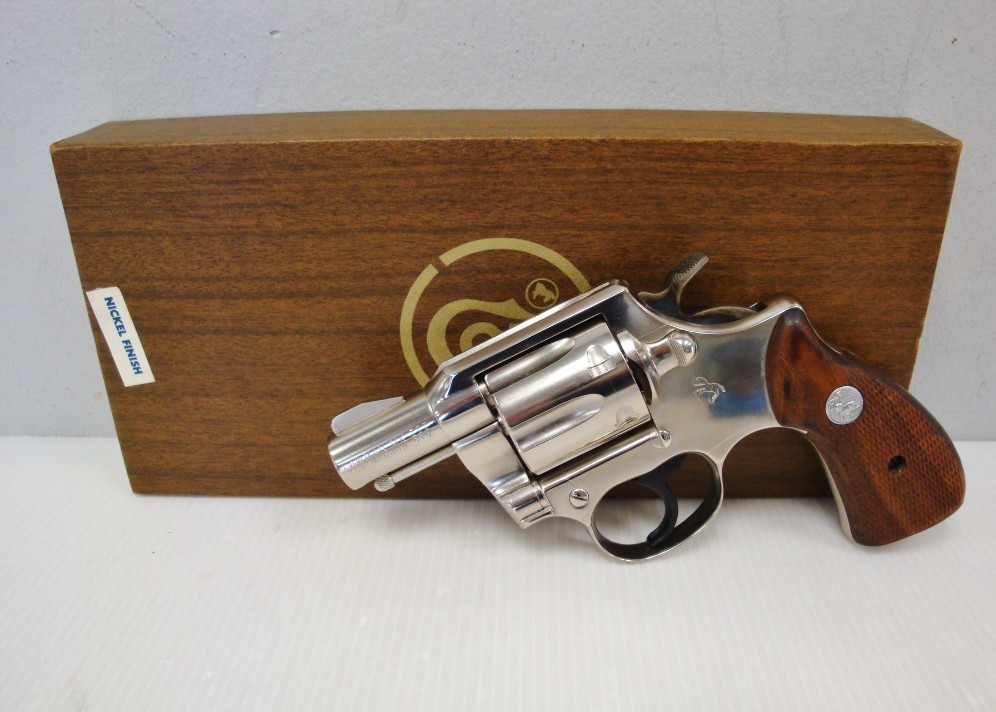
- Finishes: Bright blue, bright nickel, and later satin electroless nickel often called Coltguard.
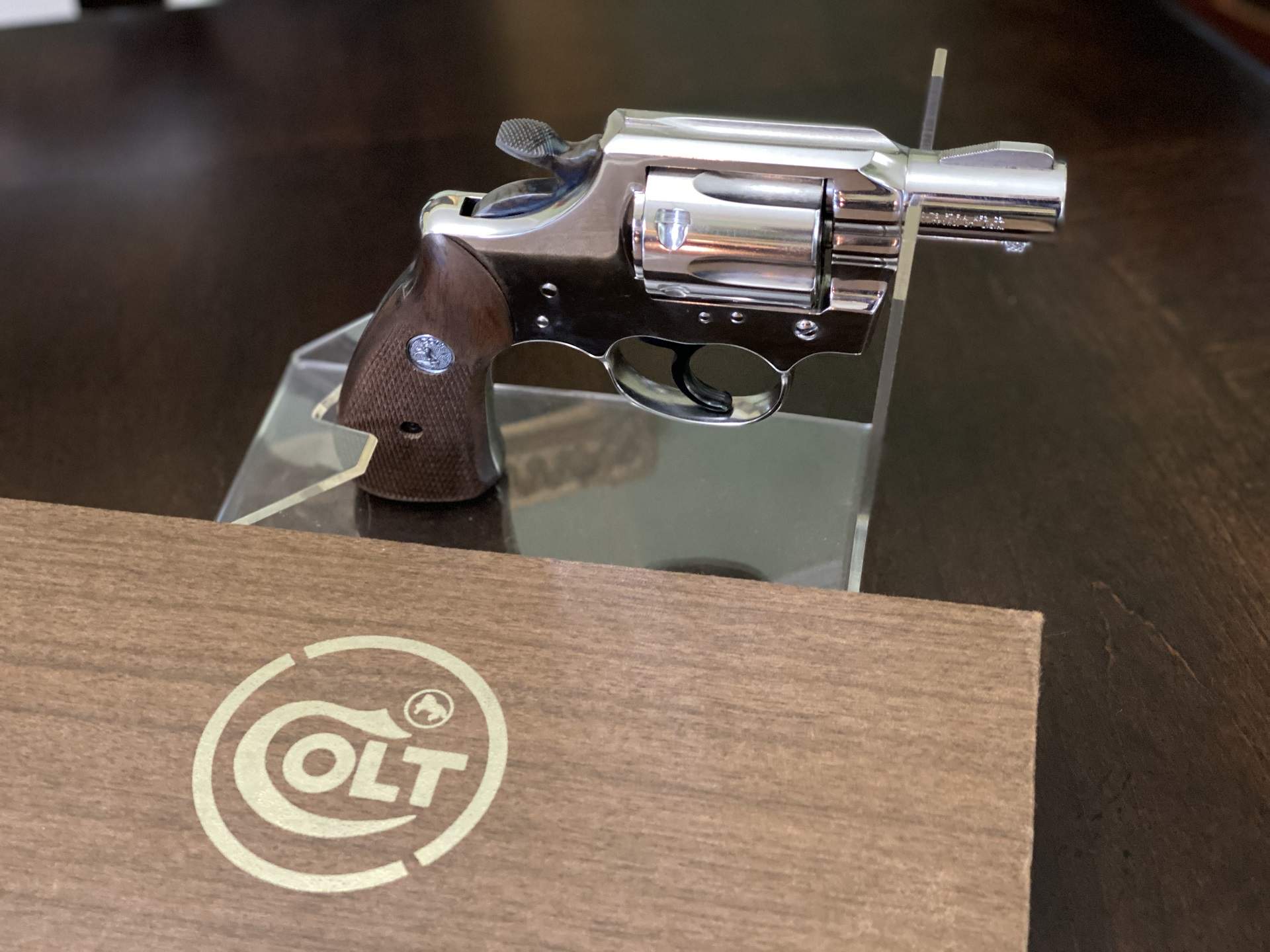
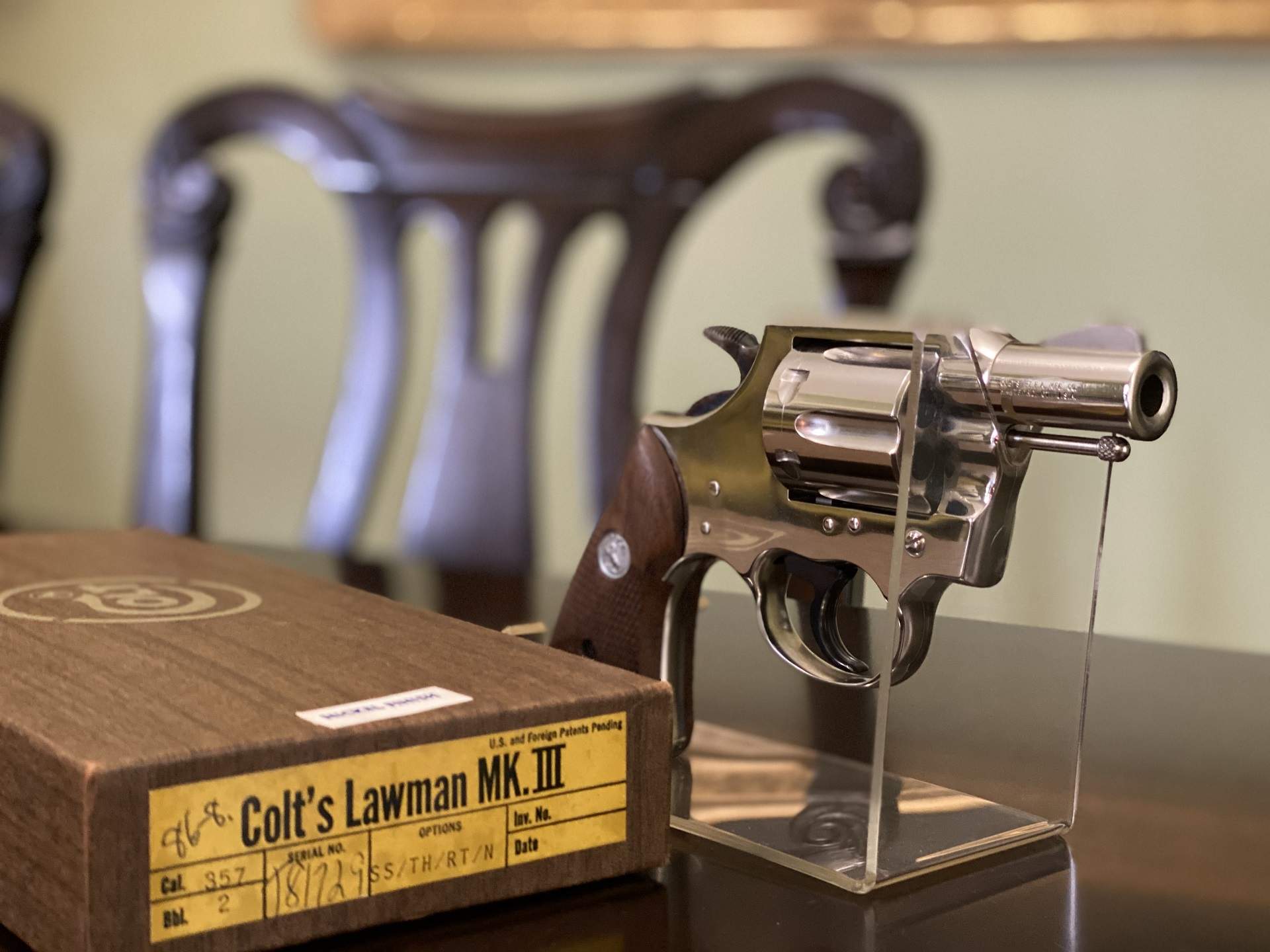
- Key visual clue: Early 2-inch guns are found with exposed ejector rods; later 2-inch guns use a shrouded ejector-rod barrel. Four-inch Lawman Mk III revolvers retained the exposed ejector rod.
Production Years
The Colt Lawman Mk III was part of Colt’s broader Mark III revolver program, introduced in 1969 as a modernized service-revolver line. Colt needed a police-market revolver that could compete with Smith & Wesson K-frame service guns without requiring the same amount of traditional hand fitting that made earlier Colt double-actions expensive to build.
Most collector references place Lawman Mk III production from 1969 through 1983. The model was offered as a no-nonsense .357 Magnum revolver with 2-inch or 4-inch barrel options, checkered walnut grips, and blue or nickel finish. The later Lawman Mk V appeared as Colt transitioned away from the Mk III platform in the early 1980s, but this page focuses on the Lawman Mk III.
Pre-war vs Post-war Differences
There is no pre-war Colt Lawman. The useful comparison is between Colt’s older pre-war-style lockwork and the post-war Mark III engineering change. Earlier Colt service revolvers such as the Official Police and Police Positive family depended heavily on skilled hand fitting. The Lawman Mk III used the newer Mark III transfer-bar ignition system, coil springs, and modernized internal parts to reduce production cost while preserving Colt service-revolver durability.
Transition Years Collectors Watch
The most important Lawman transition years involve the 2-inch barrel. Early snubnose Lawman Mk III revolvers used an exposed ejector rod similar in spirit to the 4-inch gun. Later snubnose examples received a heavier shrouded ejector-rod barrel, creating the “big Detective Special” look often mentioned by collectors. Because references do not always agree on an exact cutoff, the best practice is to document the serial number, barrel style, box label, and any Colt Archive Letter rather than relying on a single year claim.
Mk III Action Differences
The Mark III action was a major design break from older Colt double-actions. It used a transfer-bar ignition system, coil springs, and internal parts designed for more efficient assembly. The transfer bar allowed the revolver to fire only when the trigger was deliberately pulled, while the new internal design helped Colt build a service gun with less individual hand fitting.
Collectors sometimes divide Colt revolvers into “old action” and “Mark III” generations. Traditionalists may prefer the earlier hand-fitted Colt feel, but the Mark III guns have their own appeal: they are strong, practical, and historically important because they show how Colt tried to modernize revolver manufacturing while the police market was changing.
Variants
The Lawman’s variant list is shorter than the Python or Trooper, but the differences are important for collectors because the model was often used as intended. Small configuration details can separate an ordinary shooter-grade Lawman from a scarcer collector example.
Barrel Lengths
- 2-inch Lawman Mk III: The carry-oriented snubnose version. Early exposed-ejector-rod examples are especially interesting, while later shrouded-barrel guns have a different profile and their own following.
- 4-inch Lawman Mk III: The standard service configuration. It is generally the most commonly encountered version and kept the exposed ejector rod profile.
Finishes
- Bright blue: Classic Colt appearance and the finish most collectors picture first.
- Bright nickel: Desirable when original and clean, but vulnerable to polishing mistakes, edge wear, and flaking if neglected.
- Coltguard / satin electroless nickel: A later corrosion-resistant finish sometimes confused with stainless steel. Correct identification matters because the Lawman Mk III was not a stainless revolver.
Grips, Sights, and Hammer Details
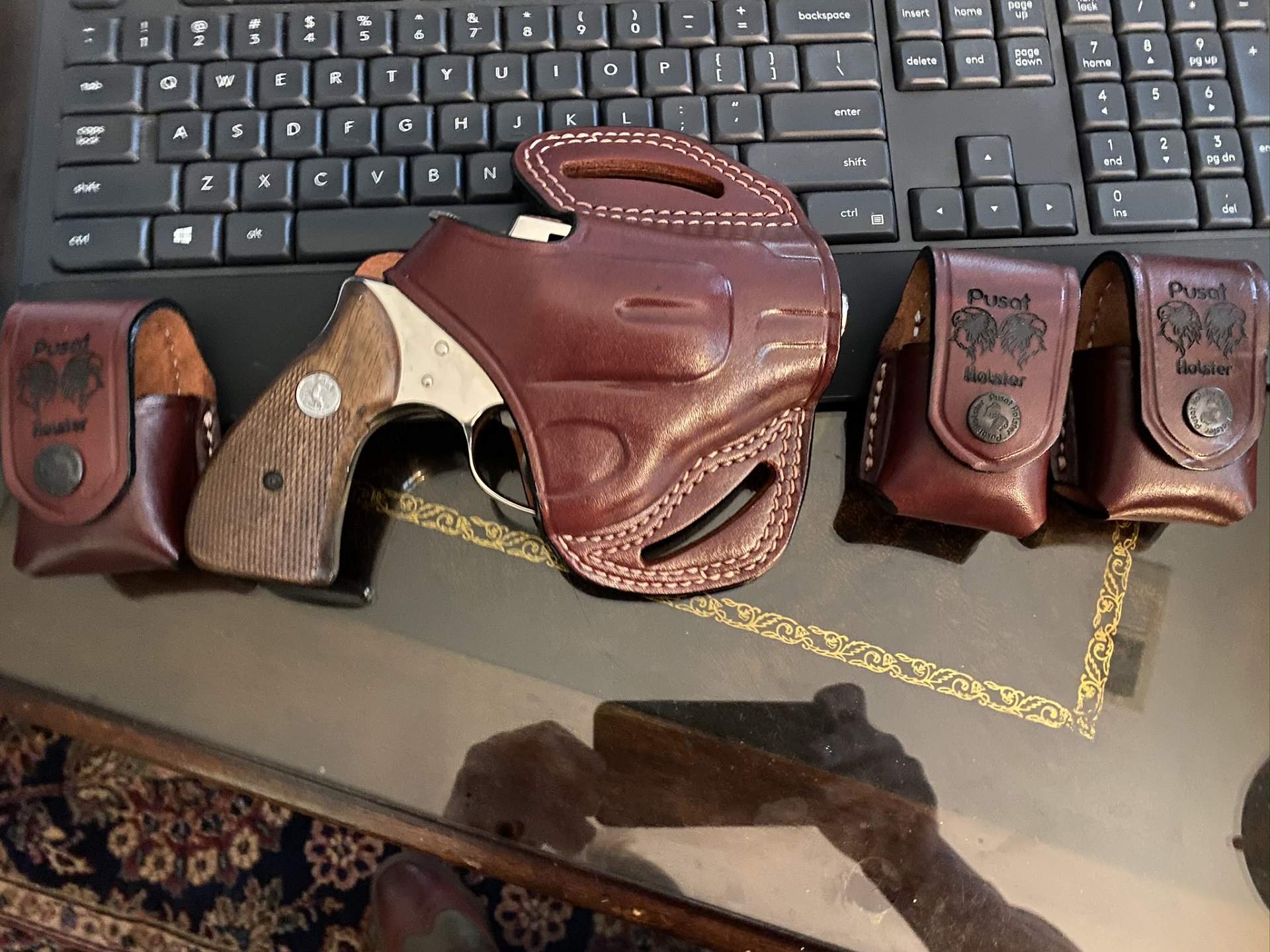
The Lawman used fixed sights and practical service-style grips rather than the target-sight setup associated with the Trooper. Early guns are commonly associated with narrower service-style grips and hammers, while later production may show target-style hammers or different grip treatments. Nickel and Coltguard examples are often seen with Pachmayr “Signature” rubber grips carrying Colt medallions. The 2-inch Lawman’s rounded-butt grip profile is a detail collectors should photograph and verify carefully.
Law Enforcement and Special-Use Context
The Lawman was a police-era revolver rather than a military-contract collectible. Its natural audience was the law-enforcement, security, and armed-citizen market of the 1970s, when .357 Magnum service revolvers were still common. Original agency markings, property numbers, holster wear patterns, and documented duty history can add story value, but undocumented claims should be treated cautiously.
Rare or Desirable Configurations
- Early 2-inch exposed-ejector-rod examples with correct grips.
- High-condition blue revolvers with sharp edges and minimal holster wear.
- Original nickel or Coltguard examples with correct grips and finish documentation.
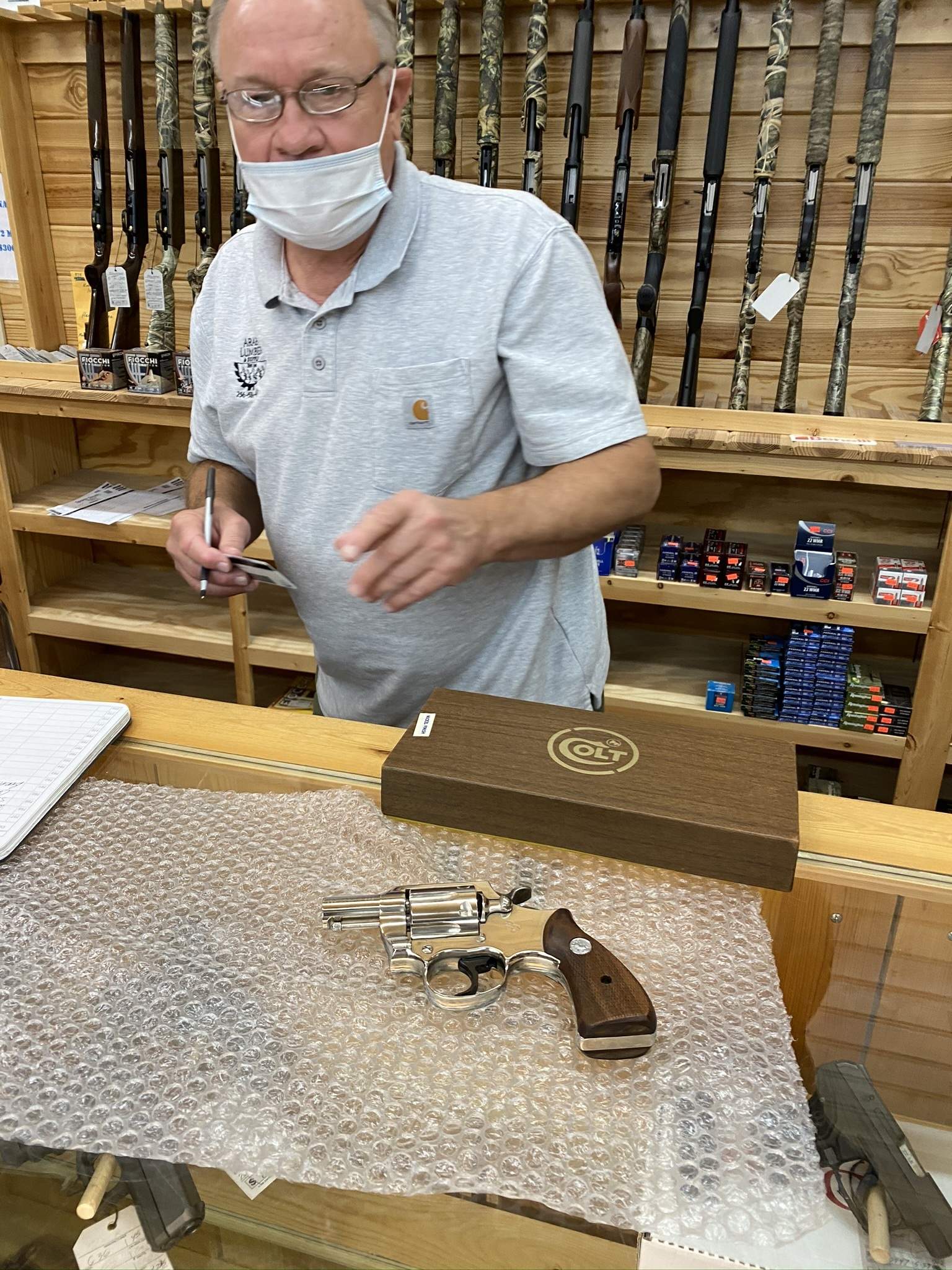
- Boxed revolvers with end-label, manual, hang tag, and matching serial-number paperwork.
- Documented police or security provenance, especially if the story can be confirmed by records.
Most Lawman revolvers saw their fair share of work. Finding one with strong condition, correct parts, and the early exposed ejector-rod profile gives the model a collector angle beyond ordinary utility.
Serial Number Ranges
The lookup uses the ColtAutos Mk III-series production chart, cross-checked with ProofHouse. ColtAutos clarifies the 1972–1975 J-suffix ranges shown below. The chart does not list 32000J–41999J; no year is assigned to that gap.
Colt serial-number dating can be confusing because ranges may overlap across models, prefixes may appear before or after the number, and online tables are often incomplete. The table below uses commonly cited Mark III-series Lawman, Metropolitan, Official Police, and Officer’s Model Match anchor ranges for 1969 through 1978. Treat these as collector reference anchors, not factory proof.
| Year | Commonly Cited Mk III-Series Serial Anchor | Collector Note |
|---|---|---|
| 1969 | J1001 | Beginning of the Mark III Lawman-era serial sequence. |
| 1970 | J8601 | Early production; desirable for first-generation Lawman features. |
| 1971 | J50201 | Early 1970s production cluster. |
| 1972 | J72201 to J98800; 01001J to 01600J | Relevant to the featured 1972 example and early exposed-ejector-rod collecting. |
| 1973 | J98801 to J100000; 01601J to 28800J | Transition-era formatting appears in references. |
| 1974 | 28801J to 31999J; 42000J to 47100J | Serial formatting can be non-intuitive; document exactly as stamped. |
| 1975 | 47101J to 88100J | Mid-1970s examples often show working-gun wear. |
| 1976 | 88101J to 99998J; L1001 to L38900 | Watch barrel style and grip configuration closely. |
| 1977 | L38901 to L78500 | Later Mk III production with L-prefix ranges. |
| 1978 | L78501 to L99998; 1001L | End of many public serial-number tables; use Colt verification for later guns. |
| 1979–1983 | Verify with Colt serial lookup or Colt Archive Letter | Public tables are less consistent; factory documentation is the safest approach. |
For a collector-grade Lawman, record the serial number as stamped on the gun, photograph the barrel marking, note the barrel length and finish, and compare the information against Colt’s serial-number lookup and Colt Archive Properties. A factory archive letter is especially useful when a revolver has unusual finish, agency provenance, or original box paperwork.
Collector Notes
The Lawman’s collector appeal comes from honesty. It was built as a working revolver, so the best examples are those that survived service use with original finish, sharp markings, correct grips, and strong mechanical condition. A revolver with honest holster wear can still be attractive, but refinishing, incorrect grips, and undocumented “rare” claims should reduce confidence.
What Collectors Look For
- Original finish: Sharp roll marks, clean screw slots, and unrounded edges matter on blue and nickel guns.
- Correct grips: Service grips, target-style later grips, Pachmayr Colt medallion grips, or 2-inch rounded-butt grips should match the era and configuration.
- Mechanical condition: Timing, cylinder lockup, crane alignment, bore condition, and ejector function are major value factors.
- Configuration rarity: The 2-inch versions, especially early exposed-ejector-rod examples, draw more collector attention than average 4-inch service guns.
- Documentation: Original box, papers, hang tags, end-label, and archive letter can move a Lawman from shooter-grade to collector-grade.
Desirable Years and Features
Early 1970s examples appeal to collectors who like the exposed-ejector-rod look and the first years of the Mark III program. Late examples can be desirable when they are exceptionally clean, boxed, nickel, Coltguard, or tied to the transition into the Mark V era. The best buy is usually not the lowest price; it is the gun with the least explaining to do.
Known Issues
Most Lawman problems are the predictable issues of a hard-used service revolver. A careful buyer should inspect condition and, for any gun intended to be fired, have a qualified revolver gunsmith evaluate it before use.
- Timing and lockup wear: Police and security guns may have seen substantial double-action use. Check carry-up, cylinder lockup, endshake, and hand/bolt wear.
- Finish wear patterns: Holster wear at the muzzle, cylinder edges, grip frame, and high corners is common. Refinished examples can lose collector value even when they look attractive at first glance.
- Nickel and Coltguard confusion: Satin electroless nickel is often mistaken for stainless steel. Bright nickel may show flaking, clouding, or polishing damage.
- Ejector-rod vulnerability: Early exposed-ejector-rod snubnose guns should be checked for rod straightness, crane alignment, and signs of impact.
- Grip replacement: Correct 2-inch rounded-butt grips and Colt-marked Pachmayr grips can be harder to replace than generic aftermarket stocks.
- Parts and action work: Mark III internal parts are not the same as older Colt lockwork. Traditional stoning or polishing of case-hardened/sintered parts can damage the hardened surface; spring replacement is the safer collector-friendly path.
- Recall status: I did not locate a model-wide Colt Lawman Mk III recall in the research sources consulted. Collectors should still check Colt service notices and have any revolver inspected if mechanical condition is uncertain.
Photo Notes
Value Trends
The Lawman market has remained more approachable than the Python market, but clean examples have become harder to ignore. The original article’s 2019–2020 market check found 63 completed online auction sales with an average sale price around $694 and the best examples selling from roughly $1,250 to $1,450. That remains useful historical context because it shows the Lawman was already separating into ordinary shooter-grade guns and collector-grade examples.
Current market references in 2026 still place many ordinary used Lawman Mk III revolvers in the roughly $700 range, while recent sold examples show 2-inch guns, boxed examples, and high-condition revolvers bringing more. The model has not climbed like the Python, but the spread between average service guns and correct collector-grade examples is widening.
Value Factors That Move the Needle
- Early exposed-ejector-rod 2-inch guns: Often bring more attention than a typical 4-inch service revolver.
- Original box and papers: Can dramatically increase desirability, especially if the end label matches.
- Nickel or Coltguard finish: Premium depends on originality and condition; refinished nickel should not be treated the same as factory nickel.
- Mechanical condition: Tight timing and lockup are essential because many Lawman revolvers were real working guns.
- Factory documentation: A Colt Archive Letter can support finish, shipment date, and original destination claims.
Lawman vs Trooper
The Colt Lawman and Colt Trooper occupied similar Mark III territory but targeted different buyers. The Trooper was the more refined adjustable-sight model, while the Lawman emphasized fixed sights, practical service use, and affordability. A useful shortcut is that the Lawman is the working fixed-sight version, while the Trooper is the more target-oriented Mark III.
- Lawman: Fixed sights, 2-inch or 4-inch barrel, service configuration, .357 Magnum.
- Trooper Mk III: Adjustable sights, target-style features, and a broader range of barrel lengths and chamberings.
- Shared heritage: Both belong to Colt’s Mark III engineering generation and help explain Colt’s 1970s revolver strategy.
Lawman vs Python
The Colt Python represented Colt’s premium .357 Magnum revolver, while the Lawman filled the practical working-gun role. The Lawman lacked the Python’s ventilated rib, premium polish, target refinements, and aura, but that difference is the whole point. It is a service revolver with a direct, businesslike personality.
- Lawman: Duty revolver focused on practical service use.
- Python: Premium target-grade Colt .357 Magnum.
- Collector appeal: The Lawman attracts collectors looking for honest Colt working revolvers rather than presentation-grade guns.
Law Enforcement Usage
The Colt Lawman appeared during a period when American police departments still relied heavily on revolvers. Many officers and armed professionals preferred durable service revolvers chambered in .357 Magnum because they balanced power, reliability, and manageable size. While the Lawman did not become as famous as the Python, it earned a place as a practical duty-style Colt of the 1970s and early 1980s.
Collector Takeaway
Final Word
The Colt Lawman Mk III is easy to underestimate. It lacks the glamour of the Python and the immediate name recognition of some other Colt revolvers, but that is exactly what makes it interesting. It is a service revolver with a real-world purpose and a collector story that rewards closer inspection.
This example works because it still feels like a working gun, but the condition, exposed ejector rod, wide hammer spur, and service-grip feel give it personality. The Lawman is not trying to be fancy. It is trying to be right.

From My Bench
For readers setting up a range bag or revolver bench, I keep a short list of practical tools, books, cleaning gear, storage items, and revolver accessories that fit the way I collect and maintain firearms.
.357 SpeedloadersAs an Amazon Associate I earn from qualifying purchases. I only link to products, books, tools, and accessories that fit the editorial purpose of Gun Collectors Club.

About Greg Cook
Greg Cook writes about firearms collecting, personal history, and the stories behind interesting guns. His Army MOS was 76Y, Unit Armorer, and he brings that practical background to his collector articles.
Comparing Colt service revolvers? The Colt Trooper identification and collector guide explains the original Trooper and Mark III distinction.
Related Revolver Reading
Research Sources Consulted
This page was updated and cross-checked against collector and historical references. For final dating or valuation on a specific revolver, use factory documentation and current sold results rather than a single online chart.
- American Rifleman: The Colt Mk III Lawman
- Gun Digest: Lawman Mk III production and configuration notes
- ProofHouse: Colt Mk III-series serial-number anchors
- Colt Fever: Mark III design, Lawman variations, grips, finishes, and action notes
- Colt serial-number lookup and Colt Archive Properties
- Colt service guidance for current and legacy firearm service questions
- TrueGunValue: current Lawman Mk III sold-price trend context
- Gun Collectors Club serial-number guide hub