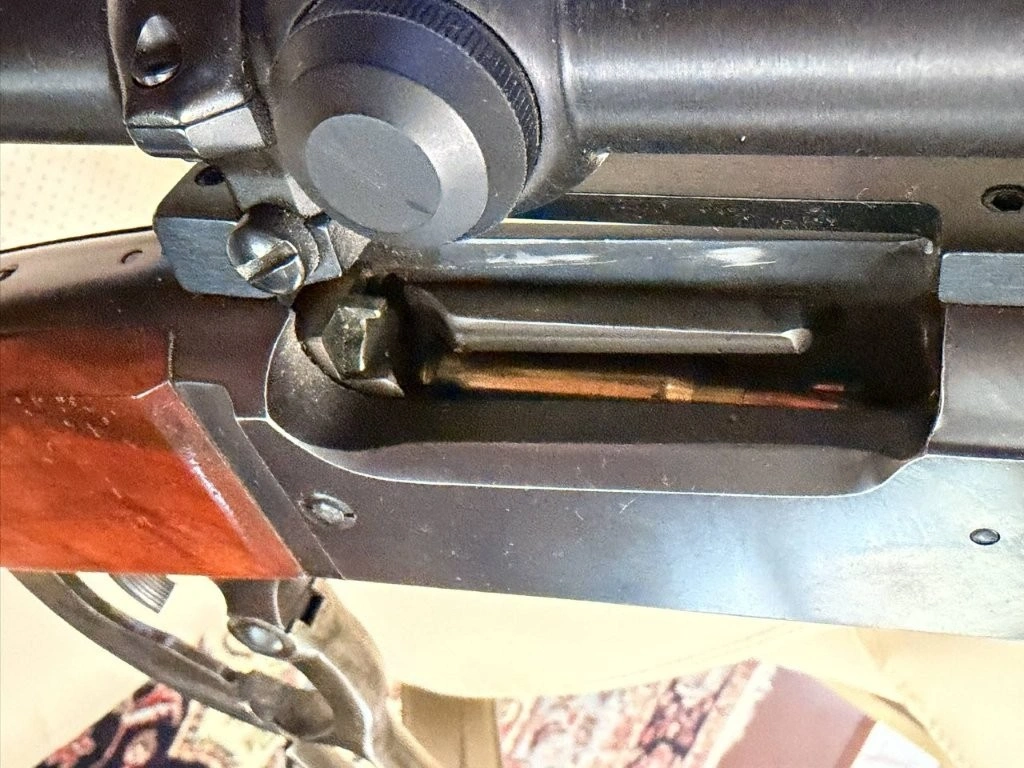
The rotary magazine is the feature that made the Savage 99 mechanically different from most classic American lever actions. Instead of stacking cartridges nose-to-primer in a tube beneath the barrel, the Savage system arranged cartridges around a rotating spool inside the receiver. That allowed the rifle to use pointed bullets without the same primer-contact concern associated with a conventional tubular magazine.
How the Savage Rotary Magazine Works
The classic Savage rotary magazine uses a spool with individual cartridge recesses. As the lever cycles the action, the spool advances and presents the next cartridge for feeding. Each round occupies its own position rather than resting in a straight stack.
Spool arrangement
Cartridges are held around a central rotating assembly. This keeps bullet tips separated from the primers of the cartridges ahead of them.
Lever-driven indexing
The operating cycle advances the magazine and positions the next round for the carrier and bolt.
Receiver-contained design
The magazine sits inside the receiver rather than extending under the barrel, preserving the rifle’s balance and profile.
Visible capacity indicator
Many rifles use a brass counter that displays the approximate number of cartridges remaining.

Why the Rotary Design Mattered
Traditional tubular magazines place cartridges in a line, with each bullet nose facing the primer of the cartridge ahead. That arrangement works well with flat- or round-nosed bullets, but it complicates the use of sharply pointed spitzer bullets. The Savage rotary system separated the cartridges and made pointed-bullet use practical in a lever-action rifle.
This helped the Savage 99 compete in a changing sporting-rifle market. Hunters could use cartridges designed for flatter trajectories and higher retained velocity while keeping the fast-handling qualities of a lever action.
Balance and handling
Because the magazine is concentrated in the receiver, the rifle avoids the long under-barrel tube seen on many lever actions. The design contributes to the Savage 99’s distinctive profile and central balance.
Cartridge flexibility
The receiver and magazine system supported a wide range of chamberings over the rifle’s long production life. Not every cartridge used a sharply pointed bullet, but the system gave Savage more freedom than a conventional tube magazine.
The Brass Cartridge Counter
One of the most recognizable details on many Savage 99 rifles is the small brass cartridge counter visible through the side of the receiver. The numbered disc rotates with the magazine and gives the shooter an indication of how many cartridges remain.

The counter should be evaluated as part of the complete magazine system. It should advance consistently as cartridges are loaded and cycled, and its wear should generally agree with the receiver. A brightly polished counter in a heavily worn rifle may indicate restoration, cleaning, or replacement.
What the counter does—and does not—prove
A visible counter strongly supports identification as a classic rotary-magazine configuration, but it does not by itself identify the exact model letter. Multiple Model 1899 and Model 99 variations used the rotary system. Serial range, stock, forearm, safety, barrel, and sights are still required.
Rotary Magazine and Detachable-Magazine Variations
Not every later Savage 99 used the traditional rotary magazine. Detachable-box-magazine models such as the 99C belong to a different production family. The magazine type is therefore one of the quickest ways to divide the identification process.
| Feature | Rotary-magazine rifle | Detachable-magazine rifle |
|---|---|---|
| Magazine location | Contained inside receiver | Removable box beneath receiver |
| Cartridge counter | Often visible on receiver side | Normally absent |
| Model implication | Classic 1895, 1899, and many Model 99 variations | Later detachable-magazine variants such as 99C |
| Collector concern | Spool timing, counter function, internal originality | Correct magazine, feed lips, fit, and availability |
Loading and Unloading Considerations
Loading procedures vary somewhat with era and configuration, but cartridges are generally introduced through the receiver loading opening and pressed into the rotary magazine. Each cartridge must seat correctly in its recess. Forcing a round, using damaged ammunition, or loading an incorrect cartridge can disrupt magazine timing and feeding.
When inspecting a collectible rifle, do not repeatedly cycle unknown or old ammunition through the action. Verify the rifle is unloaded and use appropriate inert training cartridges only when function testing is necessary.
Collector Inspection Checklist
- Verify that the rifle is completely unloaded.
- Confirm rotary magazine or detachable magazine.
- Inspect the cartridge counter for legibility and finish consistency.
- Check whether the counter advances during proper cycling.
- Look for binding, hesitation, or skipped positions.
- Inspect loading-port edges for damage or alteration.
- Compare receiver screws and finish for evidence of repeated disassembly.
- Check that the magazine system agrees with the model and serial era.
- Have a qualified gunsmith inspect any timing or feeding problem.
Common Problems and Collector Red Flags
- Counter does not move or displays inconsistent numbers
- Spool skips a position during cycling
- Cartridges sit unevenly or bind in the loading opening
- Receiver screws show heavy damage from improper tools
- Counter finish does not match the rifle
- Evidence of home polishing, grinding, or altered feed surfaces
- Magazine type conflicts with the claimed model
How the Magazine Affects Collector Value
A complete, properly functioning rotary system supports originality and value. The cartridge counter adds visual appeal and is one of the features collectors expect on many classic configurations. Mechanical problems, missing parts, amateur repairs, or an incorrect magazine system can significantly reduce desirability even when the rifle remains shootable.
Originality matters most on scarce models, deluxe variations, unusual chamberings, takedown rifles, and high-condition examples. On a common hunting rifle, sound function may matter more than perfect cosmetics, but defects should still be disclosed.
Related Savage 99 Guides
Use the Savage 99 Model Identification Guide to place the magazine within the complete rifle configuration. The Lever Safety Variations Guide explains adjacent receiver and lever features, while the Savage 99 Caliber Guide will connect magazine design with the rifle’s many chamberings.
Savage 99 Collector Series
Continue with model, caliber, value, and photographic references for the classic Savage rotary-magazine rifle.

About Greg Cook
Greg Cook writes about firearms collecting, personal history, and the stories behind interesting guns. His Army MOS was 76Y, Unit Armorer, and he brings that practical background to his collector articles.
Sources Consulted
- David Royal, A Collector’s Guide to the Savage 99 Rifle and Its Predecessors, the Model 1895 and 1899.
- Douglas P. Murray, The Ninety-Nine: A History of the Savage Model 99 Rifle.
- Period Savage Arms catalogs, advertisements, owner literature, and parts illustrations describing the rotary magazine and cartridge counter.
- Savage99.com reference material covering Model 99 variations and production details.
- Buffalo Bill Center of the West, Cody Firearms Records Office, for the scope and limitations of surviving Savage factory records.