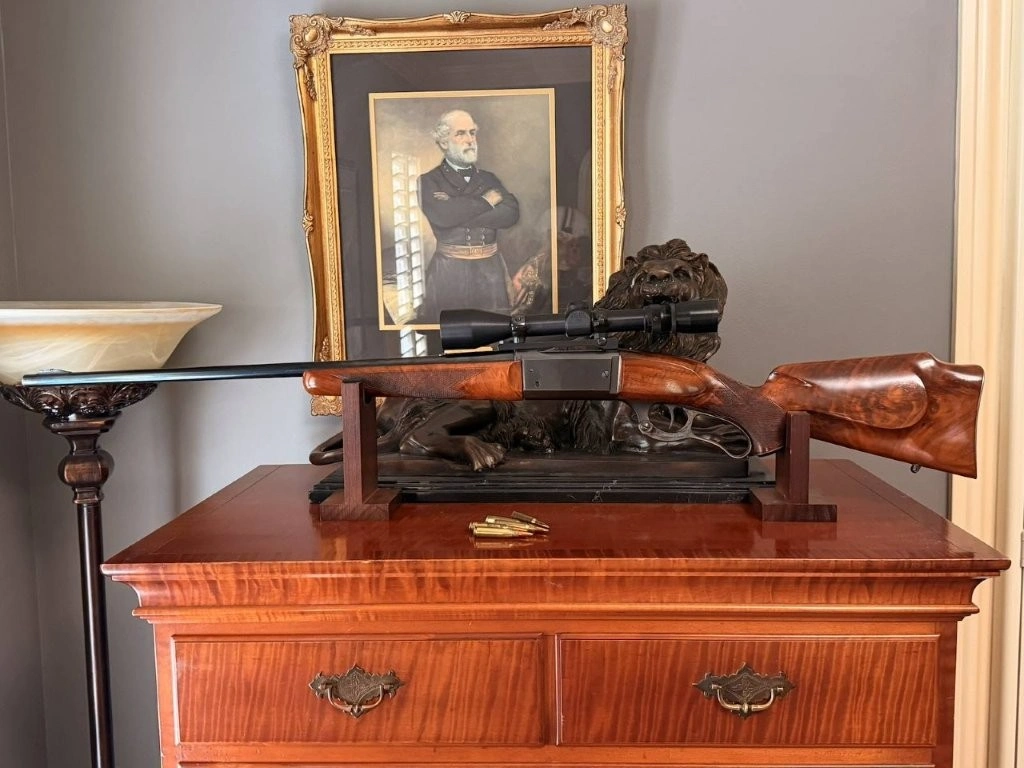
Savage 99 values are driven by the complete rifle, not by one feature in isolation. A scarce caliber can add interest, but only if the barrel and configuration are original. Beautiful wood can increase appeal, but upgraded or replacement wood may reduce value to a factory-original collector. Condition matters, but originality often matters more.
The Eight Factors That Drive Savage 99 Value
1. Model and variation
Scarce models, deluxe configurations, target rifles, takedowns, and limited late-production variations often bring stronger collector interest.
2. Caliber
Common chamberings appeal to shooters, while scarce factory chamberings may command premiums when the configuration is authentic.
3. Originality
Original barrel, wood, finish, sights, buttplate, lever, and magazine components usually matter more than cosmetic perfection.
4. Condition
Metal finish, bore, wood, checkering, mechanics, screws, and magazine operation all influence value.
5. Wood quality
Factory deluxe wood and correct checkering can add substantial value. Attractive replacement wood may appeal to shooters but not originality-focused collectors.
6. Sights and drilling
Correct factory sights and unaltered receivers are usually preferred. Extra scope holes can reduce value on otherwise collectible rifles.
7. Provenance
Factory records, period receipts, documented ownership, and credible history can support a premium.
8. Market presentation
Clear photographs, accurate model identification, disclosed defects, and strong auction exposure can materially affect the realized price.

Model, Configuration, and Rarity
Model rarity is one of the strongest value drivers, but rarity must be proven. Letter designations were reused, specifications changed, and assembled rifles can imitate desirable configurations. Compare the serial range, safety, magazine type, barrel, stock, forearm, sights, and markings before assigning a premium.
| Feature | Typical value effect | Verification needed |
|---|---|---|
| Early Model 1895 or 1899 | Often strong collector interest | Correct receiver, barrel markings, takedown features, sights, and serial era |
| Deluxe or engraved variation | Potentially substantial premium | Factory originality, engraving pattern, wood, checkering, hardware, provenance |
| Takedown configuration | Can add interest and value | Matching assembly numbers, tight fit, correct forearm and release system |
| Scarce caliber | May command a premium | Original barrel, correct markings, model compatibility, unaltered chamber |
| Factory receiver sight | Can add value on correct models | Correct sight, proper holes, period configuration |
| Late scarce chambering | Often highly desirable | Serial range, tang safety, magazine type, barrel and stock originality |
| Common hunting model | Value depends heavily on condition | Mechanical function, bore, finish, wood, and absence of major alterations |
How Caliber Influences Value
.300 Savage and .30-30 rifles are widely recognized and practical, while less common chamberings such as .358 Winchester, .284 Winchester, .375 Winchester, 7mm-08 Remington, and certain early cartridges may attract stronger collector demand. However, a rare caliber on a non-original barrel does not create the same value as a documented factory configuration.
Obsolete or limited-production ammunition can reduce shooter demand while increasing historical interest. The balance between collector rarity and practical usability differs by chambering.
Condition Versus Originality
Collectors often prefer honest original wear to a polished and refinished rifle. Original blue, case color, wood finish, checkering, and edges provide evidence of the rifle’s history. Rebluing can soften markings, round edges, and change the appearance of screws and small parts.
Metal condition
- Percentage and quality of original blue
- Case color remaining on the lever where appropriate
- Pitting, freckling, scratches, and carry wear
- Sharpness of barrel and receiver markings
- Condition of screw slots and pins
- Evidence of polishing or buffing
Bore and mechanics
- Bore brightness, rifling, frosting, and pitting
- Lever lockup and smooth cycling
- Rotary magazine timing and cartridge-counter operation
- Safety operation
- Trigger and hammer function
- Takedown joint tightness where applicable
Wood, Checkering, and Forearm Value
Wood can be one of the most visually important parts of a Savage 99. Factory deluxe wood, correct checkering, original finish, and sharp fit at the receiver can support a premium. Cracks at the wrist, oil-darkened wood, sanded contours, refinishing, replacement recoil pads, and mismatched forearms reduce collector confidence.

Factory wood versus attractive replacement wood
High-grade replacement wood may make a rifle more beautiful and desirable to an owner, but it usually places the rifle in a different market category from an original deluxe example. A custom rifle can have substantial craftsmanship value without having factory-original collector value.
Signs of altered wood
- Rounded edges around the receiver or tang
- Checkering that runs into borders unevenly
- Wood proud or below the metal in unusual places
- Recoil pad replacing a correct buttplate
- Fresh finish over dents or old oil stains
- Mismatched grain, color, or finish between stock and forearm
Sights, Scope Holes, and Accessories
Factory sights, receiver sights, scope blocks, sling eyes, and buttplates can add or subtract value depending on the model and period. Extra holes drilled in the receiver are one of the most common value deductions on collectible rifles. On later models that were factory drilled and tapped, correct hole spacing and plugs should be documented.
Period scopes and mounts can add visual appeal, but they do not automatically add value. The collector must determine whether the equipment is factory, period-correct, or simply old.
Factory Records and Provenance
A factory letter or surviving record can confirm production, shipment, destination, or configuration for covered serial ranges. Documentation is especially valuable when the rifle has a scarce caliber, deluxe features, engraving, unusual sights, or a notable ownership history.
Provenance should be specific and supported. A story repeated by a seller is not equivalent to a dated receipt, factory record, photograph, estate document, or other credible evidence.
Alterations That Commonly Reduce Value
- Reblued or polished metal
- Cut or shortened barrel
- Replacement or reshaped stock and forearm
- Aftermarket recoil pad
- Nonfactory checkering or carving
- Added scope holes
- Incorrect sights or missing sight parts
- Rechambering or replacement barrel
- Damaged screws from improper tools
- Mixed takedown parts or loose assembly
Using Auction Results Correctly
Completed sales are more useful than asking prices, but even auction results require context. Compare rifles with the same model, caliber, configuration, originality, and condition. A strong description, professional photographs, seller reputation, buyer competition, and auction timing can all influence the final price.
Do not average together common hunting rifles and scarce deluxe models. Separate original examples from refinished or customized rifles. Shipping, sales tax, buyer’s premium, and transfer costs also affect the buyer’s true cost.
A Practical Collector Grading Framework
| Category | General description | Collector interpretation |
|---|---|---|
| Exceptional original | High original finish, excellent wood, sharp markings, correct parts, strong bore, minimal alteration | Top collector tier when model and caliber are desirable |
| Very good original | Honest wear, sound mechanics, good bore, correct wood and sights, no major modification | Often the best balance of collectability and affordability |
| Average hunting rifle | Visible wear, handling marks, possible scope use, serviceable mechanics | Value driven by utility, caliber, and overall honesty |
| Altered or restored | Refinish, replacement wood, added holes, barrel changes, or mixed parts | Evaluate as a shooter, custom rifle, or restoration rather than an original collector piece |
| Project or parts rifle | Mechanical issues, missing parts, severe rust, cracked wood, uncertain assembly | Value depends on repair feasibility and parts demand |
Savage 99 Buying Checklist
- Confirm the exact model and variation.
- Record the complete serial number and estimated production date.
- Verify the caliber and barrel originality.
- Identify rotary magazine or detachable magazine.
- Check lever-area safety or tang safety.
- Inspect bore, crown, chamber, lever lockup, magazine timing, and safety.
- Check wood for cracks, sanding, refinishing, and mismatched parts.
- Inspect receiver and barrel for added holes or altered markings.
- Verify sights, buttplate, sling hardware, and scope equipment.
- Compare only with genuinely similar completed sales.
- Request factory records when the configuration justifies the cost.
- Buy the rifle, not the seller’s story.
Related Savage 99 Research
Use the Savage 99 Model Identification Guide to establish the correct variation, the Caliber Guide to evaluate chambering, and the Manufacturing Date Tables to verify the production era before estimating value.
For a starting date estimate, use the Savage 99 serial-number lookup tool. The customized Savage 99 collector article offers an example of studying nonstandard features, while the Savage Arms collector hub provides company history and related model references.
Savage 99 Collector Series
Correct identification should come before valuation. Compare the model, production era, caliber, originality, and photographs.

About Greg Cook
Greg Cook writes about firearms collecting, personal history, and the stories behind interesting guns. His Army MOS was 76Y, Unit Armorer, and he brings that practical background to his collector articles.
Sources Consulted
- David Royal, A Collector’s Guide to the Savage 99 Rifle and Its Predecessors, the Model 1895 and 1899.
- Douglas P. Murray, The Ninety-Nine: A History of the Savage Model 99 Rifle.
- Period Savage Arms catalogs and advertisements for model, grade, caliber, sight, and stock configurations.
- Completed auction results and dealer archives used only as market-context references, with condition and originality compared individually.
- Buffalo Bill Center of the West, Cody Firearms Records Office, for the scope and limitations of surviving Savage factory records.