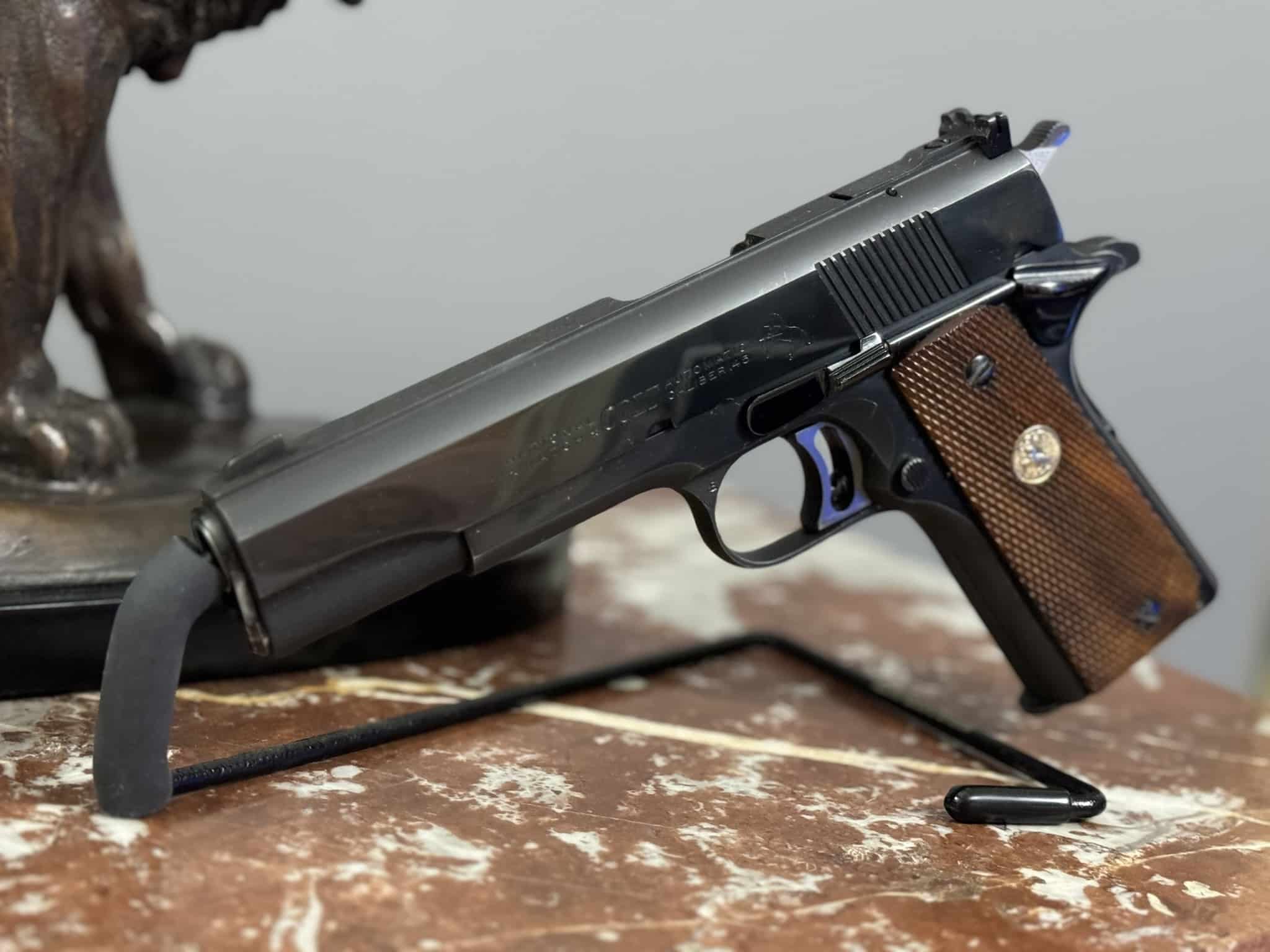
The Colt Gold Cup National Match is one of the classic American target pistols: a refined 1911 built for shooters who wanted better sights, a cleaner trigger, and match-oriented accuracy. A 1962 example sits in an especially interesting window, after the Gold Cup name had been established but before later Series 70 and Series 80 changes reshaped Colt’s commercial lineup.
For collectors, the appeal is not simply that it is a Colt 1911. It is the combination of period target features, Colt polish, National Match lineage, and a documented shipment history that makes the pistol worth studying and preserving.
History of the Colt Gold Cup National Match
The Gold Cup story begins with the broader National Match tradition. Colt’s earlier National Match pistols were built around the M1911A1 platform and aimed at serious target shooters. They used careful fitting, match-grade parts, and improved triggers to create a commercial pistol suitable for precision shooting.
That National Match foundation eventually evolved into the Gold Cup National Match. By the late 1950s and early 1960s, Colt was offering a pistol that carried both the practical DNA of the 1911 and the prestige of a dedicated competition arm.
Why the 1962 Gold Cup Matters
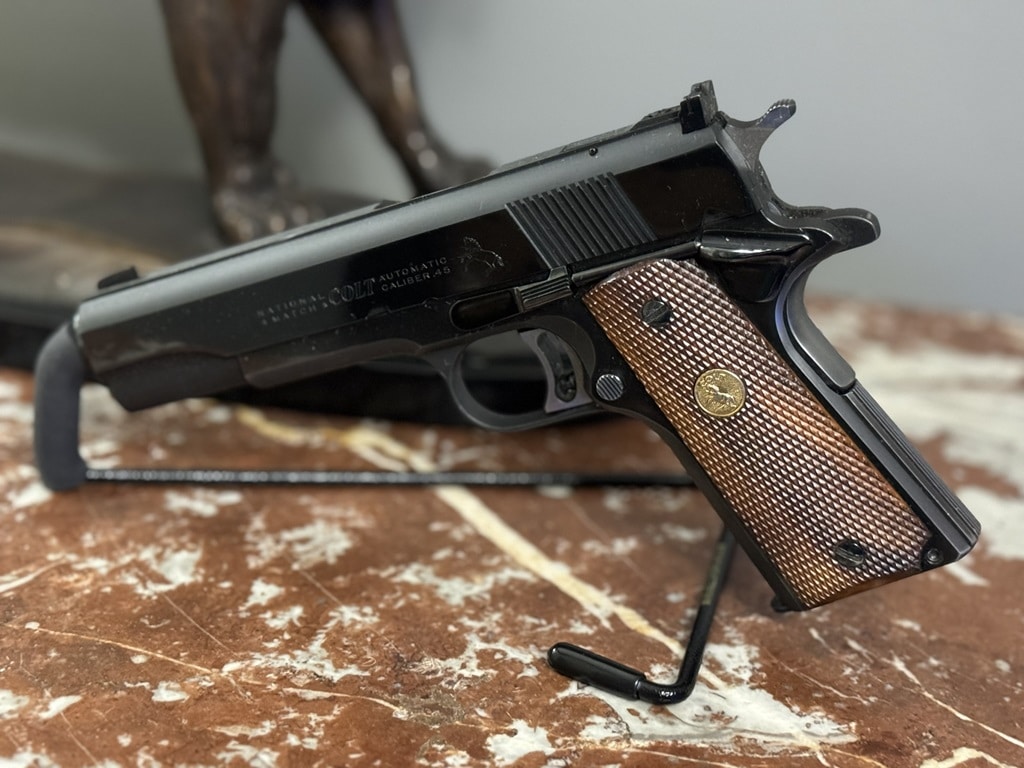
A 1962 Gold Cup belongs to the early postwar competition period, when the pistol was still closely tied to bullseye shooting culture and Colt’s old-world manufacturing reputation. These pistols were not ordinary rack-grade Government Models. They were meant to be shot well, and they rewarded the kind of careful marksmanship that made the National Match name valuable.
Key features collectors tend to notice include the adjustable target sight arrangement, match-style trigger treatment, high-polish Colt finish, and the overall feel of a pistol assembled for accuracy rather than defensive economy.
Design Features and Target Pistol Details
The Gold Cup National Match was known for refinements that separated it from the standard service-style 1911. The wider target trigger, adjustable trigger stop, carefully fitted barrel, and target sights all speak to its intended use. The pistol’s balance also reflects the classic full-size 1911 format, making it feel familiar while still presenting itself as something more refined.
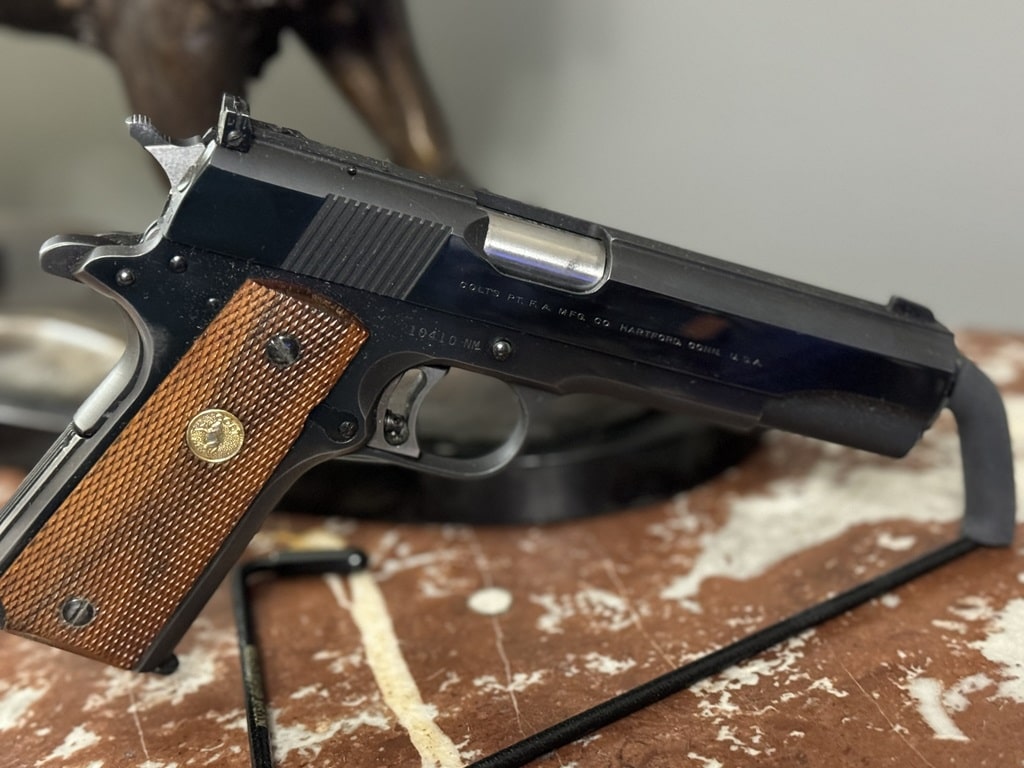
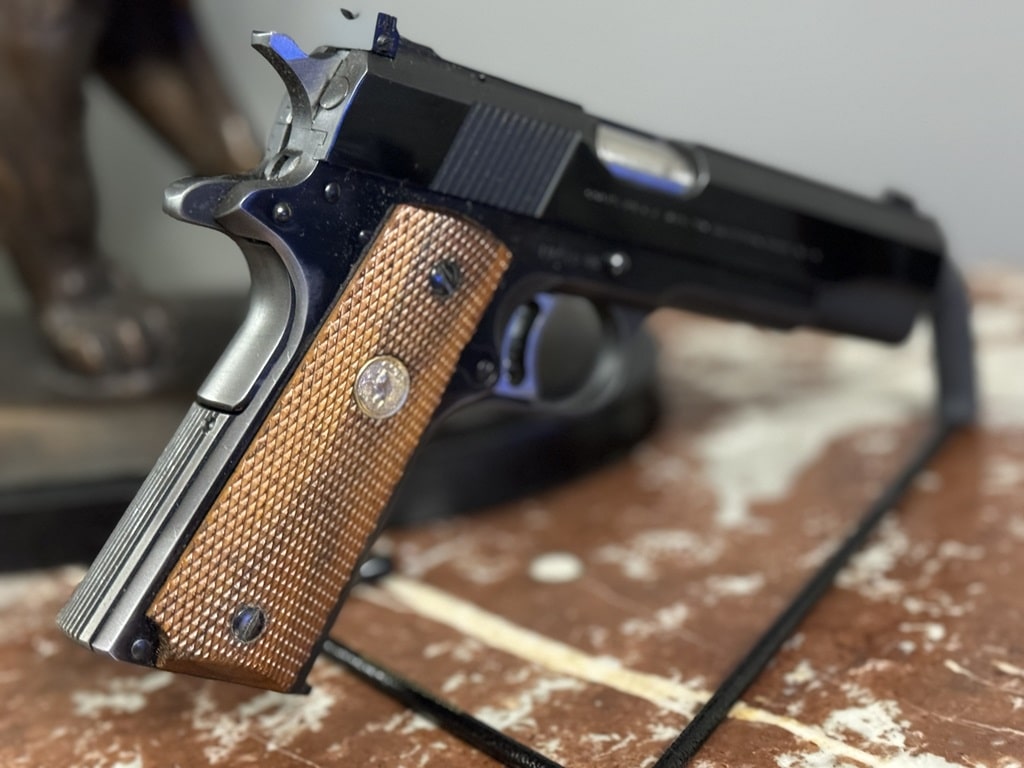
Early Gold Cups are also visually distinctive. The deep blue finish, commercial markings, and competition-oriented controls make them attractive display pieces even before the collector begins studying production period and provenance.
Colt Archive Shipment
According to the Colt Archive, this pistol was shipped on February 4, 1963 as part of a three-gun shipment to John Jovino Gun Shop of New York City. That detail gives the gun more than a production date range. It provides a documented point in the pistol’s commercial life and places it in the orbit of one of the best-known old New York gun shops.
For a collector, that kind of provenance matters. The pistol can be appreciated as a fine target handgun, but the archive letter gives the story firmer footing.
My Collector Notes
For the past year I had searched for a 1960 Gold Cup National Match. When this 1962 gun came up for auction, I jumped at the chance. It was close enough to the period I wanted, and the overall character of the pistol made it too interesting to ignore.
The gun had some fiber on it from someone using the wrong cloth to clean the finish. I was impatient to photograph it and get the article written, but a pistol like this deserves careful cleaning with the right materials. This one will not simply disappear into the back of the safe.
1962 Context: Guns, Culture, and the 1911 Story
The year 1962 sits in a fascinating period for American firearms collectors. The postwar sporting market was mature, traditional craftsmanship still mattered, and the 1911 platform had already proven itself through decades of service and target use. At the same time, American culture was changing quickly: the space race, Cold War tension, and the early 1960s style of sport shooting all form part of the backdrop.
That is one reason this Gold Cup belongs in the larger 1911 series. It connects the Government Model’s military roots to the competition world, and it shows how Colt turned the basic 1911 pattern into a prestige target pistol.
Collector Takeaway
The Colt Gold Cup National Match is more than just a handgun; it is a statement about precision, tradition, and the pursuit of excellence in American pistol making. A 1962 example captures a moment before later production changes, giving collectors a tangible link to the classic National Match period.
A well-preserved 1962 Colt Gold Cup is more than a collectible pistol. It is a snapshot of an era when craftsmanship, presentation, and pride of manufacture were inseparable. The finish has a depth modern production pistols rarely attempt, and the careful fitting of the slide and trigger reflects a level of refinement that enthusiasts recognize the moment the pistol is handled.
Continue with the dedicated 1962 Gold Cup photo gallery, or follow the period context with Dr. No and the year 1962.
From My Bench
If you are maintaining collectible pistols, use proper cloths, careful lighting, storage discipline, and reference books before rushing the cleaning process. Early high-polish finishes deserve patience.
Shop My Amazon StorefrontAs an Amazon Associate I earn from qualifying purchases. I only link to products, books, tools, and accessories that fit the editorial purpose of Gun Collectors Club.
This 1962 example fits into a much longer production story. See the Colt Gold Cup history and variants guide for the broader National Match timeline, identification features, and later Series 70 and Series 80 context.

About Greg Cook
Greg Cook writes about firearms collecting, personal history, and the stories behind interesting guns. His Army MOS was 76Y, Unit Armorer, and he brings that practical background to his collector articles.