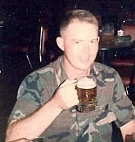
United States Army, Active Duty 1984–1986. This is the opening chapter in my Army Days and REFORGER 85 story — the path from Alabama to basic training, quartermaster school, Fort Carson, and the memories that still shape the way I look at serious rifles and military history.

Introduction
After taking the exam and making really high scores, I turned down an opportunity to obtain my college degree and become an Officer because I did not want to make the long-term commitment required. I knew that if I put in six or eight years, I would put in twenty.
I signed up for two years active duty — the minimum. I wanted to go to language school, but they required more than a two-year hitch for that. The two-year enlistment was available only to certain Military Occupational Specialties. I chose 76Y, Supply Clerk / Unit Armorer.
I processed in at Montgomery, Alabama, went to Fort Dix, New Jersey for Basic Combat Training, then went to AIT at Fort Lee in Petersburg, Virginia for Quartermaster School. From Virginia, I went to Fort Carson in Colorado Springs, Colorado for my permanent duty station.

Advanced Individual Training at Fort Lee
After leaving Fort Dix, New Jersey, I spent the summer of 1984 at Fort Lee in Petersburg, Virginia. Regrettably, I cannot recall my classmate’s name that I am having a beer with, but I can tell you what song was playing on the jukebox.
“Jump” by Van Halen. I heard it 30,000 times in three months.
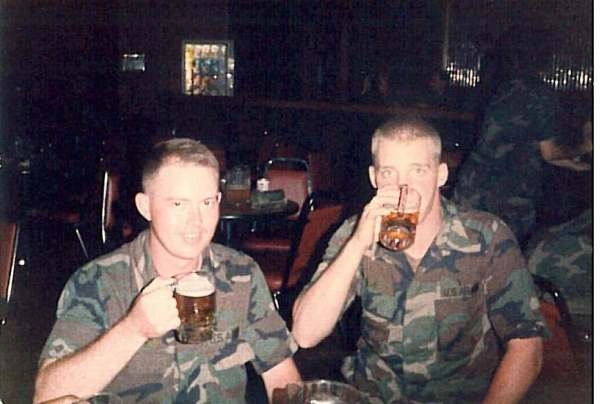
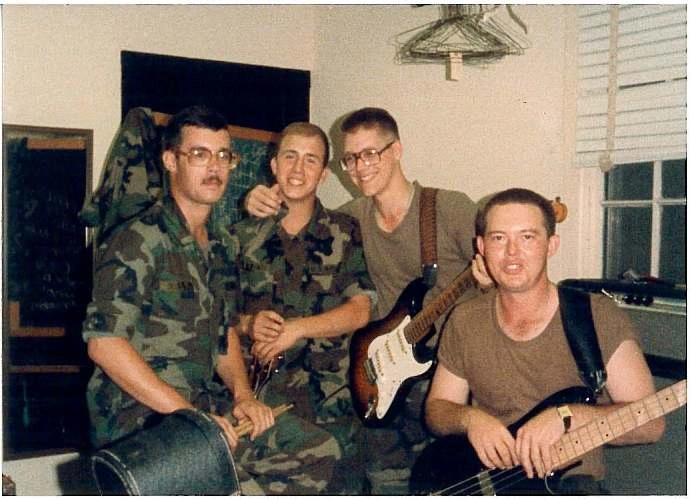
Army Airborne Parachute Riggers, Air Force air transportation and parachute-related specialties, and Marine Airborne and Air Delivery Specialists all went to school there. “Might as well jump!” “Go ahead and jump!” Nobody dared put money in the jukebox because everyone knew Jump had already been paid for so many times that you would be waiting until next Tuesday to hear anything else.
Arrival at Fort Carson
When I arrived at Carson along with a large group of “newbies,” we were all on pins and needles again, waiting to learn what unit we would be assigned to. With a Military Occupational Specialty of 76Y, you could be assigned to almost any unit.
The crisp, clean mountain air was nice, and I had escaped from the never-ending “Jump” by Van Halen.
I drew the 461st Air Defense Artillery unit and was attached to Delta Company, a Chaparral unit. All the talk was about “range time.” Some units spent more time downrange than others, playing war games. Some units never went downrange. I was not that lucky this time.
Collector Takeaway
This first chapter is not just background. It explains why military rifles, qualification ranges, unit armorer duties, and later REFORGER memories still matter to me. Those experiences became part of the lens through which I later viewed firearms collecting — not only as objects, but as reminders of responsibility, discipline, and history.
From My Bench
If you are setting up your own workspace or maintaining a collection, I keep a curated list of tools, books, cleaning gear, and bench items that fit the way I work.
Browse My Gear ListAs an Amazon Associate I earn from qualifying purchases. I only link to products, books, tools, and accessories that fit the editorial purpose of Gun Collectors Club.

About Greg Cook
Greg Cook writes about firearms collecting, personal history, and the stories behind interesting guns. His Army MOS was 76Y, Unit Armorer, and that practical background still shapes his collector articles.