This article is part of the TAR-40 Series. View full series →
Sometimes a rifle speaks to the present because it stirs up something from long ago.
My first two TAR-40 articles focused on the chase itself and then on the rifle’s identity as a named, collectible modern classic. But there is a more personal reason this rifle got under my skin. When I was in the Army from February 28, 1984, through February 28, 1986, basic combat training took me to Fort Dix, New Jersey. Looking back now, I find myself thinking about rifle qualification, the feel of a service arm in young hands, and the way certain sounds and impressions stay with a man even when the details blur around the edges.
Memory is a funny thing. I have long believed that I may have qualified with a 7.62 rifle rather than the later 5.56 pattern so many people associate with Army service of that era. Whether every detail of that memory would survive an armorer’s checklist is not really the point. What matters is that the TAR-40 brought that whole world back to me: qualification ranges, military routine, the seriousness of handling a rifle that was not a toy, and the sense that accuracy still mattered because discipline still mattered. I was taught to refer to it as my weapon, not my gun.
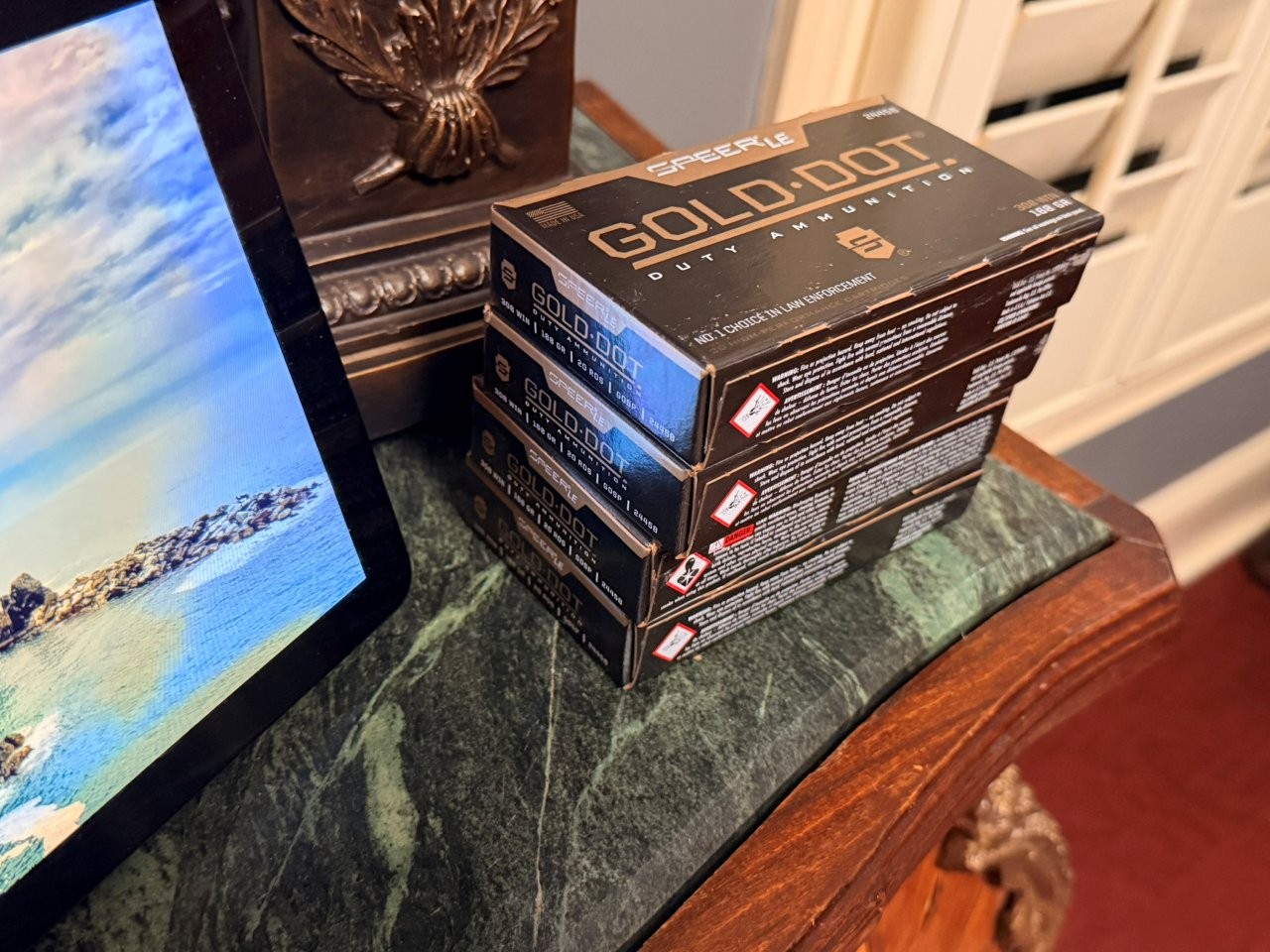
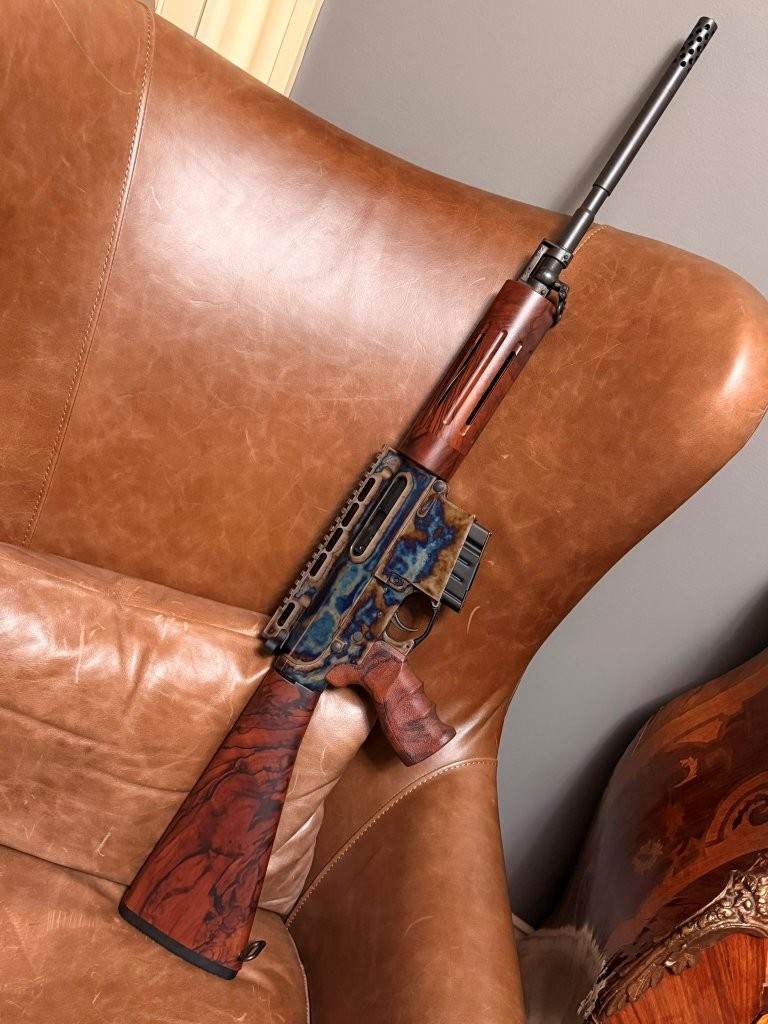
That is what makes this third chapter different. It is not just about the Turnbull TAR-40 as a collectible. It is about why a rifle like this can hit a veteran on two levels at once — first as a beautiful object of Turnbull exclusive synthetic hydrographic set, steel, and case color, and second as an echo of a younger version of himself learning what a rifle meant in the first place.
For a collector, that kind of connection matters. There are rifles you admire. There are rifles you chase. And then there are rifles that seem to close a circle you did not realize was still open.
Fort Dix, Basic Training, and the First Serious Rifle Lessons
Anyone who has been through Army basic training remembers that the rifle range was about more than marksmanship. It was about control, procedure, and respect. By the time a recruit gets into position on the line, the rifle has already become part of a larger discipline. You learn to listen. You learn to slow down. You learn that little mistakes matter.
Fort Dix is where that experience took shape for me. I can still picture the seriousness of qualification and the way the military stripped sentiment out of the process. You did not get romance. You got standards. Yet years later, that is exactly why the memory holds up. It was real.
That early exposure may also explain why the TAR-40 appeals to me in a way that a purely tactical black rifle never really could. The TAR-40 has authority without looking disposable. It has the heft and presence of something meant to be taken seriously, not merely accessorized.
The older I get, the more I appreciate rifles that feel deliberate. The Army taught me that long before I had the words for it.
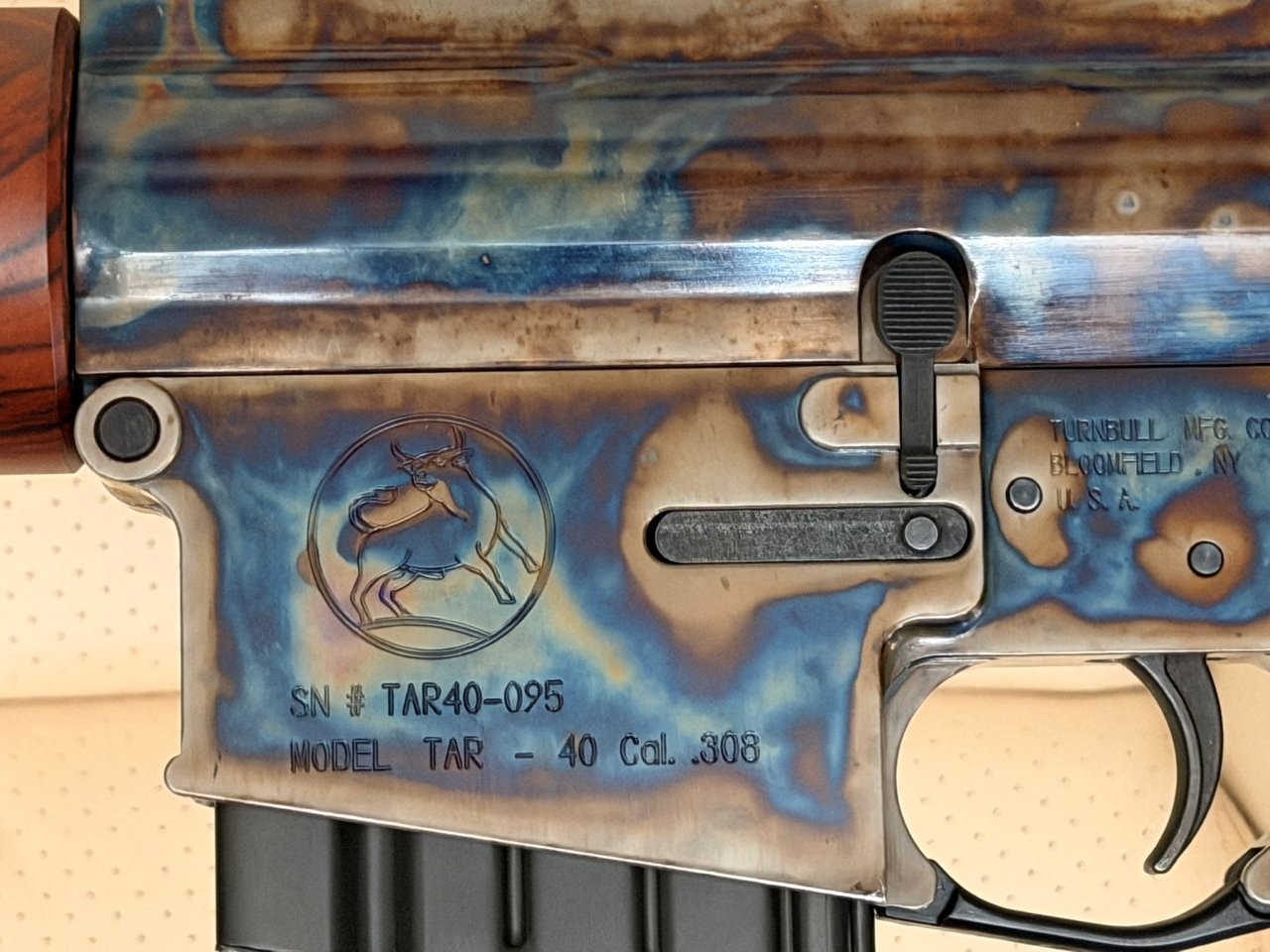
Whether I am remembering a true 7.62 qualification, a service-rifle impression filtered through the passage of decades, or some combination of both, the important thing is the way that memory colors my reaction to the TAR-40. This is a rifle chambered in .308 Winchester, the civilian cousin of 7.62 NATO, and it carries a weight, dignity, and seriousness that feel emotionally closer to the idea of a battle rifle than to the featherweight carbines that dominate the modern market.
Why the TAR-40 feels personal:
It recalls the discipline of Army qualification. Its .308 chambering carries the authority many shooters associate with 7.62-class rifles. Its Turnbull exclusive synthetic hydrographic set and steel presentation make it feel permanent rather than disposable. And for a veteran collector, it bridges memory and ownership in a way few modern rifles can.
Not a Service Rifle — But a Full-Circle Rifle
The TAR-40 is not trying to impersonate an issued military arm. That is not its purpose and not its charm. What it does instead is far more interesting. It takes a modern semiautomatic .308 platform and gives it a face, finish, and visual gravity that make it feel worthy of reflection. It is a rifle for someone who appreciates performance, yes, but who also wants craftsmanship and permanence in the same package.
That is why this rifle does not strike me as just another acquisition. It feels more like a destination. In youth, the rifle was something assigned. In later life, the rifle became something chosen. That difference is enormous. One belonged to training and obligation. The other belongs to memory, judgment, and taste.
In the Army, the rifle was part of the system. With the TAR-40, the rifle becomes part of the story. That may be the clearest way I can put it. One taught responsibility. The other rewards appreciation. Yet they still speak to each other across the years.
Why the TAR-40 Lands So Differently
Collectors often divide the gun world into neat categories: military, sporting, tactical, collectible, investment-grade, and so on. The TAR-40 ignores those boundaries. It is too refined to feel ordinary, too modern to feel nostalgic in the usual sense, and too visually distinctive to disappear into the crowd of AR-pattern rifles.
That matters because many veterans eventually reach a point where they are not looking for replicas of what they were issued. They are looking for something that honors the seriousness of that experience while also reflecting how their tastes have matured. In that sense, the TAR-40 is almost ideal. It gives you modern capability without visual emptiness.
The case colors, walnut — or in my case, the Turnbull exclusive synthetic hydrographic set, stock, grip, and fore-end — and overall presentation soften none of the rifle’s purpose. Instead, they elevate it. The rifle still says strength, but it says it with confidence rather than noise.
That may be why this gun feels less like a curiosity and more like a culmination. It does not merely perform. It resonates.
For me, that resonance begins at Fort Dix and ends with a rifle I never could have imagined owning back then.
Part III, Properly Understood
In the first article, the TAR-40 was the object of pursuit. In the second, it became a named concept worthy of collector attention. In this third chapter, it becomes something even more meaningful: a personal landmark. That is not because it duplicates military memory exactly, but because it awakens it honestly.
The TAR-40 feels like a rifle chosen by the man Army service helped create.
That is why I would not describe this rifle as merely handsome or rare. Those things are true, but they are incomplete. The deeper appeal is that it closes the distance between a young soldier learning standards at Fort Dix and an older collector who now values craftsmanship, identity, and permanence every bit as much as performance.

Why This Chapter Matters
A lot of firearm writing stays on the surface. It catalogs features, repeats specifications, and reports group sizes. There is a place for all of that, and the TAR-40 has already proven it deserves serious treatment on those terms. But sometimes the truest reason a firearm matters is not found in a spec sheet. It is found in the life experience the firearm stirs awake.
The Real Conclusion
When I look at the TAR-40 now, I do not just see a beautifully finished modern rifle. I see a thread running back to Army service, to basic training at Fort Dix, to qualification, to discipline, and to the early lessons that shaped how I still think about firearms. The rifle is modern. The connection is old.
That is why Part III belongs here. The TAR-40 is not just a collectible and not just a shooter. For me, it is a full-circle rifle — one that connects military memory, collector instinct, and the lasting appeal of a serious .30-caliber semiautomatic dressed with uncommon dignity.
In the end, the TAR-40 does something the vast majority of modern rifles never even attempt. It reminds me not only what I admire now, but where that admiration began.
From My Bench
If you are setting up your own workspace or maintaining a collection, I keep a curated list of tools, books, cleaning gear, and bench items that fit the way I work.
Browse My Gear ListAs an Amazon Associate I earn from qualifying purchases. I only link to products, books, tools, and accessories that fit the editorial purpose of Gun Collectors Club.

About Greg Cook
Greg Cook writes about firearms collecting, personal history, and the stories behind interesting guns. His Army MOS was 76Y, Unit Armorer, and this TAR-40 series reaches back to his Army years from February 28, 1984, through February 28, 1986.