This article is part of the TAR-40 Series. View full series →
A Practical Overview
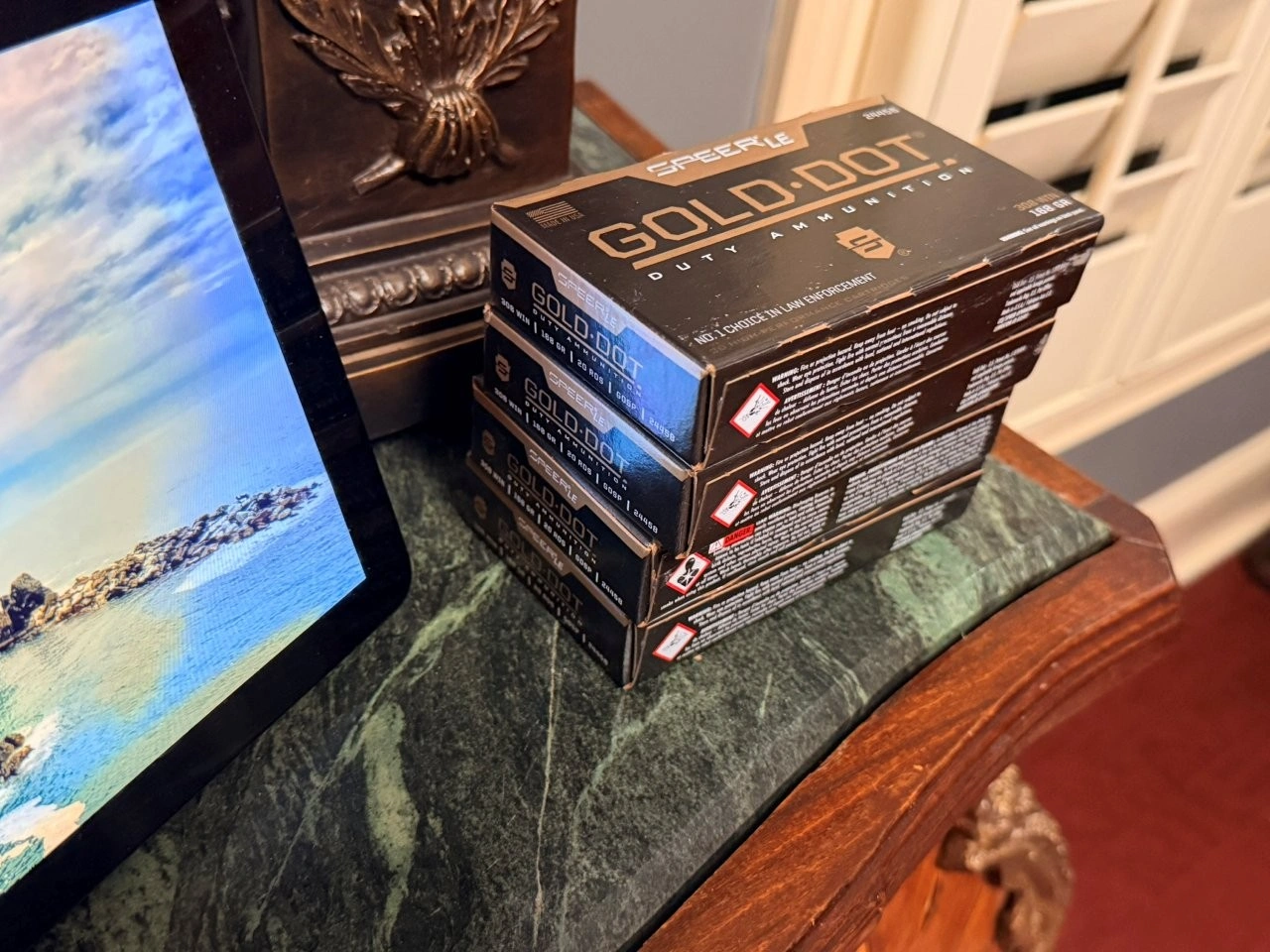
The .308 Winchester has earned its reputation the old-fashioned way: by being useful. It is accurate enough for serious target work, powerful enough for most North American big game with proper bullet selection, and common enough that a rifleman can still find a wide range of factory loads without chasing something exotic. For many shooters, it represents the sweet spot between mild manners and real field performance.
Where the .308 Winchester came from
Winchester introduced the .308 Winchester in 1952. The cartridge arrived during a period when military and sporting rifle development were both moving toward shorter, more efficient cases that could deliver strong performance without the length of older full-size battle rifle cartridges. That timing matters, because the .308 Winchester quickly became associated with the parallel development of the 7.62x51 NATO round.
In civilian form, the .308 Winchester became one of the most successful postwar rifle cartridges ever offered. Bolt-action rifles chambered for it appeared everywhere. Lever actions and semiautomatics followed. Decade after decade, hunters, target shooters, police marksmen and ordinary rifle owners kept proving the same point: the cartridge was easy to live with and hard to outgrow.
Why shooters still like .308 ammo
Even with newer cartridges competing for attention, .308 remains a standard because it does so many things well. Typical factory ammunition is available in a broad spread of bullet weights, from lighter loads intended for varmints or practice to heavier hunting and match bullets. It is not the fastest .30-caliber cartridge, but it is one of the most balanced.
For hunting, .308 Winchester has long been trusted for deer, hogs and similar game, and it is also commonly chosen for larger animals when paired with the right bullet and sensible distances. For the range, it remains one of the easiest centerfire rifle cartridges to find in match ammunition. For collectors and enthusiasts, it also sits at an interesting crossroads between the sporting market and Cold War military history.
Common strengths of the cartridge
- Broad availability of factory hunting, match and general-purpose ammunition.
- Useful performance from relatively short-action rifles.
- Recoil that most experienced shooters can handle comfortably.
- Excellent reputation for practical field accuracy.
- Strong aftermarket support for rifles, magazines, optics and accessories.
.308 Winchester vs. 7.62 NATO
This comparison creates more confusion than it should. The reason is simple: the two cartridges are closely related, and people often treat them as if they are absolutely identical. They are not identical, but they are closely enough connected that the comparison will never go away.
In broad terms, .308 Winchester is the commercial sporting cartridge, while 7.62x51 NATO is the military round developed for standardized service use. Their external dimensions are similar enough that they are often discussed together. That said, chamber specifications, pressure standards and firearm tolerances are not always described in exactly the same way by civilian and military authorities. That is why blanket statements can get a shooter in trouble.
| Point of Comparison | .308 Winchester | 7.62x51 NATO |
|---|---|---|
| Primary identity | Commercial sporting cartridge | Military rifle cartridge |
| Historical role | Introduced by Winchester for civilian use and quickly adopted by sportsmen | Standardized for NATO service rifles and machine guns during the Cold War era |
| Practical overlap | Often used in hunting, target and precision rifles | Often encountered in military-pattern rifles and surplus-style contexts |
| Main caution | Do not assume every rifle marked for one is automatically ideal for the other. Always follow the firearm manufacturer’s guidance for the specific rifle. | |
What kind of .308 ammo to buy
The best .308 load depends entirely on what you want the rifle to do. A deer hunter should not shop the same way a range shooter does, and a collector firing an older semiautomatic may have different preferences from somebody feeding a modern bolt gun.
For hunting
Look for quality soft-point, bonded or controlled-expansion bullets from reputable manufacturers. The .308 does not need gimmicks. It simply needs a bullet that matches the game and the expected shooting distance.
For target work
Match ammunition usually gives the cartridge a chance to show why it has such a strong reputation for accuracy. Many shooters find that .308 rifles perform very consistently with well-made match loads, especially in bolt actions.
For general range use
Plain, dependable full metal jacket ammunition can still make sense for practice, especially if the goal is function testing, positional shooting or simply spending time behind the rifle without burning through premium hunting or match loads.
How .308 compares with older and newer rivals
The .30-06 still offers more case capacity and a little more room at the top end, but .308 Winchester usually gets there in a shorter action with less powder and slightly lighter rifles. Newer cartridges may beat it in specific categories such as long-range efficiency or reduced recoil, but many of them do so by giving up some combination of simplicity, availability or price.
That is why .308 Winchester remains so hard to replace. It may not be the newest answer, but it is still one of the most complete ones.
Final thoughts
The .308 Winchester remains one of the great practical rifle cartridges. It has history behind it, but it is not just a historical curiosity. It is still a relevant, capable round for modern shooters who want versatility without complication. That is a big reason it continues to show up in deer camps, on target lines and in gun safes all across the country.
And when the inevitable comparison to 7.62 NATO comes up, the best answer is the calm one: yes, they are closely related, but no, a shooter should not ignore the specifications of the individual rifle. As with so much in the gun world, a little caution beats a lot of folklore.
From My Bench
If you are setting up your own workspace or maintaining a collection, I keep a curated list of tools, books, cleaning gear, and bench items that fit the way I work.
Browse My Gear ListAs an Amazon Associate I earn from qualifying purchases. I only link to products, books, tools, and accessories that fit the editorial purpose of Gun Collectors Club.

About Greg Cook
Greg Cook writes about firearms collecting, personal history, and the stories behind interesting guns. His Army MOS was 76Y, Unit Armorer, and he brings that practical background to his collector articles.