This article is part of the TAR-40 Series. View full series →
The Athlon review proved it could shoot. The trademark proves it was meant to matter.
When I wrote my first article on the Turnbull TAR-40, I focused on the pursuit itself: the research, the auction, the pressure of the final minutes, and the satisfaction of winning a rifle that stood apart from almost everything else I had chased in years. But after the excitement settled, another question began to take shape. What exactly is the TAR-40?
It is easy enough to describe what it does. It is much harder to describe what it is. The more I studied the Athlon Outdoors review and the public TAR-40 trademark record, the more convinced I became that this rifle was never intended to be just another AR-pattern firearm dressed up with prettier materials. It was conceived as something with identity.
That distinction is what makes the TAR-40 so interesting. Plenty of rifles can perform. Plenty of rifles can attract a buyer. Very few modern rifles feel as though they were created to be recognized, remembered, and discussed long after production stopped.
This follow-up article is not a retelling of the auction. It is an attempt to explain why the TAR-40 lingers in the mind once the bidding is over. The first article told the story of the hunt. This one is about the meaning of the rifle itself.
What the Athlon Review Got Right
Athlon Outdoors approached the TAR-40 the way most gun writers naturally would: evaluate the build, test the accuracy, and decide whether the rifle actually performs. On that level, the review did an important job. It established that the TAR-40 was not just a visual exercise. It was a serious rifle.
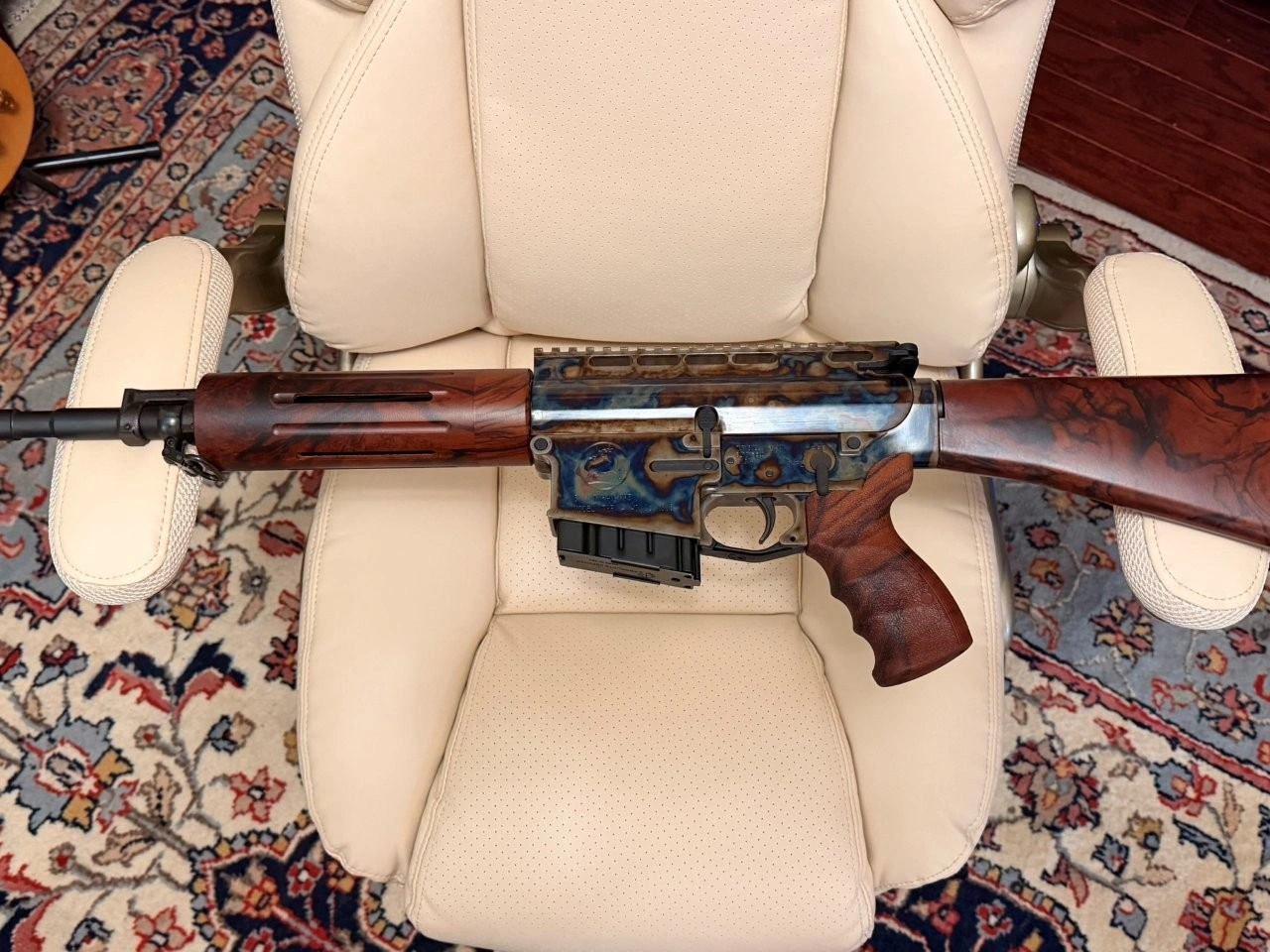
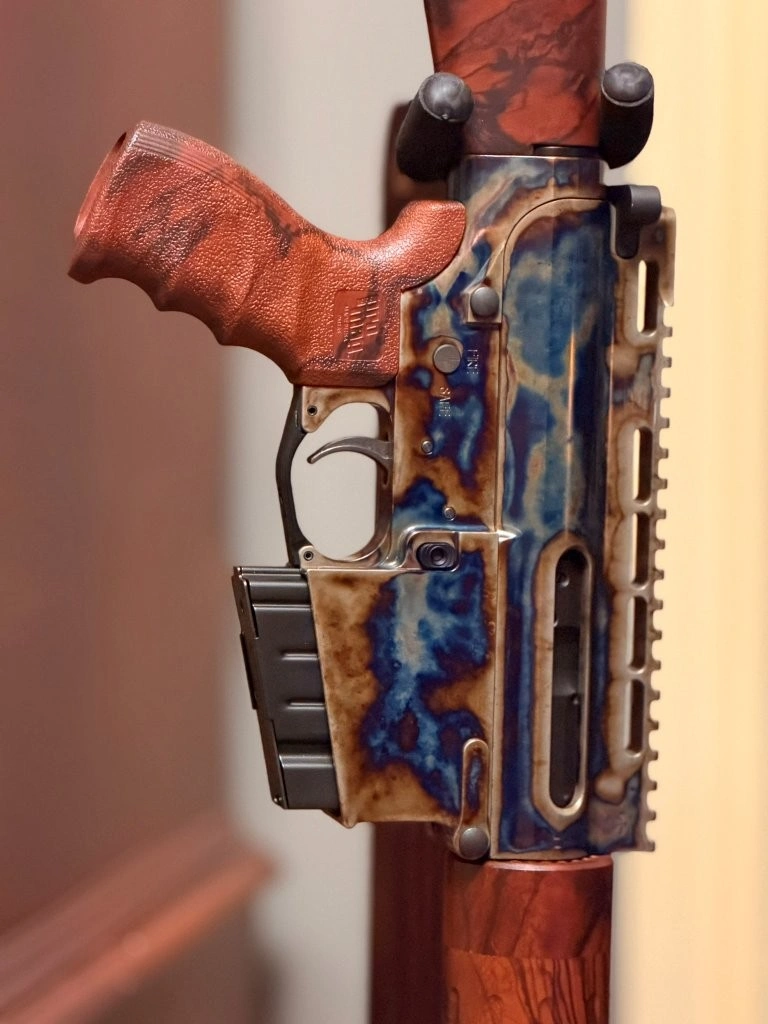
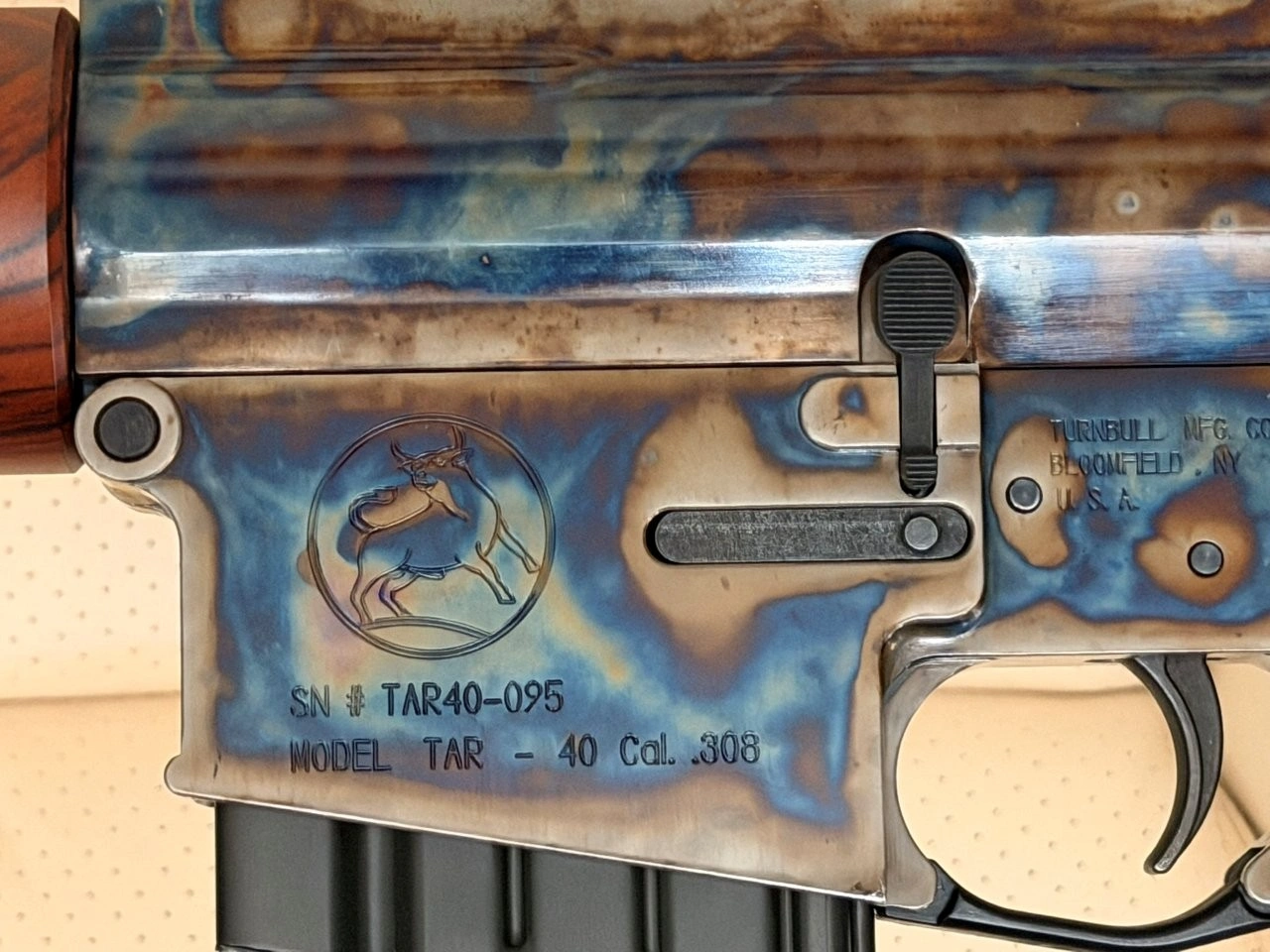
The article highlighted the case-hardened receivers, the walnut furniture — my gun has the Turnbull exclusive synthetic hydrographic set: stock, grip, and fore-end — the chrome-lined barrel concept, and the rifle’s unusual ability to combine old-world visual warmth with contemporary .308 AR performance. Just as important, the review reported excellent accuracy and emphasized the rifle’s sheer mass. At roughly sixteen pounds as tested, the TAR-40 is no featherweight, but that weight translates into stability, mild recoil, and a bench-ready demeanor that makes sense once you understand what the rifle is trying to be.
That matters because the TAR-40 could easily have become a novelty in the wrong hands: a pretty rifle that existed more for photographs than for practical shooting. The Athlon review made clear that was not the case.
The TAR-40 did not matter because it was beautiful. It mattered because it was beautiful and mechanically serious.
But the review, by its nature, could only tell half the story. A range article can tell you how a rifle shoots, how much it weighs, and what kind of groups it produces. What it cannot fully capture is the category into which the rifle falls in the minds of collectors. That is where the TAR-40 becomes far more interesting.
What separates the TAR-40 from ordinary modern rifles:
It has a distinct visual identity. It was produced in limited and varied forms. It crosses over into the world of collectors who do not normally chase AR-pattern rifles. And most important of all, it was treated as a named concept, not merely a configuration.
The Key Discovery: TAR-40 Was Treated Like a Real Name
The deeper clue came from the TAR-40 trademark record. Public records show that Turnbull Restoration filed the TAR-40 mark in January 2013, secured registration in December 2013, and listed first use in commerce in February 2012. That may sound like dry paperwork, but to a collector it says a great deal.
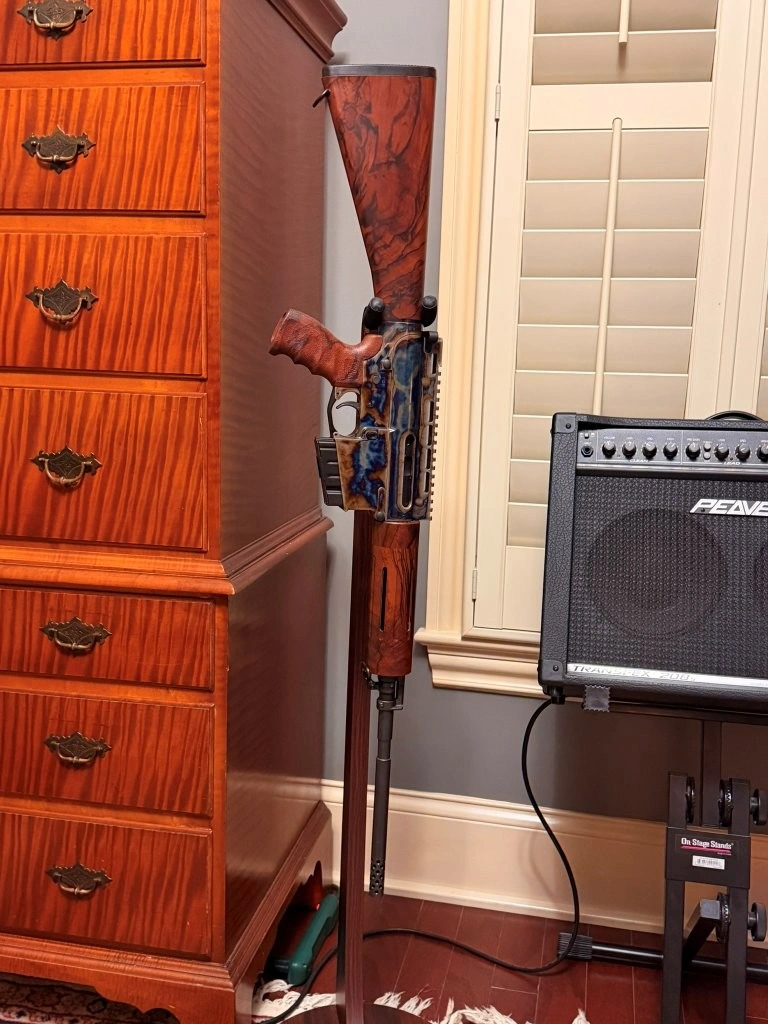
A great many firearms carry labels that function mostly as catalog shorthand. The TAR-40 feels different because it was treated differently. Turnbull protected the name itself. That tells me the company did not see this rifle as a one-off curiosity or simply as another AR-10 pattern build with premium touches. They saw it as a rifle with identity, something that could stand on its own and be remembered by name.
A model number labels a product. A protected name tries to establish memory. That is the distinction I keep returning to. When Turnbull named the TAR-40, they were doing more than describing a rifle. They were defining a concept and giving it a place in the market.
When a company trademarks a rifle name, it is not just building a gun. It is naming an idea.
That changes how I view the TAR-40 entirely. It stops looking like an eccentric AR and starts looking like a deliberate attempt to create a collectible American rifle in real time.
Why Collectors React to It
Collectors are often accused of romanticizing the ordinary, and sometimes that criticism is deserved. But every so often a firearm really does arrive carrying the signals of intention. The TAR-40 sends several of those signals at once.
It came from a company already associated with restoration, classic finishes, and reverence for traditional American gun aesthetics. It broke away visually from the sea of black, synthetic, tactically styled ARs. It blended case colors, walnut or the Turnbull exclusive synthetic hydrographic set, and modern semiautomatic .308 performance in a way that felt unified rather than forced. And because examples appear to vary by customer configuration, each rifle carries a little extra intrigue of its own.
Scarcity alone does not create collectibility. Plenty of obscure guns are scarce. What matters is scarcity joined to concept, craftsmanship, and presentation. The TAR-40 has all three.
That is why this rifle seems to attract people who do not ordinarily think of themselves as AR buyers. The TAR-40 was built for shooters who admire traditional finishes or the Turnbull exclusive synthetic hydrographic set, care about case colors, and still want a rifle that can perform. It does not ask a traditionalist to abandon his taste. It meets him where his taste already lives.
To me, that may be the smartest thing Turnbull ever did with this platform. They built an AR for people who had never quite warmed to ARs.
Modern Classic, Properly Understood
Modern Classic, Properly Understood: not a casual compliment, but a category.
The phrase “modern classic” gets used too loosely in the gun world. Sometimes it means nothing more than “a new gun I happen to like.” But the TAR-40 earns the term more honestly than most. It is modern in operating system, chambering, and practical capability. It is classic in materials, finish, visual presence, and emotional effect.
The TAR-40 embraces the present without abandoning visual character.
Most modern rifles strike me as either purely utilitarian or aggressively tactical. There is nothing wrong with either approach, but neither one usually moves me as a collector. The TAR-40 occupies another lane altogether. It does not pretend to be old, and it does not apologize for being new. Instead, it bridges categories that are usually kept apart.
Why the Name Deepens the Story
One especially interesting note in the public trademark history is that the registration was later cancelled in 2020 under Section 8. To me, that does not diminish the significance of the original filing. If anything, it sharpens the historical picture. There was a defined period in which Turnbull formally claimed the TAR-40 name, used it in commerce, and introduced the rifle as a distinct branded idea. That original intention still radiates from the rifle years later.
The Real Conclusion
The Athlon review proves the TAR-40 can shoot. The auction history proves it can command attention. The trademark record proves it was meant to be remembered. That combination is rare in modern firearms. Most rifles are either tools or collectibles. Very few are designed to be both from the beginning.
The more I study the TAR-40, the less it looks like an eccentric AR and the more it looks like a deliberate statement from a company that understood legacy, craftsmanship, and presentation well enough to build something outside the usual lanes. Whether one approaches it as shooter, collector, or simply an admirer of well-executed firearms, that is the part that stays with you.
In the end, the TAR-40 was never just a model number. It was an idea with wood — or the Turnbull exclusive synthetic hydrographic set — and steel around it.
From My Bench
If you are setting up your own workspace or maintaining a collection, I keep a curated list of tools, books, cleaning gear, and bench items that fit the way I work.
Browse My Gear ListAs an Amazon Associate I earn from qualifying purchases. I only link to products, books, tools, and accessories that fit the editorial purpose of Gun Collectors Club.

About Greg Cook
Greg Cook writes about firearms collecting, personal history, and the stories behind interesting guns. His Army MOS was 76Y, Unit Armorer, and he brings that practical background to his collector articles.