
6-Part TAR-40 Series
- Part ITurnbull TAR-40 .308: The Hunt, The Auction, and a Modern Classic
- Part IIThe TAR-40 Was Never Just a Model Number
- Part IIIFrom Ft. Dix to the TAR-40
- Part IVReasons NOT to Buy a Turnbull TAR-40 — And Why I Bought It Anyway (current page)
- Part V.308 Winchester Ammo
- Part VIThe Turnbull TAR-40: Technical Examination of a Modern Classic
Collectors are often at their most credible when they are willing to argue against their own purchase. The Turnbull TAR-40 is an easy rifle to admire, but it is not an easy rifle to defend on purely practical terms. In fact, if someone asked me whether the TAR-40 is the logical choice for most buyers, my honest answer would be no.
That may sound strange coming from someone who watched the auction closely, stayed in the fight, and bought one anyway. But that is precisely the point. The TAR-40 is not a rifle that wins on convenience. It does not win on value-per-dollar. It does not win on broad aftermarket support. It does not even win on historical standing, at least not yet. What it does have is something more complicated: character, craftsmanship, rarity, and a pull that is difficult to explain unless you have already felt it yourself.
Reason No. 1: It is heavy
The first practical objection is simple: the TAR-40 is not a lightweight rifle. For buyers who want something trim, fast, and easy to carry all day, this is not the obvious answer. Its presence is part of its appeal, but that same presence can work against it. A heavier rifle can be steady from the bench and reassuring in the hands, yet it can also become a burden in the field or an overbuilt solution for someone who just wants a capable .308.
Weight matters more than enthusiasts sometimes admit. It affects balance, carrying comfort, optics choices, sling choices, storage, and even the way the rifle lives in your safe. The TAR-40 is a rifle you are aware of every moment you handle it. Some collectors will call that substance. Others will call it excess. Both arguments have merit.
Reason No. 2: It is expensive compared with performance alternatives
This may be the hardest objection to dismiss. If your goal is simply to own an accurate .308, there are less expensive ways to get there. Plenty of modern rifles will deliver strong real-world accuracy, dependable function, and easier accessorizing for significantly less money. That is the uncomfortable truth surrounding the TAR-40: it occupies a price tier where buyers are paying for more than utility.
And once you move beyond utility, the math becomes personal. You are no longer asking, “What is the cheapest route to good performance?” You are asking, “What am I willing to pay for design, finish, scarcity, and the intangible satisfaction of owning something uncommon?” For some buyers, that answer will be no amount at all. They will see a rifle that costs more than it needs to and does not necessarily outperform less expensive choices by a similarly wide margin. That is a fair criticism.
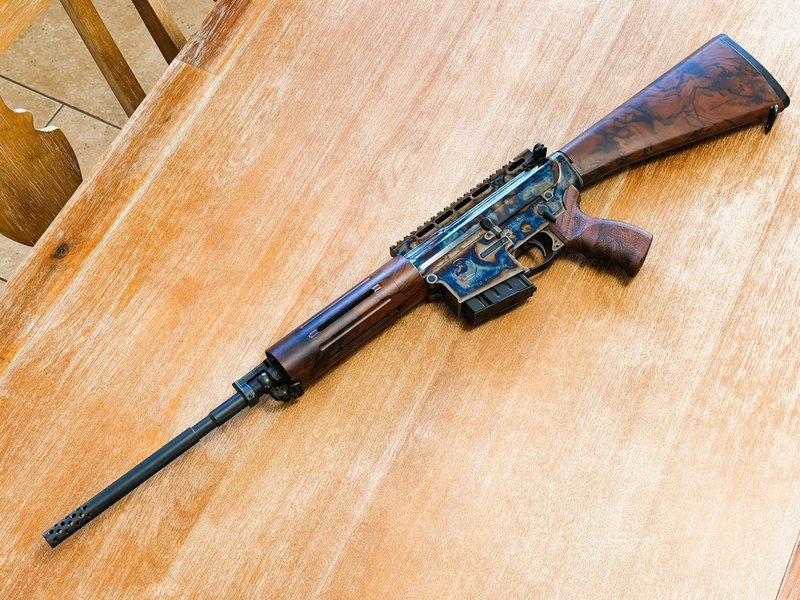
Reason No. 3: It is not historically proven — at least not yet
Collectors place a premium on context. A rifle can be beautifully made and still lack the one thing that history provides over time: proof. The TAR-40 does not come with decades of field reputation, military association, generational nostalgia, or established collector consensus. It is not a Winchester lever gun with a century of stories behind it. It is not a service rifle with wartime pedigree. It is not an already-settled icon.
That does not mean it never will be important. It means the verdict is still pending. Anyone who buys a TAR-40 today is making a judgment call ahead of history rather than leaning on history for reassurance. That creates both opportunity and risk. If the rifle becomes recognized as a meaningful limited-production modern classic, early buyers will look farsighted. If it remains a niche curiosity admired by a relatively small circle, then the case for paying a premium becomes harder to make.
Reason No. 4: The aftermarket ecosystem is limited
Many modern rifle buyers want options. They want a wide market of rails, rings, stocks, slings, magazines, accessories, display solutions, and easy-to-find parts. They want community knowledge, setup shortcuts, and a large online pool of people who have already solved the same problems they are facing. The TAR-40 does not offer that kind of mature ecosystem.
That matters. A limited aftermarket means fewer off-the-shelf answers and more trial and error. It means a buyer may have to think harder about scope mounting, storage, transport, presentation, and long-term support. For some shooters, that is part of the fun. For others, it is an unnecessary complication. If a person wants the reassurance of broad compatibility and a large support community, this is not the easiest road to take.
The TAR-40 asks a buyer to be comfortable with fewer shortcuts, fewer guarantees, and fewer people saying, “I’ve already done that—here’s exactly what to buy.”
Reason No. 5: It is a rifle for a narrow kind of buyer
The TAR-40 is not a universal recommendation. It appeals most strongly to someone who values craftsmanship, uncommon design, and the overlap between shooting and collecting. That is a narrower audience than the market for rifles that are lighter, cheaper, easier to customize, and backed by a deeper accessory world. A practical buyer can look at the TAR-40 and conclude that it asks too much in exchange for qualities that may not matter to them.
That is why I think the wrong sales pitch would be to call it the ideal .308 for everyone. It is not. For many buyers, the smarter purchase is a more ordinary rifle at a lower price point. There is no shame in that conclusion. In fact, there is wisdom in it.
And yet... I bought it anyway
This is where pure logic gives way to collecting. I did not buy the TAR-40 because it was the most economical route to .308 performance. I bought it because it stood apart. I bought it because in a world full of practical answers, it felt like a rifle with identity. I bought it because craftsmanship still matters to me, and rarity still matters to me, and because I could already see that this rifle would occupy a different place in my collection than an ordinary modern bolt gun ever could.
Part of collecting is recognizing that value is not always the same thing as efficiency. Some rifles earn their place through history. Some earn it through service. Some earn it through memory. And some earn it simply because they represent a level of fit, finish, design, and intent that is increasingly uncommon. The TAR-40, to me, belongs in that last category.
Will history ultimately validate that view? I cannot say with certainty. That is part of the gamble. But not every acquisition is a spreadsheet decision. Some are judgment calls. Some are instinct. Some are based on the belief that a modern rifle can still have soul, and that a collector can recognize it before the wider market does.
So yes, there are good reasons not to buy a Turnbull TAR-40. It is heavy. It is expensive. It is not yet historically proven. Its aftermarket support is limited. All of that is true.
And yet... I bought it anyway.
Not because those objections were wrong, but because they were not the whole story.
From My Bench
For rifle collectors, reference books, cleaning supplies, storage gear, and bench tools matter almost as much as the rifle itself.
Browse My Gear ListAs an Amazon Associate I earn from qualifying purchases.

About Greg Cook
Greg Cook writes about firearms collecting, personal history, and the stories behind interesting guns. His Army MOS was 76Y, Unit Armorer, and that practical background still shapes his collector articles.