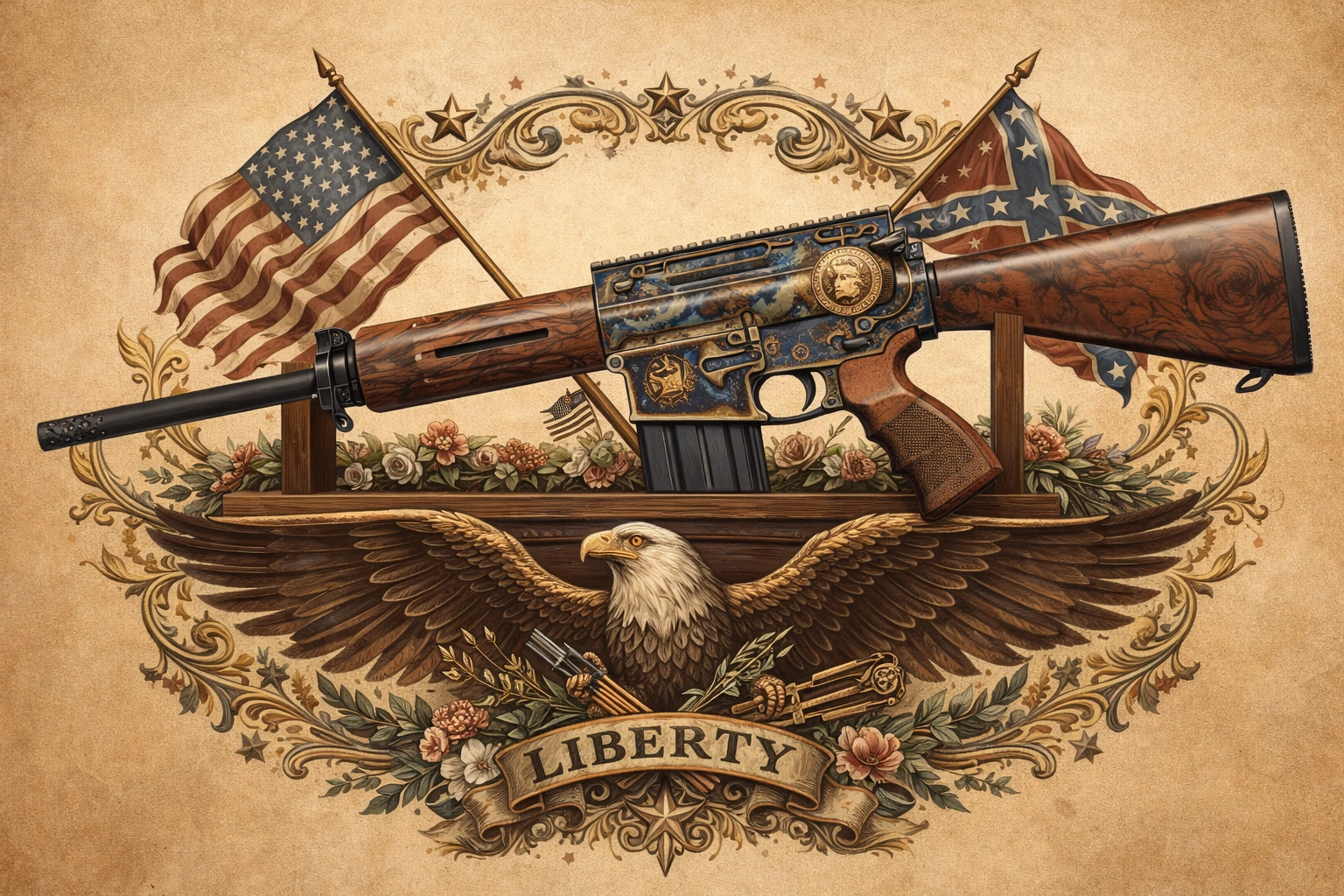
Rare American firearms are the guns collectors talk about long after an auction closes. They may be scarce because only a few were made, because most were used hard, because a special configuration was produced for a short time, or because factory records show an unusual shipment. But rarity is not a magic word. In collecting, rarity has to be connected to demand. A gun can be uncommon and still bring modest money if few collectors want it. A gun can be relatively available and still command a premium if the model has deep collector interest.
The best way to think about rare guns is to separate scarcity from desirability. Scarcity asks, “How many exist?” Desirability asks, “How many collectors care?” When those two forces meet, prices can climb quickly. That is why a rare Colt revolver variation, a documented Winchester, a high-condition Savage, or a factory-engraved presentation gun can attract bidders who already own good examples but are waiting for something better.
What actually makes a firearm rare?
Production numbers are the obvious starting point, but they are only one part of the answer. A low-production chambering, special barrel length, limited finish, scarce stock configuration, unusual sight, early production serial range, or special-order feature can all create collector interest. Factory engraving, factory letters, original boxes, shipping records, and known ownership history can strengthen the case. The more specific and documented the distinction, the stronger the collector argument becomes.
Condition can create rarity even when the model itself is common. A firearm that was normally bought for hard field use may be scarce in near-new condition. Early hunting rifles, police revolvers, and working shotguns were tools. They rode in trucks, saddlebags, patrol holsters, duck blinds, closets, and barns. When a high-condition example appears with sharp markings, original finish, and clean wood, collectors recognize that survival itself is part of the rarity.
The role of documentation
Documentation separates a rare gun from a rare claim. A factory letter from Colt, Winchester, or another archive can confirm shipment date, original configuration, barrel length, finish, stocks, destination, or special features. Cody Firearms Records Office materials are especially important for many Winchester, Marlin, L.C. Smith, Ithaca, Savage, and A.H. Fox firearms where factory information exists. A documented configuration is easier to buy, easier to insure, and easier to sell later.
Collectors should be careful with phrases such as “believed to be,” “possibly,” “attributed to,” or “one of a kind.” Those descriptions may be honest, but they require evidence. A firearm with a family story can be wonderful, but a family story is not the same as a factory record. The ideal situation is when the physical gun, serial number research, and documentation all point in the same direction.
Rare revolvers and the collector eye
Revolvers remain one of the strongest areas of American firearms collecting. Colt and Smith & Wesson both produced working guns, police guns, target guns, and premium models that now attract serious attention. A Colt Python is desirable in ordinary form, but certain barrel lengths, finishes, early production details, boxes, papers, and special variants push interest higher. A Colt Detective Special can be a study in generations, grips, frame changes, and condition. A Smith & Wesson .357 with the right features can become far more than another old revolver.
The revolver collector learns to study edges, screw heads, cylinder turn lines, muzzle wear, forcing cone condition, sideplate fit, and markings. He also learns not to confuse refinished beauty with originality. A polished and reblued revolver may look handsome in a display case, but the collector premium usually belongs to the gun that still carries its factory finish.
Rare rifles and regional memory
Rifles often become collectible through a different path. Some are tied to hunting culture, such as the Savage 99, Winchester 94, Winchester Model 70, Remington 700, and Browning BLR. Others are tied to military history, such as the Springfield 1903, M1 Garand, M1 Carbine, and various martial arms. Scarcity can come from chambering, configuration, early production, special-order features, or association with a historic period.
A rare rifle is not always flashy. Sometimes it is a correct, unaltered rifle that escaped later scope drilling, recoil pad installation, stock refinishing, or parts swapping. Many fine hunting rifles were modified by owners who wanted practical field improvements. That makes original examples more important today. When a collector finds a rifle with the correct sights, stock, buttplate, finish, and serial range, the absence of alteration becomes part of the value.
Engraving, presentation guns, and factory work
Factory-engraved firearms occupy a special place in the rare gun world. Engraving can be beautiful, but beauty alone is not enough. Collectors want to know whether the work is factory original, period correct, later custom work, or modern embellishment. Factory letters, known engraver styles, shipment records, and comparison with documented examples become especially important.
Presentation guns add another layer. A gun presented to a military officer, public figure, competitive shooter, lawman, or company executive can have value beyond model rarity. But provenance must be handled carefully. Inscriptions, photographs, letters, newspaper references, and family documentation all matter. A name on a gun is interesting; a documented connection is valuable.
The danger of rarity without context
Not every unusual gun is a good buy. Some firearms are rare because nobody wanted them when new. Odd calibers, awkward configurations, or failed experiments can be fascinating, but they may appeal to a narrow audience. That does not make them bad collectibles, but it does change the investment discussion. A collector should ask whether the gun fits a recognized collecting field or merely seems unusual.
There is also the danger of assembled rarity. Parts can be changed. Barrels can be swapped. Stocks can be altered. Special sights can be added. Boxes can be paired with the wrong gun. A collector should be skeptical of any firearm whose rare features cannot be reconciled with serial range, factory practice, wear patterns, and documentation.
How collectors should approach rare guns
The best approach is slow, methodical, and slightly skeptical. Study standard examples first. Learn what normal looks like before chasing rare. Keep notes on observed serial numbers, finishes, barrel markings, sight patterns, grip styles, and auction descriptions. Compare multiple examples. Ask why a particular feature exists and whether it belongs. When possible, consult factory records, recognized reference books, and experienced collectors.
Rare guns reward preparation. The time to learn is before the auction, not while the clock is running. If a gun is truly rare, the price will often be high enough that mistakes are expensive. A good collector would rather miss one gun than buy the wrong one.
Readers interested in rare variations should also explore the Colt Python photo gallery, Savage 99 photo gallery, TAR-40 series, and the broader collector guide library.
Rarity is strongest when the gun, the records, the condition, and the collector demand all tell the same story.
Collector takeaway
Rare American firearms are most valuable when scarcity is supported by originality, condition, documentation, and demand. The collector who learns to verify rather than assume will make better decisions. A rare gun should invite questions, and the best examples answer those questions through visible evidence and reliable records.
From My Bench
If you are preserving a collection, keep humidity, documentation, lighting, and safe handling in mind. I maintain a curated list of books, tools, cleaning supplies, storage items, and bench gear that fit the collector workbench.
Browse My Gear ListAs an Amazon Associate I earn from qualifying purchases. I only link to products, books, tools, and accessories that fit the editorial purpose of Gun Collectors Club.

About Greg Cook
Greg Cook writes about firearms collecting, personal history, and the stories behind interesting guns. His Army MOS was 76Y, Unit Armorer, and he brings that practical background to his collector articles.
Research notes and further reading
The following public references were consulted for historical framing, serial-number research, and archive guidance: