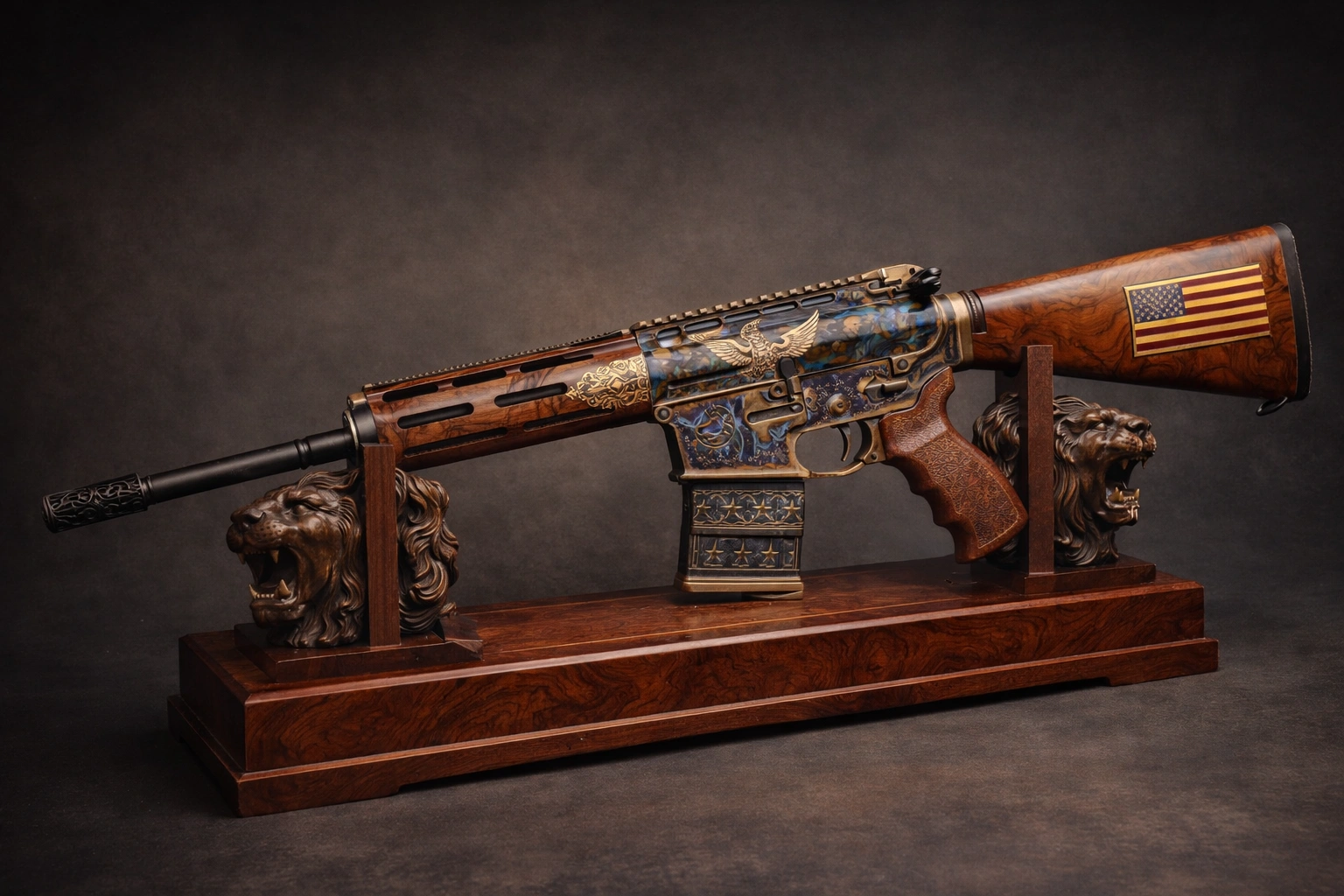
Classic American rifles occupy a special place in collecting because they bridge the worlds of hunting, military service, craftsmanship, and family memory. A good rifle was never just a tool. It was carried through deer woods, across farms, into military training, on horseback, in trucks, and sometimes into war. The best classic rifles still feel purposeful in the hands. Their appeal comes from design, balance, mechanical honesty, and the stories attached to them.
Collectors do not all agree on the same list of essential rifles, but certain names return again and again: Winchester Model 70, Winchester 94, Savage 99, Remington 700, Browning BLR, Springfield 1903, M1 Garand, M1 Carbine, and Marlin lever actions. Each model represents a different solution to a practical problem. Each also created a collector following that continues decades after introduction.
Winchester Model 70 and the bolt-action ideal
The Winchester Model 70 is often called “The Rifleman’s Rifle” for good reason. Its pre-64 versions became a benchmark for American sporting bolt actions because of controlled-round feeding, quality machining, stock design, and field reputation. Collectors study serial ranges, chamberings, barrel markings, stock details, and condition closely. A common hunting rifle may be interesting; a correct pre-64 in a desirable chambering with original finish and unaltered stock can be much more significant.
The Model 70 also demonstrates why originality matters. Many Model 70s were drilled, scoped, restocked, bedded, rebarreled, or modified for hard hunting use. Those changes may have made sense to the owner at the time, but they often reduce collector premium today. A clean, unaltered rifle with correct sights and honest finish tells a more complete factory story.
Winchester 94 and the American lever-action memory
The Winchester 94 is one of the great symbols of American hunting. It is not rare in ordinary form, but it is deeply collectible because of its cultural reach, variations, long production life, and connection to the .30-30 cartridge. Collectors look for early examples, special-order features, condition, and configuration. Carbines, rifles, saddle rings, barrel lengths, takedown versions, and chamberings all matter.
The 94 also reminds collectors that significance is not always about scarcity. Sometimes a firearm matters because it was everywhere. A rifle carried by thousands of hunters can become an American artifact precisely because it was common, trusted, and used.
Savage 99 and mechanical originality
The Savage 99 is one of the most interesting American lever actions because it does not simply copy the tube-magazine pattern. Its rotary magazine, later detachable magazine versions, sleek receiver, cocking indicator, and ability to handle pointed bullets in certain chamberings made it mechanically distinctive. Collectors enjoy the 99 because there are many variations to study: models, stock styles, takedown versions, barrel lengths, calibers, and production periods.
A Savage 99 collection can be built around hunting history, mechanical design, or specific chamberings. The rifle has enough variety to reward deep study, but enough availability to remain approachable. The Savage 99 photo gallery is especially useful for readers comparing receiver lines, wood, and configuration.
Remington 700 and the modern sporting rifle
The Remington 700 belongs in any discussion of classic American rifles because it shaped the modern bolt-action hunting and precision rifle market. Collectors may argue over where modern utility ends and classic collecting begins, but early and high-condition examples are already of interest. The 700’s reputation for accuracy, aftermarket support, and wide chambering range gives it a different kind of significance than earlier walnut-and-steel icons.
For collectors, the challenge is deciding which 700s matter. Ordinary used rifles may remain shooters, while early production examples, limited editions, special chamberings, and excellent-condition rifles may develop stronger collector appeal over time.
Browning BLR and lever-action evolution
The Browning BLR shows that lever-action design did not stop with nineteenth-century patterns. Its rotating bolt and detachable magazine allowed use of modern pointed cartridges while retaining lever-action handling. For hunters who liked the lever but wanted modern ballistics, the BLR filled a meaningful niche. Collectors should pay attention to Belgian and Japanese production distinctions, grades, calibers, and condition.
Browning firearms also attract collectors because the company’s history is tied to John Moses Browning, FN production, Miroku craftsmanship, and a long line of sporting arms that were both practical and elegant.
Springfield 1903 and the military-sporting bridge
The Springfield 1903 is a military rifle, but it influenced American sporting rifle culture as well. Many were sporterized after service, and for decades a customized Springfield was considered a fine hunting rifle. Today, however, original military configuration is usually more desirable to collectors than sporterized alteration. That shift in taste is an important lesson: what one generation considered improvement, another may consider loss.
Original 1903s, 1903A3s, and related variants require careful study of markings, barrels, stocks, heat-lot concerns, arsenal rebuilds, and parts correctness. Military rifle collecting is detail-rich, and the Springfield rewards patient research.
M1 Garand and the semiautomatic service rifle
The M1 Garand changed infantry rifle expectations. Designed by John C. Garand at Springfield Armory and adopted before World War II, it gave American troops a semiautomatic service rifle at a time when many armies still relied on bolt actions. Collectors study maker, serial range, barrel dates, drawing numbers, cartouches, rebuild marks, and condition. A Garand can be collected as a military artifact, a mechanical design, or a personal connection to World War II and postwar service.
Because many Garands were rebuilt during service life, originality can be complicated. A correct-grade discussion is different from a service-grade discussion. The collector should understand whether he is buying history as-used, history as-issued, or a restored configuration.
What collectors should avoid
Classic rifles often suffer from well-meant alterations. Recoil pads, extra sling swivels, drilled receivers, refinished stocks, cold blue, replaced sights, and non-original scope mounts may all reduce collector value. None of those changes necessarily make a rifle useless. They may make it a fine shooter. But the collector must price it honestly.
The best buying habit is to examine the rifle in layers: identity, originality, condition, mechanical function, and documentation. If a rifle passes those tests and also fits a meaningful theme in your collection, it deserves consideration.
For more rifle-related reading, visit the rifle guide section, the Savage 99 gallery, the TAR-40 series, and the site’s collector gear pages for storage and preservation.
A classic rifle earns its place when design, condition, history, and personal interest all meet in one object.
Collector takeaway
Classic American rifles remain collectible because they represent practical design at a high level. Some are elegant sporting rifles. Some are military landmarks. Some are ordinary working guns that became part of family memory. The collector’s task is to understand which role a rifle played, how original it remains, and why it belongs in the larger story of American arms.
From My Bench
If you are preserving a collection, keep humidity, documentation, lighting, and safe handling in mind. I maintain a curated list of books, tools, cleaning supplies, storage items, and bench gear that fit the collector workbench.
Browse My Gear ListAs an Amazon Associate I earn from qualifying purchases. I only link to products, books, tools, and accessories that fit the editorial purpose of Gun Collectors Club.

About Greg Cook
Greg Cook writes about firearms collecting, personal history, and the stories behind interesting guns. His Army MOS was 76Y, Unit Armorer, and he brings that practical background to his collector articles.
Research notes and further reading
The following public references were consulted for historical framing, serial-number research, and archive guidance: