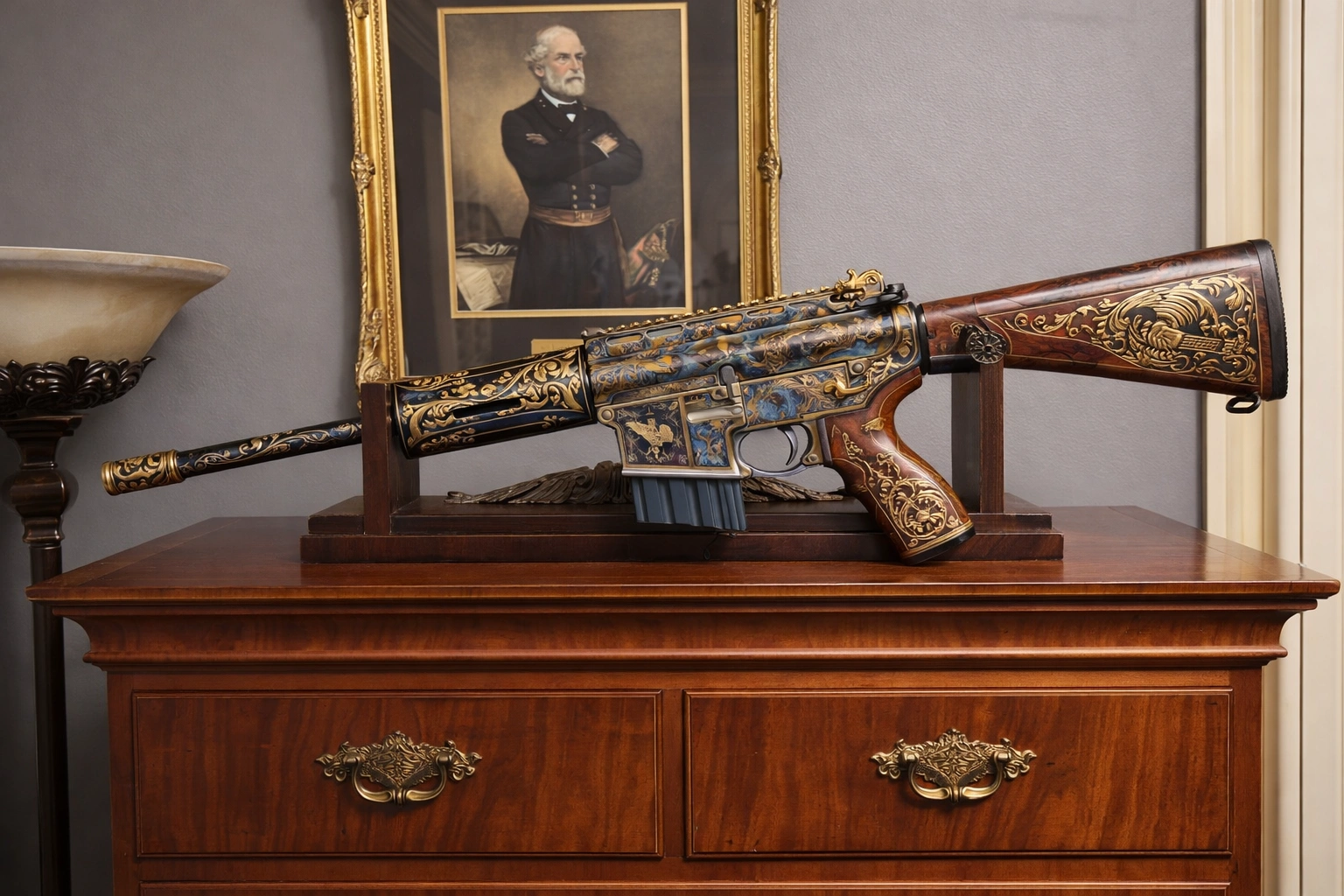
Engraved collector firearms occupy the point where mechanical design becomes decorative art. A firearm can be historically important without engraving, but engraving adds another layer of meaning. It may represent factory craftsmanship, a presentation gift, a special-order commission, a custom shop project, or the work of an individual artist. For collectors, the challenge is to admire the beauty while still asking disciplined questions about originality, quality, documentation, and context.
Engraving does not automatically make a firearm valuable. Poor engraving can reduce interest. Later engraving on a common gun may appeal to the owner but not to advanced collectors. Factory engraving, master engraving, documented presentation work, and historically appropriate embellishment are different matters. The collector must determine what the work is, who did it, when it was done, and whether the firearm itself supports the story.
Factory engraving versus later custom work
The first question is whether the engraving is factory original. On Colt, Winchester, Smith & Wesson, Browning, and other collectible arms, factory engraving can command a significant premium when documented. Factory letters, archive records, known engraving patterns, shipment records, and comparison with published examples are important. Without documentation, the collector must be careful.
Later custom engraving can still be beautiful and valuable, especially if performed by a recognized master engraver. But it should be described honestly. A modern engraved rifle is not the same as a nineteenth-century factory-engraved Winchester. A custom shop revolver is not the same as an original period presentation piece. Both can be desirable, but they occupy different collector categories.
What quality engraving looks like
Good engraving has rhythm, depth, proportion, and confidence. Scrollwork should flow naturally. Borders should be even. Background removal should be clean. Gold inlay should sit properly. Animal scenes should have life rather than looking stiff or stamped. The design should fit the firearm’s shape instead of fighting it. On the best work, the engraving feels integrated with the gun.
Collectors should look closely at screw heads, edges, corners, and high-wear areas. Does the engraving continue naturally across surfaces? Does wear make sense? Is the finish consistent? Are there signs that engraving was added after refinishing? Are markings still sharp? Was the gun heavily buffed before engraving? These clues help determine whether the piece is a serious collector arm or simply a decorated firearm.
Gold inlay, case color, and exhibition wood
Engraving often appears alongside other premium features: gold inlay, case coloring, high-polish blue, nickel, silver, ivory, pearl, or exhibition-grade walnut. Each feature creates both appeal and risk. Gold inlay can be elegant or excessive. Case coloring can be traditional or modern restoration. Exhibition walnut can transform a rifle, but stock fit and originality still matter.
Modern craftsmen such as Turnbull-style restorers and custom gunmakers have helped renew interest in case coloring, traditional finishes, and presentation-grade firearms. Collectors should distinguish between restoration, customization, and original factory work. A restored or custom gun may be a beautiful object, but its value should be based on what it is rather than what someone wishes it were.
Presentation firearms and provenance
Presentation firearms are among the most fascinating engraved arms. They may commemorate military service, political office, competition, corporate achievement, law enforcement retirement, or personal friendship. Inscriptions can add powerful context, but the collector should seek supporting evidence. A presentation inscription, photograph, letter, news clipping, family statement, or factory record can turn a decorated gun into a documented historical object.
Provenance is especially important because presentation stories are easy to exaggerate. A famous name can change the value dramatically, so the proof must be strong. Collectors should be wary of vague claims and should preserve every scrap of documentation that accompanies a presentation gun.
Engraved Colts, Winchesters, and Brownings
Colt firearms have a long association with engraving, from percussion revolvers to Single Action Army revolvers, 1911 pistols, and premium double-action models such as the Colt Python. Colt archive letters can be especially helpful in confirming original configuration and shipment information.
Winchester engraving has its own collector language, especially among lever actions and special-order rifles. Factory letters and Cody records may help confirm configuration. Browning shotguns and rifles, including high-grade Belgian and Japanese production, often combine engraving with wood quality and grade markings. In every case, the collector should learn the normal grade structure before paying a premium for decoration.
The TAR-40 and modern collector art
Modern engraved or embellished firearms can become collectible when they combine limited production, craftsmanship, distinctive identity, and strong documentation. The Turnbull TAR-40 series is a useful example for thinking about modern collector appeal. It brings together traditional finish work, modern rifle design, scarcity, and visual identity. Whether a collector approaches such a gun as art, engineering, or investment, documentation and condition remain central.
Modern pieces also raise an interesting question: when does a custom firearm become a collectible artifact? The answer usually depends on maker reputation, execution quality, scarcity, cultural interest, and whether future collectors can understand exactly what they are looking at.
Preserving engraved firearms
Engraved firearms require careful handling. Oil, fingerprints, moisture, abrasive cloths, and careless storage can damage both metal and wood. Do not aggressively polish engraved surfaces. Do not use harsh compounds in cuts or around inlays. Avoid foam cases for long-term storage. Control humidity and document the firearm thoroughly with high-resolution photographs.
If repair or conservation is needed, use specialists who understand collectible firearms. A general refinish can destroy value quickly. The best conservation work is often the least dramatic: stabilize, clean gently, preserve originality, and avoid irreversible changes.
How to buy engraved arms wisely
Before buying, ask five questions. Is the base firearm collectible? Is the engraving high quality? Is it factory, period, or later custom? Is there documentation? Does the price reflect what the gun actually is? If any answer is uncertain, slow down. Beautiful guns can create emotional bidding, and emotional bidding is where mistakes happen.
Readers interested in visual comparison should explore the Colt Python gallery, Gold Cup gallery, TAR-40 display review, and the larger collector guide library.
Engraving adds beauty, but documentation adds confidence. The best engraved firearms have both.
Collector takeaway
Engraved collector firearms should be judged as both art and artifact. The scrollwork may catch the eye, but originality, provenance, execution, and condition determine lasting collector strength. A disciplined collector can enjoy the beauty without abandoning the evidence. That is the difference between buying decoration and collecting craftsmanship.
From My Bench
If you are preserving a collection, keep humidity, documentation, lighting, and safe handling in mind. I maintain a curated list of books, tools, cleaning supplies, storage items, and bench gear that fit the collector workbench.
Browse My Gear ListAs an Amazon Associate I earn from qualifying purchases. I only link to products, books, tools, and accessories that fit the editorial purpose of Gun Collectors Club.

About Greg Cook
Greg Cook writes about firearms collecting, personal history, and the stories behind interesting guns. His Army MOS was 76Y, Unit Armorer, and he brings that practical background to his collector articles.
Research notes and further reading
The following public references were consulted for historical framing, serial-number research, and archive guidance: