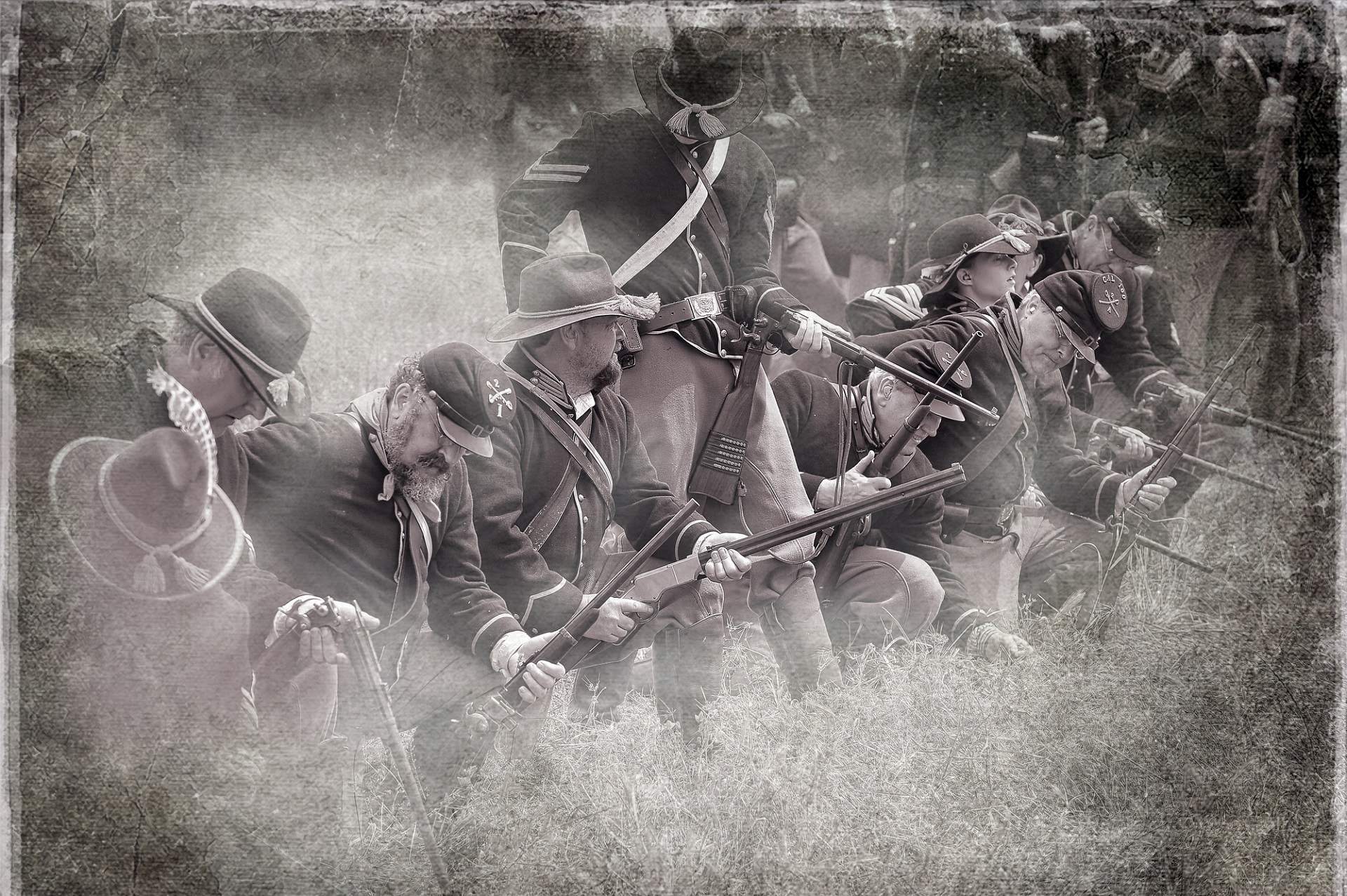
The American Civil War and the Firearms That Defined an Era
The American Civil War remains one of the most important turning points in United States history, and the firearms associated with that conflict continue to fascinate historians, collectors, and military enthusiasts alike. Fought between 1861 and 1865, the war accelerated firearms innovation at a pace the world had never seen before. Traditional muzzle-loading muskets fought alongside early repeating rifles, percussion revolvers, cavalry carbines, and experimental battlefield technologies that would shape military arms development for generations to come.
Unlike many of the firearms discussed throughout this site, I will openly admit that I have never personally owned a firearm dating back to the Civil War era or the 1800s in general. My collecting interests have largely centered on later American sporting arms, classic revolvers, military surplus rifles, and postwar firearms. Even so, it is impossible to study firearms history for very long without developing a deep appreciation for the guns, manufacturers, and technological changes that emerged during the Civil War period.
Why Civil War Firearms Still Matter to Collectors
Part of the fascination surrounding Civil War firearms comes from the realization that these were not simply weapons — they were tools carried by ordinary Americans through one of the most difficult and transformative periods in the nation’s history. The rifles, carbines, and revolvers produced during the era reflected both remarkable craftsmanship and the beginning of true industrial-scale firearms manufacturing in the United States. Companies like Colt, Remington, Sharps, and Springfield Armory helped establish manufacturing traditions and mechanical designs that continued to influence American firearms long after the war ended.
This page is less about providing an exhaustive collector guide and more about appreciating the historical significance of Civil War firearms and the role they played in shaping American gunmaking. Whether discussing percussion revolvers, rifled muskets, cavalry carbines, or the earliest repeating rifles, the firearms of the Civil War era remain some of the most historically important arms ever produced — even for collectors like myself who have admired them more from a distance than from inside the gun safe.
The Civil War as a Firearms Turning Point
The American Civil War forced both sides to adapt to rapidly changing firearm technology. Percussion revolvers, rifled muskets, breechloaders, and repeating arms all appeared in a conflict still partly shaped by older tactics.
The war also proved that industrial capacity mattered. A design could be clever, but production scale, ammunition supply, and field reliability determined whether it became historically important.
Important Civil War Firearms
Key Civil War-era arms include the Colt Model 1860 Army, Colt 1851 Navy, Remington Model 1858, Springfield Model 1861 rifled musket, Spencer repeating rifle and carbine, Sharps carbine, Burnside carbine, LeMat revolver, and Whitworth rifle.
| Firearm | Collector Significance |
|---|---|
| Colt 1860 Army | One of the iconic percussion revolvers of the war. |
| Springfield 1861 | A defining Union rifled musket. |
| Spencer Repeater | Showed the battlefield potential of repeating fire. |
| Whitworth Rifle | Associated with long-range sharpshooting and Confederate marksmen. |
The Whitworth and the Sharpshooter Story
The Whitworth rifle remains one of the most fascinating Civil War collector subjects because it points toward the later idea of precision military rifle fire. Its reputation, hexagonal bore, and connection to Confederate sharpshooters give it a special place in firearm history.
The famous account of General John Sedgwick at Spotsylvania — and the line about not being able to hit an elephant at that distance — remains one of the most repeated firearm-related stories of the war.
Collector Perspective
Civil War firearms require careful study. Original finish, inspector marks, cartouches, matching components, period alterations, battlefield provenance, and later repairs all affect value.
- Look for honest wear over aggressive cleaning.
- Study inspector cartouches and proof marks.
- Be cautious with battlefield-relic claims.
- Check whether parts are period-correct or later replacements.
Collector Insight
The Civil War compressed decades of firearms development into four brutal years.
Collectors study Civil War arms because they sit at the transition from muzzleloaders and percussion revolvers toward repeaters, metallic cartridges, precision rifle fire, and modern industrial war.
Related Reading

About Greg Cook
Greg Cook writes about firearms collecting, personal history, and the stories behind interesting guns. His Army MOS was 76Y, Unit Armorer, and he brings that practical background to his collector articles.