Smith & Wesson Era Walther
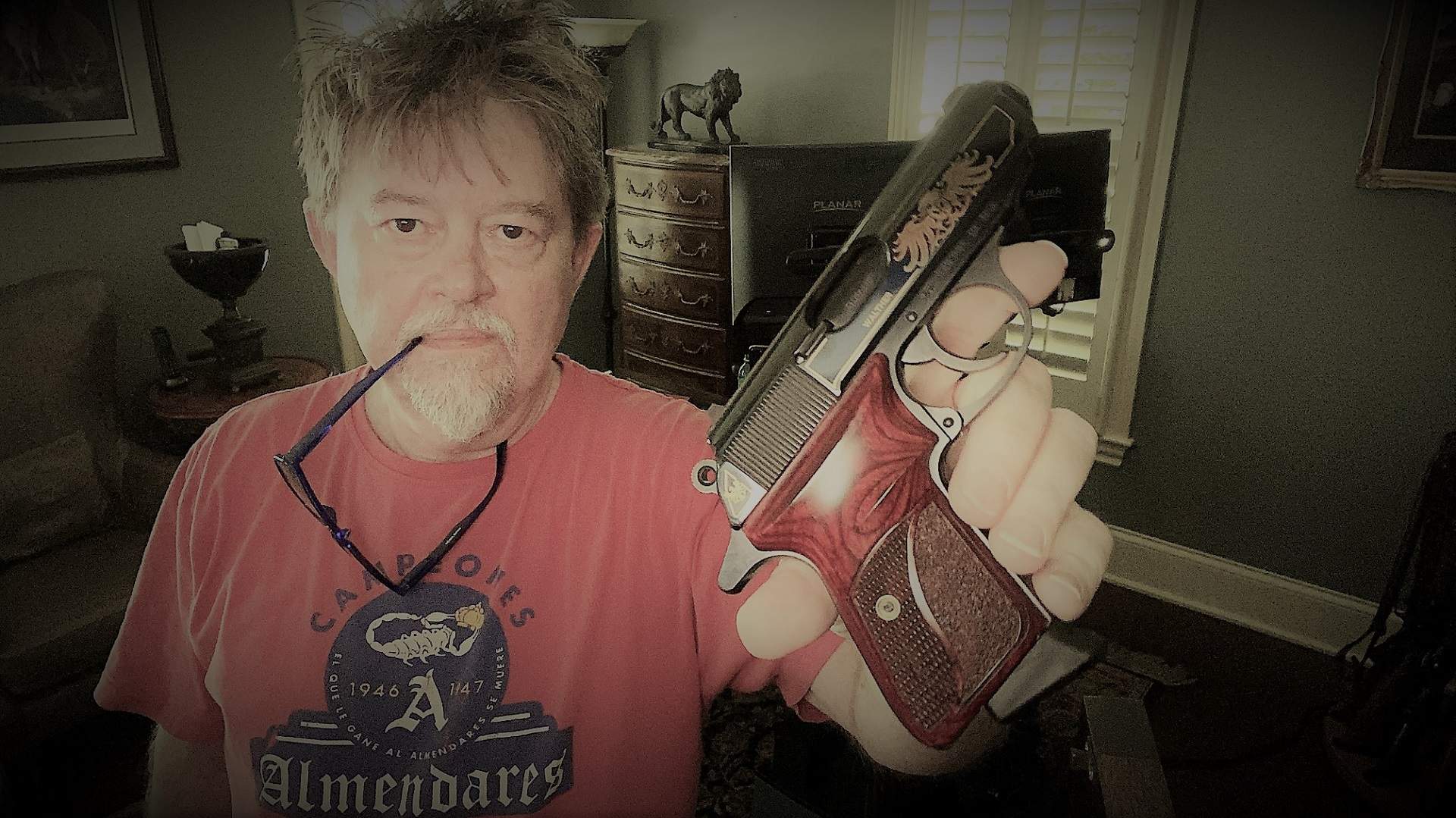
From 2002 to 2013, the main Smith & Wesson production period put licensed Walther PPK and PPK/S pistols in Houlton, Maine. This Royal Eagle Premier limited edition belongs to that era: a 2008 TALO-distributed presentation pistol from a 500-gun run.
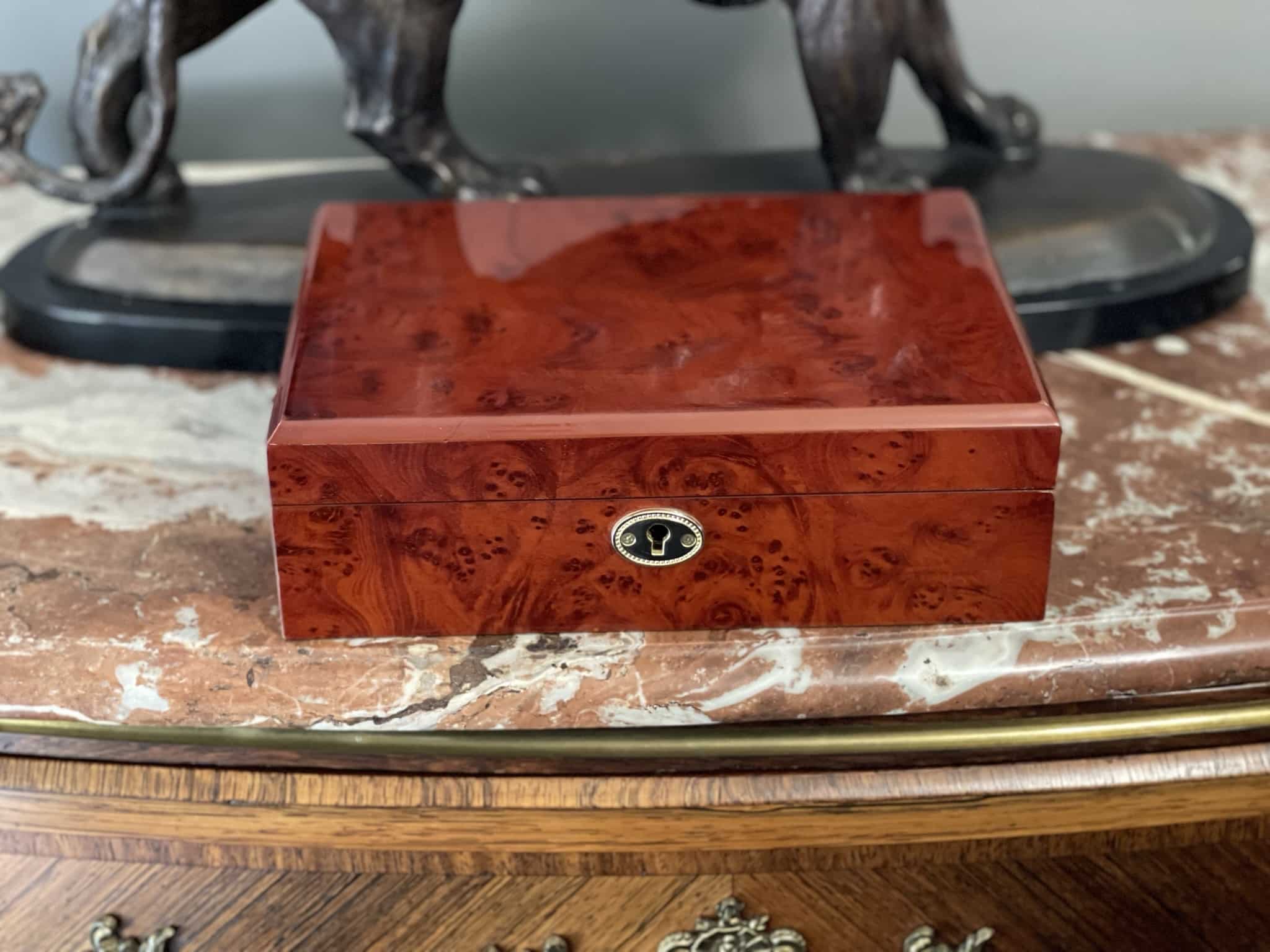
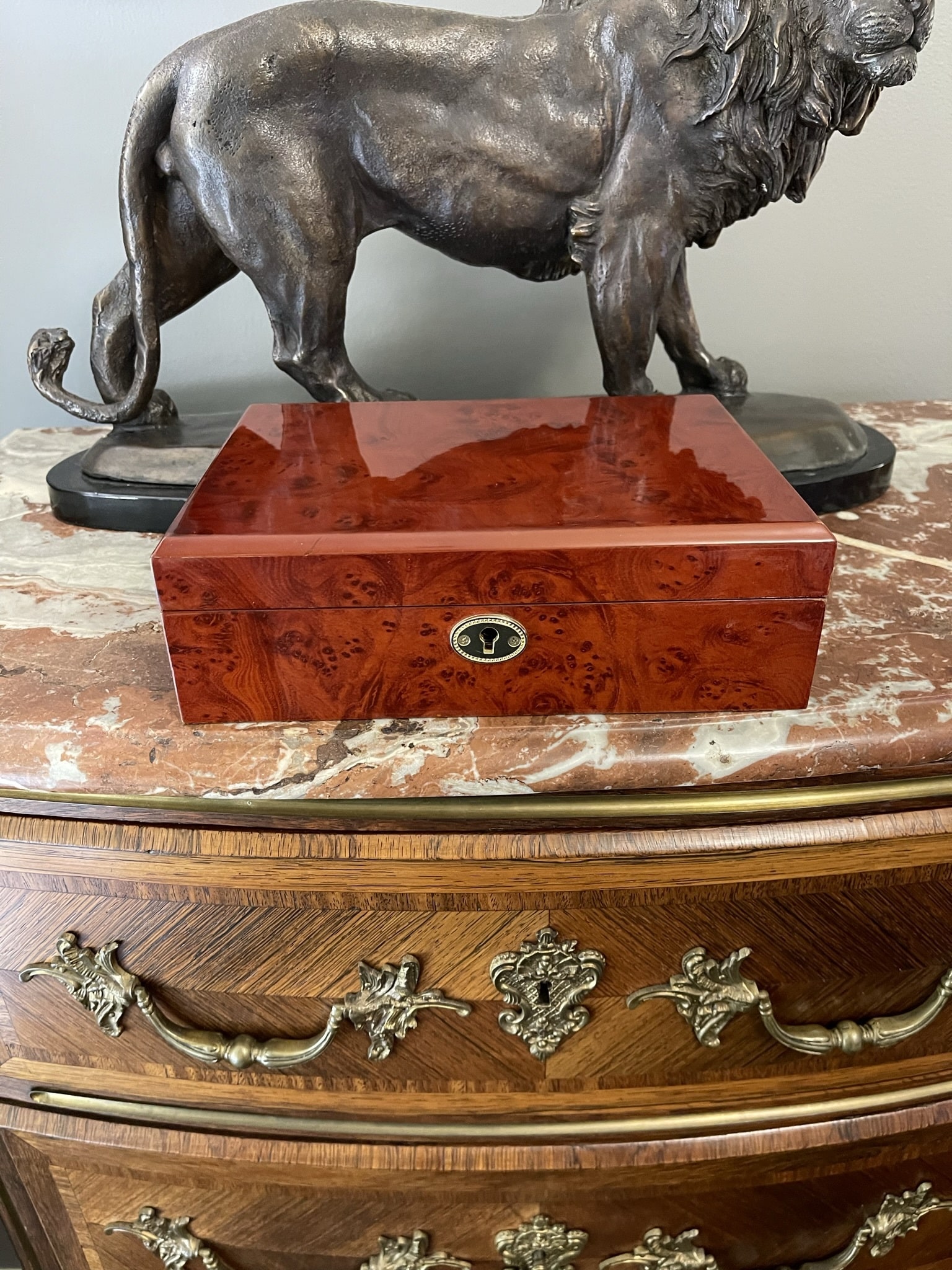
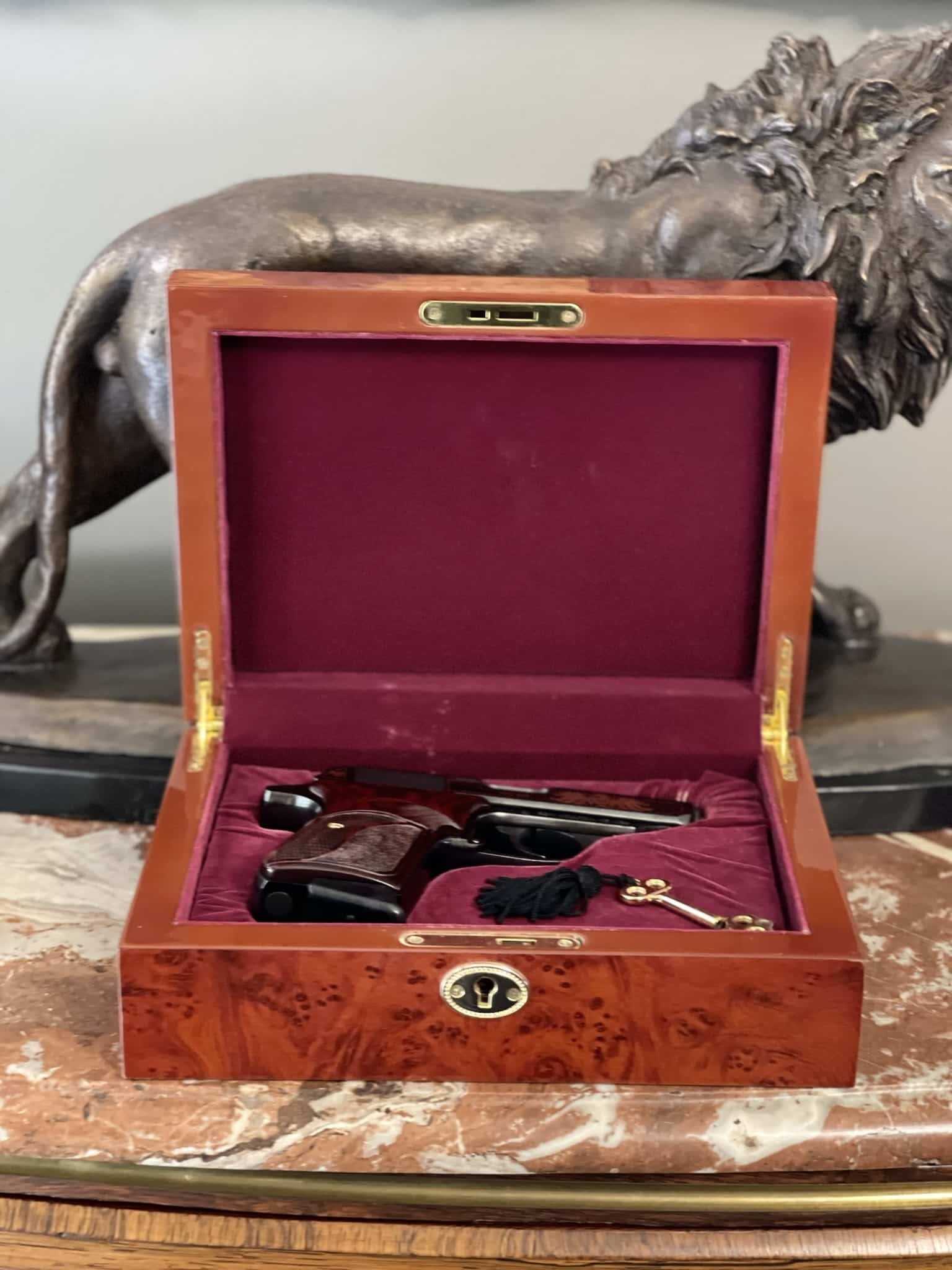
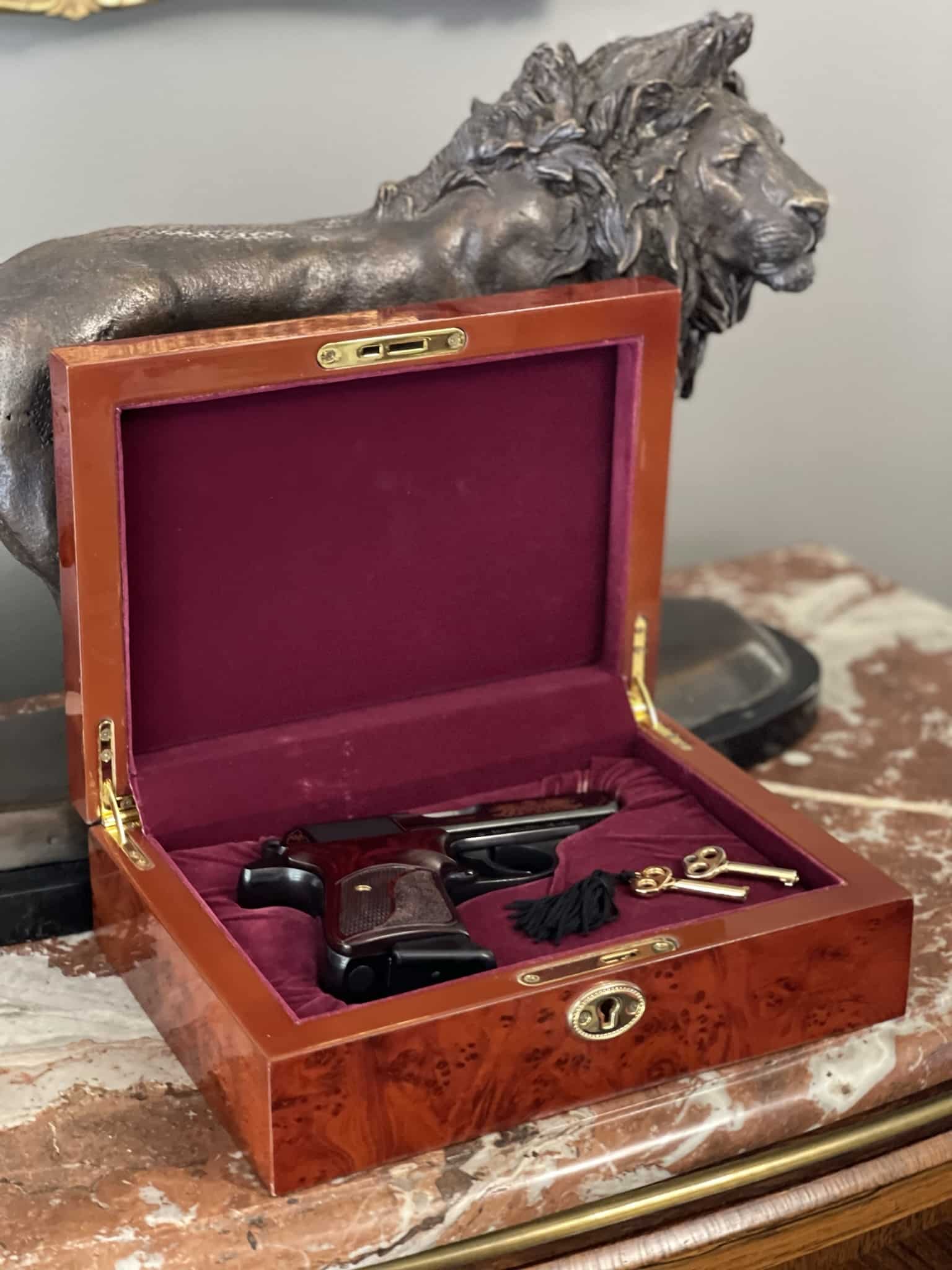
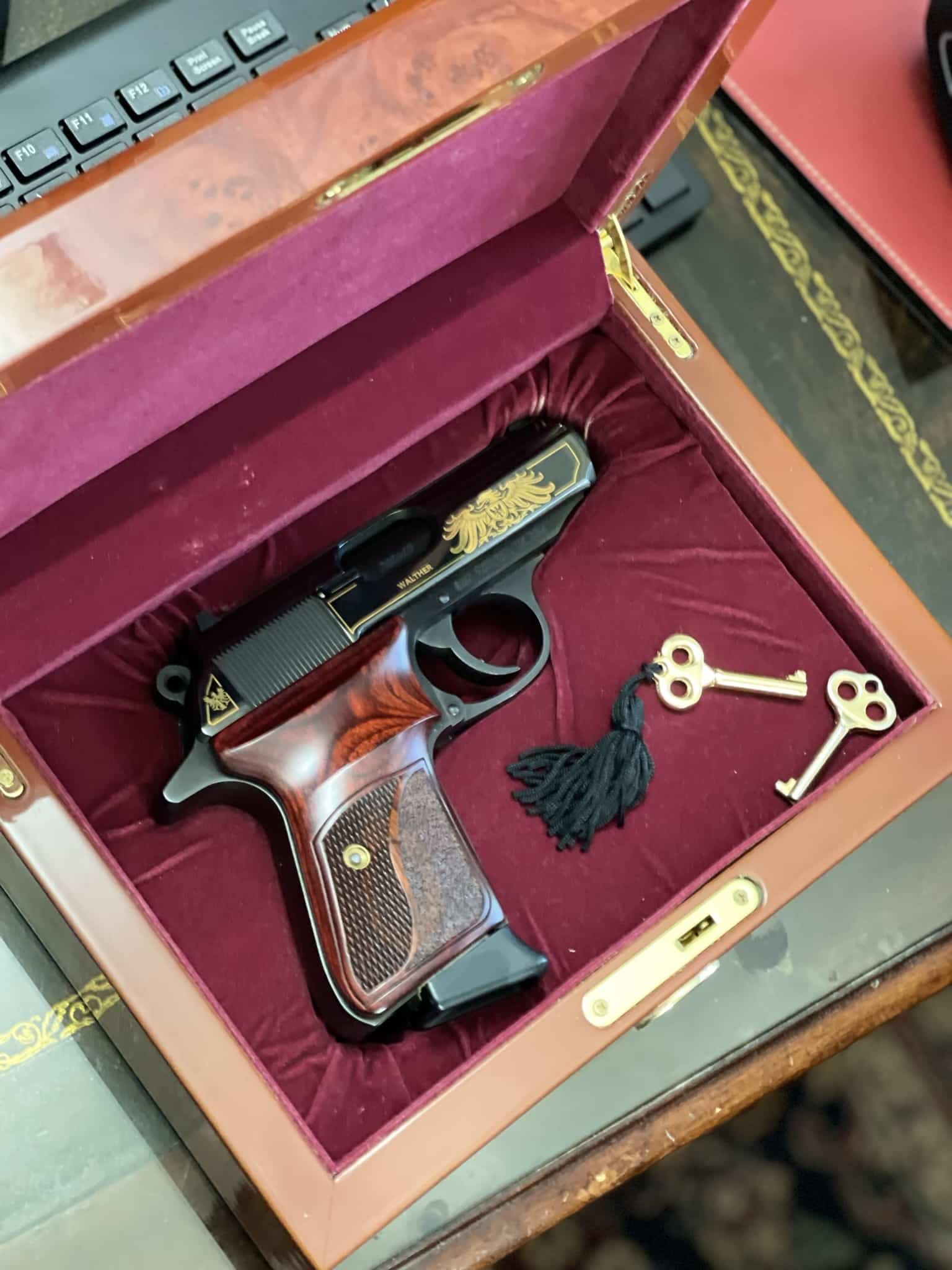
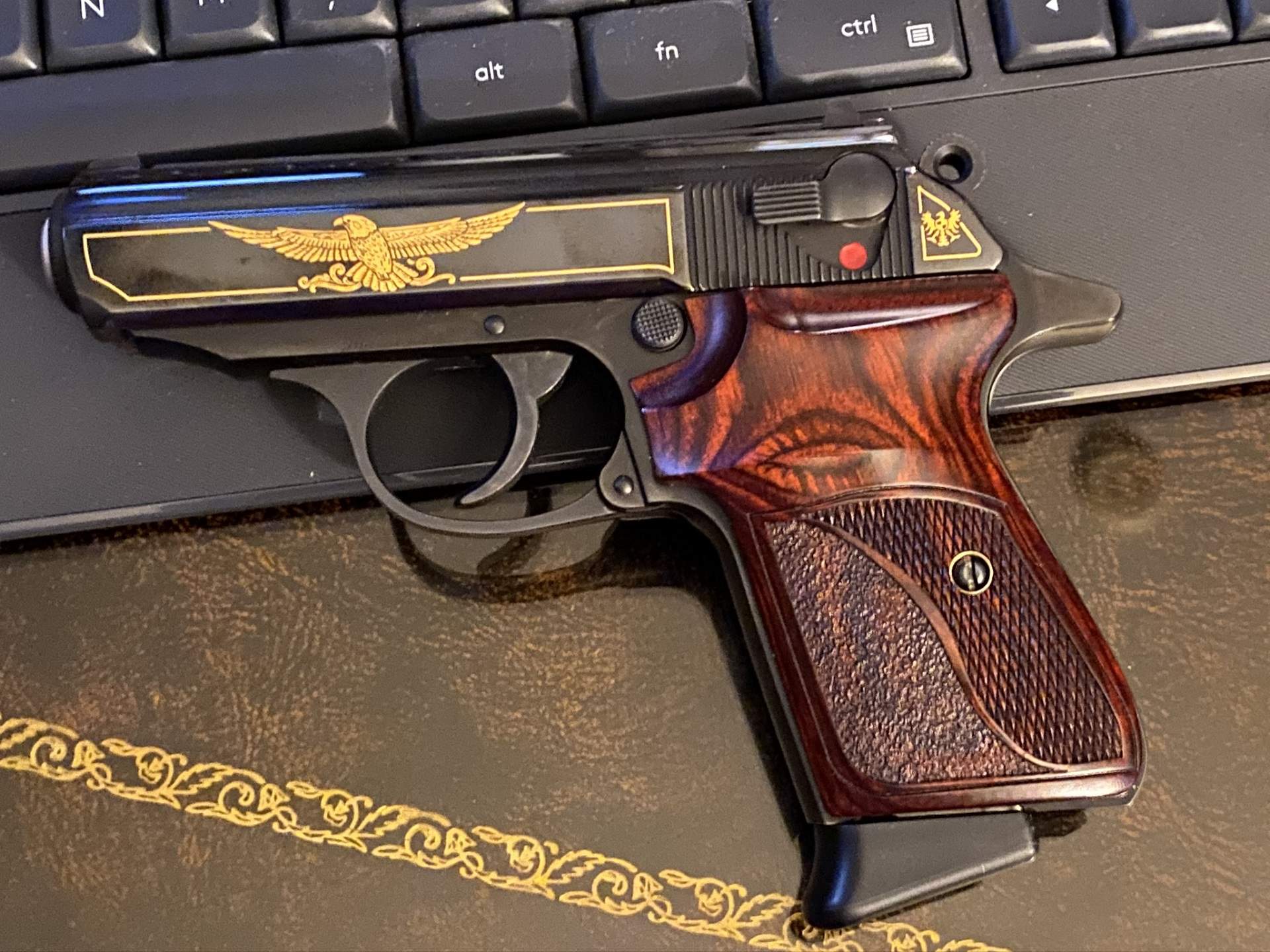
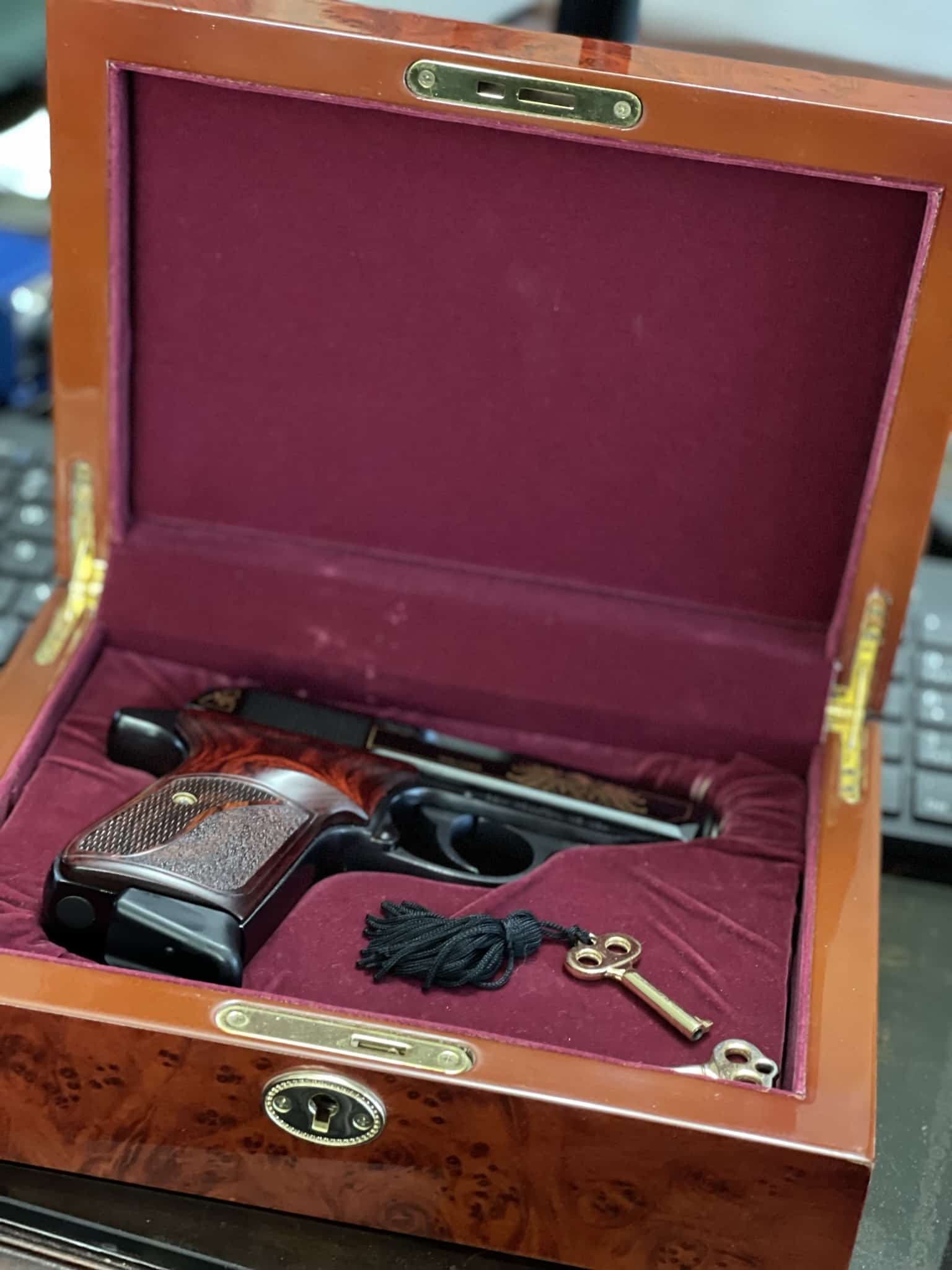
This gun is a Walther PPK/S semi-automatic .380 ACP pistol, serial number 0188REP. It has the PPK/S long grip frame, a factory-style barrel length commonly listed around 3.3 inches, high-polished blue finish, wood grips, gold enhancement, one magazine, and a wooden display case with keys. Condition is excellent, as new in the original box.
When I first saw this gun online I had to do a double-take. Normally I am not drawn to gold embellishment, but the German eagle on one side and the American eagle on the other give this pistol real presence.
Why the PPK/S Exists
PPK is commonly understood as an abbreviation for Polizei Pistole Kriminal. The “S” in PPK/S is generally associated with Sport or Sporting. The PPK/S was developed after the Gun Control Act of 1968 affected the importation of compact pistols into the United States.
Walther addressed the import-points problem by combining the PP frame with the shorter PPK barrel and slide, creating a pistol that was slightly larger and heavier than the PPK while retaining the classic profile.
- Overall height is about 4.1 inches, compared with about 3.9 inches for the PPK.
- Width is about 1.2 inches for the PPK/S, compared with about 1 inch for the PPK.
- The PPK/S weighs roughly 1.8 ounces more than the PPK.
- The PPK/S magazine holds 7 rounds of .380 ACP, compared with 6 rounds in the PPK.
That makes the PPK/S a true transition-year pistol. The basic PP family dates to 1929, the smaller PPK followed in 1930, but the PPK/S was born from the post-1968 American import environment rather than pre-war police contracts.
Production Years and Transition Years
The Walther PP family began before the PPK/S: the PP arrived in 1929 and the smaller PPK followed around 1930-1931. The PPK/S is the later American-market solution. After the Gun Control Act of 1968 affected importation of very compact pistols, Walther paired the PPK slide and barrel with the larger PP-type frame to gain size, weight, and magazine-capacity points while keeping most of the classic pocket-pistol profile.
| Period | Collector Meaning | What to Check |
|---|---|---|
| 1968-1969 transition years | Birth of the PPK/S as a U.S. import-law response. | Ulm or Manurhin proof marks, importer marks, early packaging, and whether the gun is a true PPK/S rather than a PP or PPK. |
| 1970s-1980s Interarms era | Classic postwar import period; many collectors associate these with West German or Manurhin-made examples. | Interarms markings, date/proof codes, finish originality, plastic box, test target, manual, spare magazines, and cleaning rod. |
| 1978 U.S. production begins | Ranger Manufacturing in Alabama began licensed U.S. manufacture, distributed by Interarms. | Ranger/Interarms markings, stainless versus blue finish, and matching period accessories. |
| 1998-2002 handoff into Smith & Wesson era | License and distribution moved toward Smith & Wesson, with Houlton, Maine production defining the next major group. | S&W-era frame markings, longer tang/beavertail style, serial prefix, box label, and recall status. |
| 2008 Royal Eagle Premier | The featured TALO Royal Eagle Premier is a Smith & Wesson-era limited edition, number 188 of 500. | REP serial prefix, gold eagle embellishment, wood grips, polished blue finish, case, keys, magazine, and original box. |
| 2012-2013 Walther Arms transition | Walther Arms took over U.S. operations and moved the brand center to Fort Smith, Arkansas. | Fort Smith markings, new-style packaging, and whether the pistol belongs to the S&W or Walther Arms production stream. |
| 2018/2019-2025 current-generation Fort Smith catalog period | The PPK/S returned as a modern Walther Arms catalog pistol in .380 ACP, and later in additional legacy-family configurations. | Catalog item number, stainless or black finish, walnut-grip option, .380 / .32 / .22 LR chambering, and modern warranty paperwork. |
| 2025 production pause | Walther announced a multi-year pause and modernization program for the PP, PPK, and PPK/S legacy lines. | New-in-box current-generation examples may become more interesting, but condition and comparable sales still control value. |
Transition years matter because PPK/S collecting is not one single timeline. A Manurhin-marked pistol, Interarms import, Ranger/Interarms U.S. pistol, Smith & Wesson Houlton pistol, and Fort Smith Walther Arms pistol can all be legitimate PPK/S examples, but they should not be valued or documented the same way.
Variants and Configurations
The PPK/S is best understood as a family format rather than one exact specification. The classic .380 ACP / 9mm Kurz version is the best-known American carry and collector model, but PPK/S pistols have appeared in multiple calibers, finishes, grip styles, and special editions.
| Feature | Common Examples | Collector Notes |
|---|---|---|
| Barrel length | Modern PPK/S .380 catalog examples list a 3.3-inch barrel; older references often describe the barrel as roughly 3.25 inches or simply about 3 inches. | For a listing or appraisal, quote the source used and avoid treating rounded auction wording as a factory specification. |
| Calibers | .380 ACP / 9mm Kurz, .32 ACP, and .22 LR in the broader modern PPK/S catalog family. | .380 ACP is the featured Royal Eagle chambering; .32 ACP often appeals to classic Walther purists because recoil is softer and historically closer to early PP/PPK use. |
| Finishes | Blue, stainless, black, nickel-style finishes, and engraved or embellished special editions. | Original high polish matters. Refinished slides, softened rollmarks, or mismatched wear can quickly move a pistol from collector-grade to shooter-grade. |
| Grip types | Brown or black polymer, wraparound-style panels on some eras, checkered wood, walnut, and special-edition wood panels. | Factory grips and grip screws should match the era. Attractive replacement grips help a shooter but may not help collector value. |
| Special editions | TALO Royal Eagle Premier, engraved stainless examples, presentation-case runs, and distributor specials. | Special editions need paperwork. A limited-edition serial prefix, box label, display case, keys, and original accessories support the premium. |
| Law enforcement and military association | The PP and PPK have stronger historical police and intelligence-service associations; the PPK/S is primarily the U.S. import-law and commercial variant. | Do not overstate service provenance unless the individual gun has documentation. The Bond connection helps interest, but paperwork drives value. |
| Rare configurations | Early post-1968 proofed imports, clean boxed Interarms examples, all-French Manurhin-marked pistols, and complete special editions. | Rarity is strongest when condition, markings, and accessories all support the story. |
Serial Number Ranges and Dating Notes
Walther PPK/S serial-number research is more complicated than a single chart because production spans German, French Manurhin, Interarms, Ranger, Smith & Wesson, and Walther Arms periods. Use the serial number together with proof marks, importer marks, frame markings, box label, and any factory or distributor paperwork.
| Serial or Marking Clue | Collector-Observed Use | How to Treat It |
|---|---|---|
| S suffix on many European/imported PPK/S examples | Often seen on PPK/S serials and useful for distinguishing the variant from PP or PPK examples. | Do not date from suffix alone. Check proof/date codes and importer markings. |
| Interarms / Ranger markings | Point to the Interarms distribution period and, for Ranger-marked pistols, U.S. manufacture beginning in the late 1970s. | Compare markings to period packaging, magazines, and finish style before assigning a premium. |
| BAB, BAC, BAD, BAE, BAF, BAH, BAJ, BAK, BAL, BAM | Smith & Wesson recall-listed PPK and PPK/S serial prefixes for pistols manufactured from March 21, 2002 through February 3, 2009. | Verify whether the recall repair was completed. A punch dot at the rear of the frame indicates the new hammer block was installed. |
| REP prefix | Used on the Royal Eagle Premier limited edition. This featured example is 0188REP. | Walther's recall list includes 0026REP through 0219REP, which places this example inside the recall-check range. |
| LTD, PPK, WLE prefixes | Other Smith & Wesson special-prefix groups included in the recall list. | Useful for dating and safety documentation, but not a complete production chart. |
| Fort Smith / Walther Arms item numbers | Modern catalog examples include item numbers such as 4796004, 4796004WG, and 4796006 for .380 PPK/S variants. | Use the item number, box label, and current catalog specs for modern examples. |
For broader research, pair this page with the Gun Collectors Club serial-number chart hub and the Gun Library. If a PPK/S has unusual markings or high value, preserve screenshots of comparable sales and request written confirmation from the maker or a recognized Walther reference before relying on an online serial table alone.
Collector Notes
The PPK/S rewards careful documentation. It is a small pistol, but small changes in marking, finish, grip style, magazine, recall status, and packaging can create large differences in collector confidence.
- Fit and finish: High-polish blue and clean stainless examples show handling marks quickly. On a Royal Eagle Premier, even minor carry wear can hurt the presentation value.
- Accuracy characteristics: The fixed-barrel blowback design can be surprisingly accurate for its size. A heavy double-action first pull and small sights are part of the classic experience.
- Desirable years: Early post-1968 imports, boxed Interarms examples, complete Manurhin/Ulm-marked pistols, and limited editions all attract focused collector attention.
- Rare markings: Proof marks, importer marks, special serial prefixes, TALO markings, and factory box labels should be photographed and kept with the gun.
- Factory errors and alterations: Polished rollmarks, changed sights, incorrect magazines, missing proof clarity, or aftermarket grips can complicate value.
- Packaging differences: Plastic cases, cardboard boxes, manuals, test targets, spare magazines, cleaning rods, display cases, and keys can all matter. For this Royal Eagle, the wooden presentation case is part of the story.
- What collectors look for: Original finish, matching era accessories, clean serial documentation, recall repair proof when applicable, and a coherent provenance trail.
Known Issues and Ownership Checks
- Hammer-block recall: Recalled pistols should not be treated as ready-to-fire collectibles until the repair status is documented. The repair mark is a punch dot at the rear of the frame.
- Slide bite: Older PP/PPK-family pistols can cut or scrape the web of the shooting hand. Later extended-tang designs help, but grip and hand size still matter.
- Ammunition sensitivity: The straight-blowback design can be reliable, but some examples are picky with hollowpoints or underpowered loads. A shooter-grade PPK/S should be tested carefully with the actual ammunition intended for use.
- Finish wear: High-polish blue, nickel-style finishes, and gold embellishment show holster marks and fingerprints. Collector examples should be stored dry, wiped down, and handled with care.
- Magazine and small-part fit: Original magazines, baseplates, recoil springs, extractors, safety/decocker parts, and grip screws should be inspected. Parts interchange is not always universal across European, Interarms, S&W, and Fort Smith eras.
- Packaging loss: Missing case, keys, manual, box, or test target does not make a pistol worthless, but it can change the buyer pool and reduce a special-edition premium.
Value Trends
Ordinary Walther PPK/S .380 pistols trade in a wide range because condition, production era, finish, and accessories matter. Recent 2026 market data showed ordinary PPK/S averages around $575.89 used and $867.73 new, while boxed European examples, scarce configurations, and limited editions can bring more.
| Value Factor | Trend | Why It Matters |
|---|---|---|
| Early post-1968 and West German / Manurhin examples | Often bring a premium when clean and complete. | Proof marks, importer marks, test target, original case, and spare magazines help separate collector examples from shooters. |
| Smith & Wesson Houlton pistols | Usually valued by condition and recall status rather than age alone. | A recalled serial with no repair documentation is less attractive than one with a clear repair mark and paperwork. |
| TALO Royal Eagle Premier | Should be valued above a comparable ordinary S&W-era PPK/S when complete and excellent. | Limited run, REP serial prefix, gold eagle treatment, polished blue finish, wood grips, display case, and keys all support the premium. |
| Nickel, stainless, engraved, and presentation finishes | Bring premiums only when original and well preserved. | Refinish work or over-polishing can erase markings and reduce collector confidence. |
| Box and papers | Dramatically improve buyer confidence. | Manuals, test targets, case labels, keys, and sales receipts help prove what the pistol is. |
| 2025 production pause | May support interest in new-in-box current-generation examples. | Scarcity alone is not enough; comparable sales still determine actual market value. |
For this 0188REP example, the strongest value-preservation points are originality, limited-edition completeness, clean presentation finish, display case with keys, original box, and documented recall status.
Research Sources Consulted
These notes were cross-checked against current and historical references. For an individual pistol, keep the serial number, box label, case, keys, magazine, recall documentation, and sales records together.
- American Rifleman: Walther's PPK
- American Rifleman: I Have This Old Gun ... Walther PPK/S
- Walther Arms PPK/S current catalog page
- Walther Arms: 2025 PP, PPK, and PPK/S production pause announcement
- Walther Arms PPK / PPK/S recall notice
- TrueGunValue: Walther PPK/S .380 2026 price and historical value data
From Carry Plan to Safe Queen
After winning the auction, my first thought was to order a custom Southern Trapper holster. The plan was that this gun would not be a “safe queen.” The holster was suede lined, and it made sense for a practical little Walther.
That changed. The gold detail and overall condition made me hesitate. By September 2022 I had to admit I could not bring myself to carry it. Sometimes a collector gun decides what it is going to be after it arrives.
Collector Notes
Final Word
James Bond made the Walther PPK famous, and that association still shadows every PPK and PPK/S collector page. This example adds another layer: a small American-market limited edition with German and American eagle symbolism, polished blue finish, and an unusually formal display presentation.
For me, the Royal Eagle Premier works because it is not just decoration. It captures the tension that makes the PPK/S interesting in the first place: European design, American law, pocket-pistol practicality, and collector appeal all in one compact .380.