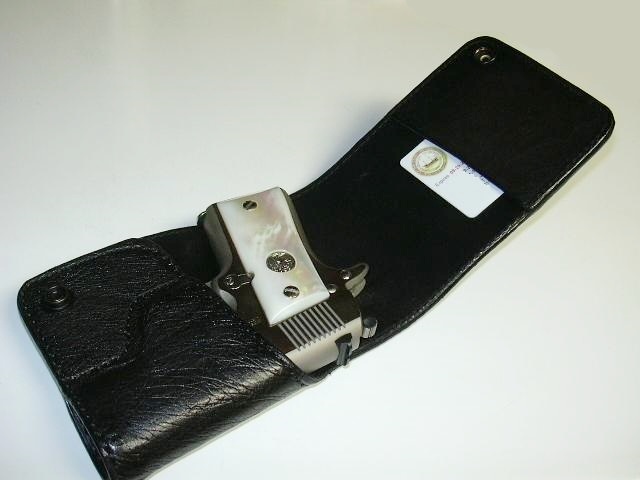
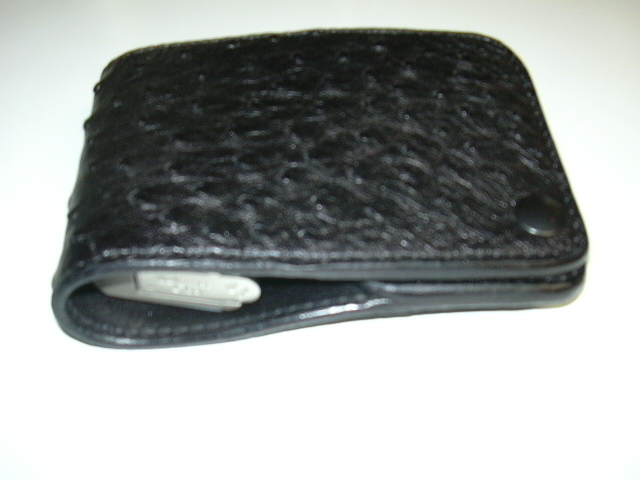
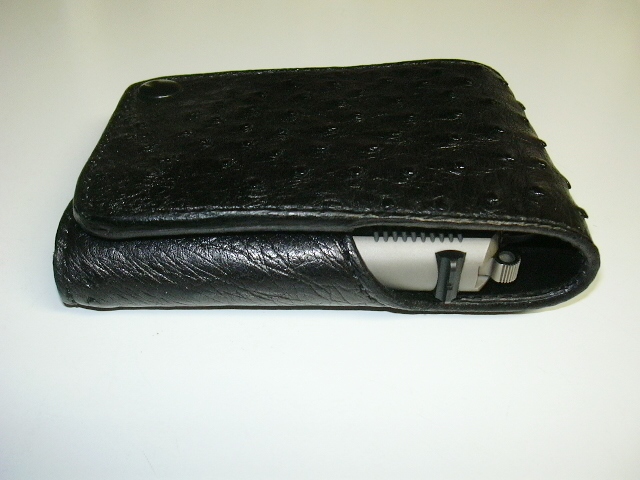
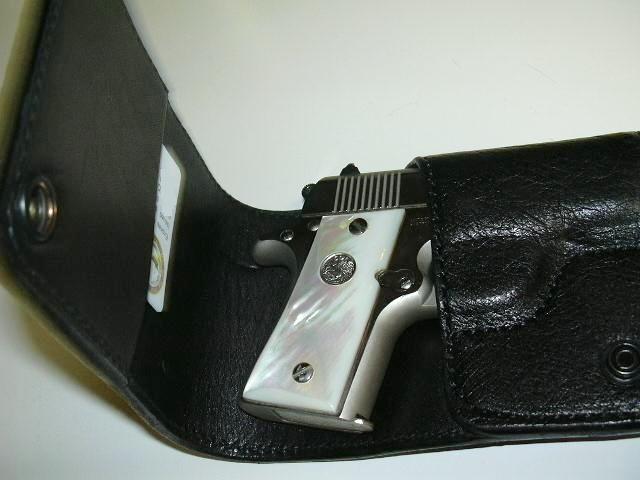
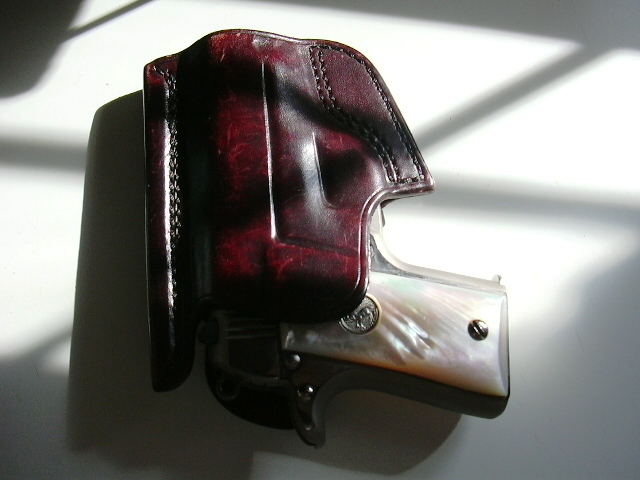
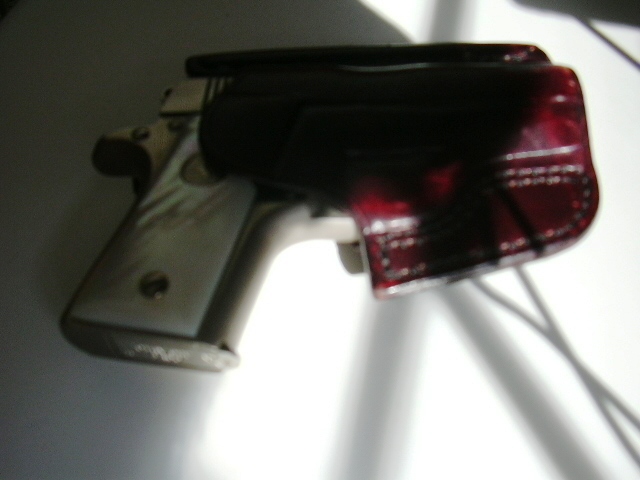
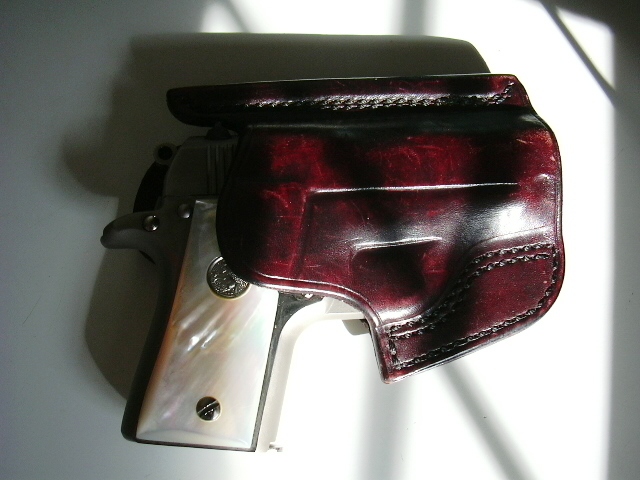
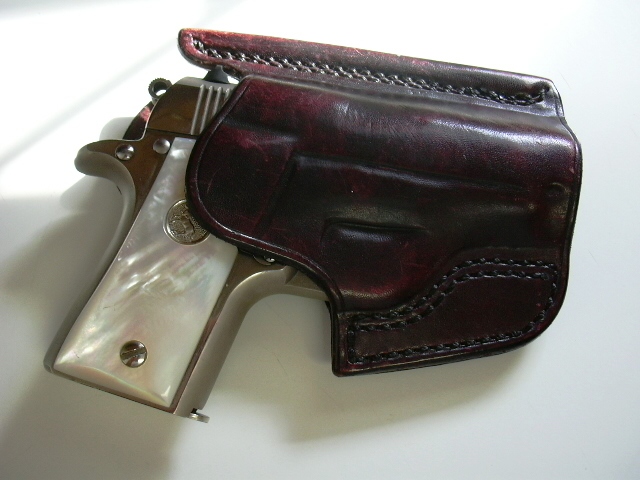
A pocket or wallet holster can be good concealment, but it is always a compromise. This ostrich wallet holster was made by custom maker Ron Graham for my Colt Mustang. It is unique, useful for concealment, and not especially suited for a fast draw. I have used it a lot over the years, and it still looks new.
That is the point of this page. Pocket holsters, wallet holsters, and other small-gun carry leather are not one-size-fits-all solutions. They are purpose-built pieces. The best ones match the firearm, the clothing, the intended use, and the collector's tolerance for wear, convenience, and access.
Pocket Carry and Small Pistols
Carrying a small firearm in a pocket holster became popular because it can be discreet and comfortable. A pocket holster is designed to keep the gun covered, upright, and separated from keys, coins, lint, and other pocket contents. It also helps keep the trigger protected while the gun is holstered.
The details matter. A holster that fits poorly can shift in the pocket, print through clothing, or make access awkward. A holster that fits well can make a small pistol far more practical to carry, but it still requires careful handling, good clothing choices, and regular inspection.
The History of Pocket and Wallet Holsters
Small firearms and pocket carry have been linked for well over a century. During the late nineteenth and early twentieth centuries, compact revolvers and vest-pocket pistols became popular among travelers, businessmen, shopkeepers, and ordinary citizens who wanted a firearm that could be carried discreetly. Firearms such as the Colt Model 1903 Pocket Hammerless, Colt Vest Pocket, Browning-designed pocket pistols, and numerous small revolvers created demand for specialized leather designed specifically for pocket use.
Early pocket holsters were often simple leather sleeves intended to protect the firearm from pocket lint, moisture, and abrasion. As concealed carry practices evolved, holster makers developed designs that held the firearm upright, broke up its outline, and improved comfort. By the middle of the twentieth century, dedicated pocket holsters had become common accessories for small defensive handguns.
Wallet holsters represented a different approach. Rather than merely protecting the firearm, they attempted to disguise its shape and reduce printing in a pocket. Various makers experimented with leather designs that allowed a compact pistol to resemble a wallet, billfold, or other everyday object. These designs appealed to owners of small semi-automatic pistols who valued concealment above all else.
Materials and Craftsmanship
The best pocket and wallet holsters are often examples of fine leather craftsmanship. Traditional cowhide remains the most common material because it is durable, relatively affordable, and capable of maintaining its shape over many years of use. Horsehide has long been valued for its dense fiber structure and resistance to moisture. Exotic leathers such as ostrich, shark, alligator, and lizard are less common but highly sought after by collectors who appreciate custom work.
Construction quality is frequently more important than the type of leather itself. Even an exotic skin can perform poorly if the holster lacks proper reinforcement, retention, or stitching. Conversely, a well-made cowhide holster from a respected maker may outlast and outperform more expensive alternatives.
Collectors often study stitching patterns, maker marks, belt slots, reinforcement techniques, and leather treatments in the same way firearm collectors examine proof marks, inspector stamps, or factory variations.
When the Holster Becomes Collectible
Many collectors focus entirely on the firearm and overlook the leather that accompanied it. In reality, original holsters can become nearly as desirable as the guns they were designed to carry. A factory-correct holster, especially one associated with a specific manufacturer or historical period, can significantly enhance the appeal of a firearm package.
Vintage Colt, Smith & Wesson, Browning, and Winchester accessories frequently command strong prices because original examples are increasingly difficult to find. Custom holsters from respected makers such as Bruce Nelson, Milt Sparks, Lou Alessi, and Ron Graham have developed dedicated followings of their own. In some cases, the maker's reputation becomes as important as the firearm carried inside the holster.
Collectors often search for matching combinations: a Colt Mustang paired with the holster originally commissioned for it, a Browning pistol accompanied by period-correct leather, or a revolver still wearing the holster carried by its original owner. These combinations tell a more complete story than the firearm alone.
Just as original boxes, manuals, and accessories can add value to a collectible firearm, original leather can contribute historical context and provenance. Wear patterns, maker stamps, and even period repairs may help document how a firearm was carried and used during its lifetime.
Preserving Vintage Leather
Leather is a natural material and requires care if it is to survive for future generations. Collectors should avoid excessive heat, direct sunlight, and prolonged exposure to damp environments. Old leather can dry out, crack, or shrink if stored improperly.
For collectible holsters, preservation is generally preferable to restoration. Over-cleaning, aggressive conditioning, or modern refinishing products may remove evidence of age and originality. A lightly worn holster with honest age is often more desirable than one that has been heavily altered in an attempt to make it look new.
When storing collectible firearms, many collectors choose to keep the gun and holster separate to prevent trapped moisture, tanning chemicals, or oils from affecting the firearm's finish.
Why Collectors Appreciate Pocket Holsters
Pocket holsters occupy a unique place in firearms collecting because they sit at the intersection of utility, craftsmanship, and personal history. Unlike many accessories that remain tucked away in a box, holsters show evidence of real-world use. They develop character through years of carry, travel, and daily wear.
For many collectors, an old pocket holster tells part of the firearm's story. It may reveal how a pistol was carried, who relied on it, and how it fit into everyday life.
Final Thoughts
Pocket and wallet holsters may be small pieces of leather, but they often become lasting companions to the firearms they protect. Whether made from simple cowhide or custom ostrich leather, they reflect changing carry methods, evolving craftsmanship, and the personal preferences of generations of gun owners. Collectors who preserve both the firearm and its accompanying leather preserve a more complete piece of history. If you enjoy exploring the world of gun leather, be sure to visit the Inside Waistband Holsters, Outside Waistband Holsters, Shoulder Holsters, and the broader Gun Leather collection for additional examples and collector insights.
Collector Takeaway
Pocket and wallet holsters deserve a place in the Gun Leather section because they show how specialized leather can become. They are not just accessories. They affect how the gun is carried, how the finish is exposed to wear, and how the owner remembers using the piece.
A good pocket holster can keep a small gun secure, upright, and ready without making the leather more important than the firearm.
Related Gear and Cases
Some product links on this page point to Amazon or another third-party destination. They are included as supporting references for readers who want to compare current options with the collector pieces shown here.
Shop Pocket Holster OptionsPaid linkAs an Amazon Associate I earn from qualifying purchases. Clicking an Amazon link may send you to Amazon or a.co, where Amazon may collect its own data under its own policies.

About Greg Cook
Greg Cook writes about firearms collecting, personal history, and the stories behind interesting guns. His Army MOS was 76Y, Unit Armorer, and he brings that practical background to his collector articles.