What Makes a Hunting Rifle Different?
Hunting rifles are built around practical field use. A good hunting rifle balances accuracy, reliability, weight, handling, weather resistance, and suitability for the game being hunted. It is not simply a target rifle carried outdoors; it is a tool shaped by terrain, distance, caliber choice, and local hunting regulations.

Camouflaged finishes, synthetic stocks, weather-resistant metal finishes, and lightweight profiles all reflect the same idea: a hunting rifle has to work outside the safe, not just look good inside it.
Accuracy and Practical Field Use
Accuracy is central to ethical hunting because the goal is a clean, humane shot. Manufacturers often focus on barrel quality, action consistency, stock fit, and trigger control to help the rifle produce predictable groups. In the field, though, accuracy also depends on how well the rifle carries, mounts, and points under real conditions.
Stock Material, Caliber, and Optics
Stock material and design: Traditional wood stocks offer classic appeal, while synthetic stocks can provide better resistance to weather and rough handling. A collector may prefer walnut, but a hunter in wet or rugged conditions may choose synthetic materials for durability.
Caliber and ammunition: Caliber choice depends on the game and expected distance. Smaller cartridges may suit varmints or small game, while cartridges such as .308 Winchester and .30-06 Springfield are common big-game choices. Magnum calibers may be appropriate for larger game or longer-range situations.
Scopes and optics: Scopes are common on hunting rifles because they improve target identification and shot placement. The right optic depends on typical distance, terrain, light conditions, and whether the hunter needs quick close-range acquisition or precise longer-range aiming.
Additional Features
Modern hunting rifles may include detachable magazines, threaded barrels, sling mounts, corrosion-resistant finishes, or camouflaged stocks. Those features may be useful, but they should not distract from the basics: a rifle should fit the shooter, suit the game, and be reliable in the weather and terrain where it will be used.
Collector Takeaway
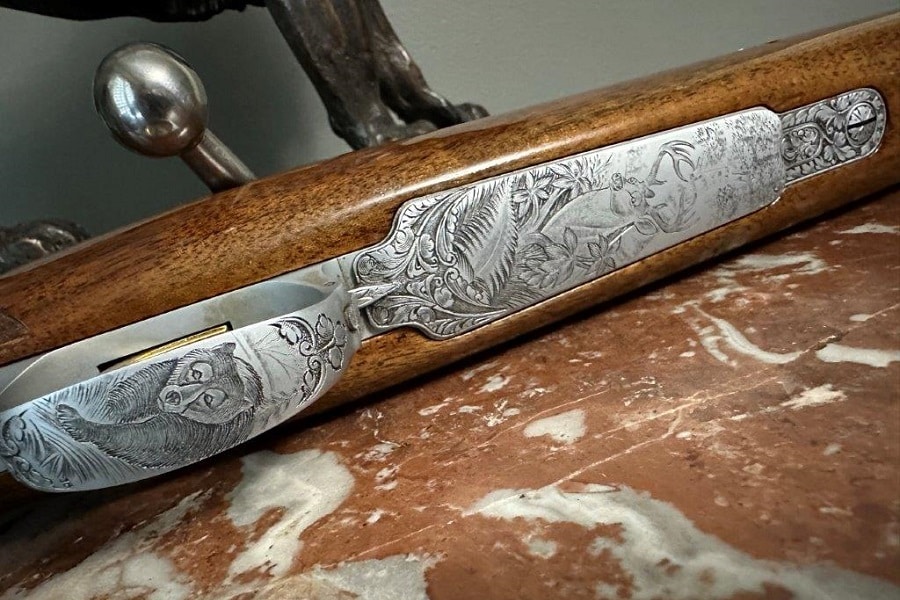
From a collecting standpoint, hunting rifles are interesting because they sit at the intersection of use and craftsmanship. Some are plain working rifles. Others carry fine wood, engraving, brand history, or family provenance. The best examples tell two stories at once: the story of the manufacturer and the story of the hunts, places, and people connected to the rifle.

About Greg Cook
Greg Cook writes about firearms collecting, personal history, and the stories behind interesting guns. His Army MOS was 76Y, Unit Armorer, and he brings that practical background to his collector articles.