The nickel finish on a 61-year-old gun can be delicate. The last thing I want to do is use any abrasive product or rough method on an old firearm. My Rule #1 is use the right products, and Rule #2 is use the right cleaning methods.
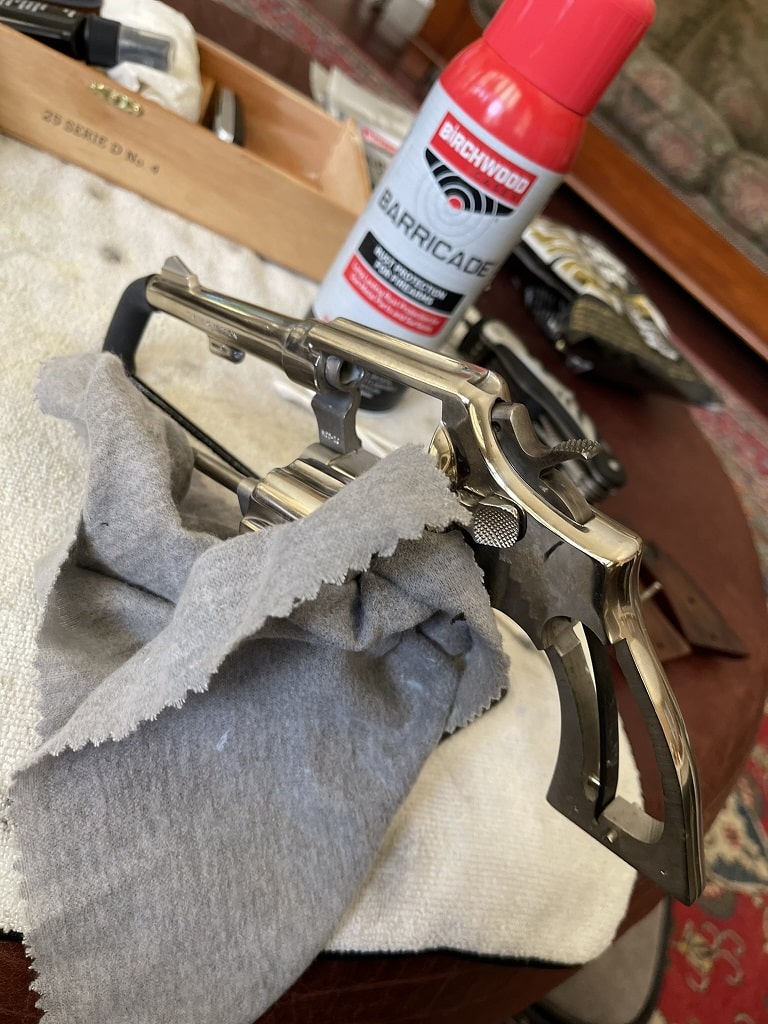
While cleaning this gun, I used more than a dozen Q-Tips, quickly disposing of them as soon as the cotton heads absorbed any color.
What the Auction Photos Showed
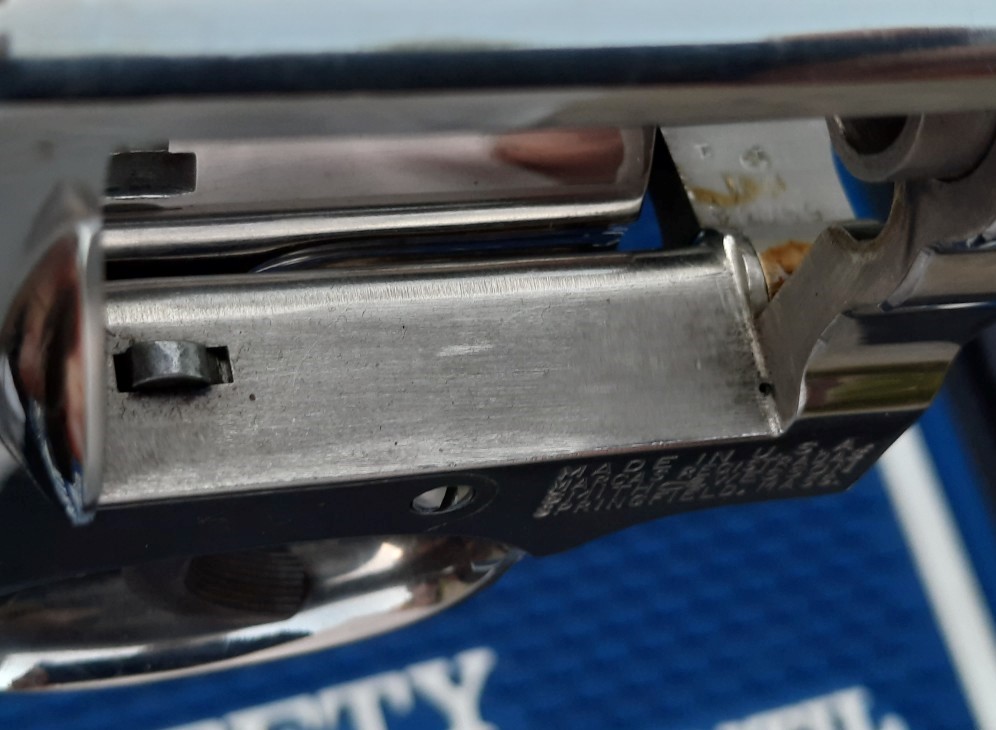
In my example today, this 61-year-old gun was a recent auction purchase. The seller probably could have realized $100 to $300 more for this gun had he taken the time to carefully clean it before taking the photos for the auction listing. That third photo is the one that would have scared off many potential buyers.
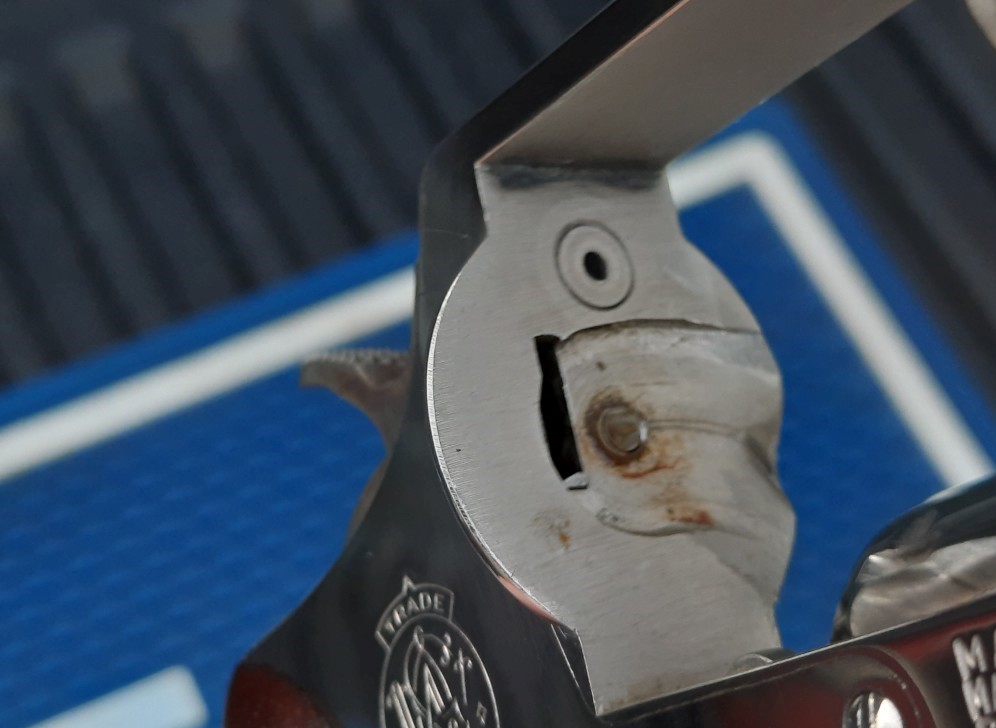
When I undertake a project like this, I do not get in a hurry. I take my time. After about an hour of cleaning, I wiped the gun down with a silicone cloth and put it back in the gun cabinet. I noticed the humidity level in my cabinet rose by one percentage point, so I removed it and placed it on top of the ammo cabinet.
The Concern: Where Did the Stains Originate?
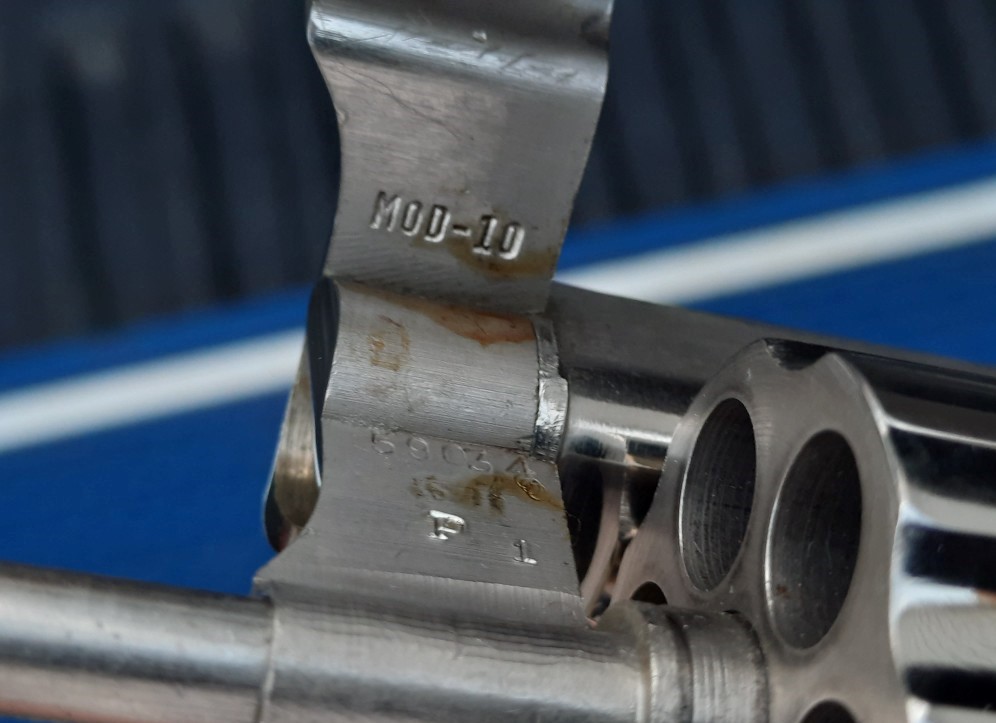
The most common culprit is moisture, whether it came from rain, sweat, or humidity in the storage environment. Secondly, it could have developed from old ammunition. This gun is 61 years old, and primers containing potassium chlorate or sodium perchlorate can leave salts behind after firing. Failing to properly clean a firearm after firing that ammunition is bad news, especially if moisture reaches the gun before it is cleaned.
Lastly, these stains could have been inflicted by a well-intentioned previous owner. There are many ways this could happen, and I will not go into them here other than to say: see Rule #1 and Rule #2.
Products Have Changed More Than the Guns
What has changed more than guns in the last 61 years? The products used to clean and care for guns have changed more.
Coincidentally, it was 1961, the same year this gun was made, that a new consumer product was launched. That 1961 product acts as a lubricant, rust preventative, penetrant, and moisture displacer. Odds are very good that you have an aerosol can of it in your household. I am not going to start a war of words on my Facebook page by naming it here, other than to say it is not what I use to clean and lubricate my guns.
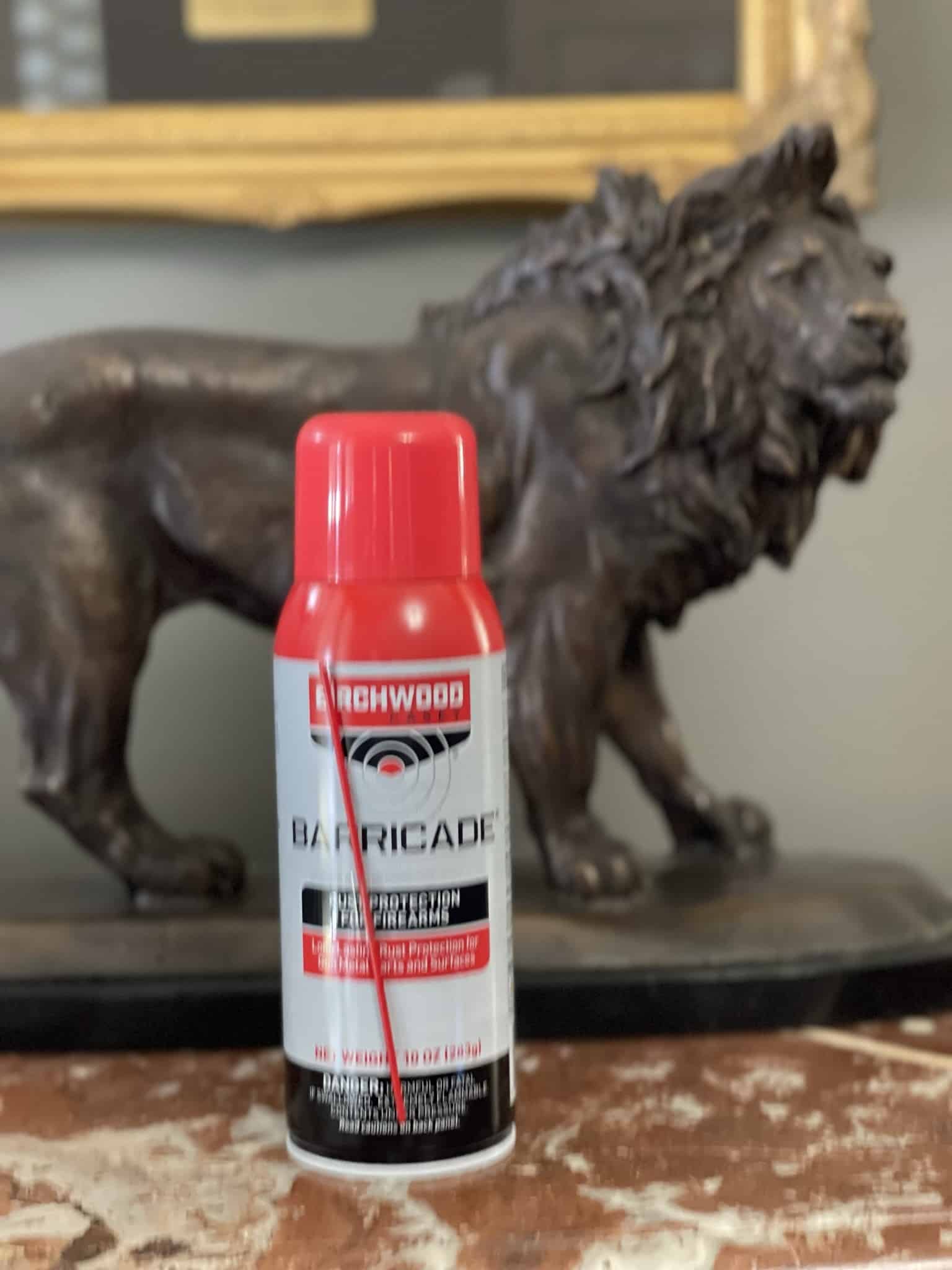
Barricade® rust protection rapidly drives out moisture from metal pores and deposits a transparent protective coating that seals the surface. It is a practical way to help protect firearms from rust. It is also an excellent penetrant for loosening rusty or frozen parts, a useful lubricant, and an effective bore cleaner.
Cloths, Finish, and Patience
The nickel finish on my 1970s lightweight Colt Cobras is very delicate. I have seen many examples of these guns over the years with thousands of tiny scratch marks from being wiped with the wrong kind of cloth, or with a dirty cloth. The Flitz MC200 Thick 'n Thirsty 16" x 16" Silver Microfiber Polishing Cloth that I always use on all of my guns is washable up to 500 times.
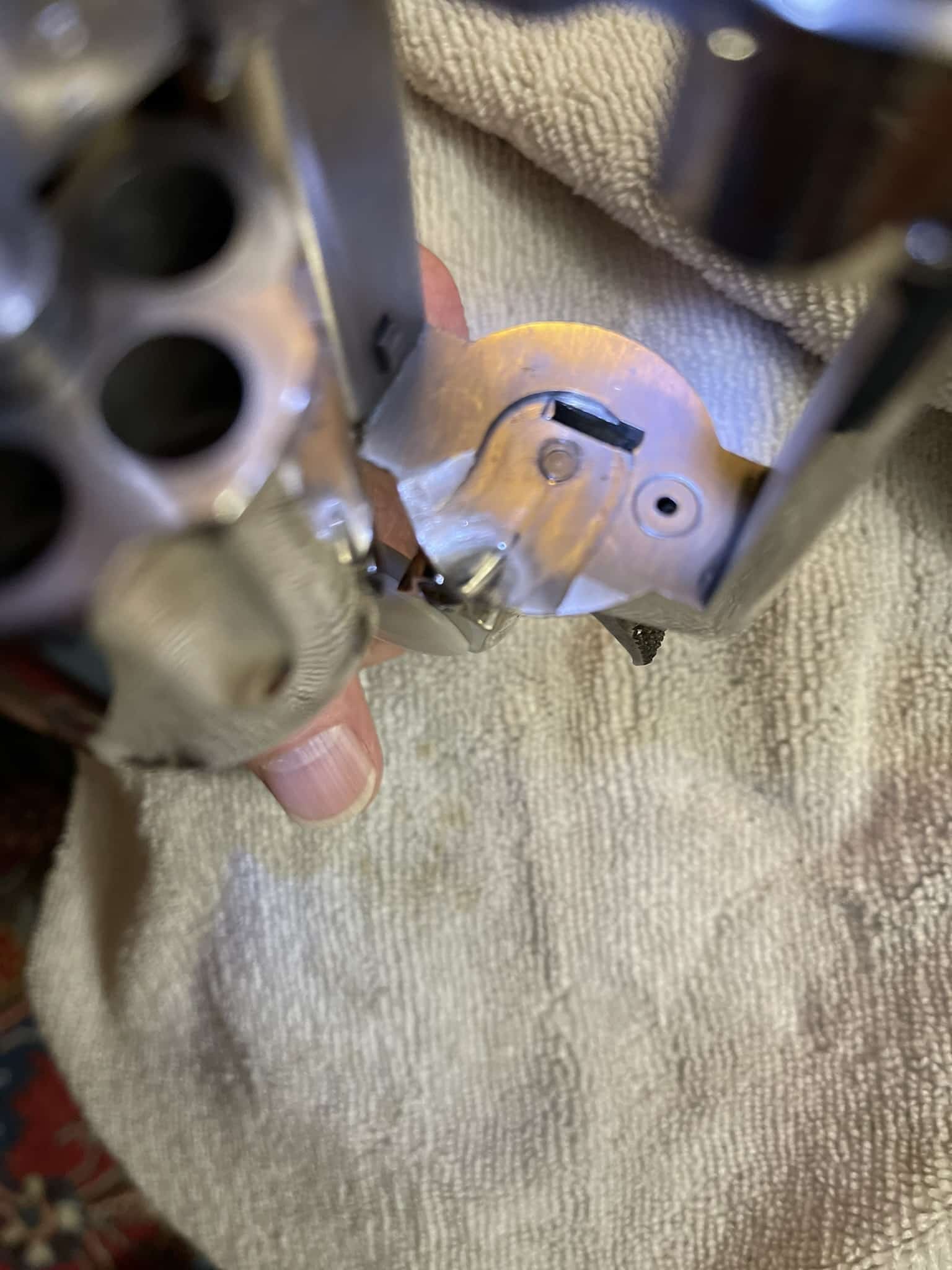
After letting the gun sit on top of my ammo cabinet for 48 hours, allowing it to completely dry, I revisited the job. Upon inspection, I could see faint evidence of the stain reappearing in three places. This time I did not remove the grips. I simply used Q-Tips to apply more Flitz wax to the affected areas. After gently massaging the wax for 5 to 10 minutes, I allowed it to dry.
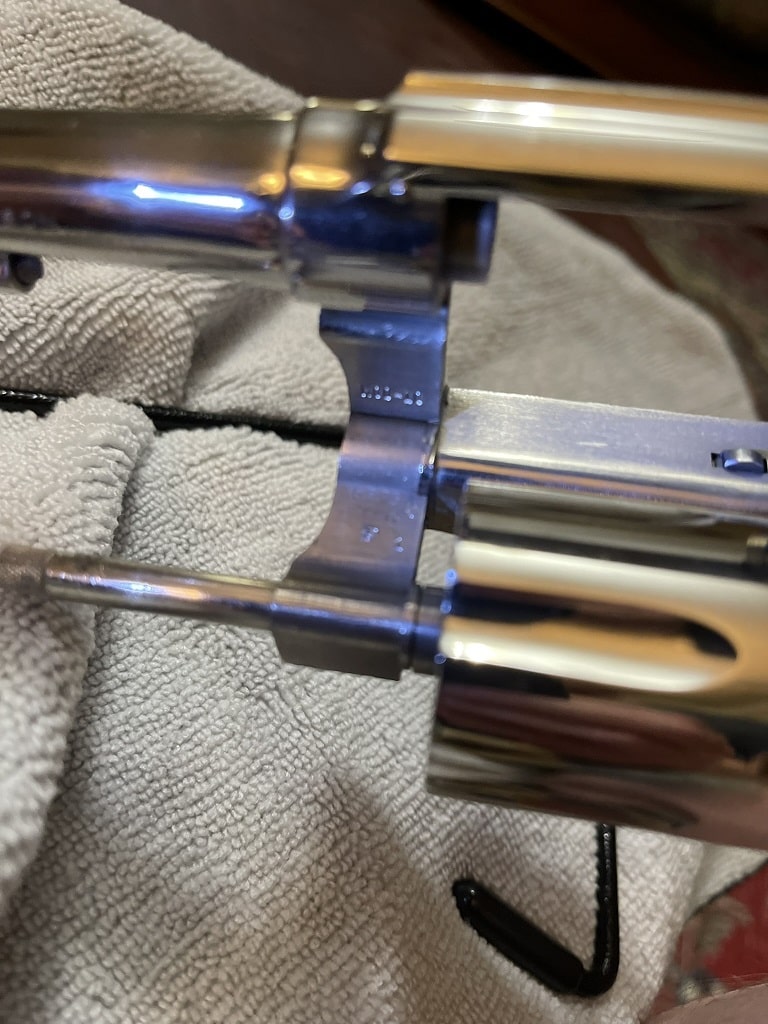
After wiping the dried wax off, I took these photos. Anything in the photos that appears dirty is only shadows. The gun looks great, and I am really pleased with my purchase. It is important to note that had the rust penetrated the finish, there would have been a different outcome to this story.
The Method I Used
No elbow grease was used in cleaning this gun. In fact, I was extremely gentle, using only Q-Tips and two varieties of cleaning cloths. I used no brushes.
- Sprayed it with Barricade.
- Wiped it with a Flitz cloth.
- Applied Flitz polish with a Q-Tip.
- Wiped again with a Flitz cloth.
- Applied Flitz wax with a Q-Tip.
- Wiped with a Flitz cloth.
- Gave it a final wipe down with a silicone cloth.
All of the products used in my project were less than $50 combined and will last for many other guns. I have to thank Benny, my FFL guy, for his guidance on just the right stuff to use. Do not be tempted to grab the nearest rag and cleaner intended for home, shop, or automotive use.
Always read the fine print on any gun cleaning product. Many metal cleaning products claim that they will not harm wood. I never take their word for it and remove the wood if I am going to be working anywhere near it.
From My Bench
Products Used
These are the products linked from the original project notes.
- Flitz Gun Cleaning Kit
- Birchwood Casey Barricade Rust Protection
- Birchwood Casey Silicone Gun Cloth
- Q-Tips Cotton Swabs, Standard White
As an Amazon Associate I earn from qualifying purchases. Product links are included for readers who want to see the bench items used in this project.
Collector Takeaway
Patience, clean materials, and product selection matter more than force. When working around old finish, plating, wood, or collector-grade surfaces, gentle preservation beats aggressive cleanup every time.
Browse My Gear ListThis article is for historical, collecting, and general informational purposes. Always follow product instructions and use appropriate safety practices.

About Greg Cook
Greg Cook writes about firearms collecting, personal history, and the stories behind interesting guns. His Army MOS was 76Y, Unit Armorer, and he brings that practical background to his collector articles./p>