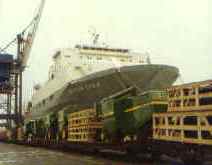
The Diary of a Soldier — February 18–21, 1985. We had completed the field portion of REFORGER '85. Our next responsibility was to get the vehicles and equipment through Bremerhaven and onto the American Eagle.
Monday, February 18: The Train to Bremerhaven
After we reached the station, we sat on the train for about 30 minutes. Major Garr finally roared up in a rented Mercedes, pulled off the roadside, and boarded. I had not realized that Gibbs and his crew were traveling with us, and I did not know what accommodations had been arranged for them.
At Bremerhaven, Major Garr and SFC Sawyers left in the Mercedes. Powers arrived in a van to collect us and our baggage.
Tuesday, February 19: Waiting, Lists and Dock Work
Breakfast was in the dining facility, with AFN Bremerhaven on the radio and two cups of coffee. Brett and I passed the time with trivia from a copy of People magazine he had bought during R&R. One fact that made it into the diary was that Julio Iglesias had three swimming pools at his home in Spain.
By 9:20 we were preparing to go to the docks. Until then, we played pinochle with two dummy partners. The waiting was part of the job, but once instructions arrived, everything moved quickly.
Wednesday, February 20: Preparing the Equipment
I woke to the cannon, bugle, and raising of the flag. I had expected it at 6:00, but it was 7:30 and too late for breakfast, so I went to the snack bar. A confusing order for scrambled eggs and toast somehow became two sandwiches with two eggs apiece, plus coffee, for one dollar.
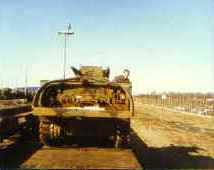
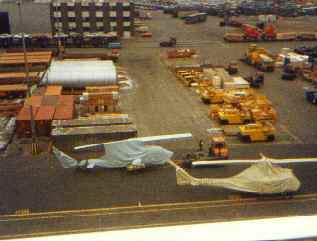
SFC Sawyers had a small box of TCMBs for the 4th Aviation Hueys and other equipment going back on the Eagle. We sorted packing lists and separated the computer printouts by type. At 9:30, Plotnicky and I were assigned to post the TCMBs to the Hueys. Brett and Sawyer checked oil and antifreeze levels in the Chaparrals and Vulcans, while Gibbs and his crew collected trash from the other vehicles being loaded.
My First Look at the American Eagle
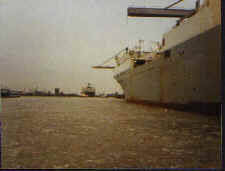
Powers gave us ten minutes to get ready. At the dock I saw the American Eagle for the first time. She had arrived overnight. She was majestic, though smaller than the Antares, with faded white and gray paint and rust in places.
She was backed into the same position the Antares had occupied the day before. American Eagle appeared boldly in large white letters against a gray background. Below it, in smaller letters, was Wilmington, Delaware.
At the far end of the dock, I saw what looked like a small replica of the space shuttle Columbia on a huge flat trailer. It resembled a bus made from an airplane and carried a California license plate reading “1SHUTTLE.” Nearby, Germans were driving new Bradleys off the ship’s rear ramp while we began checking the Chaparrals and Vulcans.
A Reporter at the Docks
A PFC carrying a handbag and two 35mm cameras appeared beside the Eagle, taking notes. When I saw the 4th Infantry Division patch, I assumed she was with the Iron Horse newspaper. Her name was Sterling.
She photographed Sawyer, Plotnicky, and me on top of a Chaparral while we checked the oil. After recording our names and unit, she asked whether we were going back on the ship. I told her yes and invited her to come along. She laughed and flashed a beautiful smile. She had spent the previous night at Carl Schurz Kaserne but was returning to Frankfurt by train.
Charles at the Bremerhaven Docks
Snow was blowing in from the North Sea. Back in the loading area, an older gray-haired German waved and spoke to me in English. His name was Charles, and he had worked for the U.S. Army at the Bremerhaven docks for 20 years.
He was friendly and eager to talk. He had visited family in New York in 1971 and remembered what his hotels near Madison Square Garden had cost. While we waited for the crew to return from lunch, he invited me to sit in his truck out of the cold.
Charles smoked Marlboros and offered me half a pack of American cigarettes. I had just bought two packs of French Gauloises from a machine at the snack bar. The machine accepted four deutsche marks, but 60 pfennigs in change had been taped beneath the cellophane because the cigarettes cost 3.40 DM.
A Damaged Volkswagen and a Search for Antifreeze
Powers was preparing a damage report on a privately owned vehicle that had been damaged during shipment from the States. The Army seemed to have a language of its own, with an acronym for almost everything.
We drove through a maze of shipping containers to inspect a badly damaged container that looked as though it had been dropped by a crane. Inside was a Volkswagen Rabbit. Its front section was undamaged, but the area near the door was crushed and the driver-side mirror was broken. The Polaroid developer fluid made a mess of the pictures, so we returned to operations for another camera and film.
I also asked Powers to help us find antifreeze for the vehicles that were low. It became a wild-goose chase, with one person sending us to another, but we eventually obtained four gallons—almost enough.
After dinner we worked until 8:30 that evening. Customs inspection was scheduled for 10 the next morning, and our bags had to be packed and ready by 7. We removed our red safety helmets, which served for protection and identification, put on our soft hats, and went to the NCO club. Sawyers ordered scotch, Brett ordered a strawberry daiquiri, and I ordered a double scotch and water.
Thursday, February 21: The Last Hours Ashore
The next morning we rolled our sleeping bags and packed to board the Eagle. At 8:00 there was no sign of Major Garr or the staff, so Sawyers went to check. He returned about 30 minutes later with good news: we had until 2 o’clock. We had to remain in uniform, but we could go downtown.
I asked a woman near the flags for directions to the shopping district. I had 17 deutsche marks and wanted one final look around. In a hat store I found a sailor’s hat. The woman helped me with the German size and a pin bearing an anchor design.
Across the street was a Sparkasse bank. I exchanged $40 for approximately 125 DM, then went to the post office next door to call home.
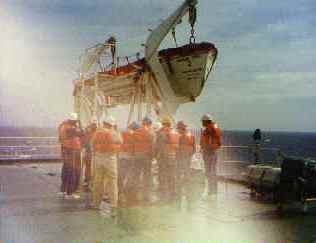
By afternoon, our time in Germany was ending. The vehicles were aboard, our bags were packed, and the American Eagle was waiting to take us across the Atlantic.
From My Bench
If you enjoy military history, firearms collecting, and practical reference books, I keep a curated list of books, tools, cleaning gear, and bench items that fit the way I work.
Browse My Gear ListAs an Amazon Associate I earn from qualifying purchases. I only link to products, books, tools, and accessories that fit the editorial purpose of Gun Collectors Club.

About Greg Cook
Greg Cook writes about firearms collecting, personal history, and the stories behind interesting guns. His Army MOS was 76Y, Unit Armorer, and his REFORGER '85 memories remain part of the way he looks at serious rifles and military history.