The Colt Python deserves its reputation, but collectors should still separate real scarcity from sales talk. Colt introduced the Python in 1955, and the revolver quickly became known for its Royal Blue finish, ventilated rib, full-length underlug, adjustable sights, and remarkably smooth action.
For serial-number dating, use the separate Colt serial-number lookup tool or the Python serial-number tables and identification guide; this page stays focused on Python history and collector context.
The original production run lasted for decades. Regular production wound down in the early 2000s, with later availability through Colt's Custom Shop before the old-line Python disappeared. When Colt brought the Python back in 2020, the announcement reignited collector interest in both the new stainless guns and the earlier Hartford-made examples.
They are not all rare. They are all special.
The Python’s Place in Colt History
The Python arrived during a period when Colt still had a deep revolver tradition and a strong reputation for polished fit and finish. It was marketed as a premium .357 Magnum revolver, not a utility sidearm. That distinction matters. A Python was a step above ordinary service revolvers, and the price reflected that from the beginning.
Collectors still gravitate to the early guns because they represent the old style of Colt hand work: polish, timing, action feel, and the kind of blue finish that became part of the Python legend. Later guns are collectible too, but early production details, original finish, barrel length, box, papers, and documentation become increasingly important as prices rise. For a fuller explanation of those factors, see the Python collector pricing guidance.
Production, Custom Shop Years, and the 2020 Return
Original Python production began in 1955. Many collector summaries state that regular production ended in 2004, with Custom Shop availability extending beyond that point. The practical collector takeaway is simple: an original-era Python and a modern reintroduced Python are different collector categories, even though both carry the Python name.
The 2020 reintroduction matters because it gave shooters a modern Python option without requiring them to put wear on an older collectible example. For collectors, however, the revival also sharpened the distinction between original production, late Custom Shop guns, and the new stainless production revolvers.
Barrel Lengths Collectors Watch
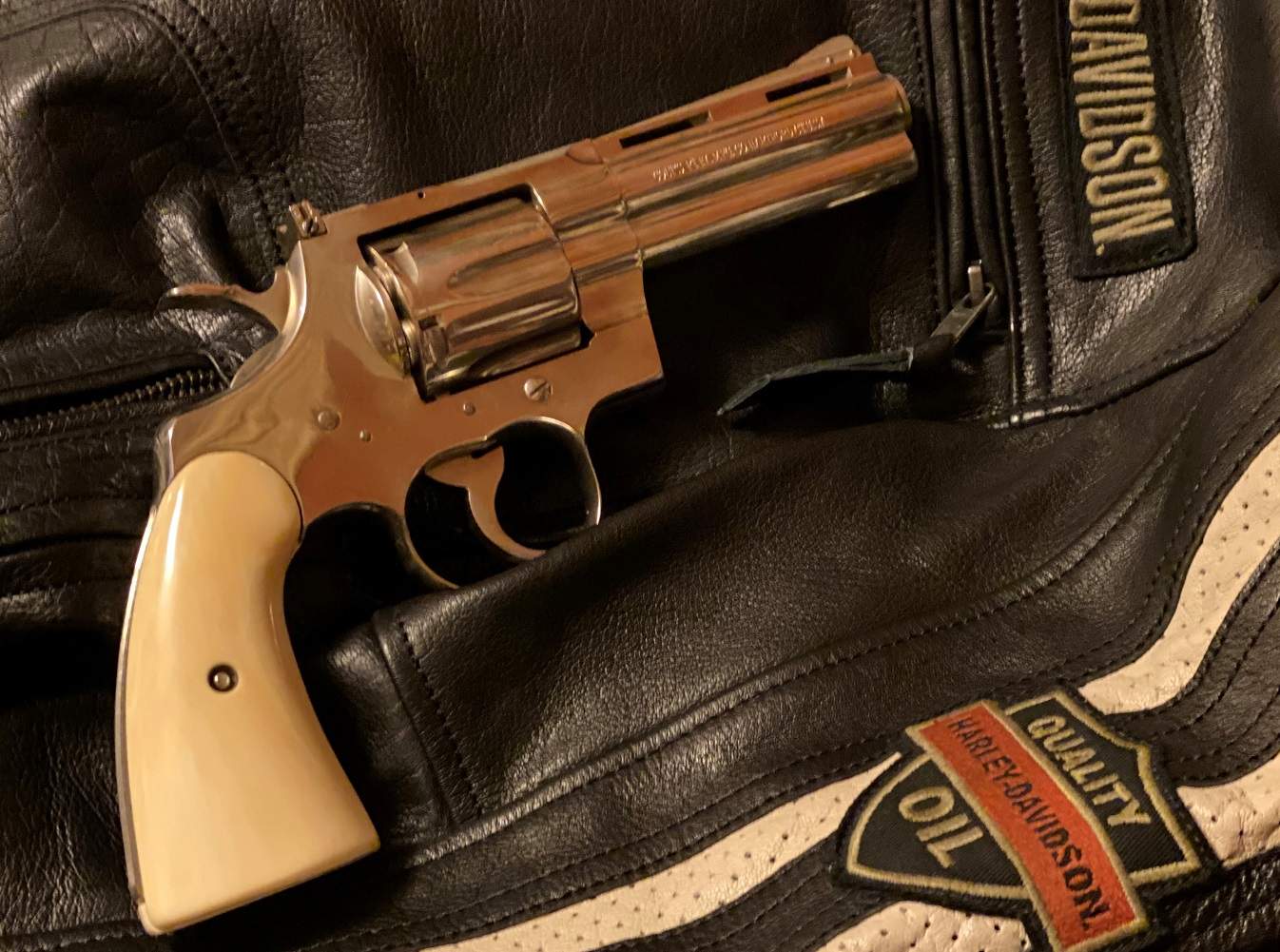
Python barrel lengths are part of the collecting story. Six-inch guns are strongly associated with the classic Python image, while four-inch examples have their own law-enforcement and field-carry appeal. The shorter barrels, especially properly documented examples, often draw special attention.
| Barrel Length | Collector Context |
|---|---|
| 2½ inch | Short-barrel Pythons draw collector interest, especially when original and properly documented. |
| 3 inch | Factory 3-inch Pythons are especially watched, but non-factory conversions exist and must be verified. |
| 4 inch | A classic working length with strong collector appeal, especially in original finish. |
| 6 inch | The iconic Python profile and one of the most recognizable configurations. |
| 8 inch | Associated with later production and target or hunting use. |
Finishes and Why Words Matter
Python collectors talk about finish constantly because finish can be the difference between a good revolver and a truly desirable one. Colt Blue and Royal Blue are part of the legend. Bright Nickel, Satin Nickel or Royal Coltguard, Matte Stainless, and Ultimate Bright Stainless all belong in the collector conversation, but originality is the key.
One point deserves emphasis: do not assume every shiny Python is original, and do not assume every stainless or nickel description is precise. Look closely at markings, edges, polish, box label, and documentation. A beautiful refinish may be attractive, but it is not the same as original factory condition.
The “Rare” Problem
With many Pythons produced over roughly half a century, the word rare gets overused. A Python can be spectacular, important, valuable, or unusually configured without being rare in the strict sense. Auction descriptions often stretch that word because it sells the dream.
That does not make the Python ordinary. It means collectors should be more precise. A documented factory 3-inch gun, a special-order finish, verified factory engraving, or an unusual original configuration is different from a common gun with a dramatic description.
Collector Insight
Factory documentation changes the conversation.
A story may make a gun interesting, but a Colt Archive Letter or strong original paperwork can make it collectible in a way that sales language alone cannot.
They Are All Anniversary Editions
Back when I bought my first Corvette, it was a 1978 Silver Anniversary. I remember calling Zeke Jenkins, known locally as the Corvette expert, to tell him. He cut straight through my excitement: “Greg, they’re all anniversary models.”
The same idea applies here. Every Python has a place in the story. Some are more valuable than others, some are more desirable than others, and some deserve closer documentation. But the basic truth remains: if you own an original Colt Python, you own one of the great American revolvers.
A Book Worth Having
For deeper study, I still believe collectors benefit from keeping good reference books within reach. Online listings are useful, but books, factory letters, catalogs, and careful photographs make better research habits.
Colt's Python, King of the Seven SerpentsPaid link
Related Reading
From My Bench
If you collect revolvers, a few good reference books, proper storage, and careful documentation matter more than impulse buying. I keep a curated list of books, tools, cleaning gear, and storage items that fit the way I work.
Browse My Gear ListPaid linkAs an Amazon Associate I earn from qualifying purchases. I only link to products, books, tools, and accessories that fit the editorial purpose of Gun Collectors Club.

About Greg Cook
Greg Cook writes about firearms collecting, personal history, and the stories behind interesting guns. His Army MOS was 76Y, Unit Armorer, and he brings that practical background to his collector articles.