Start With the Action Type
The easiest way to understand shotguns is to begin with the action. The action determines how the firearm opens, loads, fires, extracts, and chambers the next shell. For collectors, it also suggests the intended use: upland hunting, waterfowl, trap, skeet, sporting clays, turkey hunting, youth training, defense, or general farm use.
A shotgun collection becomes more interesting when examples are chosen to show different solutions to the same problem. A Winchester Model 42 pump, a Browning Citori over-and-under, a Remington semi-automatic, and an older side-by-side may all be shotguns, but they represent very different eras and handling ideas.
Break-Action Shotguns
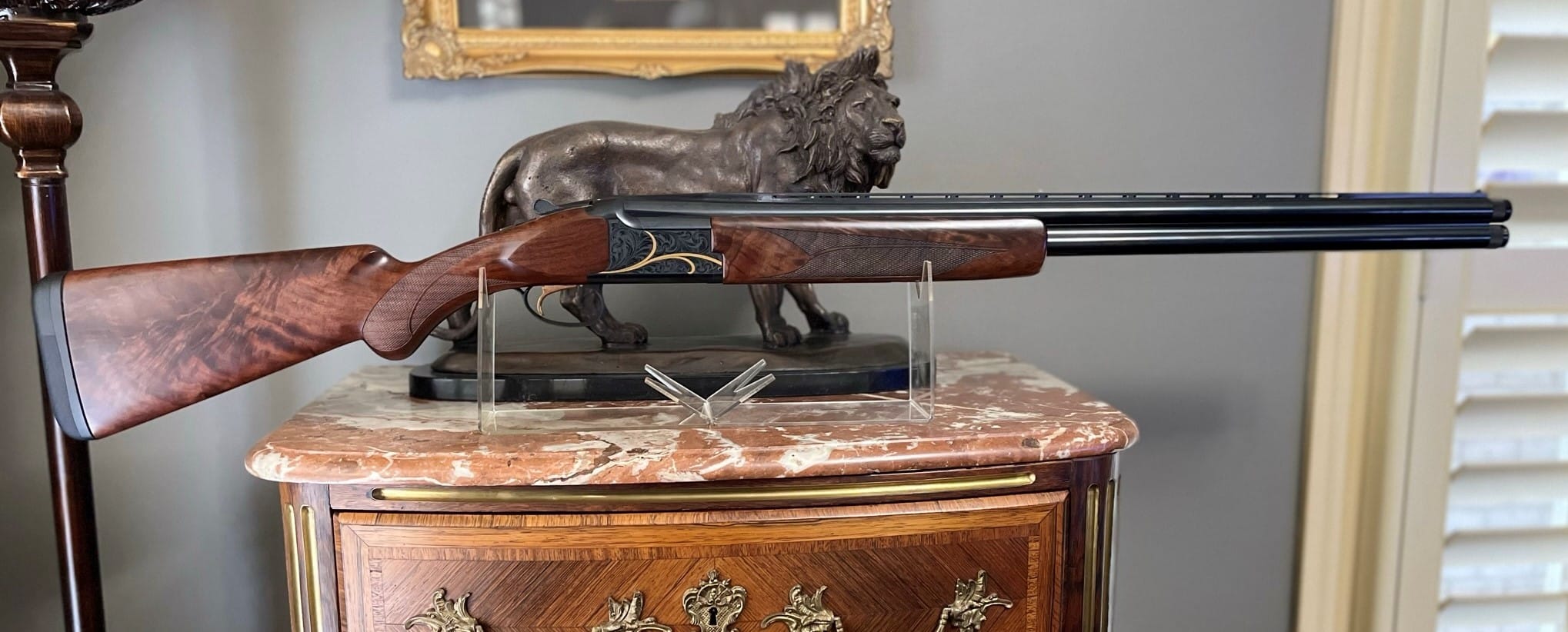
Break-action shotguns are simple, elegant, and easy to inspect. The barrels hinge open to expose the chambers. This category includes single shots, side-by-sides, and over-and-unders. Collectors often look closely at lockup, lever position, rib condition, barrels, chokes, engraving, wood fit, and whether the gun remains in original configuration.

Over-and-Under
The over-and-under places one barrel above the other. It is common in sporting clays, skeet, trap, and upland hunting. Many collectors appreciate the clean sighting plane and the way higher-grade examples combine engraving, walnut, and mechanical precision.
Side-by-Side
The side-by-side carries an older field tradition. It can feel lively in the hands and is strongly associated with upland hunting and classic gunmaking. Condition of barrels, ribs, stock dimensions, and proof or maker marks can be especially important.
Pump-Action Shotguns
Pump-action shotguns are manually cycled with a sliding forearm. They are rugged, familiar, and deeply tied to American sporting and utility use. Collectors may focus on Winchester, Remington, Ithaca, Browning, and other makers depending on era and specialization.
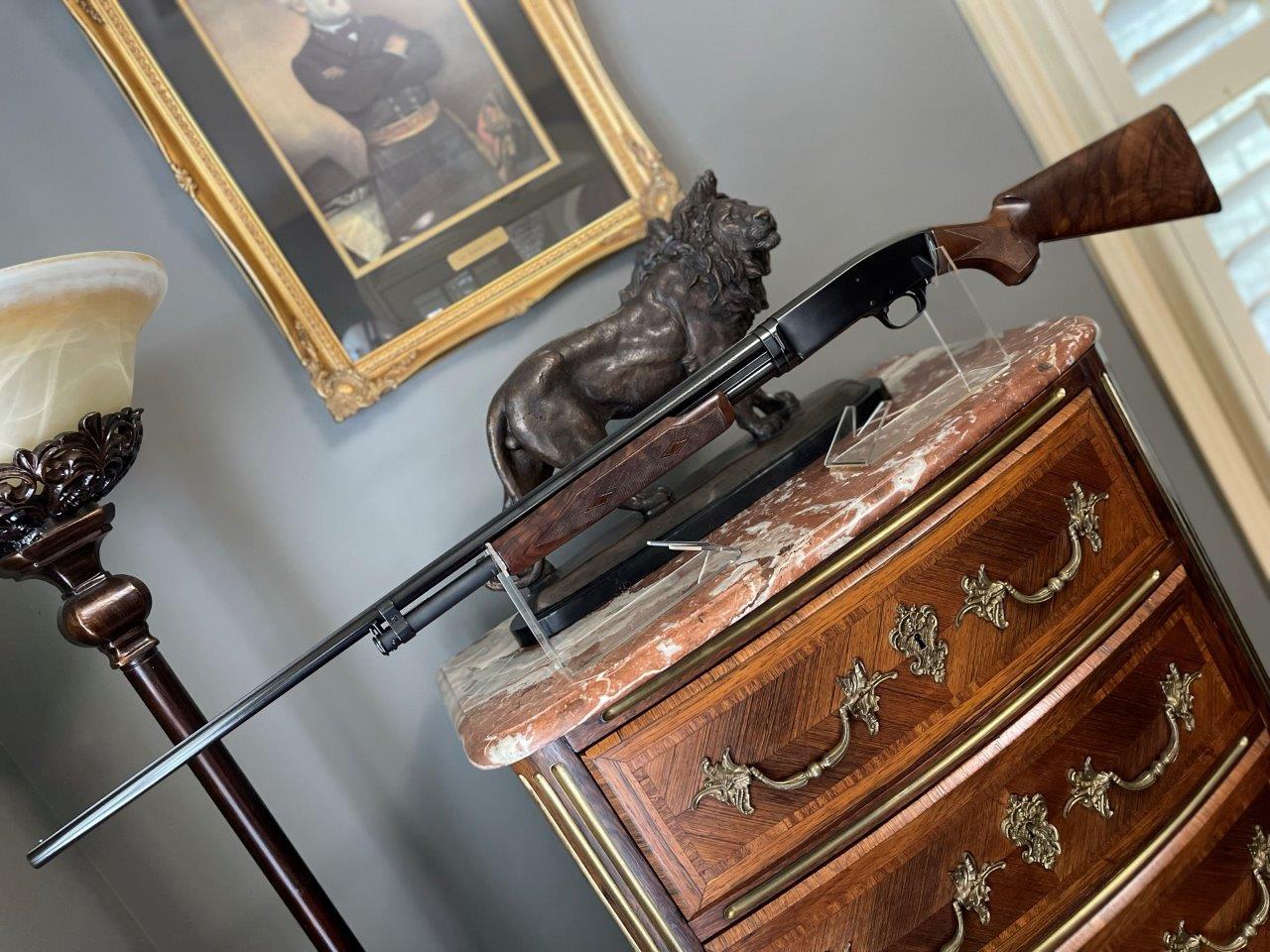
The Winchester Model 42 is a useful example because it is not just a pump shotgun; it is a scaled .410 classic with collector interest tied to condition, configuration, and Winchester history.
Semi-Automatic, Bolt-Action, and Specialty Shotguns
Semi-automatic shotguns use recoil, inertia, or gas operation to cycle the next shell. Collectors often study the Browning Auto-5, Remington 1100, and other designs because they show how shotgun makers solved the problem of repeat fire in a sporting arm.
Bolt-action shotguns are less common in serious collector conversation, but they represent an interesting working-gun category. They were often affordable utility arms. Combination guns and drilling-style arms combine shotgun and rifle barrels for specialized hunting use. Specialty shotguns include turkey guns, trap guns, slug guns, tactical configurations, and limited-production target models.
| Type | Typical Collector Notes |
|---|---|
| Single shot | Condition, maker, youth or utility history. |
| Side-by-side | Barrel condition, ribs, stock fit, maker grade. |
| Over-and-under | Grade, engraving, wood, lockup, sporting use. |
| Pump action | Model reputation, gauge, originality, wear. |
| Semi-automatic | Operating system, generation, barrel/choke configuration. |
| Combination / specialty | Purpose, rarity, documentation, and originality. |
Collector Takeaway
A shotgun should be evaluated by type, use, condition, and originality. Pay attention to barrel length, choke markings, chamber length, stock alterations, recoil pads, cracks, refinishing, and whether the gun still matches the purpose it was built for. A beautiful shotgun with altered barrels or replacement wood may still be enjoyable, but the collector value must be judged honestly.
From My Bench
For collecting work, I keep a short list of reference books, humidity control, cleaning supplies, lighting, and bench gear that fit the way I document and maintain older firearms.
Browse My Gear ListAs an Amazon Associate I earn from qualifying purchases. I only link to products, books, tools, and accessories that fit the editorial purpose of Gun Collectors Club.

About Greg Cook
Greg Cook writes about firearms collecting, personal history, and the stories behind interesting guns. His Army MOS was 76Y, Unit Armorer, and he brings that practical background to his collector articles.