The dagger is one of the oldest and most recognizable edged tools in human history. Long before firearms, and long before the modern sporting knife, short pointed blades served as tools, sidearms, symbols of authority, and objects of craftsmanship.
Firearms Makers and the Knife Collector
When most collectors think of Colt, Smith & Wesson, Winchester, and Remington, they naturally picture revolvers, lever actions, shotguns, and sporting rifles. But all four of these famous firearms names also crossed into the world of knives. Some made or marketed pocketknives, hunting knives, Bowie-style knives, survival knives, and commemorative blades, giving firearm collectors another related field to study.
That connection is one reason knives and daggers fit so naturally beside a gun collection. A good blade carries many of the same qualities collectors look for in firearms: steel, balance, design, maker history, condition, markings, and the story behind the piece. Remington built a major cutlery business after World War I, Winchester entered the knife market in 1919, Smith & Wesson offered notable Blackie Collins-designed knives in the 1970s, and Colt-branded knives became collectible in their own right. Together, these names show that the line between firearm collecting and knife collecting has always been closer than many people realize.
For me, a dagger or fixed-blade knife is not a replacement for firearms collecting, but a natural side road from it. These pieces connect to military history, sporting use, personal gear, craftsmanship, and the same American maker traditions that make old guns worth preserving.
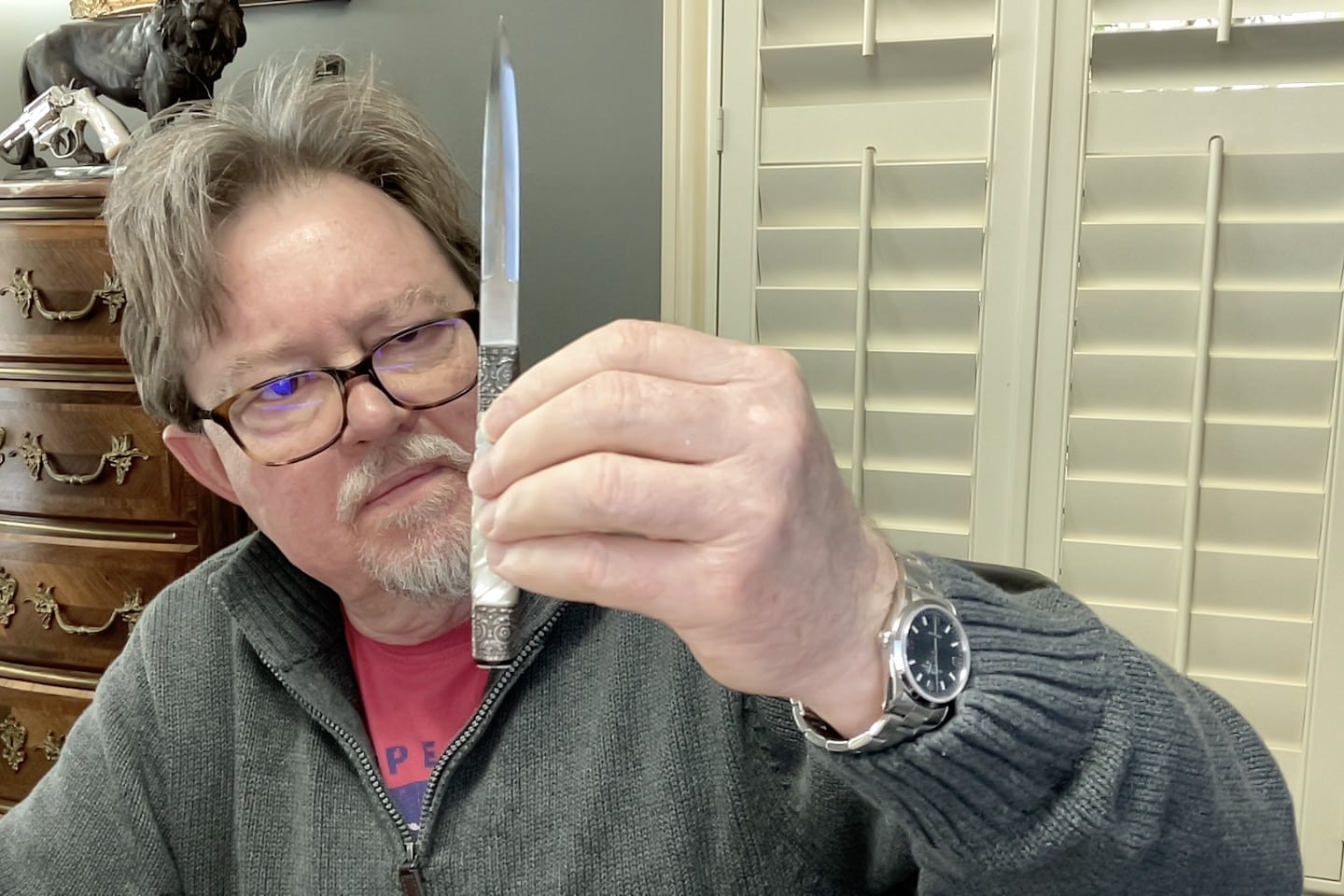
In addition to firearms, I keep a small collection of knives. I do not collect old knives with the same depth that I have collected guns over the years, but I enjoy good examples of fixed blades, folders, and interesting handmade pieces. The custom dagger shown here is part of that small side collection.
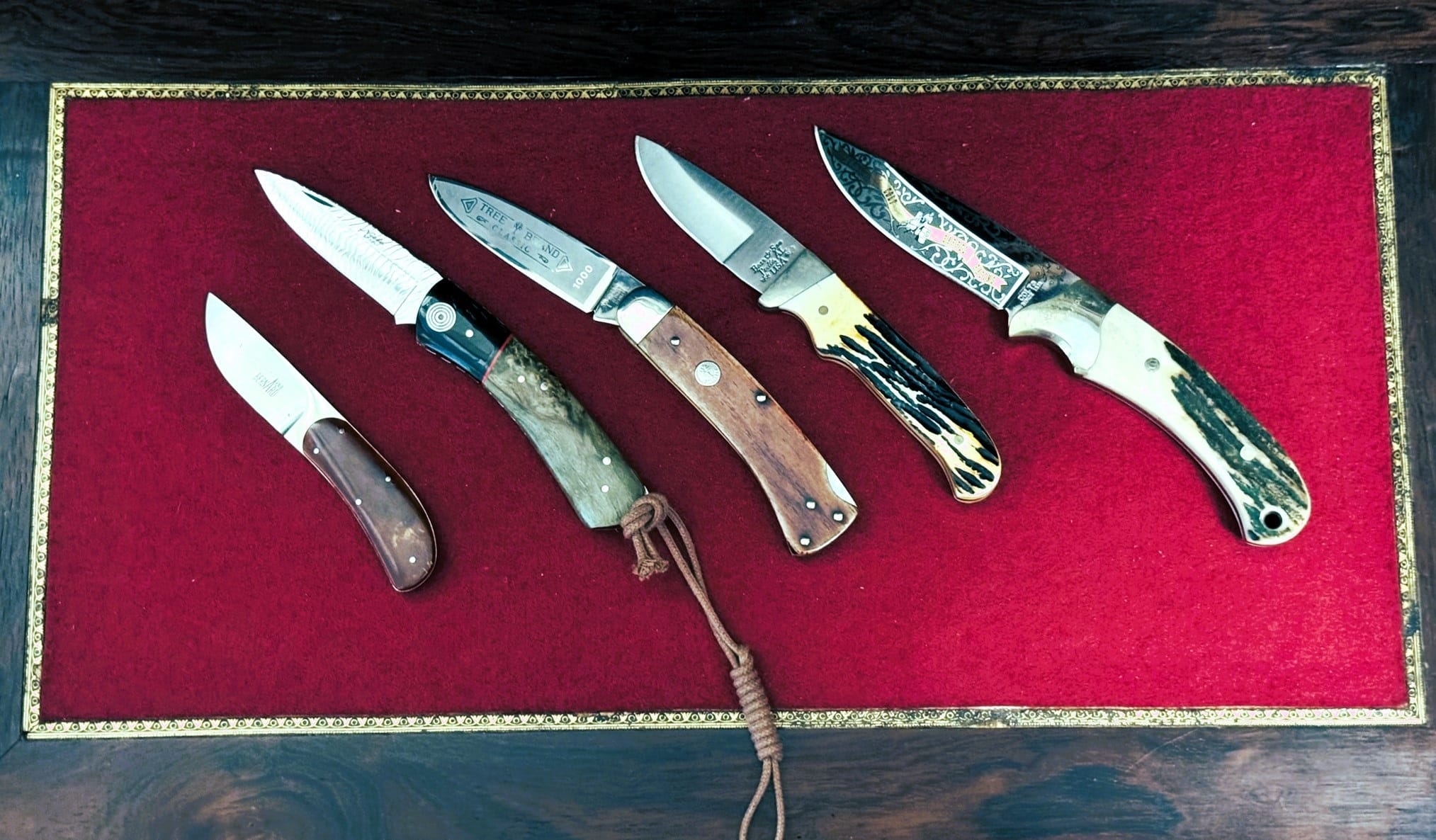
A Custom Dagger in a Small Collector Group
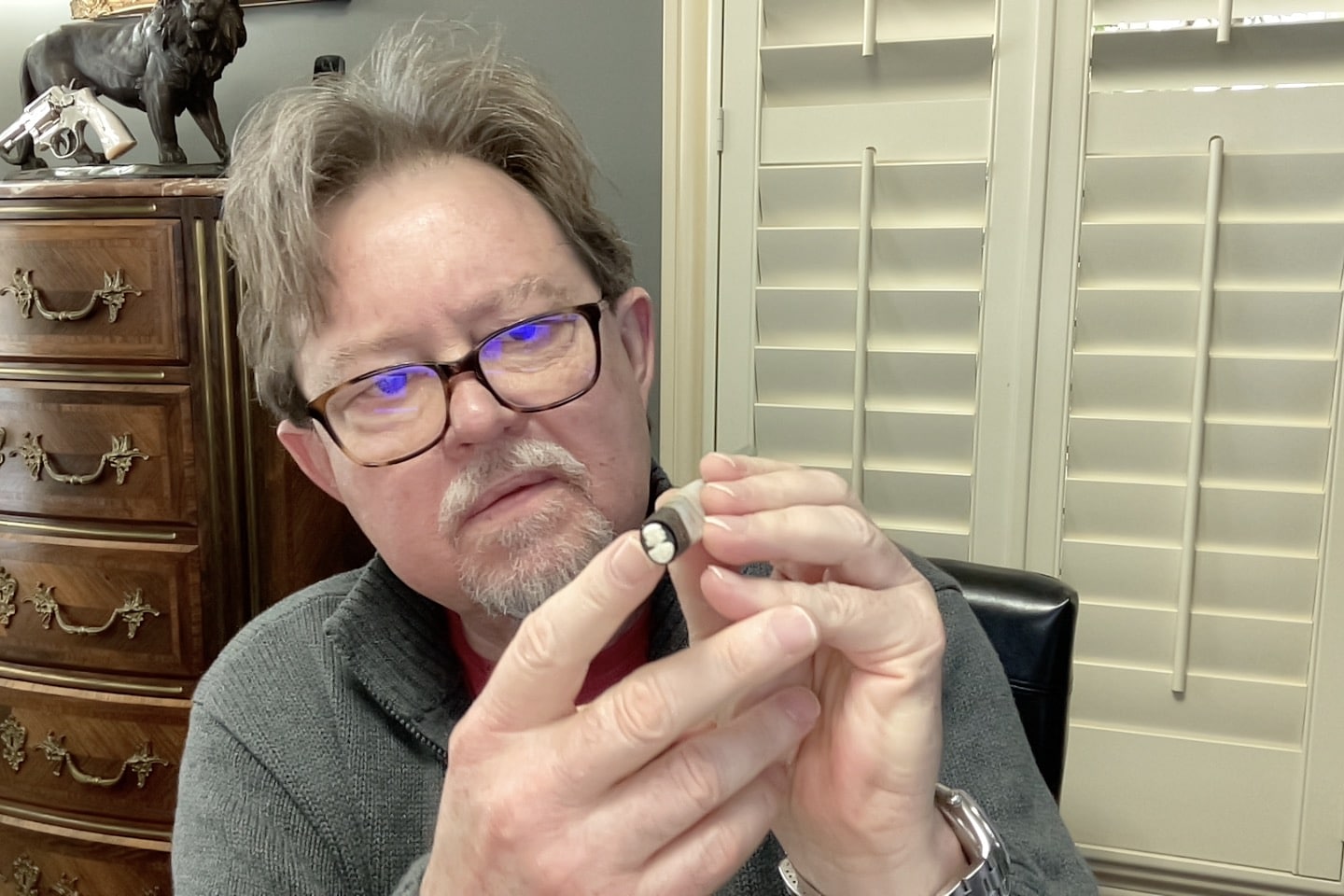
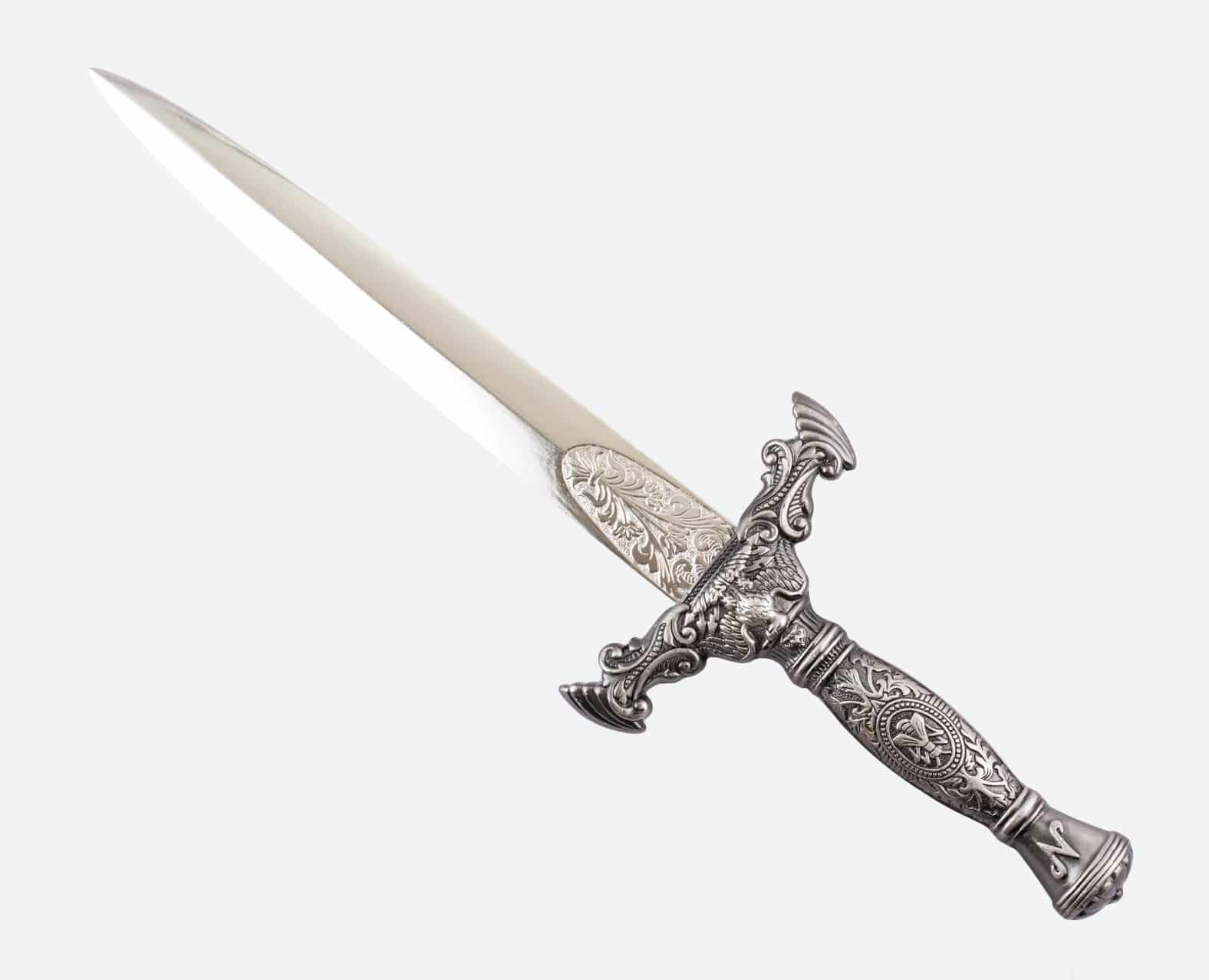
This particular dagger is a custom-made knife by a Canadian maker. It is not the kind of piece I would build an entire collection around, but it represents the same things that draw many collectors to firearms: form, balance, materials, craftsmanship, and historical design language.
The Dagger Through History
Daggers are usually short, pointed blades designed primarily for thrusting or close work. Across history they have appeared as practical tools, military sidearms, ceremonial objects, and status symbols. Their meaning changed depending on the culture, the period, and the person carrying one.
Prehistoric and Bronze Age Daggers
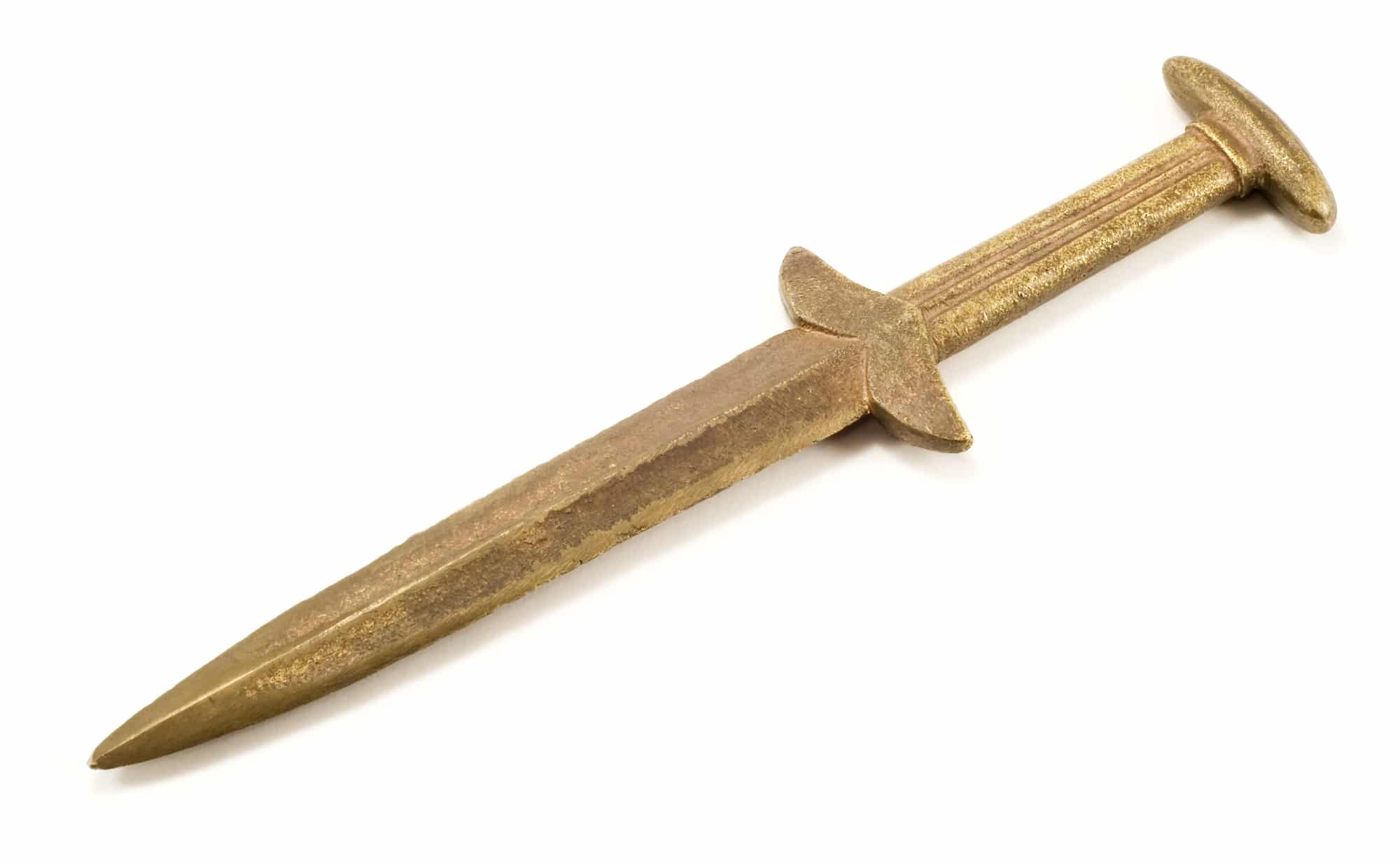
The basic idea of the dagger reaches back to the Stone Age, when early examples were made from bone, antler, flint, and other hard materials. As metallurgy advanced, bronze daggers appeared in early civilizations across Europe, the Near East, and the Mediterranean world. Some were practical blades, while others were clearly made to signal authority, rank, or ritual importance.
Iron Age, Roman, and Medieval Daggers
Iron made daggers stronger, more durable, and more effective. The Roman pugio is one of the most recognizable military examples: a short sidearm carried by Roman soldiers. In medieval Europe, daggers remained common secondary weapons. Knights, infantrymen, and civilians carried variations such as rondel daggers, dirks, and other regional sidearms.
Renaissance, Ceremonial, and Modern Daggers
During the Renaissance and Baroque periods, dagger design became more specialized and decorative. Parrying daggers were used with rapiers, while ornate ceremonial blades became part of dress, rank, and cultural identity. In the modern era, daggers remained visible in military and tactical history, including the famous Fairbairn-Sykes fighting knife associated with British commandos during World War II.
Collectors today often approach daggers the same way they approach firearms: looking for originality, maker history, condition, materials, provenance, and the story behind the object. A dagger may be a weapon historically, but in a collection it is often studied as design, metallurgy, culture, and craftsmanship.
Collector Takeaway
For a firearm collector, daggers and fixed-blade knives can make sense as a related collecting lane. They connect to military history, personal equipment, display culture, and hand craftsmanship. The key is to treat them the same way you would a firearm: document what it is, preserve its condition, avoid careless cleaning, and separate proven history from seller storytelling.
Collector Research
Books for Knife Collectors
Reference books are still useful for identifying makers, patterns, materials, and historical context.

About the Author
Greg Cook
Greg Cook writes about firearms collecting, personal history, and the stories behind interesting guns. His Army MOS was 76Y, Unit Armorer, and he brings that practical background to his collector articles.