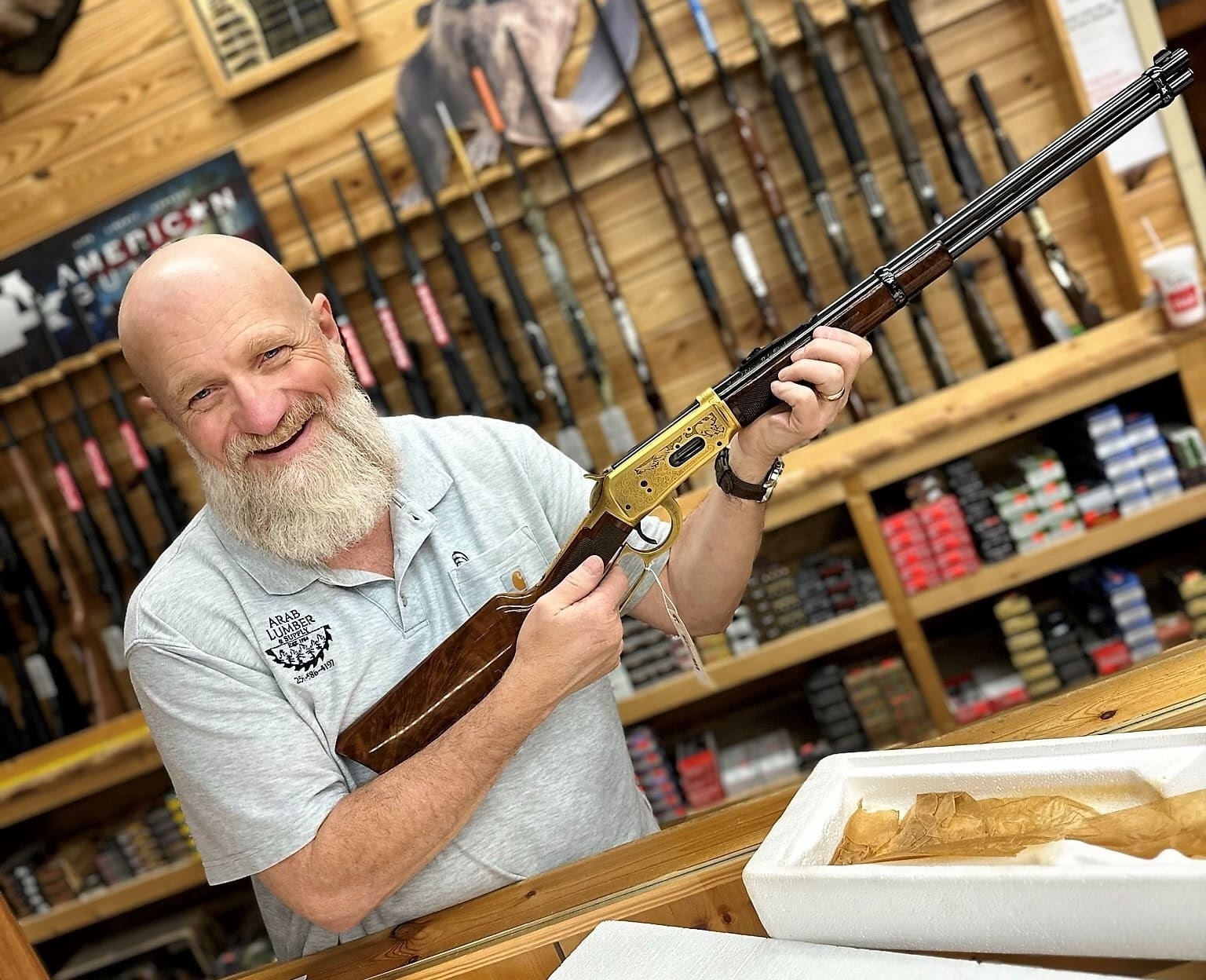
Lever Action Firearms is part of the Gun Collectors Club American Firearms Encyclopedia. These encyclopedia entries connect firearm design, manufacturing history, military use, sporting culture, and collector evaluation into one reference system.
The goal is not merely to define a firearm term. The goal is to explain why the subject mattered, how it connects to other American firearms, and what collectors should study before drawing conclusions about age, value, originality, and historical importance.
In the American Firearms Encyclopedia, every entry should lead the reader deeper into the collection — from design idea, to production era, to collector meaning.
What Makes a Lever Action
A lever-action firearm uses a lever, usually integrated with the trigger guard, to cycle the action. The motion extracts and ejects the fired case, chambers a new round, and prepares the gun to fire again.
The system became famous in rifles, but lever-action history also includes shotguns and unusual specialty designs.
Henry, Winchester, and the American West
The Henry rifle and Winchester lever actions made the repeating rifle a central part of American firearm culture. Whether in frontier mythology, ranch use, hunting, or collecting, lever actions became associated with speed, handiness, and practical field use.
The Winchester Model 1873 and Model 1894 remain foundational reference points for collectors.
Savage, Marlin, and Other Lever-Action Paths
Lever actions were not only Winchester rifles. Marlin developed a loyal collector base, and the Savage Model 99 offered a very different concept with its rotary magazine and ability to handle pointed bullets in certain chamberings. Use the Savage 99 model identification guide to compare the features that separate major variants.
For early Marlin lever guns, check what survives in Cody’s Marlin ledgers before relying on a seller’s factory-configuration claim. A published serial range does not guarantee that an individual record is filled in.
Collectors should avoid treating all lever actions as a single category. Mechanical layout, cartridge design, and production period matter.
Collector Perspective
Lever-action values depend on condition, originality, manufacturer, model, chambering, special-order features, production year, and whether the gun has been refinished or altered. Pre-64 Winchester context, Marlin JM markings, Savage 99 variations, and early Henry/Winchester history all create separate collector lanes. If you have an interest in old Winchesters, see Guide to Collecting Pre-64 Winchester Firearms .
| Collector Question | Why It Matters |
|---|---|
| Who made it? | Winchester, Marlin, Savage, Henry, Browning, and others occupy different collector markets. |
| What model and cartridge? | Model and chambering drive both historical importance and value. |
| Is it original? | Cut barrels, replaced sights, refinished stocks, and recoil pads can affect value. |
| Is it tied to a classic era? | Frontier, prewar, postwar, and pre-64 context all matter. |
Encyclopedia Insight
The lever action is where American utility became American mythology.
Many firearms are useful. Fewer become symbols. Lever actions became both: practical hunting tools and a visual shorthand for the American rifle.
Related Encyclopedia Entries
Build Your Reference Shelf
Encyclopedia-style collecting works best with good books, careful photography, magnification, and a slow research process. I keep a curated list of reference books and collector tools for this kind of work.
Shop My LibraryAs an Amazon Associate I earn from qualifying purchases.

About Greg Cook
Greg Cook writes about firearms collecting, personal history, and the stories behind interesting guns. His Army MOS was 76Y, Unit Armorer, and he brings that practical background to his collector articles.