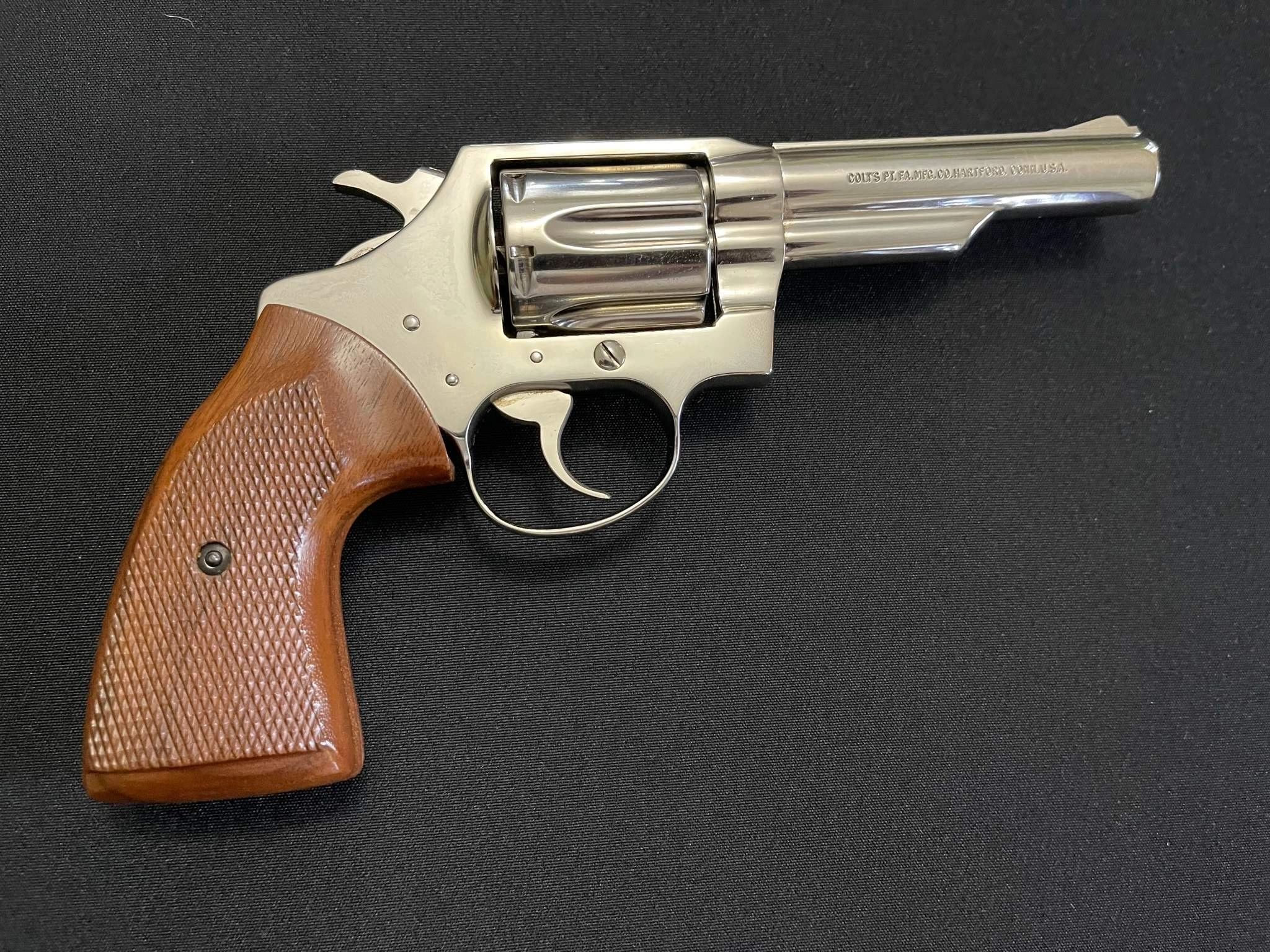
This page is intentionally short because the Police Positive Heavy Frame sequence is short. It should still stand alone: folding these anchors into the standard .32 or .38 tables is exactly the kind of shortcut that causes incorrect collector dates.
When the serial number is available, continue with the heavy-frame Police Positive research in the Colt serial-number lookup tool.
Use a serial table as an anchor, not as a factory letter. These numbers are best for collector orientation. Record the serial exactly, confirm the barrel marking and chambering, and use Colt Archive documentation when originality, provenance, or price depends on the claim.
Related tables: This page is one branch of the Colt Police Positive serial-number set. For the decision tree, start with the Police Positive serial-number hub. The companion tables cover standard .38, .32 / Target, Heavy Frame, and Police Positive Special / Detective Special.
Heavy Frame: A Short Separate Sequence
Use this page only after the revolver has been identified as a Police Positive Heavy Frame. The serial span is compact, so the table is useful for orientation, but the model identification still has to come from the gun itself: frame, markings, chambering, barrel, sights, and period-correct features.
Why a Small Table Still Matters
A short production run is not a minor detail. The Heavy Frame branch sits apart from the standard Police Positive tables, and treating it as just another .32 or .38 entry can make a correct revolver look inconsistent with its apparent year.
What to Photograph
For Heavy Frame research, photograph the barrel legend, frame and crane area, cylinder, stocks, sight treatment, and any unusual markings. Those images help show why this page, rather than a standard Police Positive table, was the right dating path.
Police Positive Heavy Frame Table
This table is intentionally compact because the Heavy Frame run was a short, separate sequence.
| Year | Serial number shown / annual anchor | Collector use |
|---|---|---|
| 1925 | 250,000 | Opening anchor for the short Heavy Frame sequence. |
| 1926 | 250,100 | Early Heavy Frame reference point; confirm the frame branch first. |
| 1927 | 250,500 | Production guide for a mid-1920s Heavy Frame example. |
| 1928 | 250,800 | Anchor for comparing Heavy Frame features with the serial range. |
| 1929 | 251,000 | Late-1920s reference point within the separate Heavy Frame run. |
| 1930 | 251,300 | Depression-era anchor for the Heavy Frame branch. |
| 1931 | 251,700 | Early-1930s reference point; do not blend with standard tables. |
| 1932 | 251,900 | Collector dating guide for the short Heavy Frame sequence. |
| 1933 | 252,100 | Late Heavy Frame anchor; verify visible model clues. |
| 1934 | 252,400 | Near-end reference point for Heavy Frame research. |
| 1935 | 253,100–253,351 | Closing range shown for this separate Heavy Frame sequence. |
Caption language: Say “serial range suggests” or “production anchor indicates” unless a factory record confirms exact shipment details.
Suggested Caption
Example: “Colt Police Positive Heavy Frame, serial range places it in the short Heavy Frame production sequence. Model identification and visible features should be verified before relying on the table for collector description.”
Heavy Frame Verification Checklist
- Confirm the gun is truly a Heavy Frame before using the short table.
- Photograph frame, crane area, barrel marking, cylinder, and stocks.
- Do not merge these anchors with standard .32 or .38 Police Positive tables.
- Use cautious wording because the sequence is compact.
Collector Takeaway
The Heavy Frame page is short by design. Its value is in preventing a small, separate sequence from being swallowed by the larger Police Positive tables.

About Greg Cook
Greg Cook is a CPA and firearms collector who writes about gun collecting, history, provenance, ownership impressions, and the practical details that make individual firearms memorable. His Army MOS was 76Y, Unit Armorer.
Sources Consulted
This page was prepared by comparing Colt factory resources, historical firearm publications, collector serial-number archives, and Gun Collectors Club notes. The table is presented as a collector production reference, not as a factory shipment ledger. When value, originality, provenance, or a premium claim depends on the details, Colt Archive documentation remains the stronger standard.
- Colt Serial Number Lookup — official first-pass factory lookup for approximate date-of-manufacture orientation.
- Colt Archive Services — factory-letter resource for documented shipment information and original configuration details when records are available.
- Colt Timeline — factory historical background on Colt double-action revolver development and related company milestones.
- ProofHouse Colt revolver serial-number archives — collector reference material compared against the model-family notes in this guide.
- ProofHouse Colt target and small-frame reference material — historical collector data reviewed while checking .32 and Target-era anchors.
- ProofHouse Colt Heavy Frame reference material — archival serial-number reference consulted for the short Heavy Frame sequence.
- ProofHouse Colt D-frame reference material — collector serial-number archive reviewed for Police Positive Special and Detective Special family ranges.
- American Rifleman historical coverage — background on the Police Positive family, Positive Lock context, chamberings, and related D-frame development.
- Gun Collectors Club: Colt Police Positive Guide — companion GCC identification article for production years, issue changes, and Police Positive family context.
- Gun Collectors Club: Colt Police Positive Timeline — companion GCC timeline for placing the model family in chronological order.