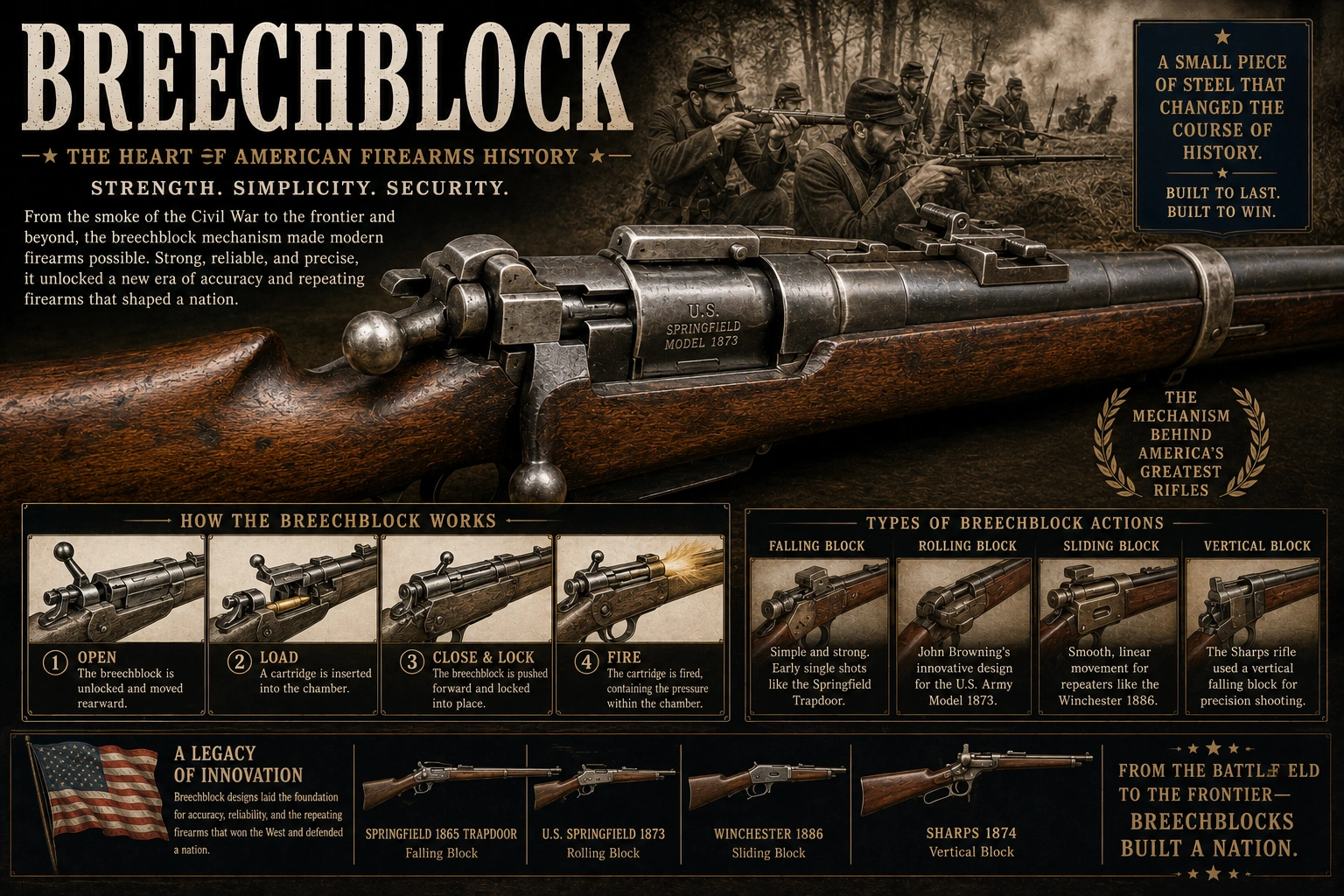
Breechblock Firearms is part of the Gun Collectors Club American Firearms Encyclopedia. These entries connect mechanical design, historical use, production evolution, and collector evaluation into a single reference system.
This page is written as a practical collector reference: what the subject means, where it fits in firearms history, why it matters, and how it connects to other encyclopedia entries on the site.
When collectors understand the mechanism, the context, and the era, the firearm becomes more than an object — it becomes evidence.
What a Breechblock Does
The breechblock is the part of a firearm that closes and supports the rear of the chamber during firing. In breechloading firearms, it is central to safety, strength, extraction, and overall design.
Collectors encounter breechblock design most often when studying single-shot rifles, military conversions, falling blocks, rolling blocks, and transitional arms from the black-powder era.
Falling Blocks, Rolling Blocks, and Trapdoors
Different breechblock systems solved the same basic problem in different ways. Falling blocks move vertically. Rolling blocks rotate into position. Trapdoor systems hinge open. Each design reflects its era, cartridge, manufacturing capability, and military or sporting purpose.
From Civil War Arms to Metallic Cartridges
Breechblock history belongs naturally beside Civil War firearms, early cartridge arms, Sharps rifles, Springfield trapdoor rifles, and the broader repeating-arms story. These systems show the transition from muzzleloading to practical metallic-cartridge firearms.
Collector Perspective
Collectors should examine breechblock fit, hinge wear, lockup, extractor condition, markings, refinishing, chamber alterations, and whether the firearm was converted or built originally for its cartridge.
| Collector Question | Why It Matters |
|---|---|
| What breech system is used? | Falling block, rolling block, trapdoor, and other systems define category. |
| Was it converted? | Conversions can be historically important but must be described correctly. |
| Is lockup tight? | Mechanical condition is central to safety and collector confidence. |
| Are markings intact? | Military and arsenal markings help place the firearm in history. |
Encyclopedia Insight
The breechblock is the hinge between old and modern firearms.
When firearms moved from muzzleloading to breechloading, the breechblock became one of the most important pieces of engineering in gun history. It is where pressure, safety, and design all meet.
Related Encyclopedia Entries
Build Your Reference Shelf
Encyclopedia-style collecting works best with good books, careful photography, magnification, and a slow research process. I keep a curated list of reference books and collector tools for this kind of work.
Shop My LibraryAs an Amazon Associate I earn from qualifying purchases.

About Greg Cook
Greg Cook writes about firearms collecting, personal history, and the stories behind interesting guns. His Army MOS was 76Y, Unit Armorer, and he brings that practical background to his collector articles.