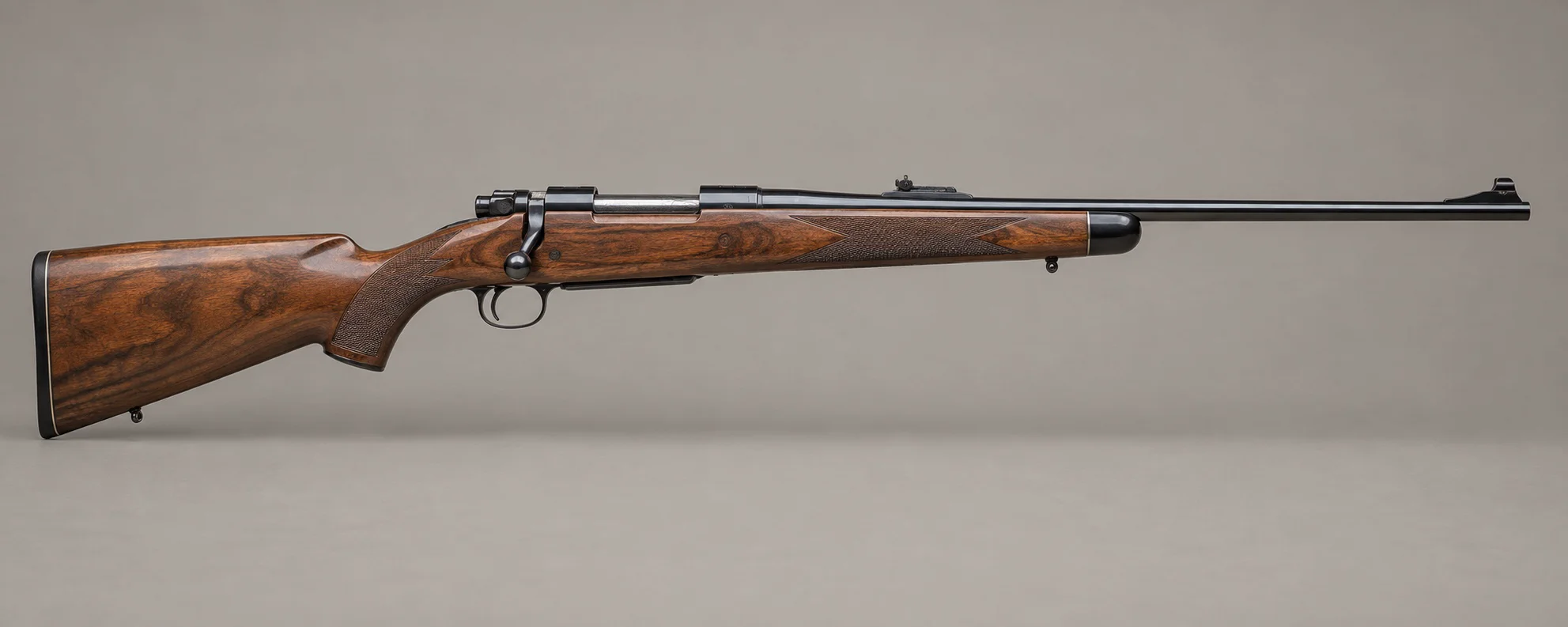
Winchester Model 70
Pre-64 Serial Number Lookup
Enter your rifle’s serial number to estimate its year from Winchester’s published year-end serial table.
Your estimated year will appear here.
Source: Winchester Repeating Arms manufacturing-date table, Model 70 (PDF page 30). Dates are approximate; serial numbers alone do not confirm a rifle’s originality or Pre-64 configuration.
Collector disclaimer: Educational reference only—not an appraisal, offer to buy or sell, legal opinion, or gunsmithing manual. Verify every firearm is unloaded before handling. Confirm model-specific claims against published references, factory records when they exist, and careful hands-on inspection before you buy, insure, or represent a rifle as Pre-64.
Collector Quick Read
| Question | Practical answer |
|---|---|
| What made Pre-64 famous? | Controlled-round-feed claw extractor, blade ejector, forged/machined character, cut checkering, and classic stock work—not the slogan alone. |
| First physical check? | Look at the bolt: long Mauser-style claw extractor = controlled round feed (classic Pre-64 action). Small rotating extractor / push-feed bolt face = later design language. |
| Serial alone enough? | No. Use serial for era estimate, then confirm features, originality, and configuration. |
| Cody letter for Model 70? | Very limited. Cody’s May 2024 ranges PDF lists Model 70 SNA date records only for serials 49135–54805—configuration data not available. See limitation box below. |
| Best first buy habit? | Photograph serial, bolt/extractor, floorplate, stock fit, sights, screw slots, and any extra holes before negotiating. |
Why the Model 70 Is the Pre-64 Dividing Line
Few American sporting rifles carry a collector dividing line as sharp as the Winchester Model 70. When collectors say “Pre-64 Winchester,” they are often thinking first of this bolt gun—the rifle Winchester itself marketed as “The Rifleman’s Rifle” in period advertising (a nickname later cemented in collector speech and in Roger C. Rule’s well-known Model 70 study of the same title).
Documented framing (not romance): Winchester introduced the Model 70 in the mid-1930s as a refinement of the earlier Model 54. Period and museum writing commonly place introduction in 1936, with commercial sales following shortly thereafter. NRA Museums writing (Philip Schreier) summarizes the redesign goals clearly: better suitability for telescopic sights, a redesigned bolt handle and safety, and a stronger sporting-rifle package built around a Mauser-inspired claw-extractor action.
As the broader history of Winchester sporting arms shows, the 1964 manufacturing change did not invent collector interest overnight, but it made differences easy to see and feel. Earlier rifles are associated with forged receivers, machined small parts, cut checkering, and the controlled-round-feed action. Later production shifted toward manufacturing economies that collectors still debate—serviceable hunting rifles for many users; a different collector category for most Model 70 specialists.
This article is the identification companion to Gun Collectors Club’s broader Pre-64 Winchester collecting guide. That guide covers the era and several models. Here we stay on one practical question:
How do you tell a true Pre-64 Model 70 action and period configuration from a later gun—or from a later gun wearing a Pre-64 story?
Controlled-Round Feed vs Push Feed: What to Look for on the Bolt
If you remember one Model 70 ID habit, make it this: open the bolt and study the extractor.
Controlled-round feed (classic Pre-64 language)
On the classic Pre-64 Model 70, the cartridge rim is captured by a long, non-rotating Mauser-style claw extractor as the round rises from the magazine. The case is controlled on its trip into the chamber. Ejection on these actions is associated with a fixed blade ejector working through a slot in the bolt face—not a spring plunger in the bolt face.
What you should see (visual ID):
- A long, flat spring-steel claw extractor running along the right side of the bolt body
- A bolt face arranged for that claw’s engagement of the rim
- Blade-ejector architecture (inspect carefully; do not force parts)
This claw is the feature most collectors point to when they say “Pre-64 Model 70 action.” It is also the feature visible in the deluxe/Super Grade–style photographs accompanying this article.
Push feed (post-1964 redesign language)
The redesigned Model 70 of 1964 moved to a push-feed system: a smaller extractor that engages as the bolt closes over the case, and typically a plunger ejector in the bolt face. NRA Museums writing and long-standing collector references treat that extractor/ejector change as a central part of the Pre-64 vs later conversation.
Collector caution: Modern Winchester Model 70 production later reintroduced controlled-round-feed Classic-style rifles. A claw extractor on a modern Model 70 does not make the rifle a 1936–1963 New Haven Pre-64. Always combine extractor type with serial era, markings, stock/bottom-metal details, and overall configuration.
Pre-64 Identification Cues Beyond the Extractor
Treat the rifle as a system. Serial number + extractor + stock + bottom metal + sights + screws should tell one coherent story.
Action and receiver habits
Established collector/museum descriptions of Pre-64 Model 70s emphasize:
- Forged/machined receiver character (vs later production economies)
- Two forward locking lugs
- Coned breech feeding geometry in the classic design tradition
- Three-position wing safety on the bolt sleeve (a Model 70 hallmark across eras—confirm style against the claimed period; early safeties differ from later “dog-leg” levers)
Postwar Pre-64 receivers are commonly drilled and tapped for scope mounts. Extra holes, filled holes, or mismatched base patterns still matter for originality even when drilling was period-correct.
Bottom metal
- Standard Pre-64 sporting rifles: typically steel trigger guard and hinged floorplate assemblies in collector descriptions
- Featherweight: widely described in collector references as using aluminum trigger guard / floorplate (and aluminum or later plastic buttplate), with a lighter 22-inch barrel package introduced in the early 1950s
- Super Grade: floorplate commonly stamped “SUPER GRADE” (or “-SUPER GRADE-”) on documented examples—verify the stamp style and do not treat aftermarket engraving as factory proof
Aluminum bottom metal on a Featherweight is a trim cue, not automatic Pre-64 proof by itself. Confirm the bolt/extractor and serial era.
Stock and checkering
Pre-64 collector preference leans toward cut checkering, correct wood-to-metal fit, and stock lines that match the cataloged trim:
- Standard: checkered walnut pistol-grip stock; practical field lines
- Super Grade / deluxe: higher-figure walnut, cheekpiece on many examples, ebony or black forend tip, grip cap, finer checkering patterns
- Monte Carlo comb lines appear on deluxe/target-oriented stocks; treat silhouette as a trim clue, not a year stamp
Red flags: wood sanded below the metal line, glossy modern finishes filling checkering, re-cut diamonds, proud or sunken tang fit, or a modern synthetic/custom stock sold as “original Pre-64 wood.”
Sights and small parts
Period iron sights vary by trim and era. Hooded front sights and adjustable rear leaves are common on sporting rifles and appear on the deluxe examples photographed for this article. Super Grade references often mention Redfield sourdough front sights on factory guns—another detail to verify against the specific rifle, not assume from a photo alone.
Inspect screw slots. Buggered slots usually mean repeated amateur disassembly. Scope bases, plugged holes, replacement pads, and non-factory sling work are common user changes; disclose them in any collector file.
Major Trim Lanes: ID, Not Romance
WACA’s Model 70 overview lists familiar Pre-64 lanes including Standard Grade, Carbine, Featherweight, Alaskan, Westerner, and Super Grade, plus special-order wood and engraving. Gun Digest–style summaries add National Match, Target, Varmint/Bull, African, and Featherweight Super Grade as cataloged collector categories. Use these as identification lanes, not auction adjectives.
| Lane (collector language) | Typical ID notes (verify on the gun) | Common pitfall |
|---|---|---|
| Standard | 24" class barrel on many chamberings; steel bottom metal; field stock | Paying Super Grade money for nice wood alone |
| Carbine | Shorter (~20") barrel; earlier production window in many references | Cut-down standard barrels sold as carbines |
| Featherweight | ~22" barrel; aluminum guard/floorplate; weight-saving stock work | Swapped aluminum bottom metal on a standard rifle |
| Super Grade | Deluxe wood, cheekpiece often, forend tip, grip cap; floorplate stamp | Restocked standards with fancy aftermarket wood |
| Target / Varmint / Match | Heavier barrels, target stocks, sight/block arrangements | Sporterized target guns mislabeled as rare field grades |
| Alaskan / Westerner / African | Magnum-oriented barrel/chambering packages in late Pre-64 catalogs | Caliber claims without proof marks / barrel marking photos |
Interpretation vs fact: Production counts for scarce sub-variants circulate widely in dealer copy. Unless you have a cited primary tally in hand, treat “only XXX made” claims as unverified marketing until confirmed in a published Model 70 reference (Rule, Whitaker, etc.) or factory documentation.
What Cody Can (and Cannot) Letter for Model 70
Cody Firearms Records — Model 70 Limitation Box
Source: Buffalo Bill Center of the West / Cody Firearms Records Office, Available serial number ranges PDF (May 2024).
For Winchester Model 70, Cody lists:
- Serial Number Application (SNA) date records ONLY for serials 49135–54805
- Configuration data not available for that Model 70 listing
SNA records, when present, relate to the date a serial was applied to a receiver—not a full shipping configuration letter of the kind collectors sometimes expect from early lever-gun warehouse ledgers.
WACA’s Model 70 page states bluntly that there are no factory records available for this model in the association’s model summary—consistent with how thin the surviving Cody Model 70 block is.
Practical takeaway: Do not buy or sell a Model 70 on the assumption that “Cody will letter the caliber and grade.” For most serials, that path does not exist. Physical identification and published serial/date tables matter more here than for many earlier Winchesters.
Before ordering anything, re-check Cody’s current Winchester ranges PDF and the Winchester records page.
For the broader factory-letter process and what letters can and cannot prove across makers, see Factory Letters for Collectors.
For a contrasting Winchester record system, see the Model 21’s final inspection and order-sheet records. The Model 21’s configuration records should not be confused with the limited Model 70 SNA-date records described above.
Serial Numbers: Use Them Carefully Without Inventing Charts
Do not treat a blog table as factory gospel. Winchester Repeating Arms’ own scanned customer-service date document warns that there is no single, totally accurate original database of serials from 1866 forward, and that published year tables are approximate research aids.
What established sources do show for Model 70
Winchester’s published Model 70 year-end serial table (customer-service compilation) shows:
- Early production beginning in the mid-1930s (table starts 1935: 1–19)
- 1963 ending at 581,471
- 1964 beginning a new block at 700,000 (table: 700000–740599 for 1964)
Roger C. Rule’s The Rifleman’s Rifle, as summarized in Dave Anderson’s GUNS Magazine article, likewise treats 581,471 as the highest known Pre-64 serial, with that receiver dated mid-October 1963 in Rule’s account.
Pre-64 Model 70 production is commonly cited in collector literature—and appears in Winchester Repeating Arms’ published year-end serial tables—as ending at serial 581,471, with post-1963/1964 production associated with a higher serial block beginning at 700,000. Winchester’s own preface treats such tables as approximate aids, not a perfect ledger. Confirm the physical features. Do not invent edge-case “factory exceptions” without documentation.
Casual shorthand like “under 700,000” is not a substitute for feature inspection. A serial in the right neighborhood still needs the claw extractor and coherent Pre-64 details.
Use the serial-number estimator above for an approximate year, then compare Winchester’s published date table with a dedicated Model 70 reference. Photograph the rifle’s features and reconcile its configuration with the estimated era.
Common Mistakes
Buying the phrase “Pre-64” instead of the bolt. Sellers reuse the label. You need the claw extractor (or a documented modern CRF Classic—with modern markings—clearly disclosed as modern).
Trusting serial charts alone. Charts estimate era. They do not prove originality, grade, or that parts match.
Assuming Cody will save a weak inspection. For Model 70, Cody usually cannot. See the limitation box.
Calling every fancy walnut rifle a Super Grade. Look for the floorplate stamp, forend tip/grip-cap package, swivel bases, and coherent deluxe features—or call it “deluxe-style” until proven.
Ignoring scope work and restocks. Period-correct drilling is one thing; butchered holes, filled bridges, and replacement stocks are another. Price accordingly.
Mistaking push-feed polish for Pre-64 blue. Deep polish and attractive wood appear on later rifles too. Extractor first.
Inventing provenance. No serial, year, or ownership story should be attached to a photograph unless it is marked on the gun or documented in paperwork you can cite.
Paying rare-caliber money without barrel proof. Photograph caliber marking, proofs, and chambering claims in the same light as the serial.
Photo Gallery / Visual Examples
The following photographs are included as visual identification examples of a deluxe / Super Grade–style Winchester Model 70. They show the kind of features collectors study on premium Pre-64 sporting rifles. No serial number, year, or provenance is marked on these images; none is invented here.
Photo A — Right-side full profile
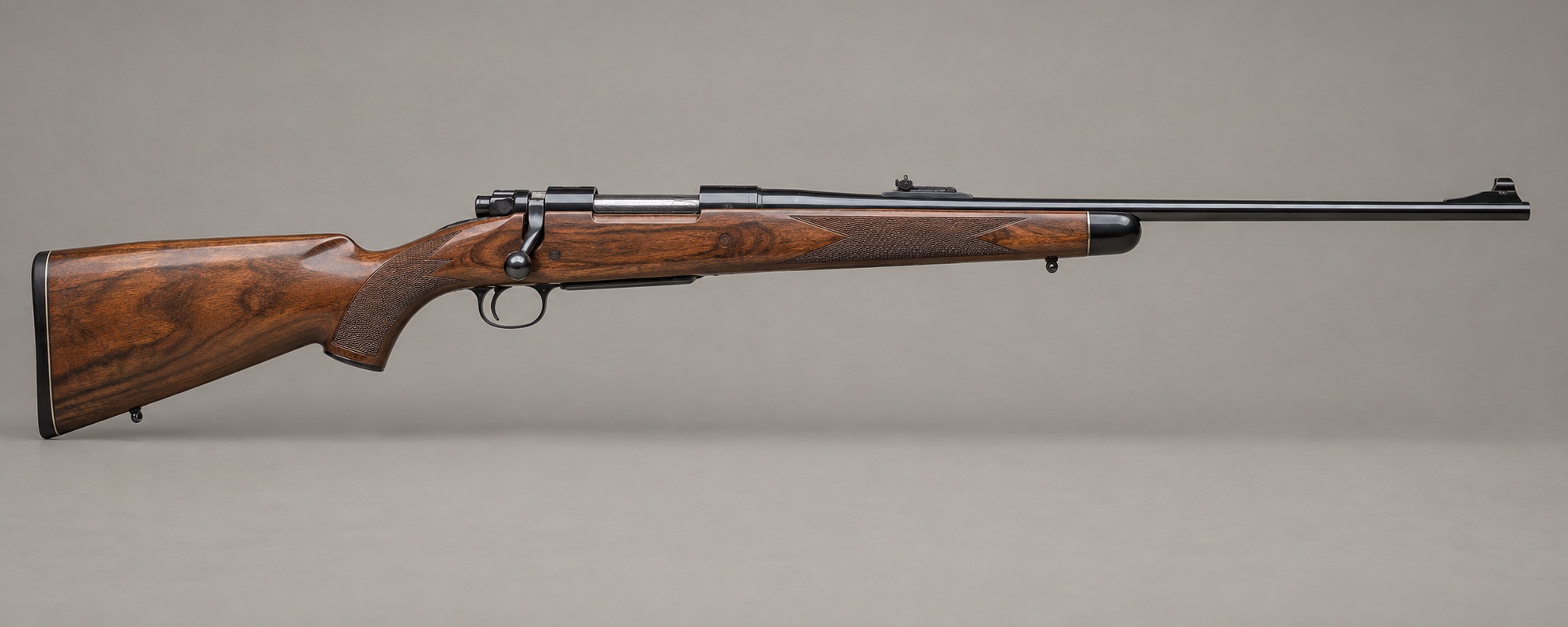
Figure 1. Right-side profile of a deluxe/Super Grade–style Model 70: figured walnut, Monte Carlo comb/cheekpiece silhouette, ebony forend tip with white spacer, checkered grip and forend, polished blue metal, hooded front sight, adjustable rear sight, three-position wing safety, and a long claw extractor visible on the bolt.
Photo B — Alternate right-side profile
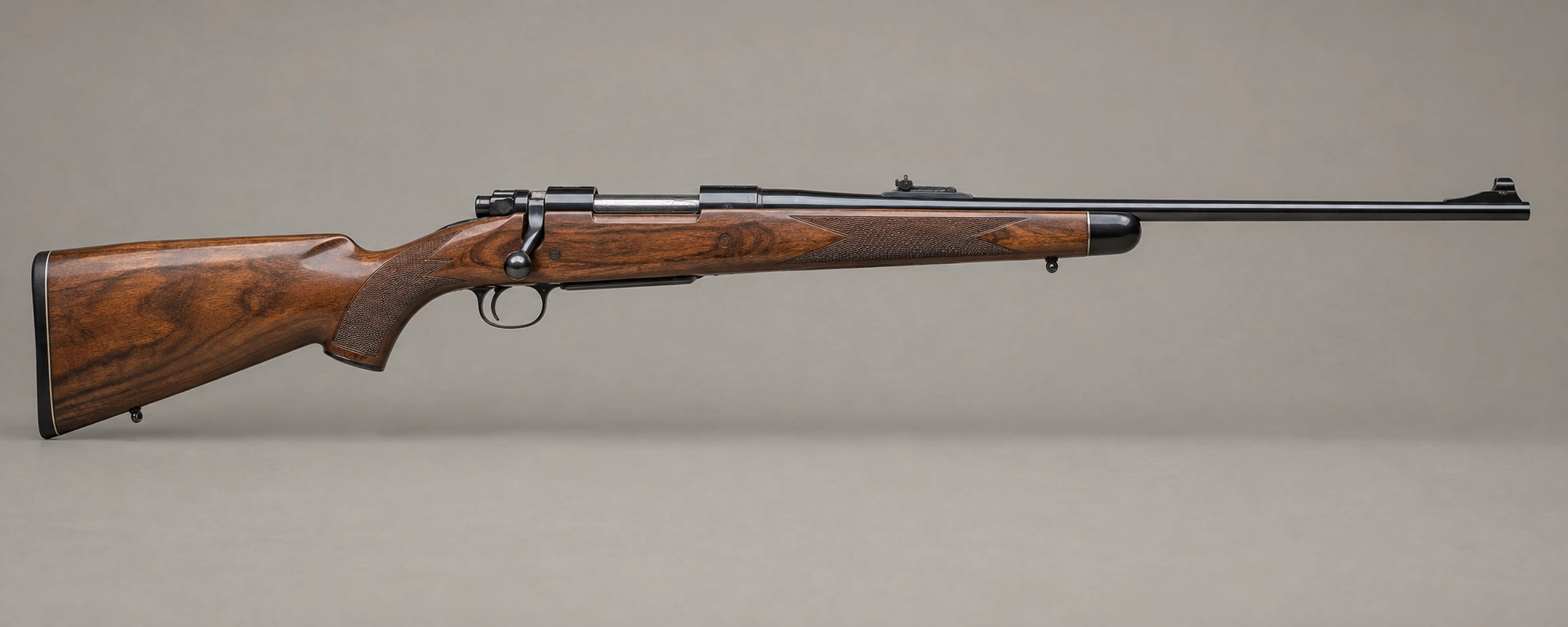
Figure 2. Second right-profile view of the same deluxe presentation language: highly figured stock, white-spaced ebony tip and buttplate spacer, sling-swivel studs, claw extractor on the bolt body, and classic iron-sight sporting barrel contour.
What these photos help teach
- Claw extractor visibility in ordinary side light—your first Pre-64 action check
- Deluxe stock vocabulary: figure, Monte Carlo line, ebony tip, white spacers, wrap of checkering
- Sight package typical of a dressed sporting rifle (hooded front, adjustable rear)
- Three-position wing safety at the bolt shroud
What they do not prove alone: exact catalog grade without floorplate stamp close-ups, exact year without a documented serial, or factory originality of every screw and sight. Add detail photos (floorplate stamp, serial, proofs, muzzle, tang fit) before any “Super Grade, 19XX” claim in a listing or collection record.
Photo credit: Collector example photographs courtesy Gun Collectors Club / user collection. Identification examples only; serial and provenance not shown.
Collector Takeaway
Open the bolt first. A long claw extractor and coherent Pre-64 stock, bottom-metal, and sight details matter more than a seller’s label or a blog serial chart. Treat 581,471 / 700,000 as commonly cited era markers from published Winchester tables and Model 70 literature—not a substitute for hands-on ID—and remember Cody’s Model 70 lettering window is narrow (SNA dates only for 49135–54805, no configuration data). Photograph the gun before you negotiate, and do not invent provenance the metal does not show.
Related Reading
- The Complete Guide to Collecting Pre-64 Winchesters
- Winchester Firearms History
- Winchester Model 94 Collector’s Guide
- Gun Serial Numbers and Firearm Identification Guides
- Factory Letters for Collectors
Build Your Reference Shelf
Library articles are strongest when paired with good books, careful photos, magnification, and a patient research process. I keep a curated list of reference books and collector tools for this kind of work.
Shop My LibraryAs an Amazon Associate I earn from qualifying purchases.

About Greg Cook
Greg Cook writes about firearms collecting, personal history, and the stories behind interesting guns. His Army MOS was 76Y, Unit Armorer, and he brings that practical background to his collector articles.
Sources
- Buffalo Bill Center of the West — Winchester factory records page
- Cody / Center of the West — Available serial number ranges (May 2024 PDF)
- Jacob Newman — “The Winchester Records Synopsis…” (Aug. 18, 2026)
- Winchester Repeating Arms — Firearms Manufacturing Dates by Serial Number and Year (customer-service compilation PDF)
- Winchester Arms Collectors Association — Model 70 overview
- Philip Schreier / NRA Museums — “The Classics: Winchester Model 70,” Shooting Illustrated
- Dave Anderson — “Pre-’64 Winchester Model 70’s,” GUNS Magazine (cites Roger C. Rule, The Rifleman’s Rifle)
- Gun Digest values summary — Pre-1964 Model 70 styles list
- GCC — Pre-64 collecting guide
- GCC — Winchester history hub