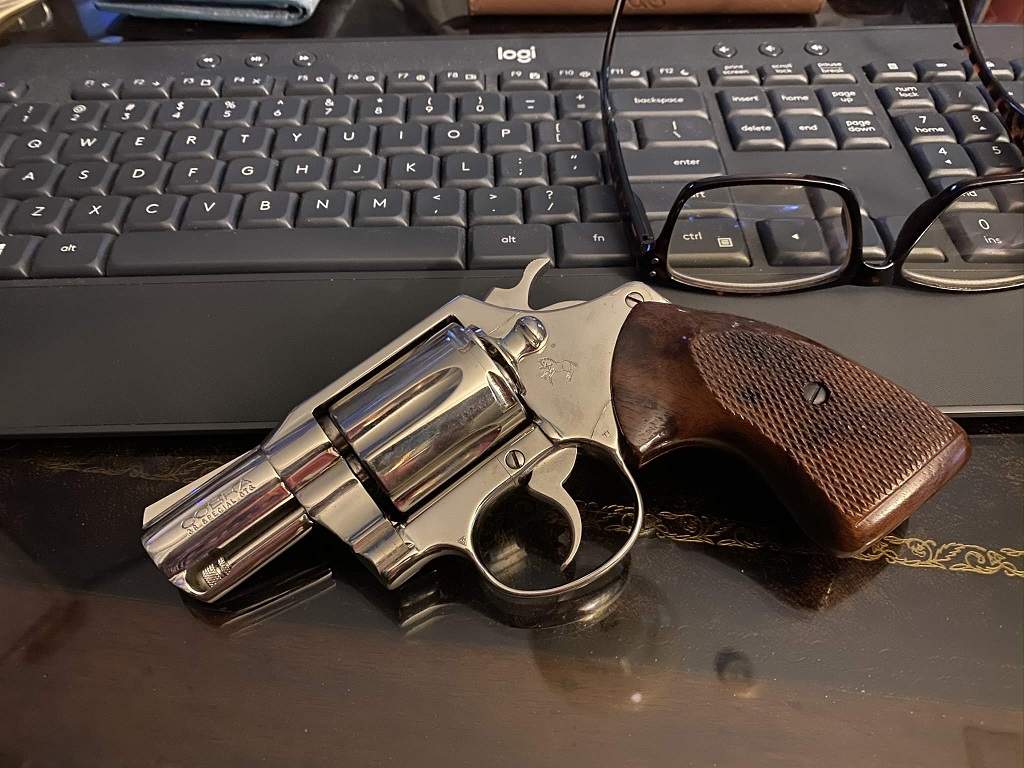
After many years of writing about collectible firearms, one question has followed me almost everywhere: which old gun did I actually carry the most? I understand why people ask. A gun collector’s cabinet often holds practical tools, sentimental favorites, mechanical curiosities, and irreplaceable pieces of family or personal history. Sometimes those categories overlap.
This article is not a recommendation that anyone carry an older firearm for personal protection. It is a collector’s reflection on why older guns once made sense, why some still appeal to experienced owners, and why modern handguns have changed the conversation. The subject deserves more nuance than a simple yes or no.
Why the Question Keeps Coming Up
Older Colt revolvers, compact automatics, and steel-frame pistols have a way of drawing attention. They are familiar to people who grew up around classic American firearms, and they often carry a visual honesty that newer handguns do not try to imitate. They look like mechanical objects rather than molded products.
I have often said that a carry gun has to be something a person will actually carry. It must be comfortable enough to be present, concealable enough to fit ordinary life, and familiar enough that the owner can operate it confidently. That statement describes the practical side of the issue, not an endorsement of any particular old gun.

Situational Awareness and the Old Colt Cobra
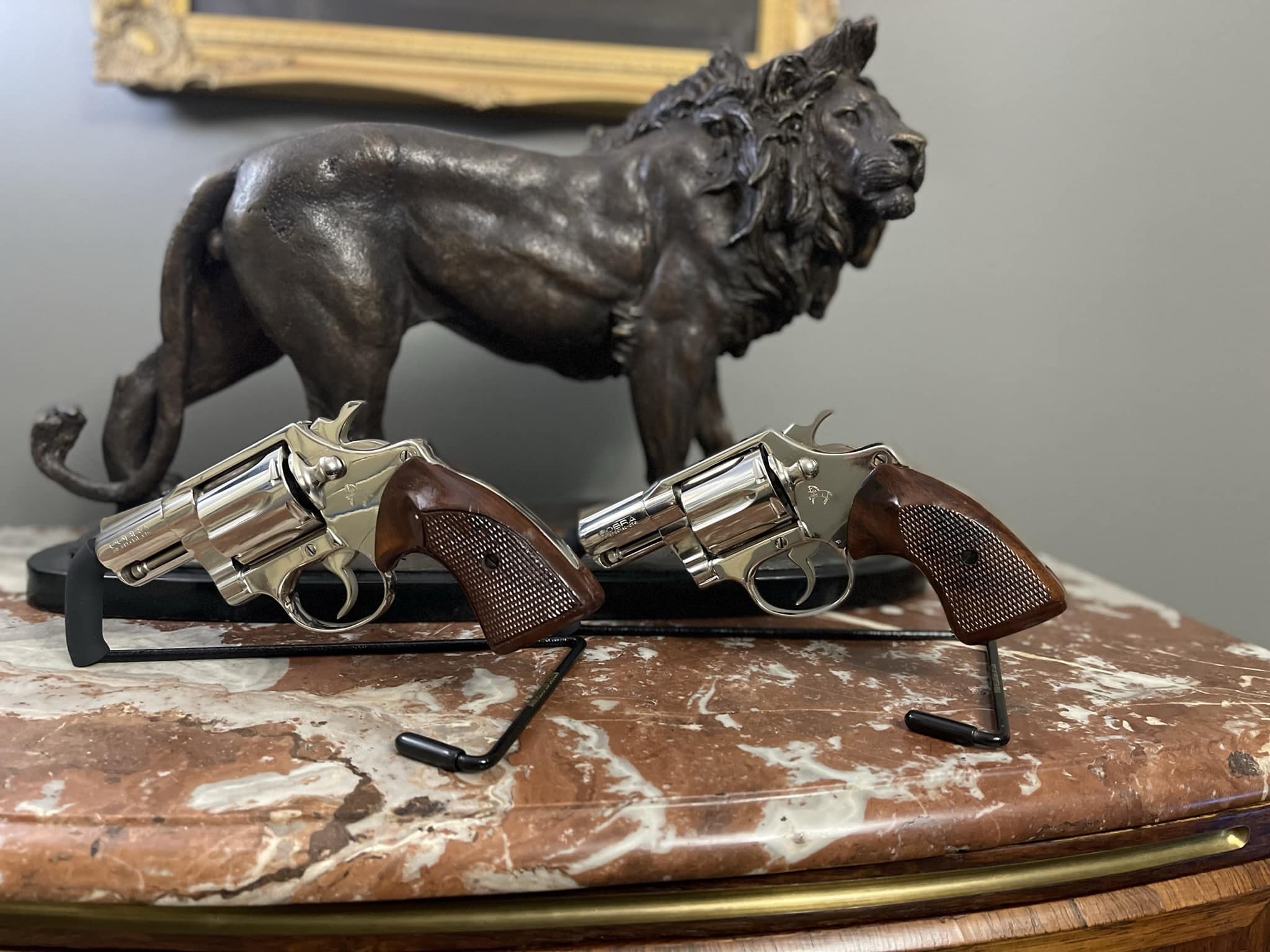
Situational awareness has always shaped how I think about personal protection. There are times and places where a small, lightweight revolver such as my 1970s Colt Cobra may seem appropriate to me, mostly because it is familiar, concealable, and easy to keep with me without much fuss.
That said, this is a collector’s observation, not carry advice. The Cobra belongs to a different generation of defensive handguns, and anyone evaluating an older firearm has to consider age, condition, parts availability, ammunition choice, training, legal responsibilities, and whether a modern handgun would be the more practical tool.
For many years, several older Colt handguns filled that role for me at different times. Some were light. Some were thin. Some had triggers and proportions that felt natural after decades of use. They were not chosen because they were fashionable. They were chosen because they fit life at the time.
The Appeal of an Older Handgun
The best older handguns were not primitive. Many were carefully engineered, beautifully machined, and intended for serious use. A lightweight Colt Cobra, a Commander-size 1911, a small-frame Smith & Wesson, or a compact Colt automatic may feel dated on paper while still making perfect mechanical sense in the hand.
Collectors often appreciate older guns for reasons that are not entirely measurable. The cylinder lockup, the polish of the blue, the shape of the grip frame, the way the sights sit low on the slide, and the balance of steel or alloy all contribute to the experience. Those qualities matter to enthusiasts even when they do not show up on a modern specification chart.
Some of the appeal also comes from familiarity. A person who has owned and used the same firearm for decades may have more confidence in that specific gun than in a newer design they barely know. Familiarity is not the same thing as superiority, but it is a real factor in why some people remain attached to older firearms.
Pros and Cons, Without the Sales Pitch
The honest answer is that older guns have advantages and disadvantages. A collector should be willing to discuss both. Romanticizing old firearms is easy. Evaluating them honestly is more useful.
Potential Advantages
- Slim profiles that may conceal well.
- Excellent balance and natural pointing qualities.
- Simple manual of arms on many designs.
- Long familiarity for owners who have used them for decades.
- Traditional craftsmanship and strong emotional connection.
- Historical significance that makes them rewarding to own and study.
Potential Drawbacks
- Limited parts availability as models age.
- Small sights compared with modern defensive pistols.
- Lower ammunition capacity in many designs.
- Possible ammunition sensitivity, especially in older automatics.
- Holster wear, sweat, and daily handling that can reduce collector condition.
- Replacement difficulty if the firearm is damaged, stolen, or held as evidence after an incident.
The Modern Handgun Has Changed Expectations
My primary carry gun today is a modern SIG Sauer P320. That change is not a rejection of classic firearms. It is an acknowledgment that the defensive handgun market has evolved. Modern pistols commonly offer better sights, improved corrosion resistance, higher capacity, consistent factory support, and broad compatibility with current holsters and accessories.
Modern defensive ammunition has also influenced expectations. Many newer handguns are designed around current bullet shapes, pressures, and feeding profiles. Older semi-automatics may run beautifully with ball ammunition yet require careful testing with modern hollow points. Revolvers avoid some feeding issues, but they bring their own tradeoffs in weight, capacity, recoil, and reload speed.
The point is not that modern is automatically better in every possible way. The point is that modern equipment has shifted the baseline. What seemed perfectly normal in 1975 may feel limited in 2026, especially to people trained around contemporary pistols.
Condition, Value, and the Collector’s Dilemma
A working gun can become a collector gun gradually. One day it is simply a reliable sidearm. Years later, the model is discontinued, parts are scarce, prices have risen, and the same gun has become too nice or too personal to treat casually.
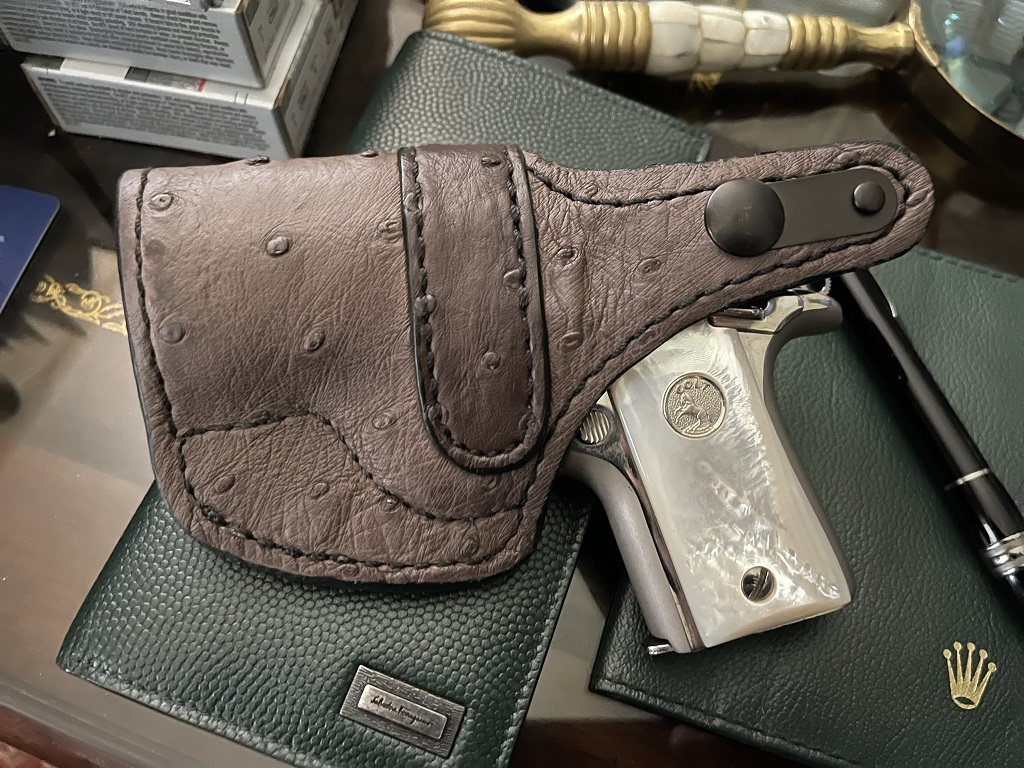
That transition changes the way I think about older firearms. A holster line on a common working gun may be honest wear. The same mark on a high-condition collectible Colt may be expensive damage. Sweat can affect finish. Leather can trap moisture. A sharp front sight can cut into a holster. Repeated carry can loosen screws, mark grips, and polish edges that can never be unpolished.
There is also a practical legal reality that collectors sometimes overlook. A firearm used in a defensive incident may be taken and held as evidence. That possibility alone is enough for some owners to keep collectible or sentimental guns out of daily defensive rotation.
Reliability Means More Than “It Worked Last Time”
Older guns should not be judged only by nostalgia. Springs age. Magazines wear. Extractors, firing pins, screws, and small internal parts can become difficult to source. Alloy frames can have different service-life considerations than steel frames. A gun that has been perfectly reliable for casual range use may still deserve careful inspection before anyone thinks of it as a serious defensive tool.
That does not mean older firearms are unreliable. Many are extraordinarily durable. But reliability is not a memory; it is a current condition. The gun in the hand today is the one that matters, not the reputation it earned forty years ago.
Training and Proficiency Still Matter
One advantage of a familiar old gun is that the owner may know it well. One disadvantage is that familiarity can become assumption. Small sights, heavier triggers, manual safeties, heel magazine releases, short sight radius, strong recoil in light frames, and limited capacity all require realistic practice.
I do not often shoot recreationally unless it is competition or serious practice. When I carried a particular firearm regularly, I tried to confirm that both the gun and I still performed acceptably together. That is a personal observation, not a training prescription. The broader lesson is simply that the firearm’s age is only one part of the equation.
Where I Come Down on the Question
I understand why people carry older guns. I also understand why many people stop. A classic handgun can be comfortable, familiar, and reassuring. It can also be valuable, hard to replace, less supported by modern parts channels, and less forgiving than newer defensive designs.
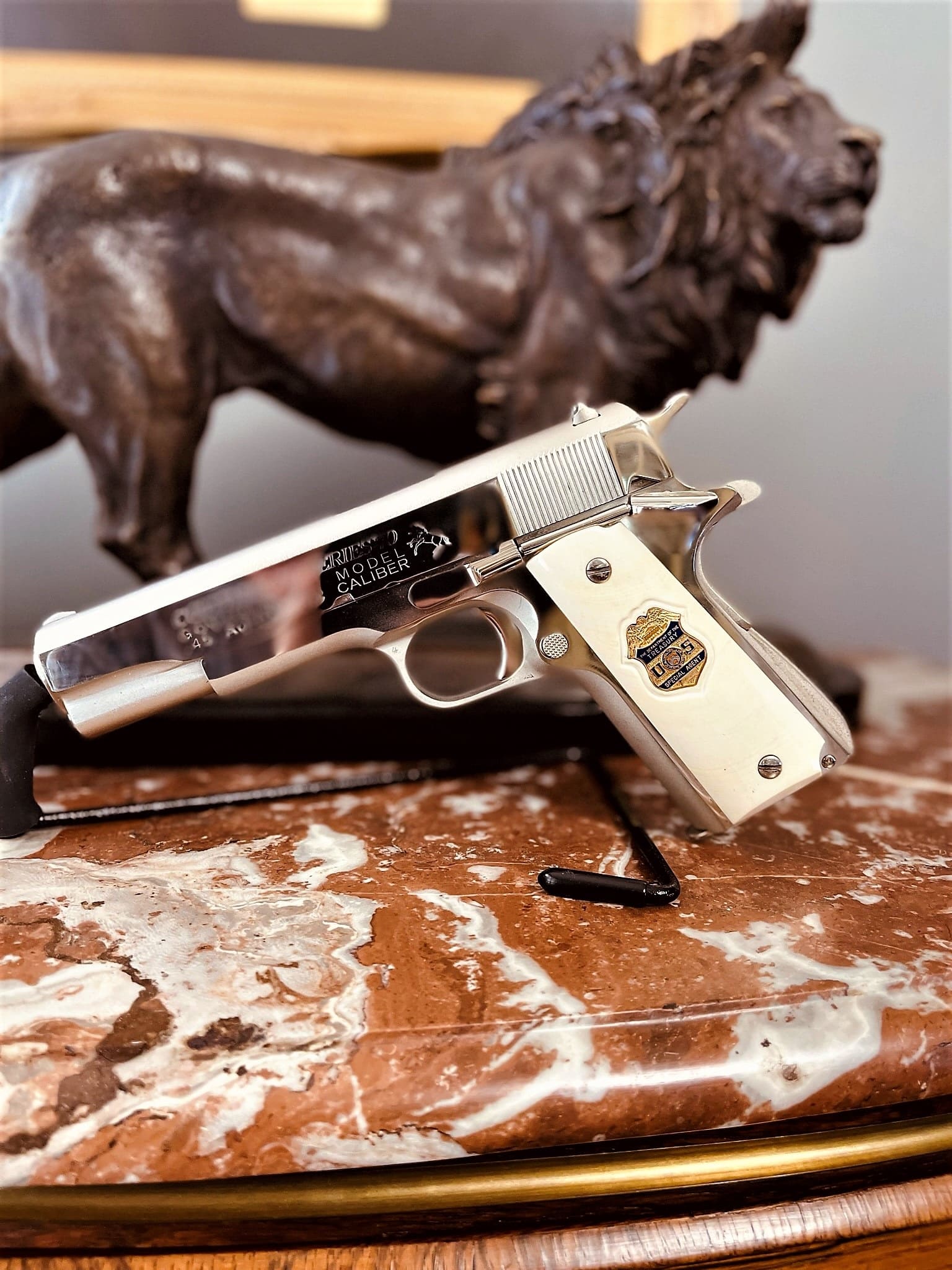
For my own purposes, the older handguns I once carried are now more often appreciated as examples of American design, personal history, and collector interest. They have earned that quieter role. Some still feel wonderful in the hand. Some still carry memories I would not trade. But the fact that an old gun once made sense for me does not mean I would recommend it broadly today.
That is the tone I think a collector site should take. Respect the old guns. Tell the truth about their virtues. Tell the truth about their limitations. Let the reader see the full picture without pretending this is a modern carry recommendation.
Final Thought
The older guns in my collection have already given me more than my money’s worth. Some rode with me during earlier chapters of life. Some now sit where they belong, preserved and appreciated. They are part of a larger story about craftsmanship, utility, aging, and the way a practical object slowly becomes history.
That is why I still enjoy writing about them. Not because everyone should carry one, but because they explain something about the people who owned them, the times that produced them, and the evolution of the American handgun.
From My Bench
If you are setting up your own workspace or maintaining a collection, I keep a curated list of tools, books, cleaning gear, and bench items that fit the way I work.
Collector GearAs an Amazon Associate I earn from qualifying purchases. I only link to products, books, tools, and accessories that fit the editorial purpose of Gun Collectors Club.

About Greg Cook
Greg Cook writes about firearms collecting, personal history, and the stories behind interesting guns. His Army MOS was 76Y, Unit Armorer, and he brings that practical background to his collector articles.