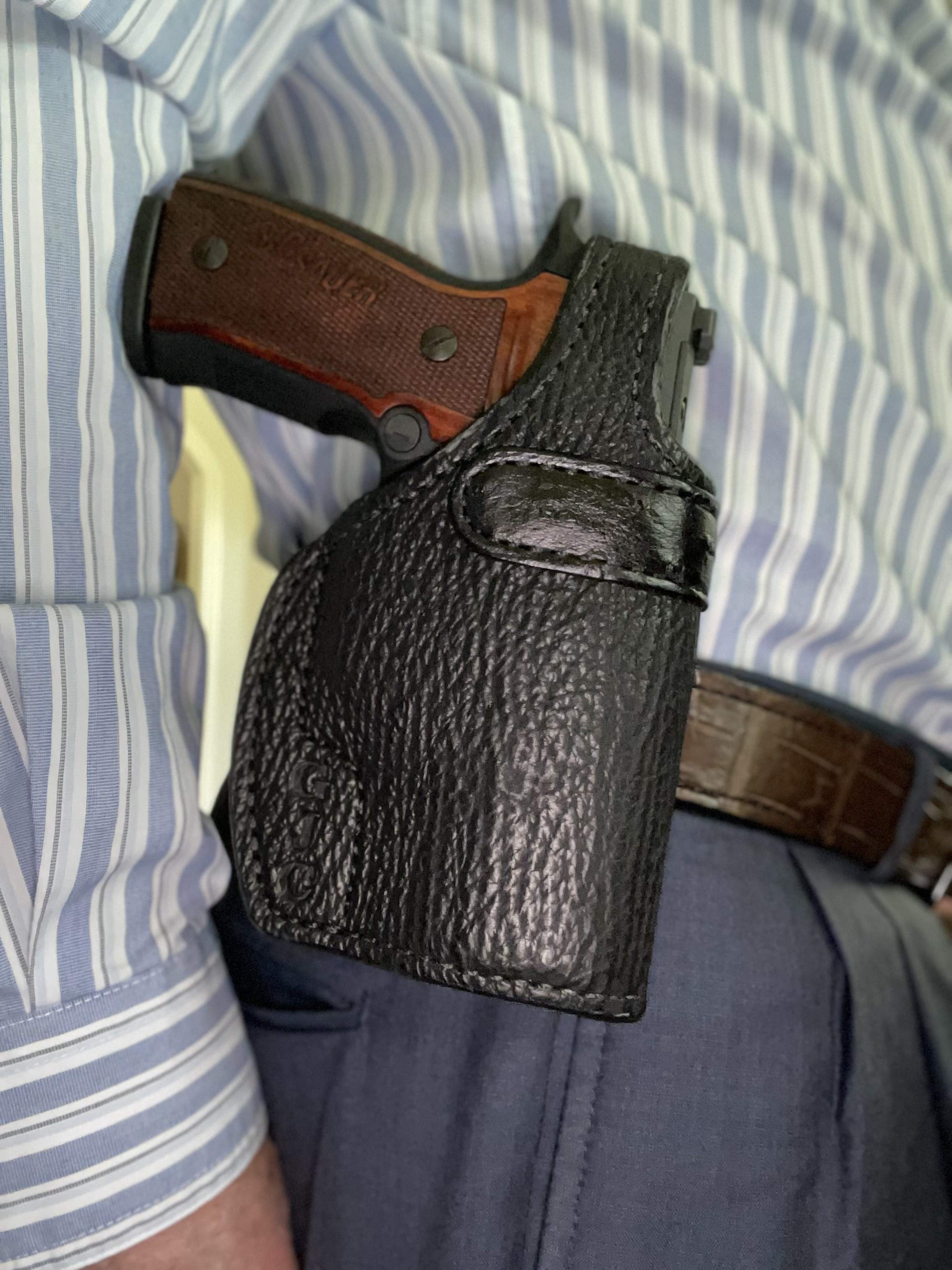
Holster wear is one of those subjects that sounds simple until you start looking closely at collectible guns. A holster can protect a firearm from being dropped, bumped, or handled carelessly. At the same time, the holster itself can become the very thing that rubs, polishes, dulls, or scars the finish.
That is why gun leather belongs in a collector conversation, not just a carry conversation. The leather, the lining, the stitching, the shape, the age, the fit, and even the dirt trapped inside the holster all become part of the story. Sometimes that story adds charm. Sometimes it costs money.
This page is not tactical advice and it is not a general concealed-carry guide. It is a collector's look at how holsters, cases, and leather gear interact with the surface of a firearm over time.
The Basic Problem: Movement Creates Wear
The finish on a gun is not damaged merely because it is placed in leather. Wear usually comes from movement, pressure, grit, moisture, or repeated handling. The trouble is that a holster can create all of those conditions at once.
A very tight holster can wear the finish during holstering and unholstering. A loose holster can wear the finish while the gun moves inside it.
That observation is the center of the issue. Too tight and the leather acts like a polishing block every time the gun goes in or out. Too loose and the gun shifts against the same contact points while carried or moved. The collector is trying to find the narrow middle ground: secure enough to protect the gun, gentle enough not to punish the finish.
Where Holster Wear Usually Appears
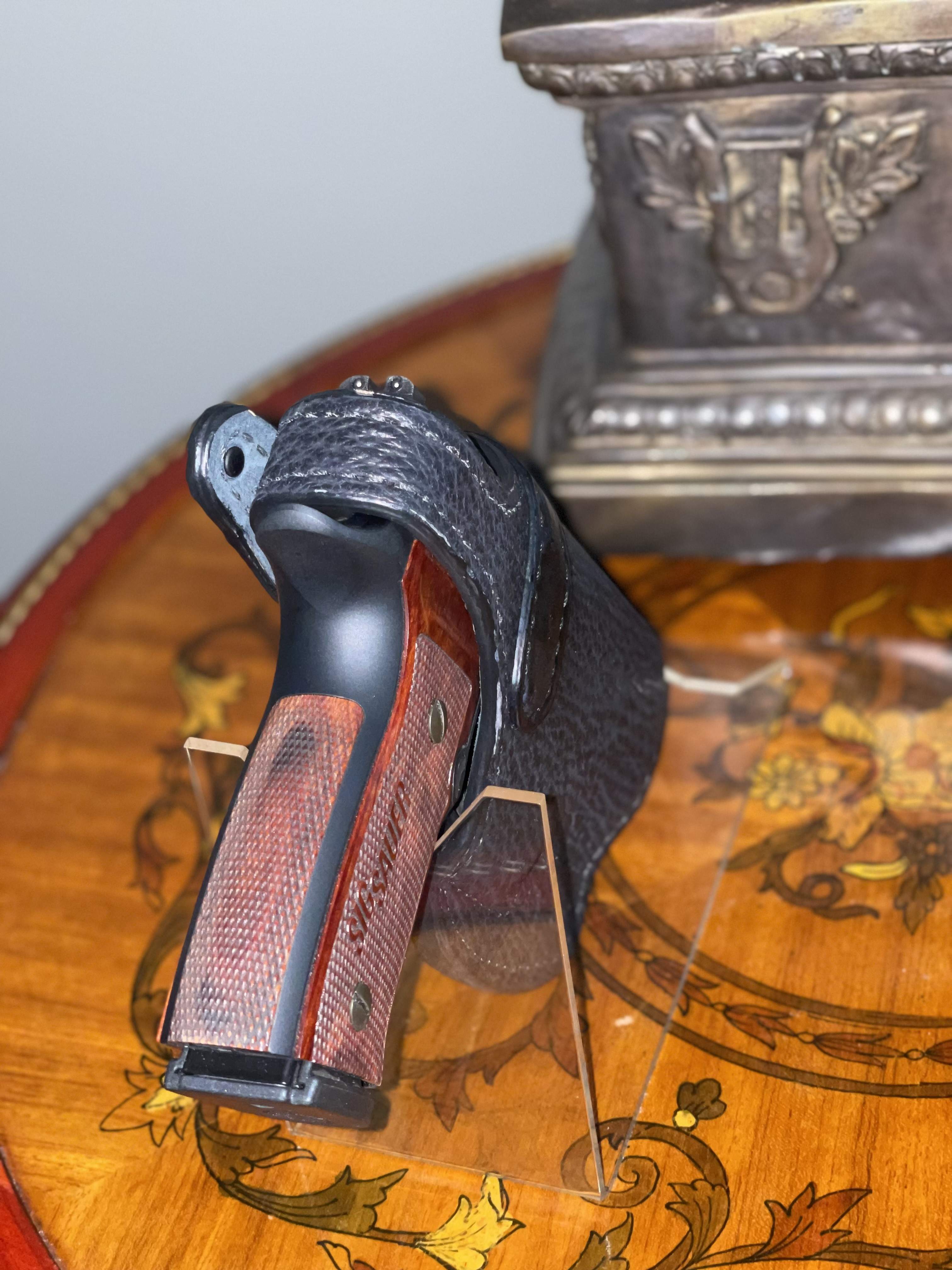
Different firearms show holster contact in different places, but the usual suspects are easy to understand once you look at the shape of the holster. High edges, retention straps, tight mouths, sight channels, cylinder areas, muzzle ends, and frame corners tend to become the pressure points.
On a revolver, the cylinder, barrel, front sight, muzzle, and high spots on the frame often tell the story. On a semi-automatic pistol, the slide flats, muzzle, front sight, trigger guard area, grip frame, and ejection-port area may show repeated contact. Nickel, bluing, case coloring, stainless, parkerizing, and modern coated finishes do not all age the same way, but all can show evidence of friction.
Collectors often describe honest holster wear as part of a gun's story. That can be true. A service revolver or a working sidearm may be more interesting because it shows careful use. But there is a difference between honest age and preventable abrasion from a badly matched holster.

Tight Leather: Good Retention, Real Friction
A new custom holster may arrive tight. That is not automatically bad. A quality maker wants the gun to fit securely, and some break-in is expected. The collector's mistake is forcing a valuable firearm through a rough break-in period without thinking about what the leather is doing to the finish.
Repeated dry draws from a tight holster can polish high points quickly. If the gun is blued, the first signs may appear as brightening at edges or a soft dulling on the slide or barrel. If the gun has a more delicate or historically important finish, the cost of that break-in can be greater than the value of the practice.
When the gun is collectible, I would rather break in the leather carefully than use the gun's finish as the break-in tool. That means slow fitting, clean leather, and stopping when resistance feels like abrasion instead of retention.
Loose Leather: Comfortable, But Not Always Kind
A loose holster feels harmless because the gun slides in easily. But loose leather can be deceptive. If the firearm shifts, rattles, or leans in the holster, the same surfaces may rub all day long. That kind of wear can be less dramatic than a hard draw from a tight holster, but it can be more constant.
Older leather is especially important here. A holster from the 1960s or 1970s may have sentimental appeal and wonderful character, but the fit may no longer match the way it did when new. The leather may have stretched. Stitching may have relaxed. The mouth may have softened. A collector should enjoy the vintage piece without pretending it is still a perfect protective shell.
Suede Lining Helps, But It Is Not Magic
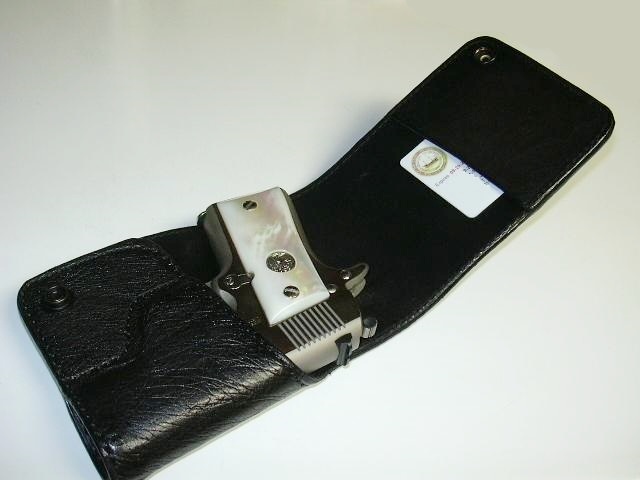
Suede lining is one of the best upgrades I have paid for in custom leather. It cushions the gun and gives the interior a softer surface. On a high-quality holster, lining can make the rig feel more like a protective case than a hard leather shell.
But suede is not magic. It can hold grit. It can trap dust. If sand, lint, or dirty residue gets into the lining, the soft surface becomes a carrier for abrasive material. That is why a suede-lined holster should be treated like a clean storage environment. The lining only helps if it stays clean.

The Hidden Enemy: Grit Inside the Holster
The most dangerous thing in a holster may not be the leather. It may be what the leather carries with it: dust, grit, pocket lint, range debris, metal shavings from a bench, or ordinary dirt from daily use.
Small abrasive particles can do more damage than smooth leather. Once trapped inside the holster, they sit directly between the firearm and the surface that moves against it. This is especially true for pocket holsters, field holsters, and leather used around vehicles, shooting benches, or outdoor conditions.
For a collectible gun, the simplest rule is also the best: do not put a clean gun into a dirty holster, and do not put a dirty holster around a clean gun.
Old Cases Are Part of the Finish Story Too
Cases deserve the same scrutiny as holsters. An old fitted case can look beautiful with a vintage Colt, Smith & Wesson, Browning, or presentation gun, but it may also have compressed lining, old glue, worn corners, exposed fasteners, or abrasive areas that touch the gun.
When I bought an old Colt case for my 1962 Python, the emotional reaction came when the revolver finally sat in the case. The pairing felt right. But a collector still has to separate display value from storage safety. A case can be historically charming and still be a poor long-term storage environment.

Long Gun Leather: Protection, Compression, and Travel
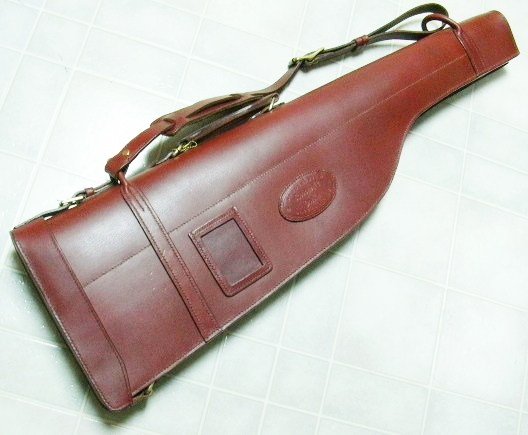
Leather long-gun cases bring another issue into the discussion: pressure over a larger surface. A Leg-O-Mutton case, for example, may protect a broken-down shotgun beautifully during transport. It can also concentrate pressure around the rib, barrels, receiver, forearm, or hardware depending on fit.
For a shotgun that is actually being transported, a fitted case makes sense. For indefinite storage, I would be more careful. Leather, lining, padding, and hardware should be checked, especially if the firearm has a high-polish blue, delicate wood, engraved metal, or sentimental value.
Materials Matter: Cowhide, Shark, Ostrich, Alligator, and More
Different leathers behave differently. Smooth cowhide, sharkskin, ostrich, alligator, elephant, and other exotic materials vary in stiffness, surface texture, thickness, and how they age. The outside of the holster may be exotic and decorative, while the inside may be plain leather, suede, or another lining material.
For finish protection, the interior is usually more important than the show side. A beautiful exotic exterior does not help the gun if the interior is rough, dirty, or poorly fitted. That is one reason I judge custom leather by the inside as much as the outside.
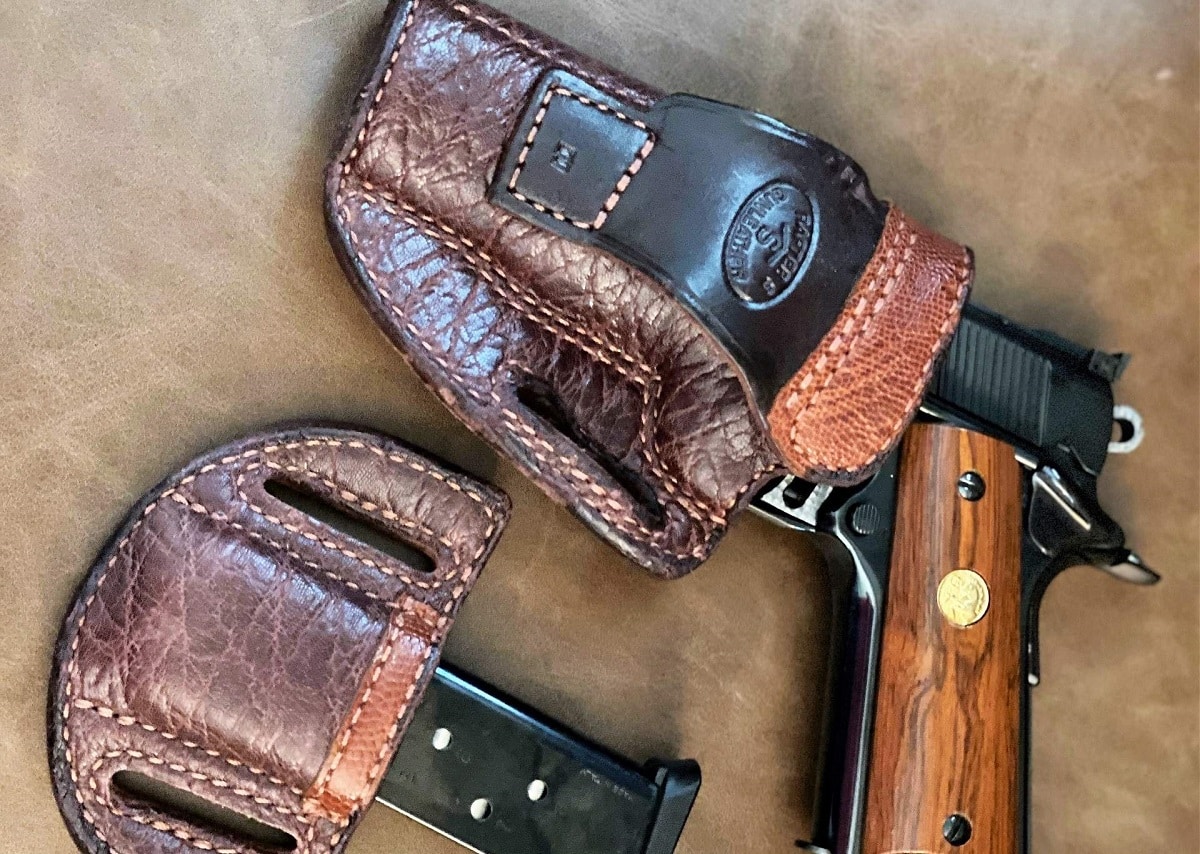
Retention Straps and Snaps Can Mark a Gun
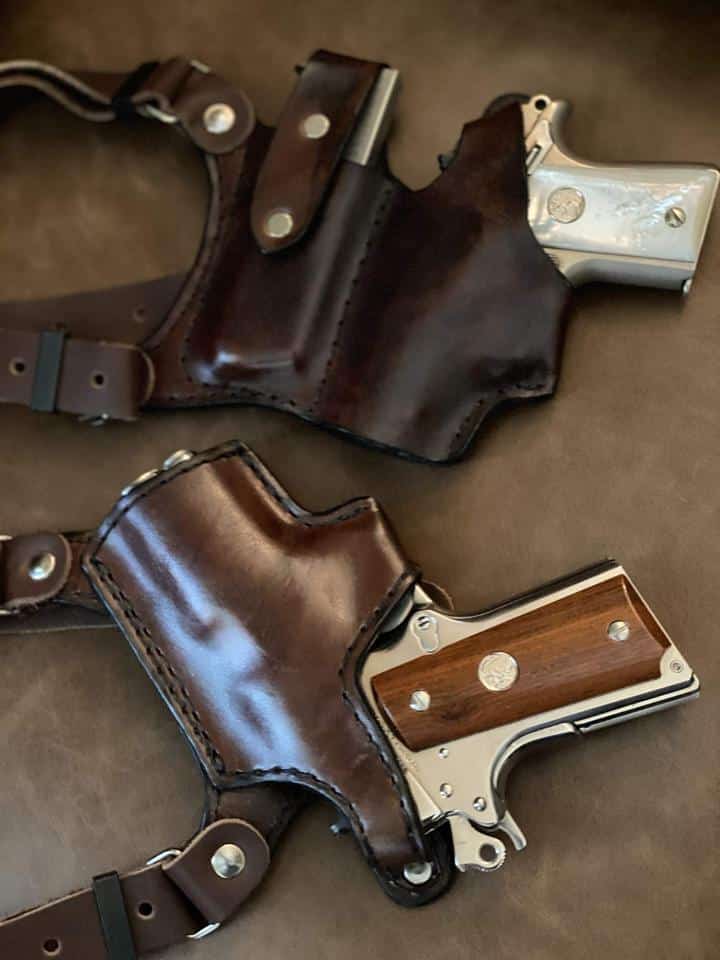
Retention straps are useful, especially on shoulder rigs, field holsters, and some paddle designs. But straps and snaps create contact points. A snap that rides against a slide, frame, cylinder, or grip can leave a mark over time. A stiff strap dragged repeatedly over the same surface can do the same.
This is not a reason to avoid retention. It is a reason to inspect the exact place where the strap crosses the gun. If a holster is going to touch the same high-polish area every time it is snapped, the collector should know that before the wear appears.
Display, Storage, or Carry: The Purpose Changes the Risk
A holster used for display is different from a holster used for carry. A holster used for occasional photographs is different from one worn all day. A fitted case used to transport a shotgun is different from a case used for long-term storage in a closet.
Before pairing a collectible firearm with leather, ask what job the leather is performing:
- Display: Is the gun resting on soft, clean, non-abrasive contact points?
- Transport: Is the gun secure enough not to shift, but not compressed against hardware?
- Carry: Does the holster protect the gun from movement, sweat, grit, and repeated draw wear?
- Storage: Is leather really the right environment for long-term storage?
My Collector Rules for Pairing Guns and Leather
After years of buying, using, selling, keeping, and occasionally regretting holsters, these are the rules I trust most:
- If the gun is highly collectible, test fit slowly and carefully.
- Inspect the inside of the holster before judging the outside.
- Avoid using the gun's finish to break in the leather.
- Keep the interior clean, especially if the holster is suede-lined.
- Watch contact points: muzzle, cylinder, front sight, slide edges, straps, snaps, and seams.
- Do not assume an old holster still fits correctly just because it looks right.
- Use leather for the purpose it serves best: display, carry, transport, or story—not necessarily all four.
- For long-term preservation, do not rely on leather alone.
The Best Holster May Be the One You Use Least
That sounds backward, but collectors will understand it. Some leather belongs with a gun because it completes the story. Some leather is best kept as a companion piece. Some leather should be used only carefully because the gun it fits has become too valuable, too original, or too sentimental to expose to unnecessary wear.
The goal is not to make every collectible gun a safe queen. The goal is to understand what each use costs. A little honest wear on the right gun can be part of its character. Preventable wear on the wrong gun can be a permanent mistake.
Collector Takeaway
Holsters affect collector gun finish in two opposite ways. They protect guns from drops, bumps, and careless handling, but they can also create wear through friction, pressure, grit, moisture, and poor fit. The collector's job is to know which force is winning.
When the leather is clean, properly fitted, thoughtfully lined, and used for the right purpose, it can become part of the firearm's story in the best possible way. When it is dirty, loose, too tight, poorly lined, or used as long-term storage without inspection, it can write a chapter into the finish that no collector really wanted.
From My Bench
For collectors, finish preservation is part storage, part handling, and part judgment. I keep a curated list of tools, books, cleaning gear, storage items, and bench supplies that fit the way I work.
Paid linkBrowse My Gear List
As an Amazon Associate I earn from qualifying purchases. I only link to products, books, tools, and accessories that fit the editorial purpose of Gun Collectors Club.

About Greg Cook
Greg Cook writes about firearms collecting, personal history, and the stories behind interesting guns. His Army MOS was 76Y, Unit Armorer, and he brings that practical background to his collector articles.