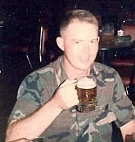
REFORGER ’85 and Operation Central Guardian
Exercise Campaign Reforger, short for “REturn of FORces to GERmany,” was an annual military exercise and campaign conducted by NATO during the Cold War. The exercise was intended to ensure that NATO had the ability to quickly deploy forces to West Germany in the event of a conflict with the Warsaw Pact.
Blue Team consisted of Germany-based USAREUR units including the 8th Infantry Division at Bad Kreuznach, the 11th Armored Cavalry Regiment at Fulda, and the 3rd Armored Division at Frankfurt-am-Main. Orange Team included U.S.-based units such as the 4th Infantry Division (Mech), 5th Infantry Division (Mech), and 197th Infantry Brigade.
The Diary of a Soldier — January 9, 1985
We reported to the S&A at 19:30 hours on January 9, 1985. I issued weapons to the entire unit. We loaded our baggage at 0200 hours on the 10th — hurry up and wait. Finally, at 0900 hours, we loaded the buses and went to Garcia Gymnasium for customs inspection. At 1030 we went to quarantine in the holding area, still at Garcia Gym.
At 1330 we loaded on Greyhound buses and departed, destination Peterson Air Force Base. At 1430 hours on January 10, 1985, 747 Flight 15 took off, destination Bangor, Maine for a refueling stop, with a final destination of Ramstein AFB, Kaiserslautern, West Germany.
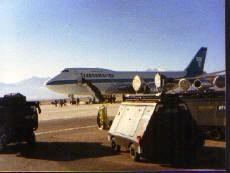
There was a lot of ice and snow in Bangor, Maine when we stopped to refuel. We did not get off the plane, and I watched out the window as a crew de-iced our wings. After being deprived of sleep for 24 hours, I slept when the flow of adrenaline slowed. We watched From Russia With Love on the flight as we neared our final destination.
Our ETA for K-Town was 0935 hours local time on January 11, 1985. We reached Kaiserslautern right on time.
While disembarking, the theme from The Pink Panther was playing on the plane’s sound system. We loaded on 11 German buses. One of the soldiers had the bus driver put on a Beatles tape that he had brought along with him. At 1120 hours we were still sitting on the bus, waiting — possibly on the second 747 that left Pete Field.
Arrival in Germany
It was very foggy and snowing lightly with about three or four inches on the ground. A C-141 landed and three additional German buses lined up on the airstrip to pick up passengers. A couple of F-4 Phantom jet fighters landed and took off. A German news team was taking pictures of us and filming.
A C-130 loaded and took off. It was now 1200 hours and we had listened to both sides of the Beatles 1962–1967 cassette. Two more Phantoms took off. A C-5A came in. The trucks had all our baggage loaded and we were about to pull out. We watched as the nose of the C-5A opened up and, very hurriedly, a crew began unloading equipment.
At 1220 we finally pulled out in the buses. After listening to the Beatles twice, someone put a new cassette in — the Scorpions. As we exited through the gates we saw four German girls in a Citroën. I waved and they waved back. Dave smiled and said, “it may be a good thing we brought the army-issued gear.” We laughed.
Nahbollenbach and the Mountain Warehouses
After riding the bus for about two hours, we arrived at Nahbollenbach, where huge warehouses stored vehicles to be drawn and used in the event of war. We started bringing them out of the warehouse at 1730 hours.
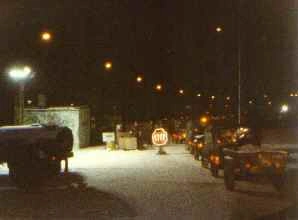
We had brought only our specialized equipment from Colorado. Standard equipment such as trucks, jeeps, and trailers were drawn from a very unique storage area. The storage facility was inside a huge mountain. Much of the equipment was brand new when it was placed inside the mountain in the 1950s and had not seen daylight again until now. The efficiency with which this phase of our operation went was truly astounding.
From My Bench
For readers interested in military firearms history, I keep a curated list of books, collecting references, bench tools, and related items that fit the editorial purpose of Gun Collectors Club.
Browse My Gear List
About Greg Cook
Greg Cook served in the United States Army from February 28, 1984, through February 28, 1986. His MOS was 76Y, Unit Armorer, and his Army memories still shape the way he writes about serious rifles and collecting.